Extra Challenge 2D Shapes Worksheets for Ages 5-6
10 filtered results
-
From - To
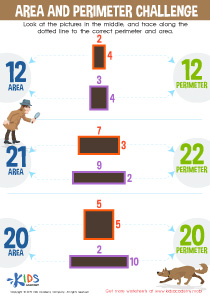
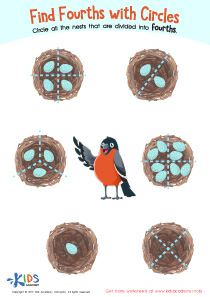
Dive into the world of geometry with our "Extra Challenge 2D Shapes" worksheets, perfectly tailored for curious minds aged 5-6. These engaging worksheets are designed to introduce young learners to the fascinating world of two-dimensional shapes in a fun and challenging way. Through a variety of activities, children will explore, recognize, and differentiate between shapes, enhancing their geometric vocabulary and spatial reasoning skills. Each sheet is crafted to capture young imaginations while pushing their boundaries just enough to inspire growth and confidence in their abilities. Embrace the adventure of shapes with our Extra Challenge 2D Shapes worksheets for Ages 5-6, and watch your child's understanding and love of geometry expand.
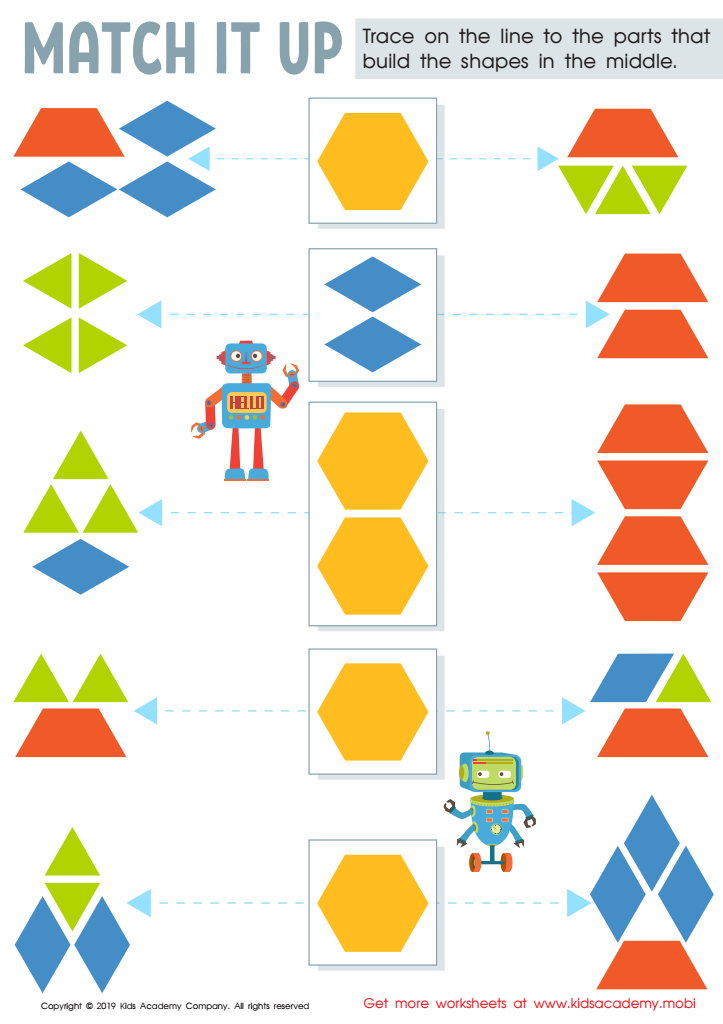
Match It up Worksheet
 Assign to My Students











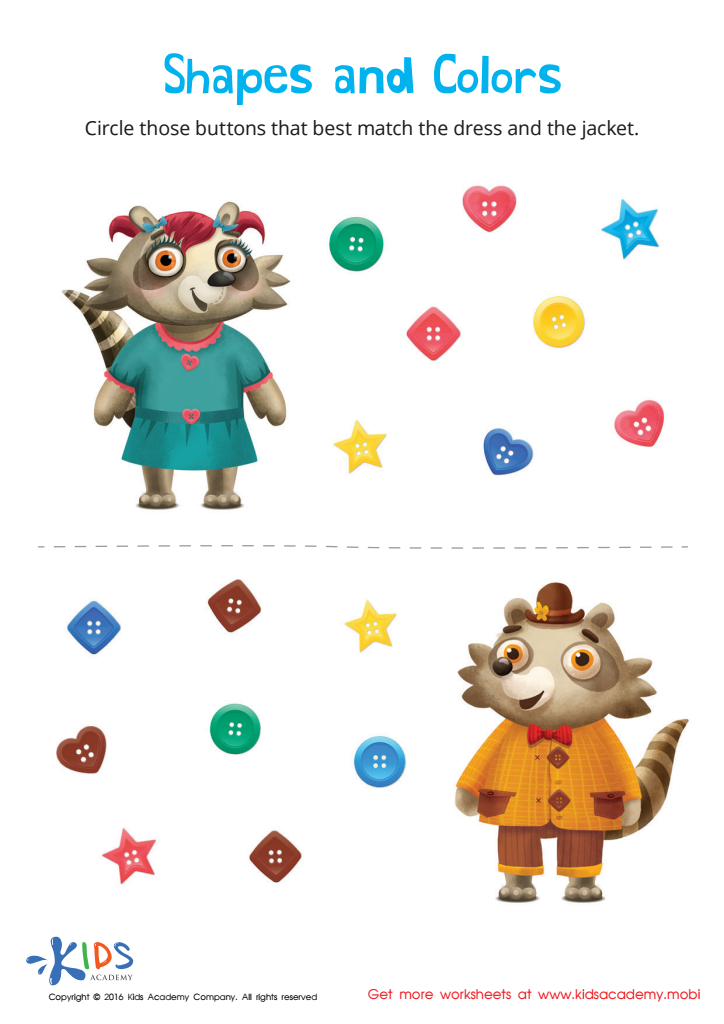
Matching: Shapes and Colors Worksheet
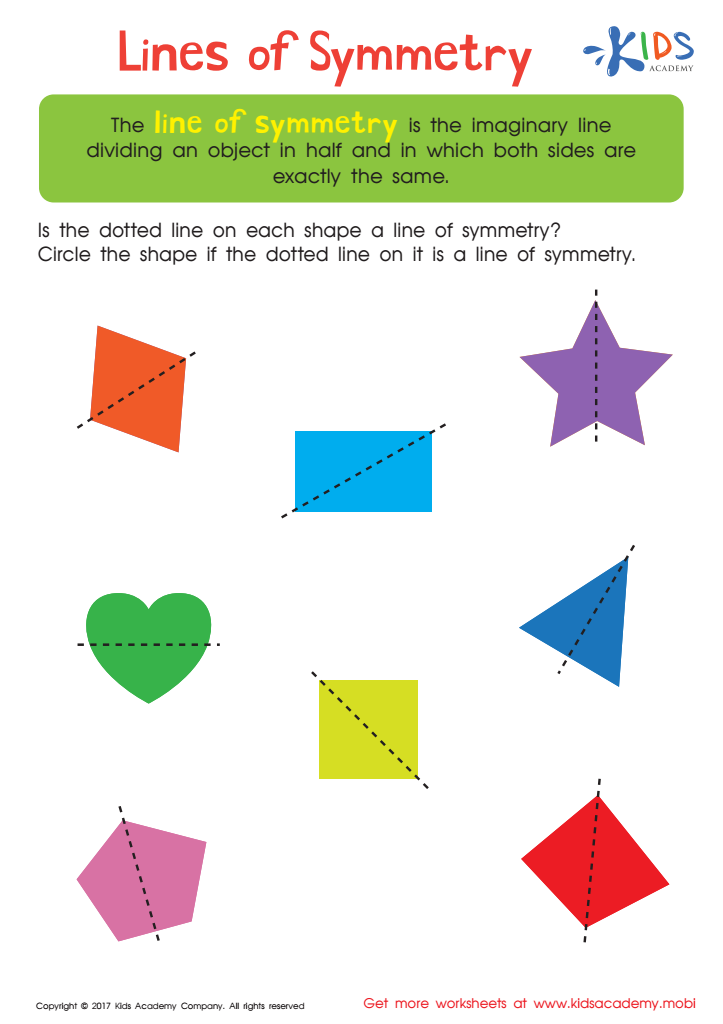
Lines of Symmetry Printable
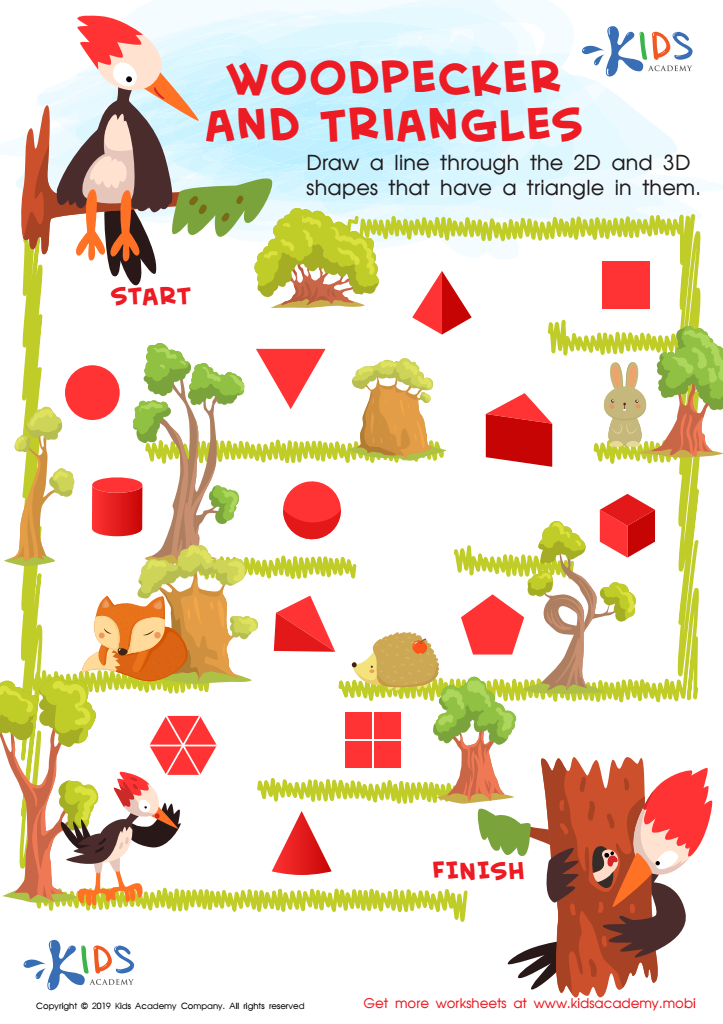
Woodpecker and Triangles Worksheet
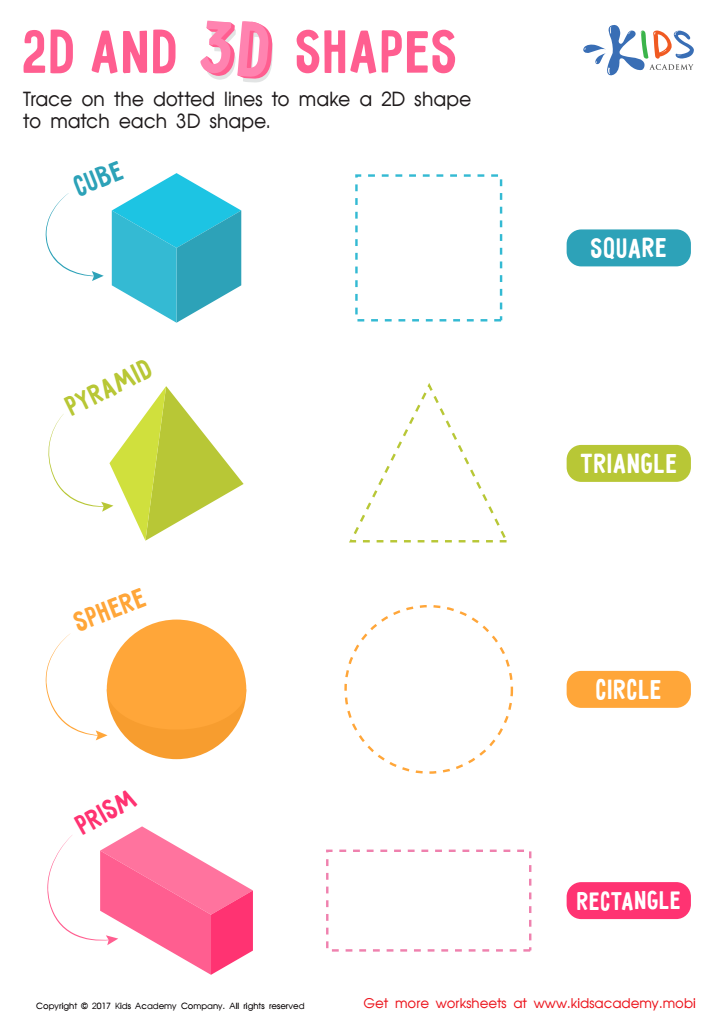
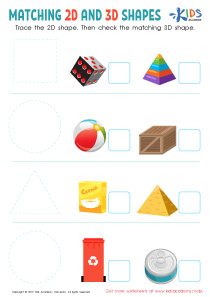
2D and 3D Shapes Worksheet
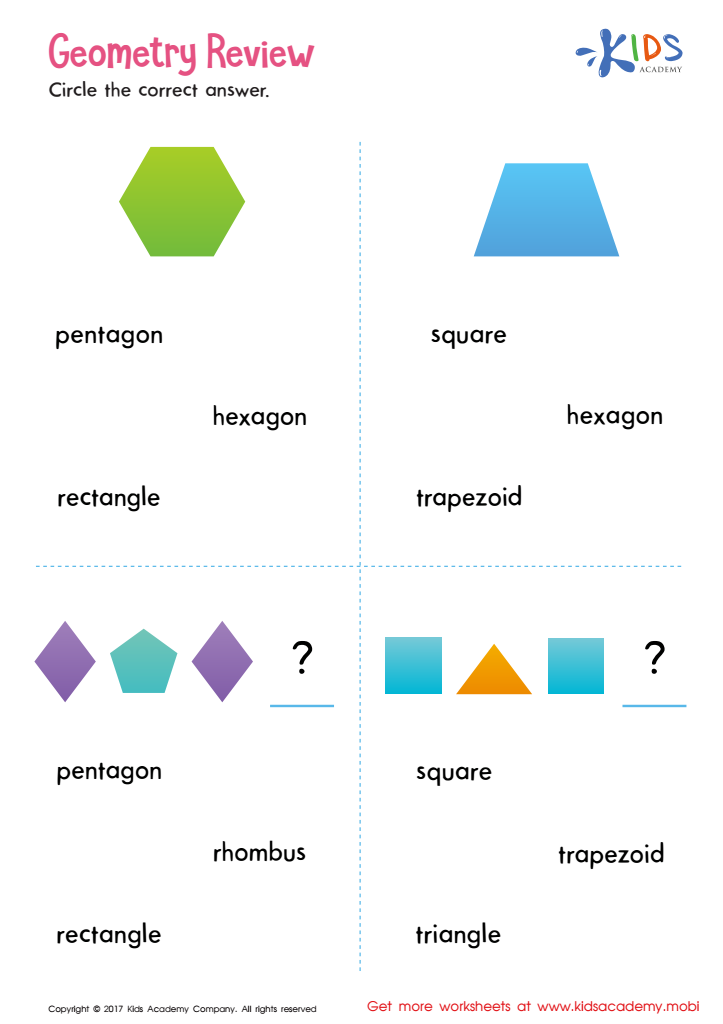
Geometry Review Printable
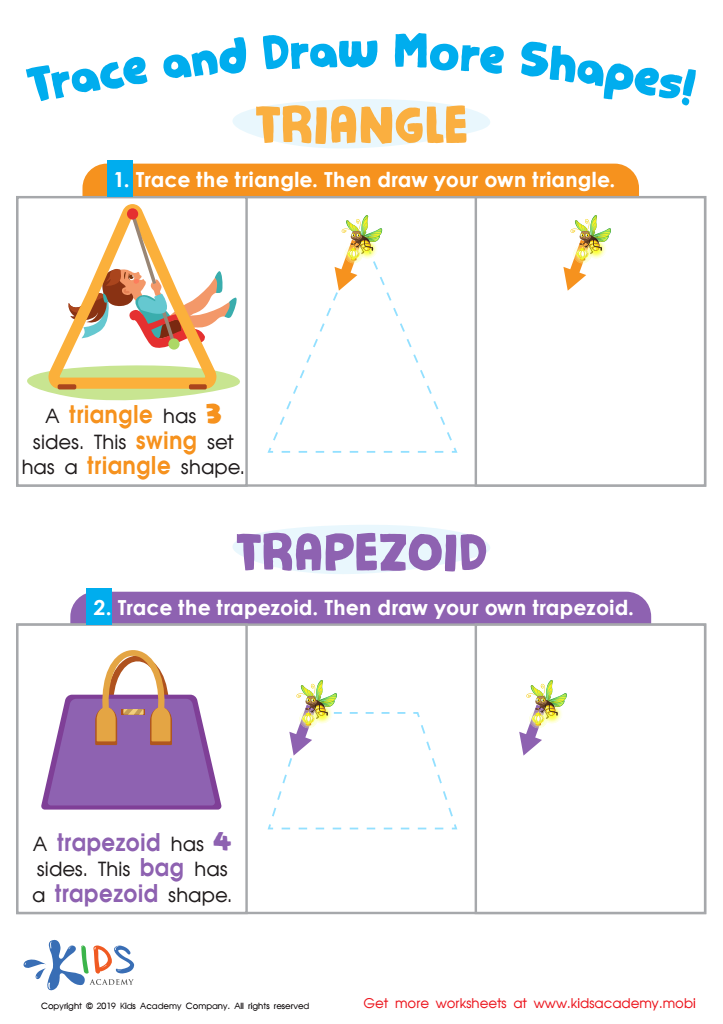
Trace and Draw More Shapes Worksheet
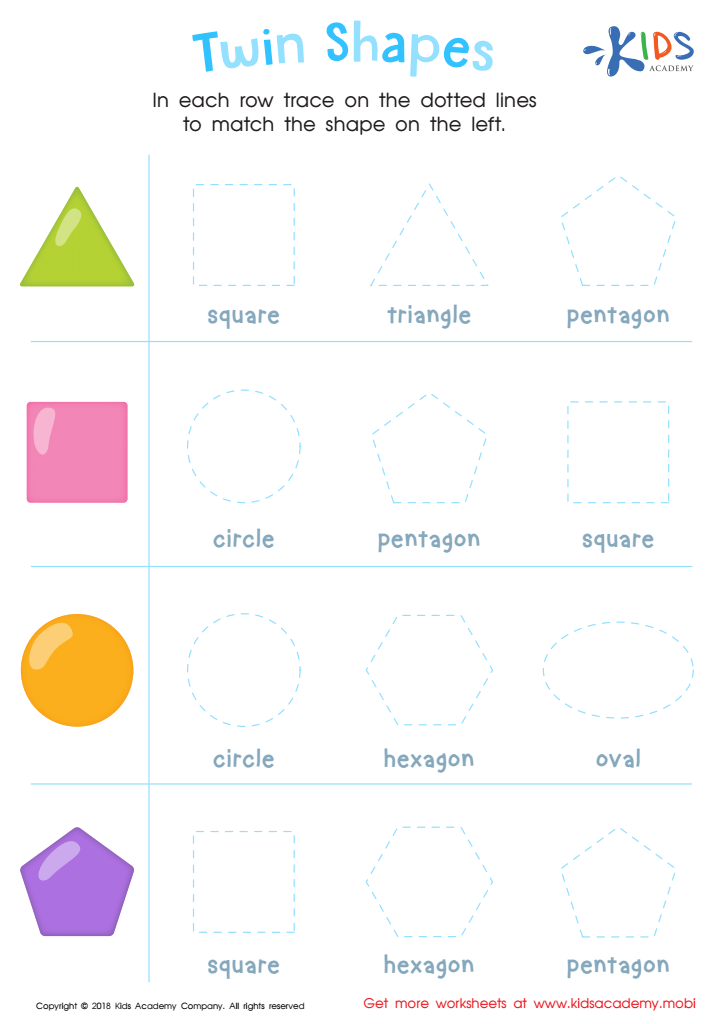
Twin Shapes Dot-to-Dot Worksheet
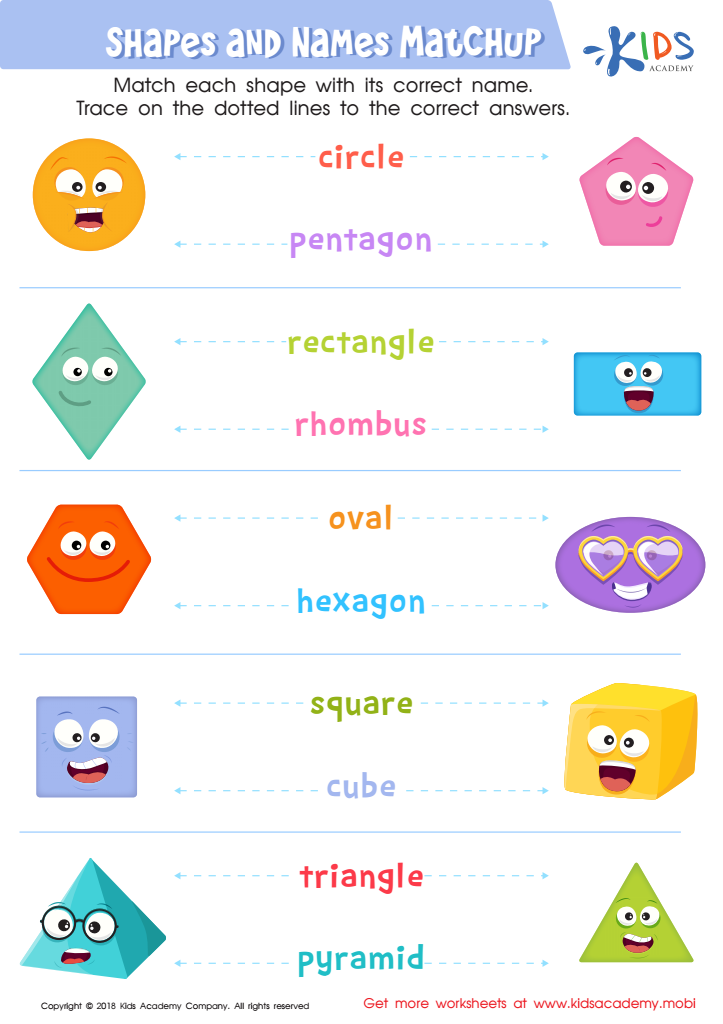
Shapes and Names Matchup Worksheet
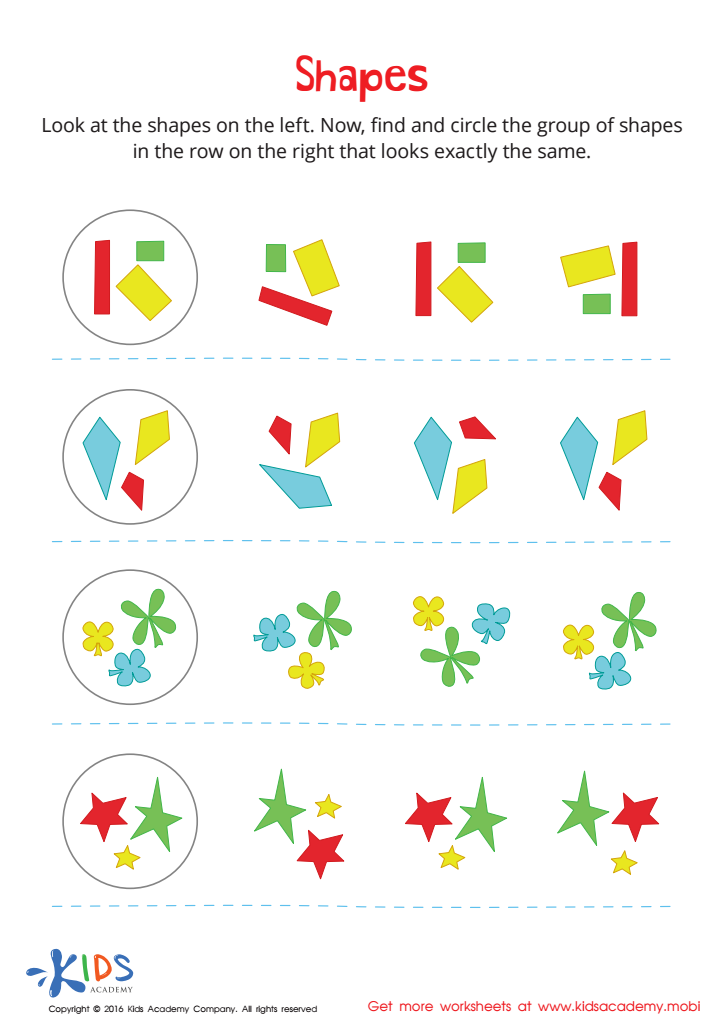
Shapes Worksheet








Extra Challenge 2D Shapes worksheets designed for Ages 5-6 are a remarkable tool in the educational journey of young learners. These worksheets go beyond the basic introduction to 2D shapes, providing a level of complexity suited for children who are ready to stretch their understanding further. At this critical age, children are developing foundational skills in geometry, and these extra challenge worksheets serve as an excellent means to reinforce and expand their knowledge.
The advantages of using Extra Challenge 2D Shapes worksheets are manifold. Firstly, they cater to the varied learning paces of children, ensuring that those who grasp concepts quickly remain engaged and challenged. This prevents boredom and keeps the learning process exciting and stimulating. Secondly, these worksheets are meticulously designed to enhance problem-solving skills. Through a variety of tasks that require critical thinking, children learn to approach problems from different angles, fostering a versatile way of thinking.
Moreover, the Extra Challenge 2D Shapes worksheets for Ages 5-6 are perfect for reinforcing classroom learning. They provide additional practice in a fun and interactive way, helping children to consolidate their learning outside of the traditional educational setting. By tackling these extra challenges, children not only improve their geometric skills but also gain confidence in their abilities, setting a solid foundation for future mathematical learning.