Normal Addition and Subtraction Word Problems Worksheets for Ages 3-7 - Page 2
29 filtered results
-
From - To
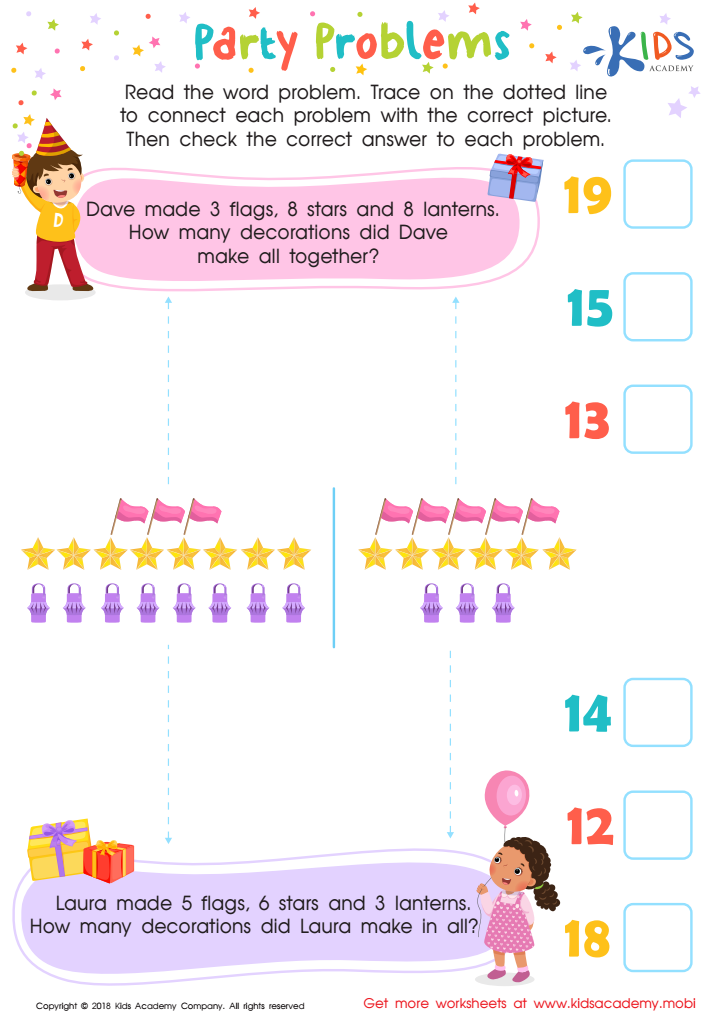
Party Problems Worksheet
 Assign to My Students
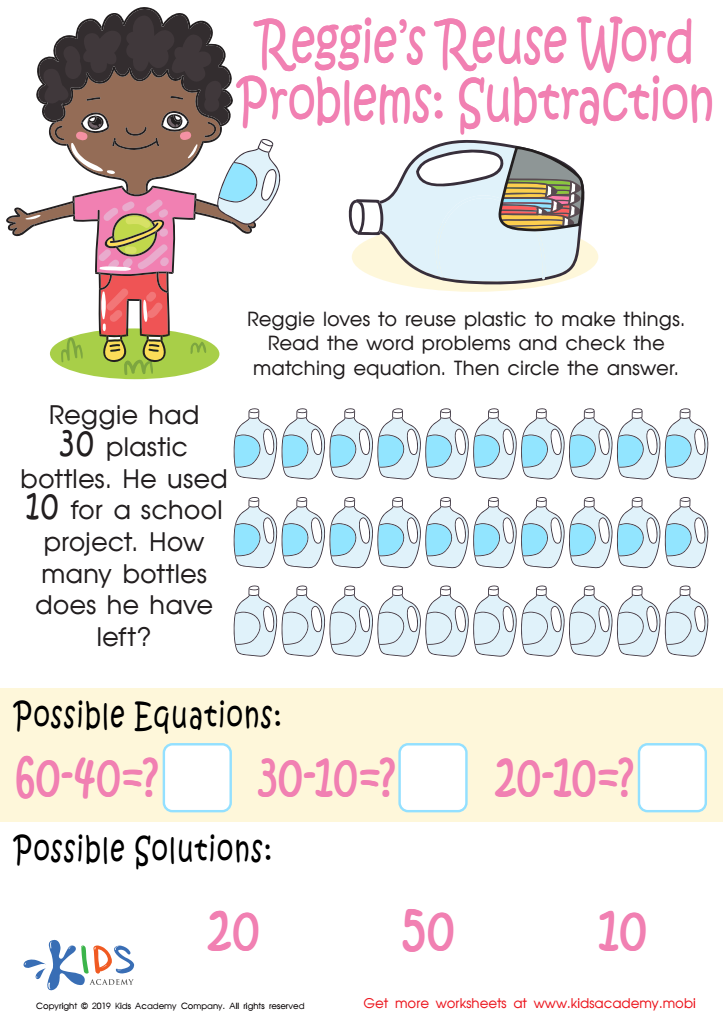
Reggie's Reuse Word Problems: Subtraction Worksheet
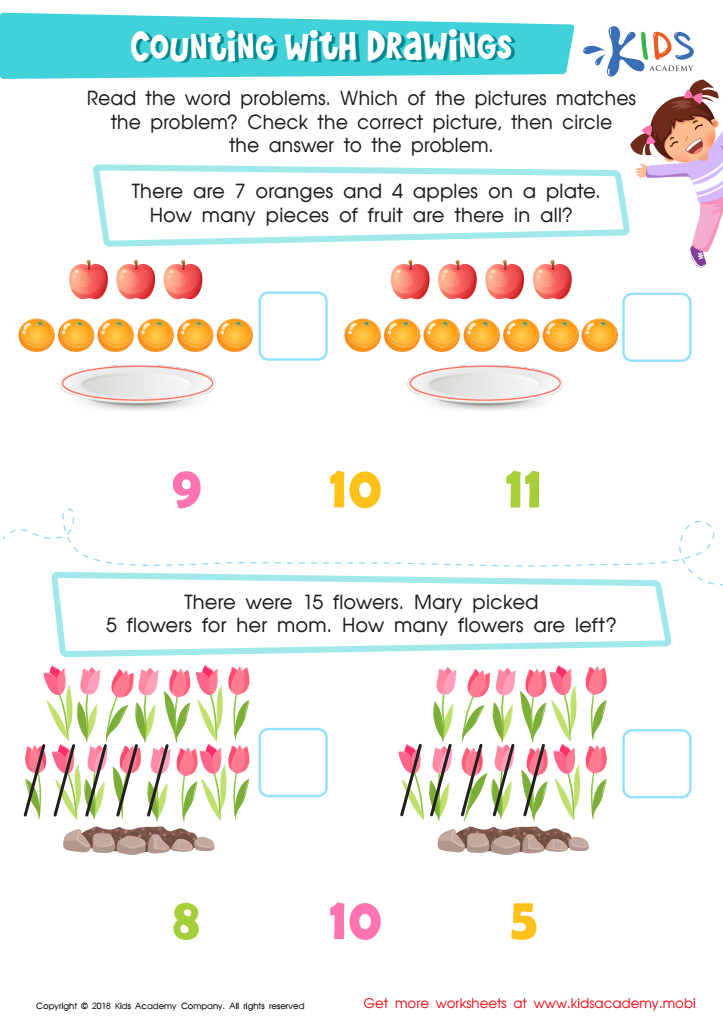
Counting with Drawings:Fruits & Flowers Worksheet
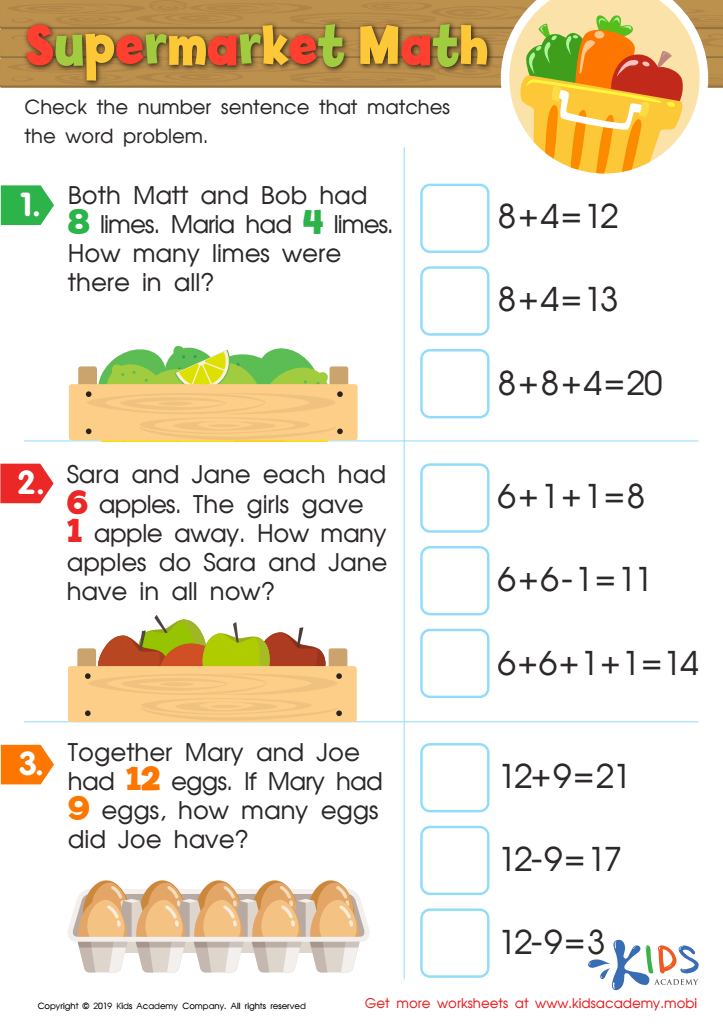
Supermarket Math Worksheet
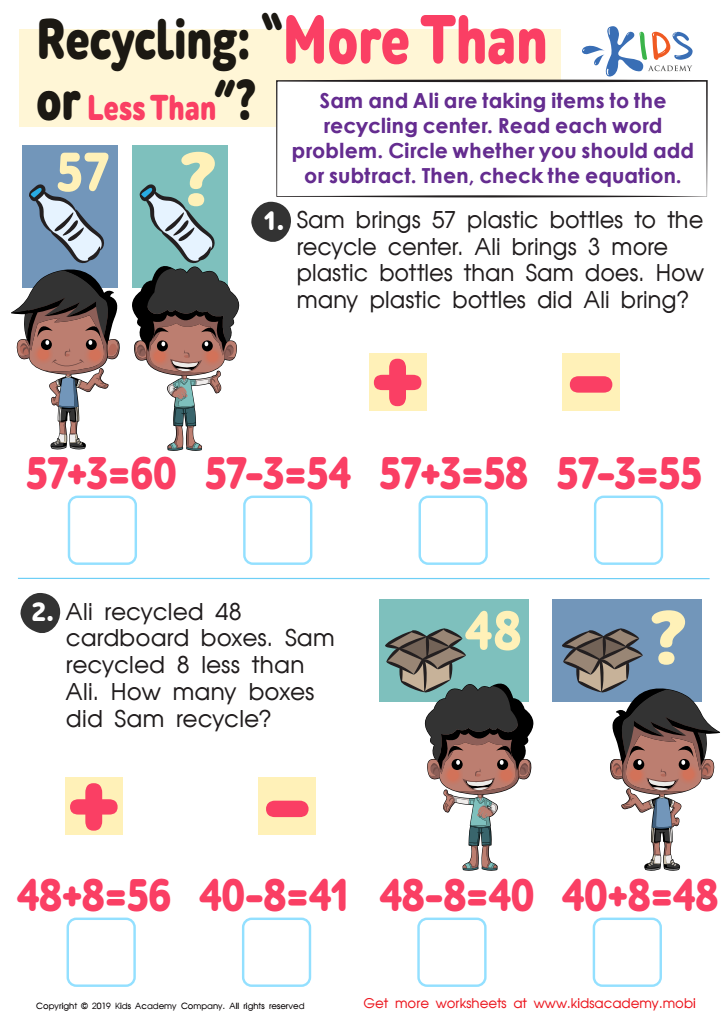
Recycling - More or Less Worksheet








Understanding normal addition and subtraction word problems is crucial for children aged 3-7 as it lays the foundation for their mathematical reasoning and problem-solving skills. These skills are not just about rote memorization of sums; they involve critical thinking and comprehension which are applicable in various aspects of life.
Word problems encourage children to translate real-life situations into mathematical equations, fostering a deeper understanding of numbers and their relationships. This is essential because math is not an isolated subject; it integrates into everyday scenarios, from sharing toys to counting snacks. By solving these problems, children learn to interpret language and discern key information, enhancing their critical thinking abilities.
Parents and teachers play a pivotal role in this developmental journey. Introducing word problems at an early age promotes literacy skills alongside mathematical development, as students engage with the verbal aspects of problems. This dual focus helps children become confident and competent learners.
Additionally, mastering these concepts early on can prevent future math anxiety, establishing a positive attitude toward learning. By nurturing these skills, parents and teachers set the stage for academic success, making it imperative for them to prioritize normal addition and subtraction word problems in early education settings.