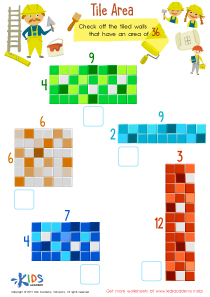
Normal Numbers Worksheets for Ages 3-7 - Page 9
193 filtered results
-
From - To
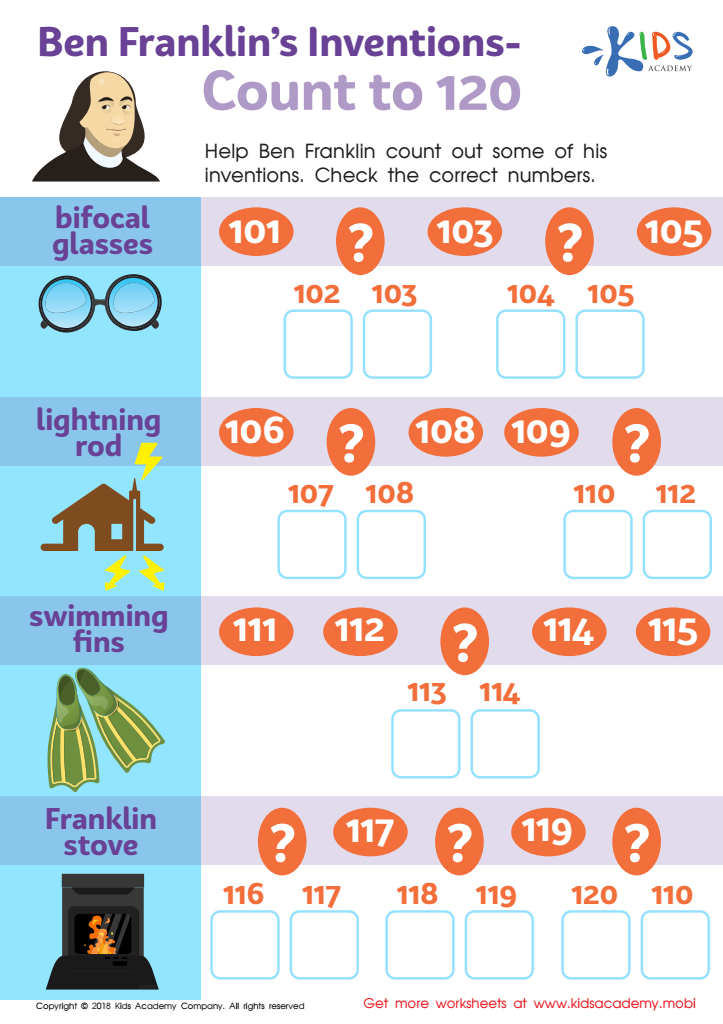
Ben Franklin’s Inventions – Count to 120 Worksheet
 Assign to My Students








Introducing the concept of normal numbers to children aged 3-7 can provide a strong mathematical foundation crucial for their cognitive development. At this early stage, children’s brains are highly adaptable and eager to absorb new information, making it a perfect time to instill essential numerical skills.
One critical reason parents and teachers should care about teaching numbers is that early numeracy skills are strongly linked to future academic success. Understanding numbers aids in developing logical reasoning, problem-solving skills, and critical thinking. These are not only pivotal for advanced mathematical concepts but also for other subjects and real-world decision making.
Additionally, integrating numbers into everyday activities helps children to see the relevance and application of mathematics in their daily lives. This context-based learning enhances their engagement and interest in the subject. Simple activities like counting objects, recognizing patterns, or even basic addition and subtraction lay down the groundwork for more complex math concepts.
Ultimately, fostering a positive and supportive environment for learning numbers ensures that children develop the confidence to tackle mathematical challenges. This early investment translates to better performance in school and ignites a lifelong interest and proficiency in maths, providing children with invaluable skills for their future education and careers.