Normal Ending Sounds Worksheets for Ages 3-8
5 filtered results
-
From - To
Enhance your child’s literacy skills with our Normal Ending Sounds Worksheets, specially designed for ages 3-8. These engaging activities help young learners identify and practice the sounds that end words, crucial for developing phonemic awareness. Perfect for early education settings or at home, our worksheets feature colorful illustrations and user-friendly formats to keep kids motivated. Each worksheet includes a variety of exercises that encourage fun learning through tracing, matching, and sound recognition. Foster your child's reading and writing confidence as they master ending sounds with these comprehensive and versatile resources that support foundational language skills. Start your journey towards literacy today!
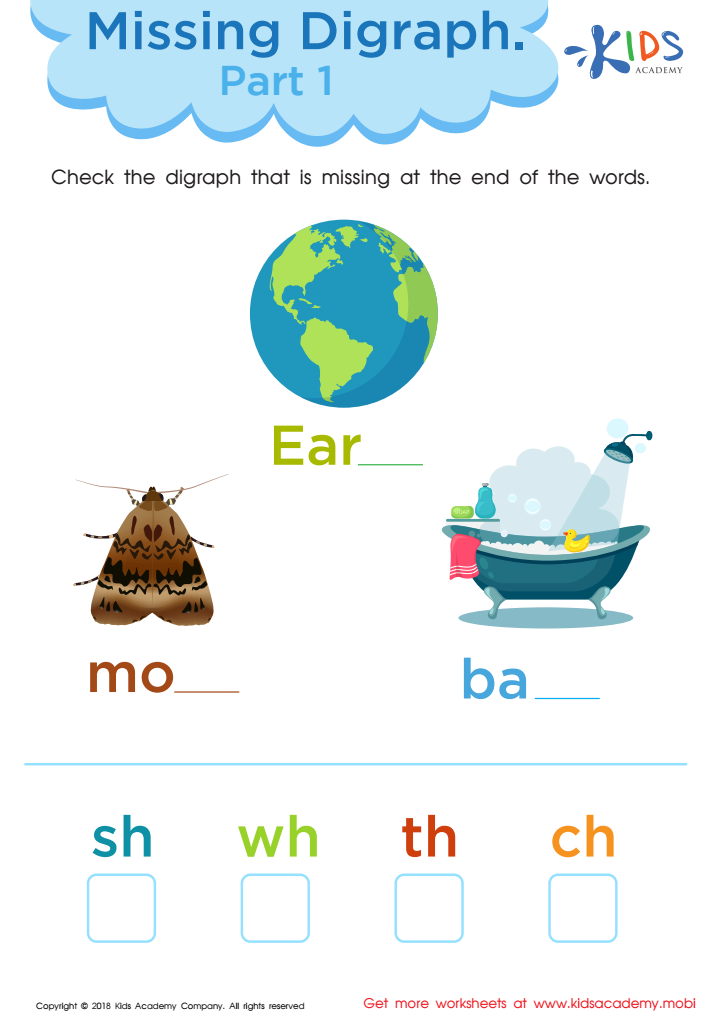
Missing Digraph: Part 1 Worksheet
 Assign to My Students
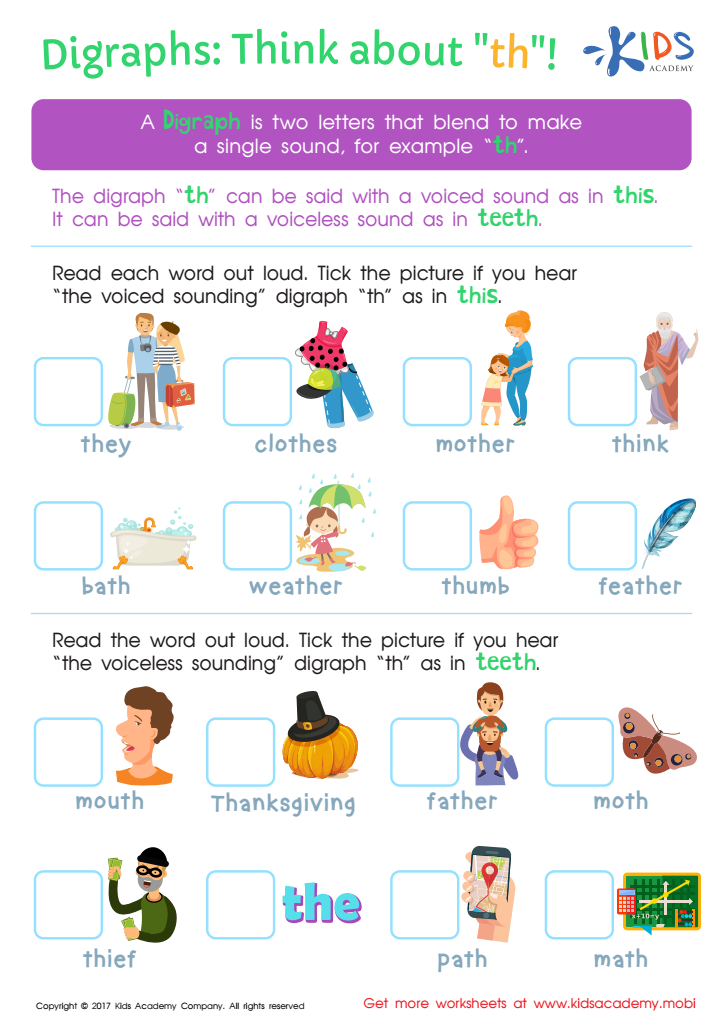
Digraphs: Think About "th" Worksheet
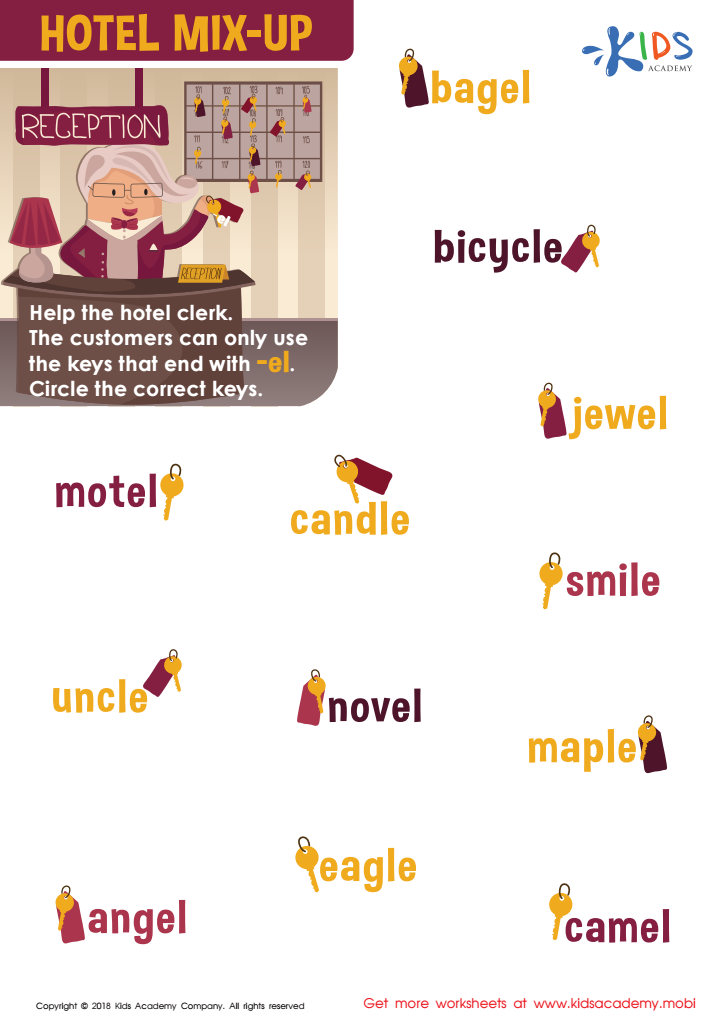
Hotel Mix-up Worksheet
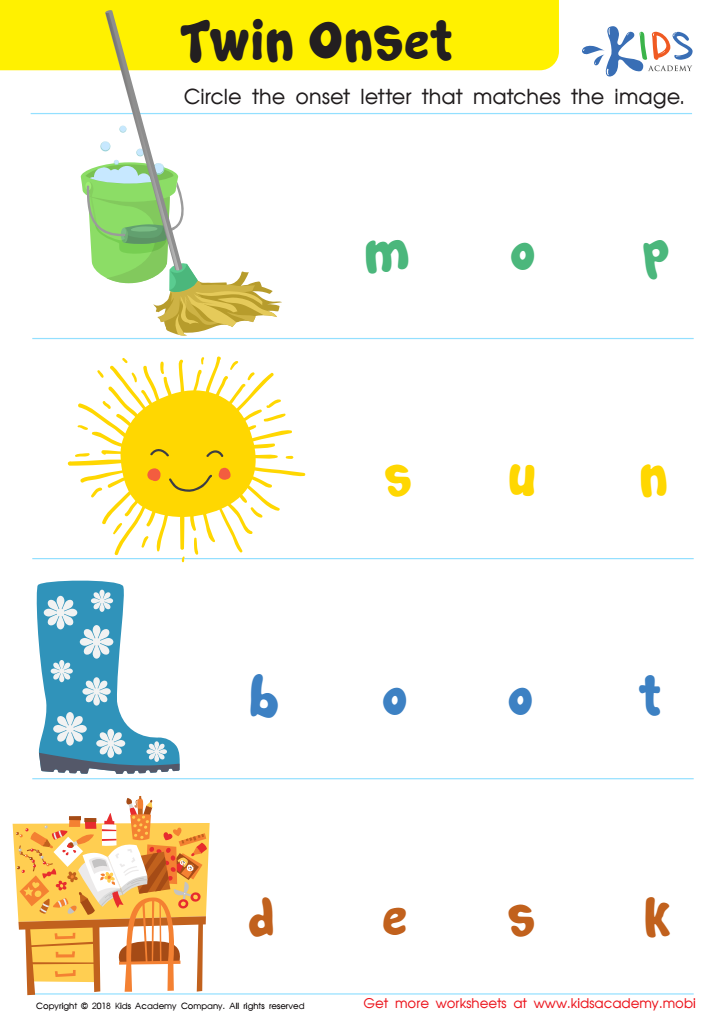
Twin Onset Worksheet
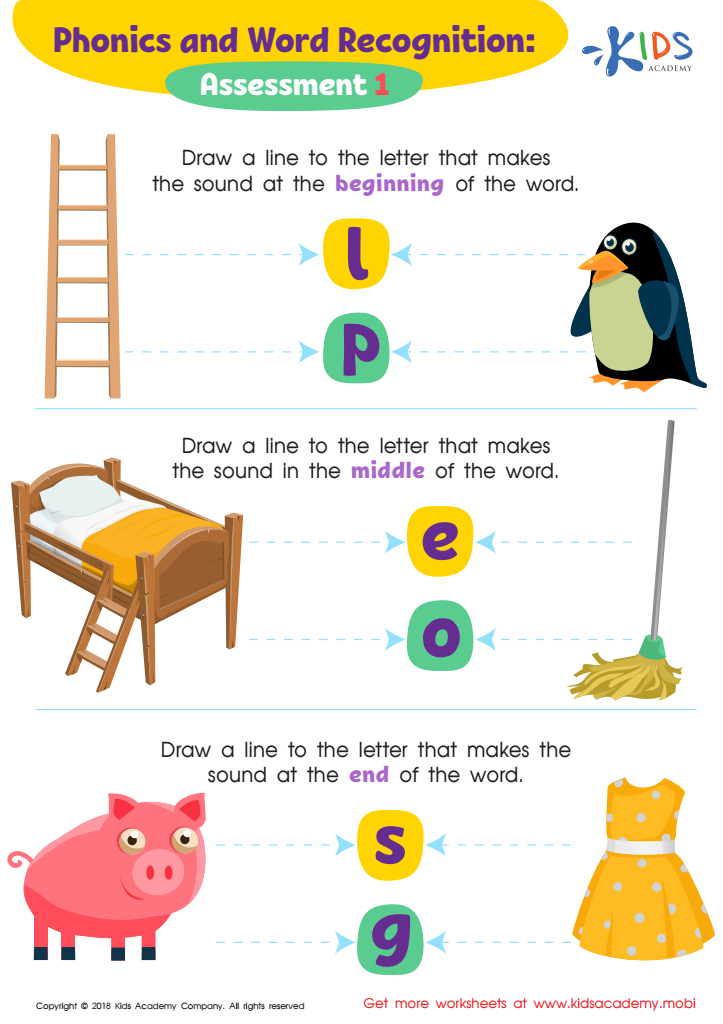
Phonics and Word Recognition: Assessment 1 ELA Worksheet






Understanding normal ending sounds is crucial for parents and teachers of children aged 3-8 because these sounds play a significant role in early language development. Phonemic awareness, which includes the ability to hear, recognize, and manipulate sounds, is foundational for reading and writing proficiency. By focusing on normal ending sounds, educators can help children discern the differences that can change word meaning and enhance their vocabulary.
Children learn best through play and interactive experiences. Engaging them in rhyming games and songs can strengthen their ability to identify ending sounds, promoting auditory skills and cognitive flexibility. This focus establishes a groundwork for phonics instruction, vital for learning to read.
Furthermore, improving awareness of ending sounds aids in spelling abilities, as children learn that the sounds at the end of words can influence how words are constructed and understood. Teachers and parents should prioritize this area of learning to support language rich environments that foster communication skills.
Ultimately, by emphasizing normal ending sounds, parents and teachers guide children toward greater literacy success, enhance their analytical skills, and help them develop a lifelong love for reading and writing. Engaging with language early on sets the stage for future academic achievement as children transition into more complex literacy tasks.