Normal Silent Vowels Worksheets for Ages 3-8
5 filtered results
-
From - To
Introducing our engaging Normal Silent Vowels Worksheets, perfect for children aged 3-8! These educational worksheets from Kids Academy help young learners recognize and understand silent vowels in everyday words through fun and interactive activities. Each worksheet is thoughtfully designed to enhance early reading skills, focusing on common silent vowel patterns with vibrant illustrations and simple tasks. Our resources cater to different learning styles, ensuring each child finds joy in mastering tricky vowel sounds. Boost your child's reading confidence and phonics skills with these comprehensive and kid-friendly silent vowel exercises. Ideal for home or classroom use!
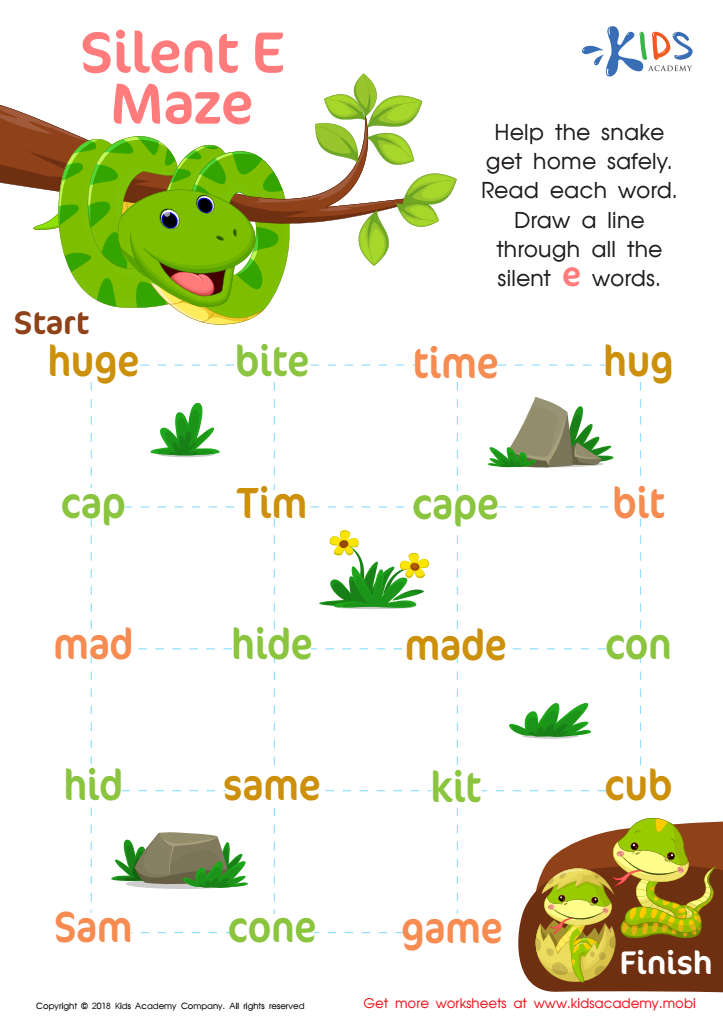
Silent E Maze Worksheet
 Assign to My Students
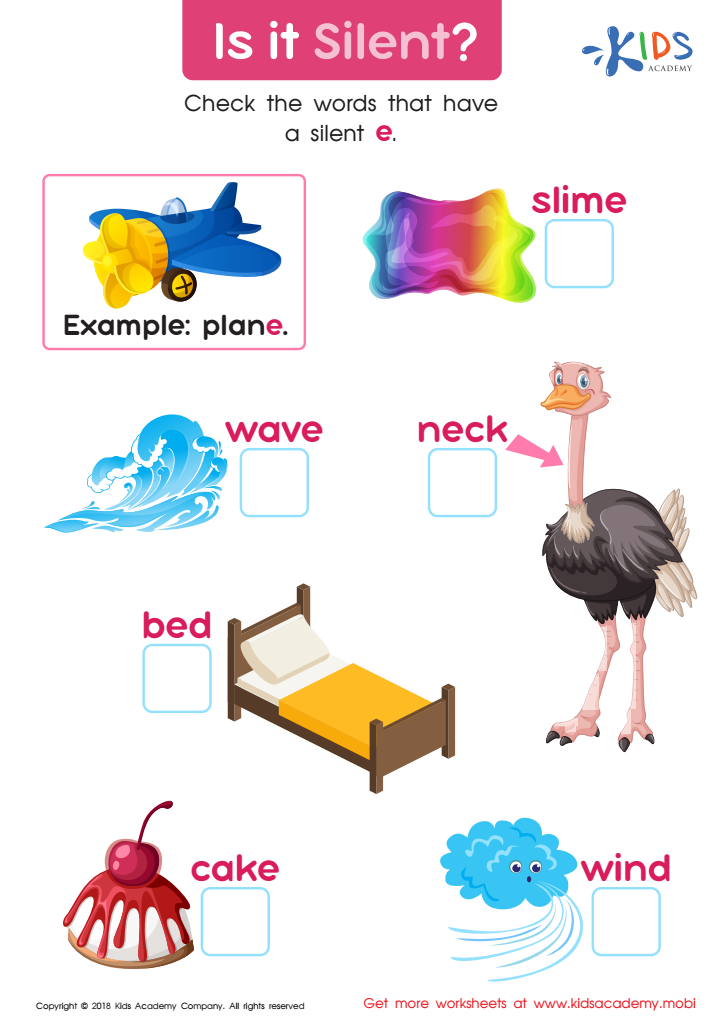
Is It Silent? Worksheet
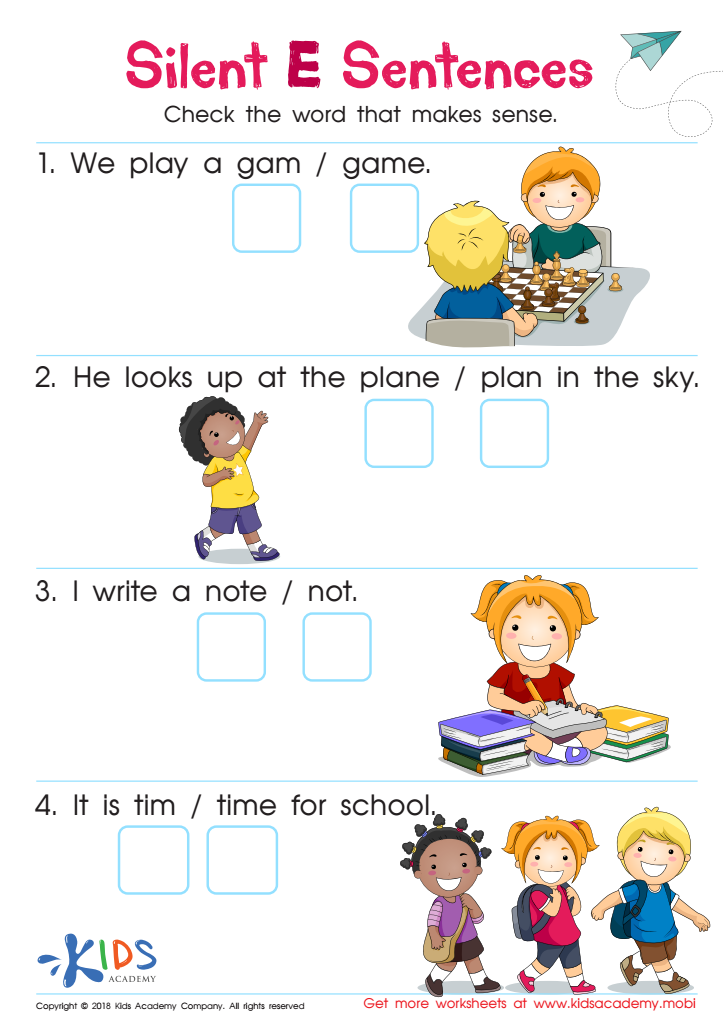
Silent E Sentences Worksheet
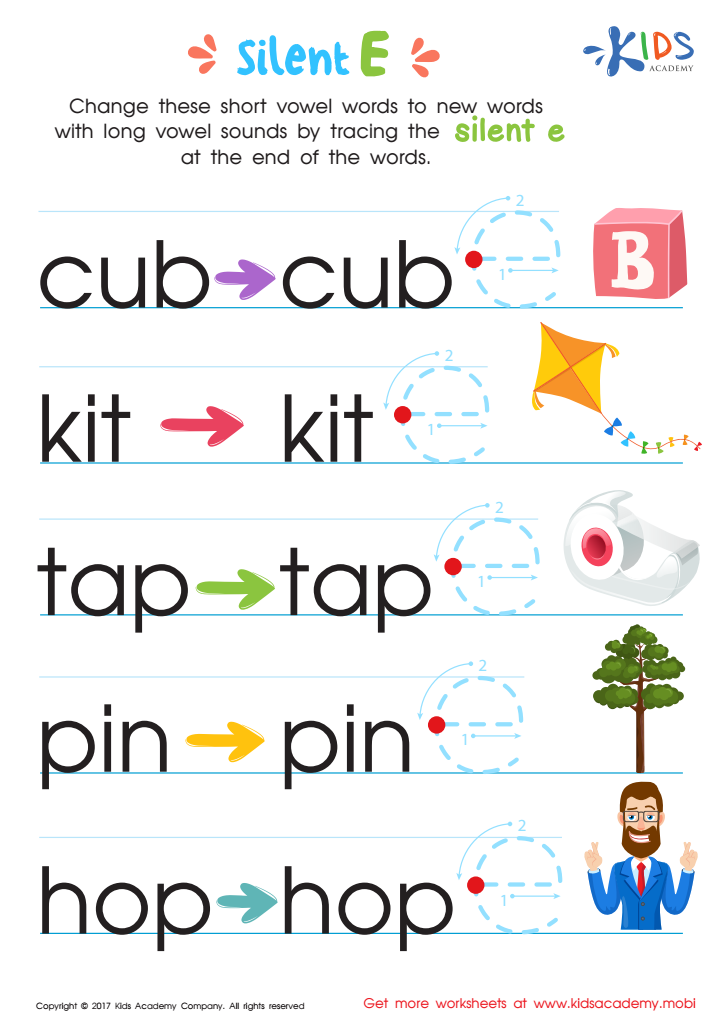
Silent E Words Worksheet
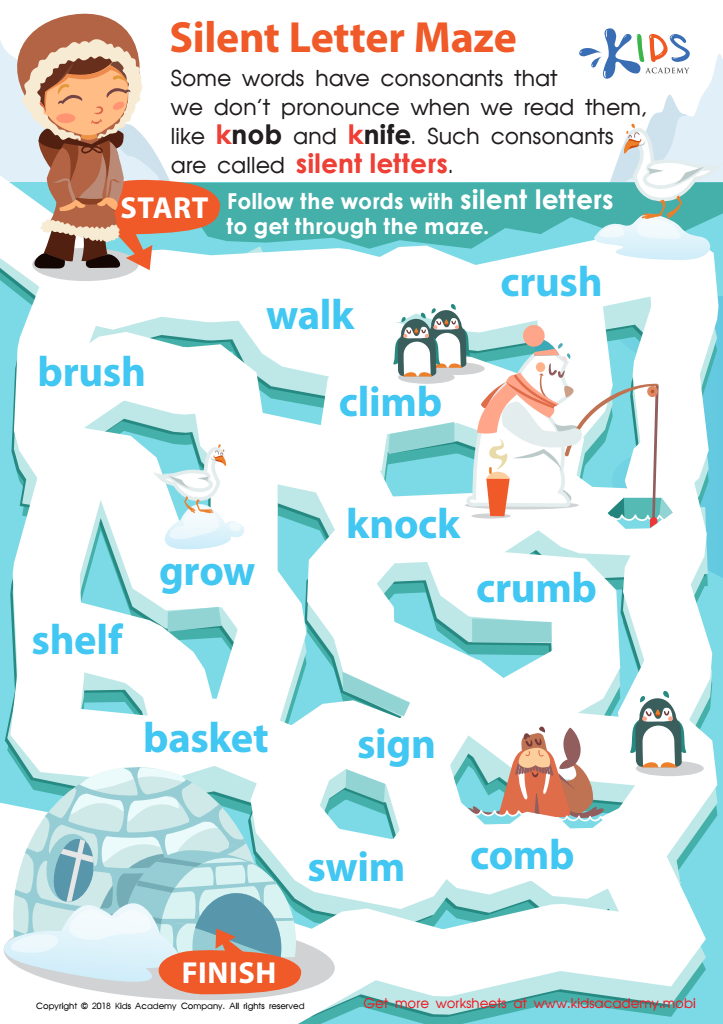
Silent Letter Maze Worksheet


Understanding normal silent vowels is crucial in the literacy development of children aged 3-8. During these formative years, young learners develop foundational reading and writing skills that will support their academic journey. Silent vowels, such as the "e" in "love" or the "a" in "bread," play a significant role in English pronunciation, spelling, and overall language comprehension.
When parents and teachers emphasize silent vowels, they help children grasp how English letters and sounds often differ, reinforcing critical phonetic awareness. For instance, knowing why "bite" where the vowel "i" sounds long differs from "bit" with a short vowel "i," enhances a child's ability to decode words correctly, improving reading fluency and spelling accuracy.
Additionally, early familiarity with silent vowels can mitigate confusion later on, as English is notorious for its irregularities and exceptions. Helping kids recognize these patterns early builds their confidence, making them more proficient readers and adept writers. Consequently, this foundational knowledge not only aids in academic areas but also fosters a genuine love for reading, enriching a child's educational experience. Therefore, paying attention to silent vowels is an investment in a child's literacy skills that can yield lifelong benefits.