Normal Rounding Worksheets for Ages 3-9
16 filtered results
-
From - To
Discover our engaging Normal Rounding Worksheets designed for children ages 3-9! These fun and interactive activities help young learners grasp the essential concept of rounding numbers in a playful way. Tailored to various skill levels, our worksheets provide clear instructions and vibrant visuals to cultivate math confidence. From rounding to the nearest ten and hundred, to practical exercises, each worksheet encourages children to develop critical thinking and arithmetic skills. Perfect for home or classroom use, our resources make learning rounding enjoyable. Explore our collection today and support your child's mathematical journey with curiosity and creativity!
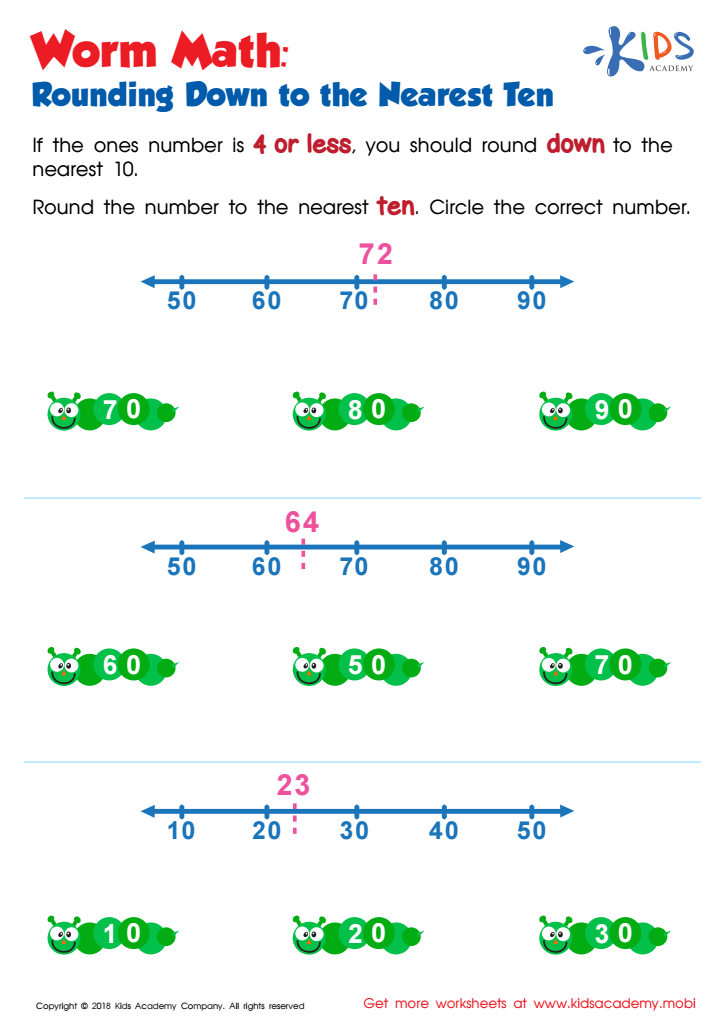
Worm Math Rounding Down to the Nearest Ten Worksheet
 Assign to My Students
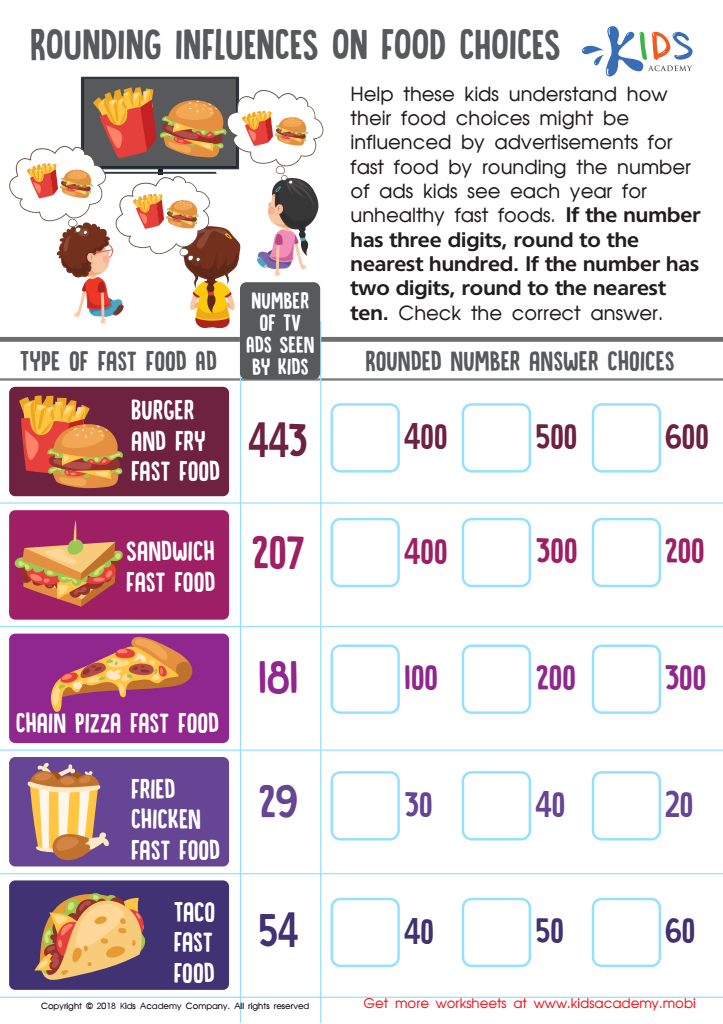
Rounding Influences Food Choices Worksheet
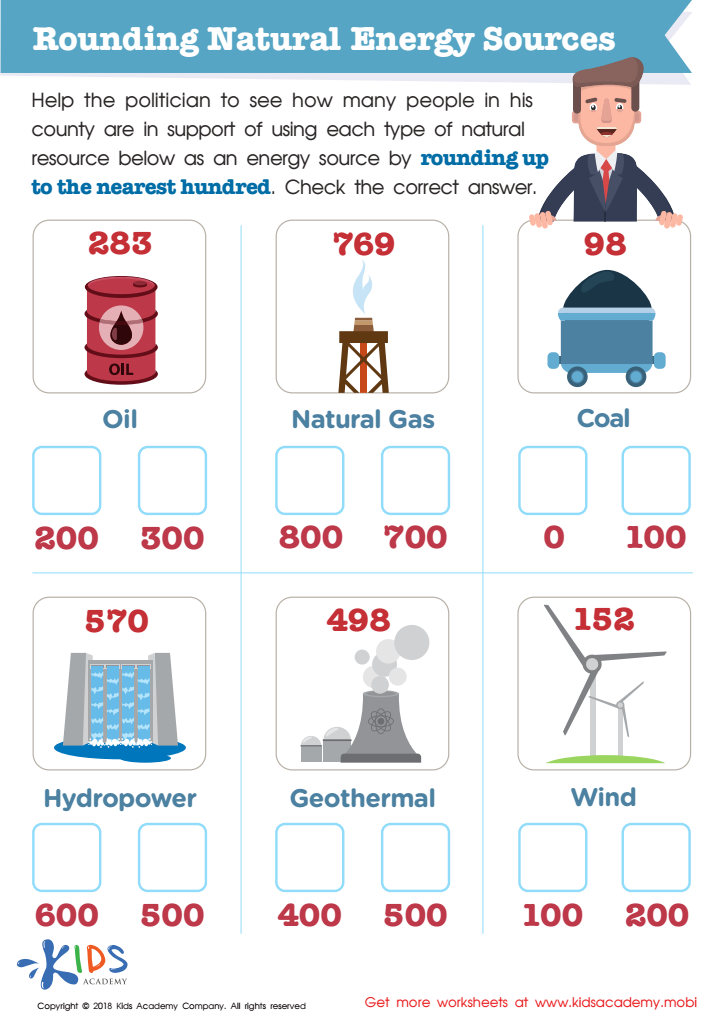
Rounding Natural Energy Sources Worksheet
Rounding Down Printable Worksheet
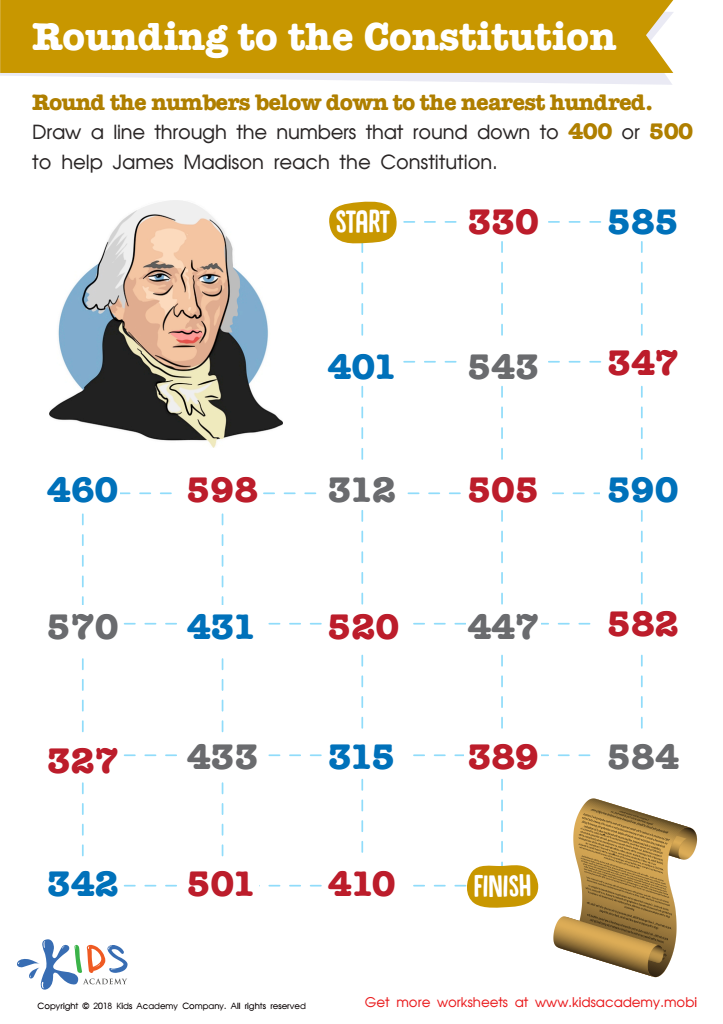
Rounding to the Constitution Worksheet
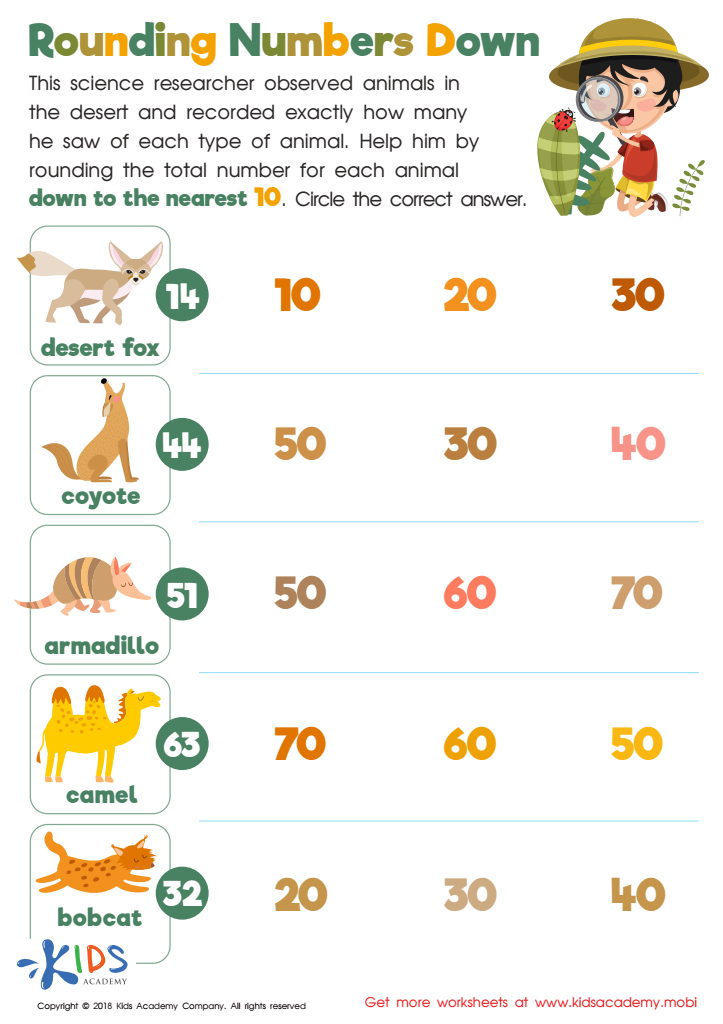
Rounding Numbers Down Worksheet
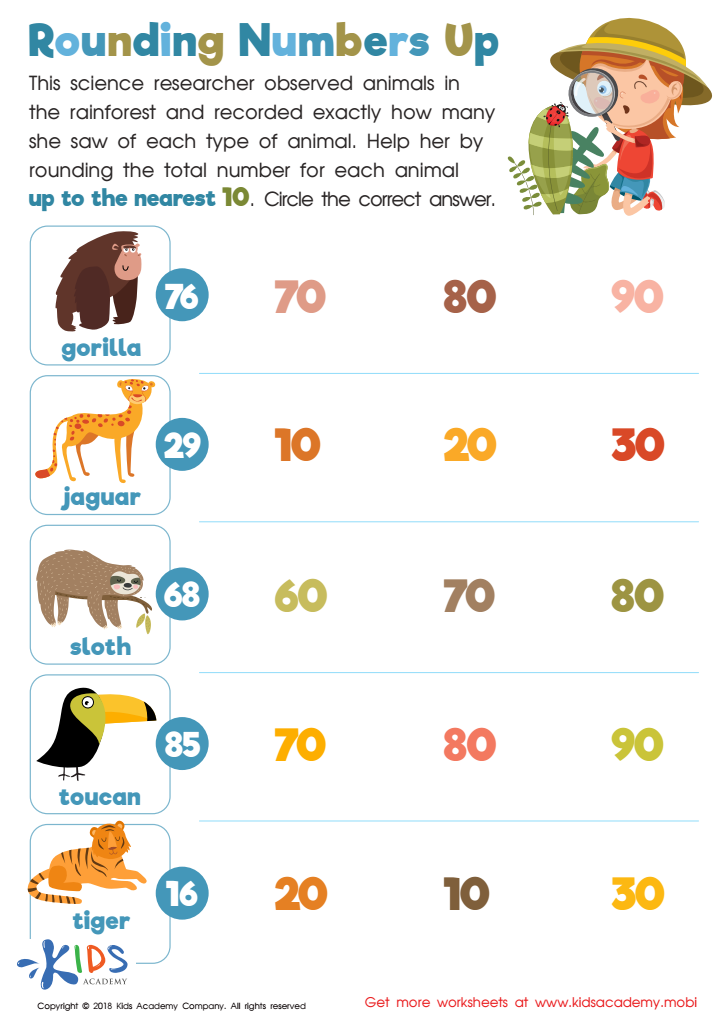
Rounding Numbers Up Worksheet
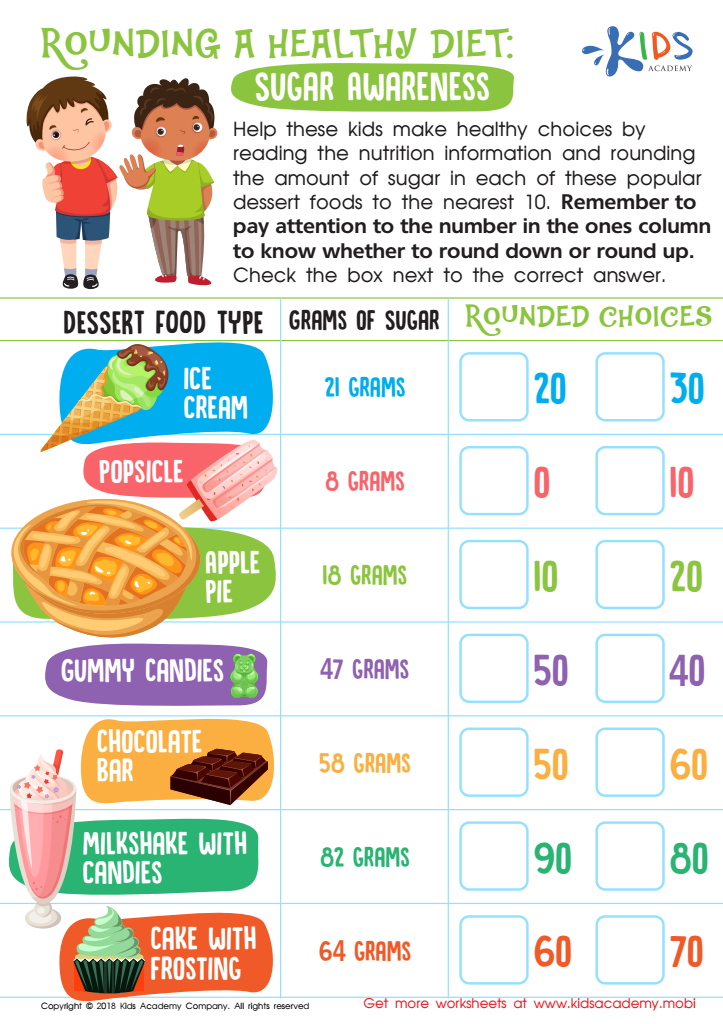
Rounding Healthy Diet Worksheet
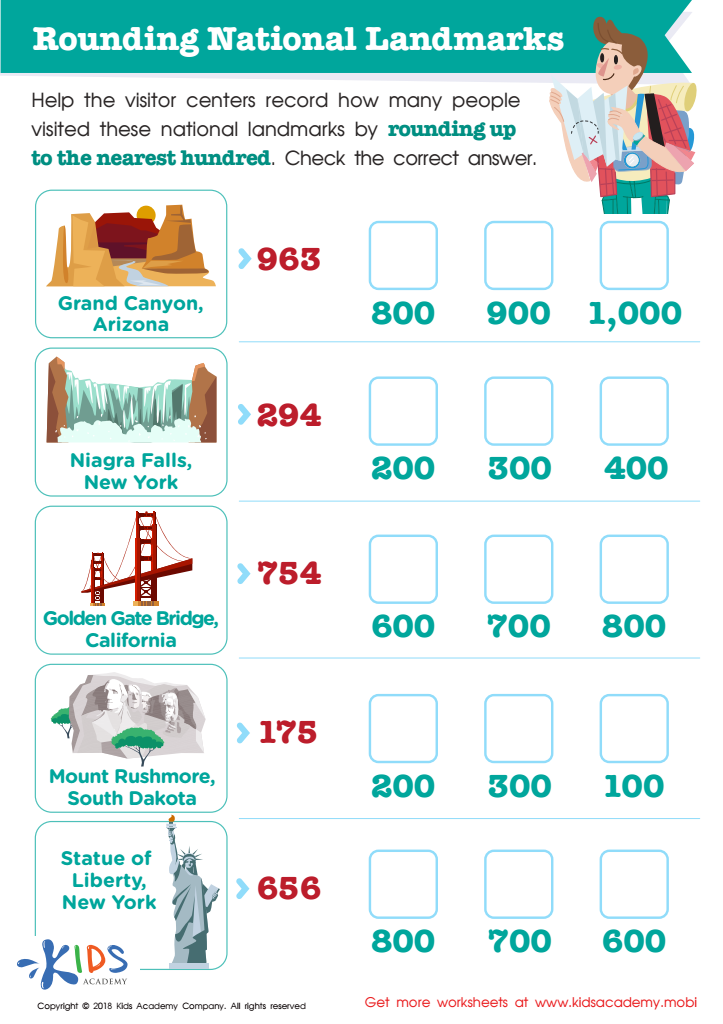
Rounding National Landmarks Worksheet
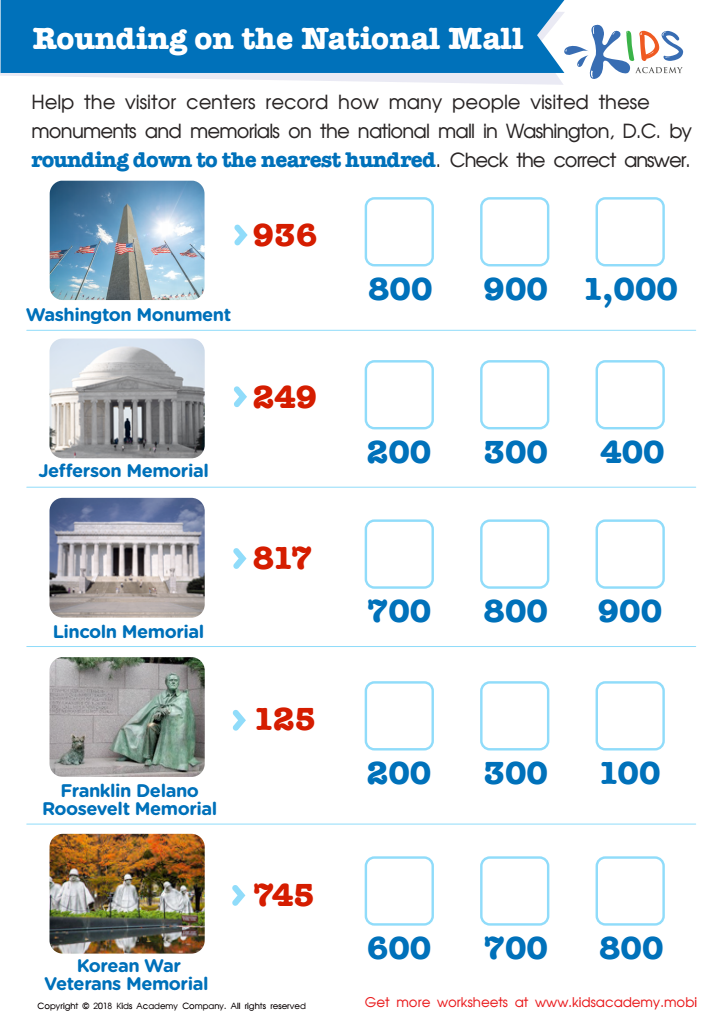
Rounding on the National Mall Worksheet
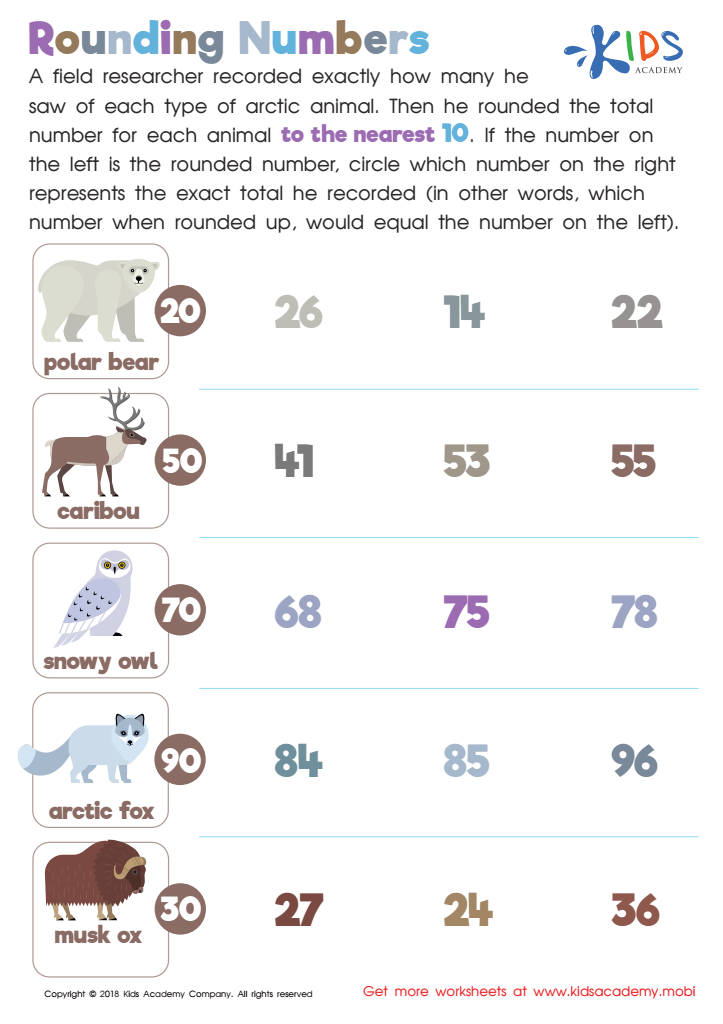
Rounding Numbers Worksheet
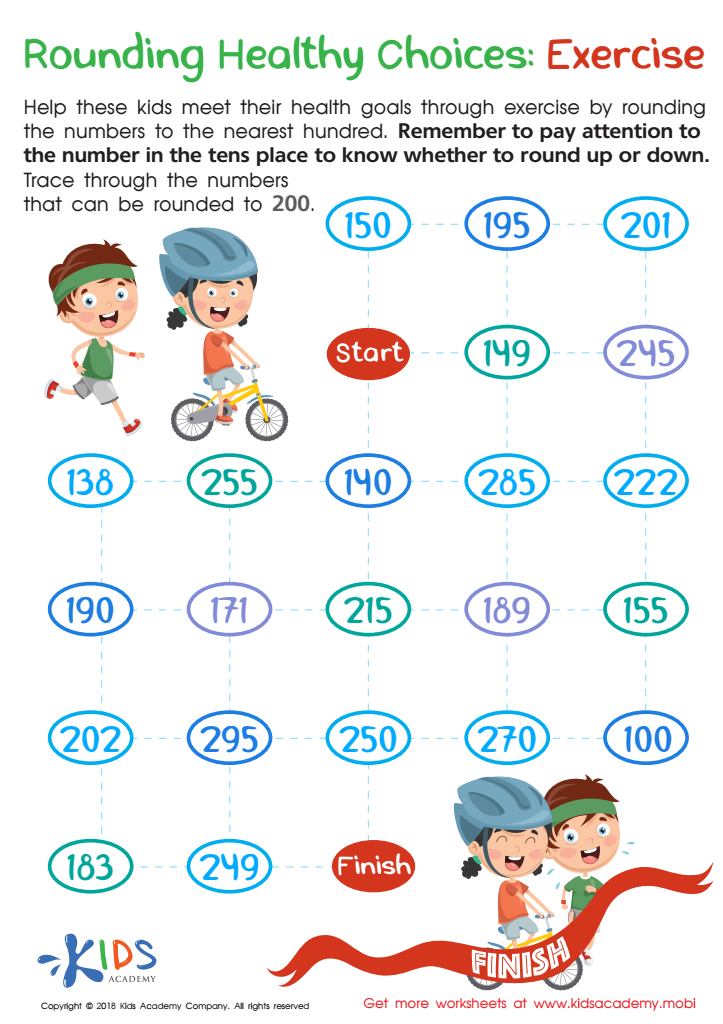
Rounding Healthy Choices Exercise Worksheet
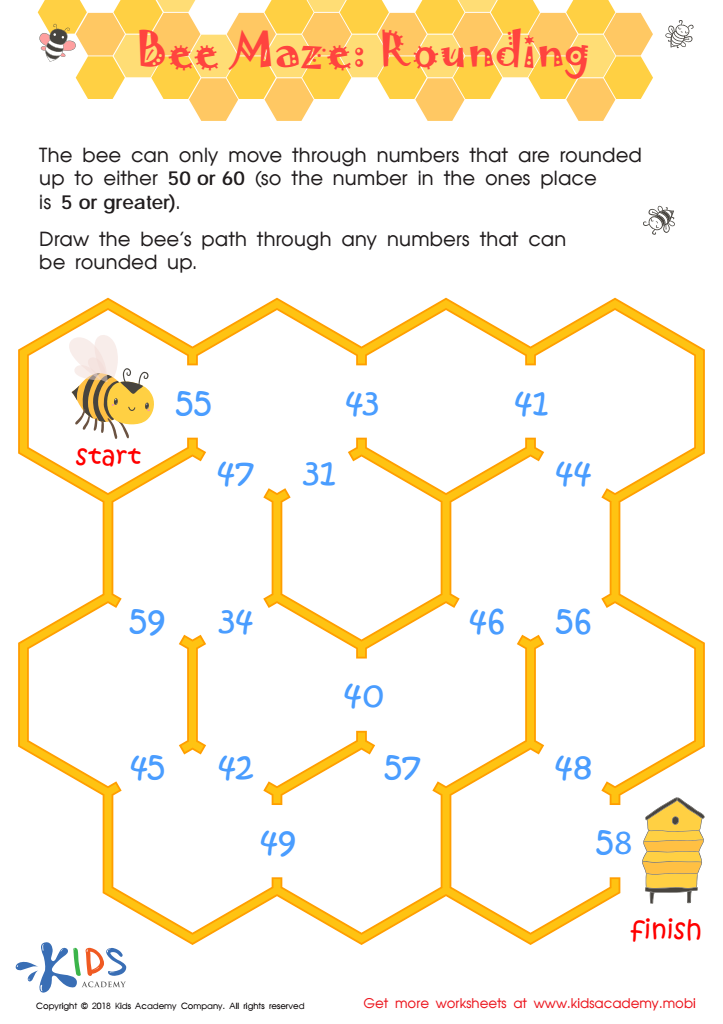
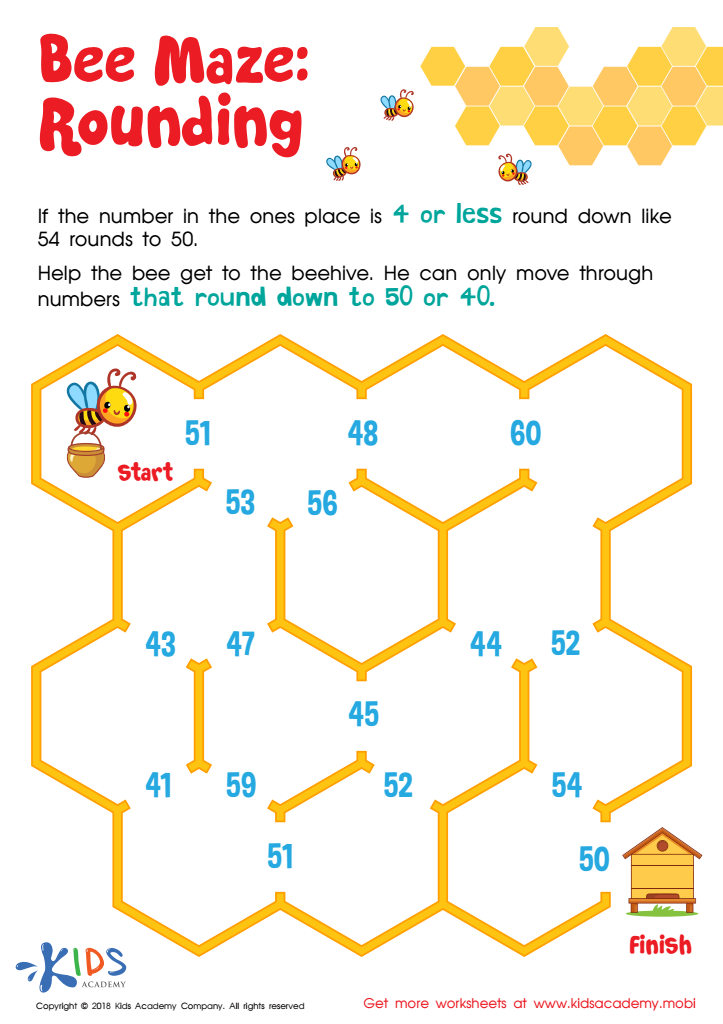
Bee Maze Rounding Worksheet
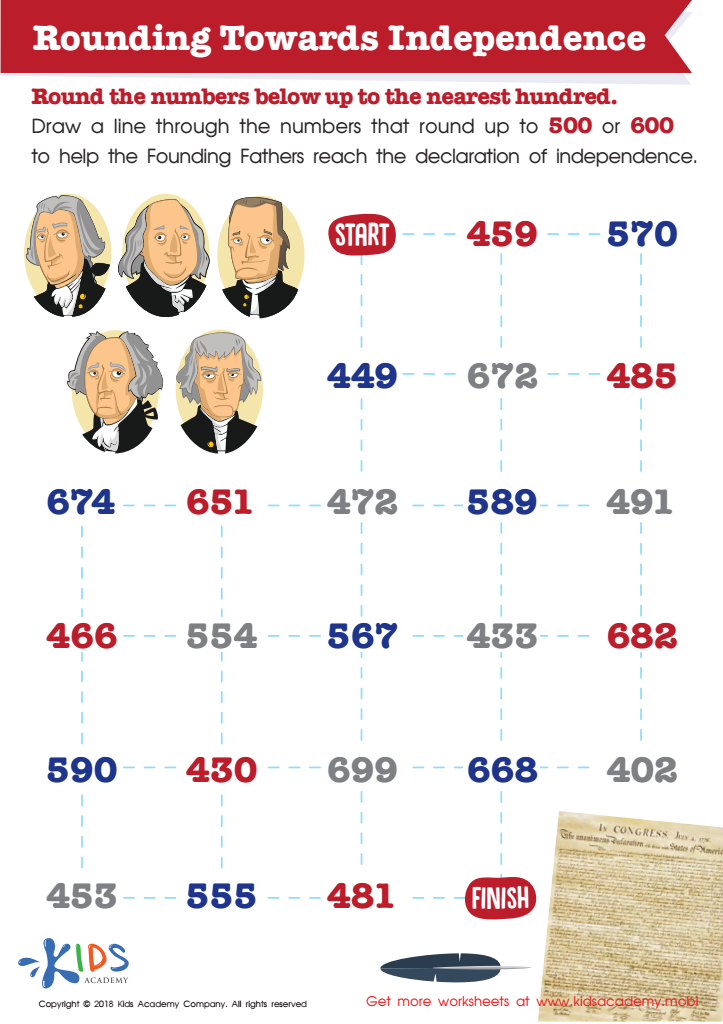
Rounding Towards Independence Worksheet
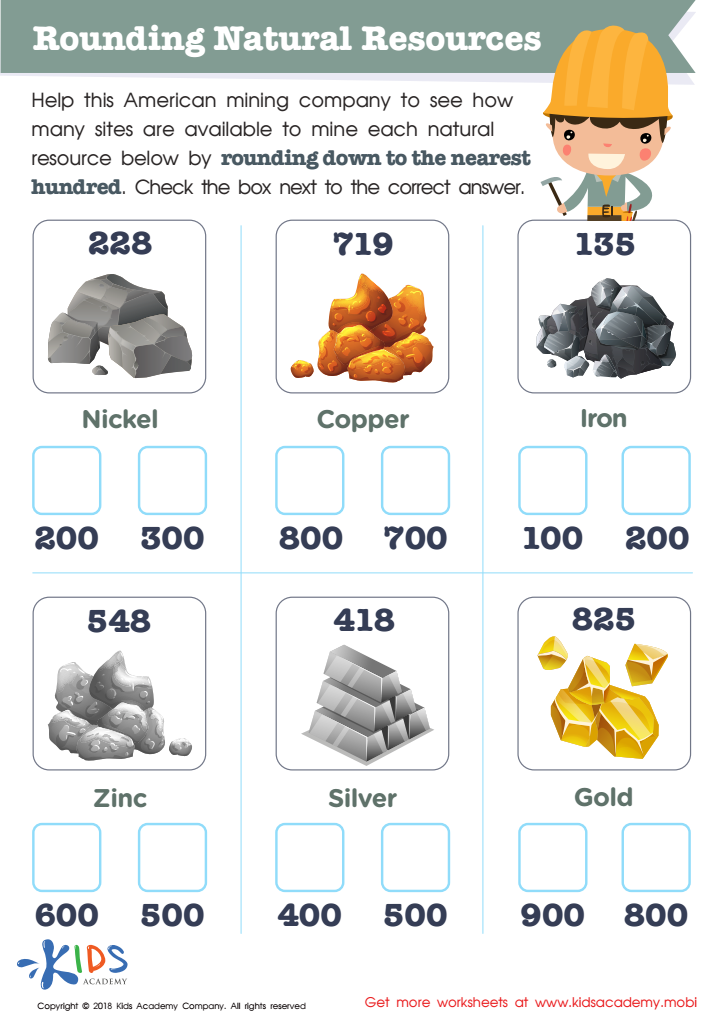
Rounding Natural Resources Worksheet
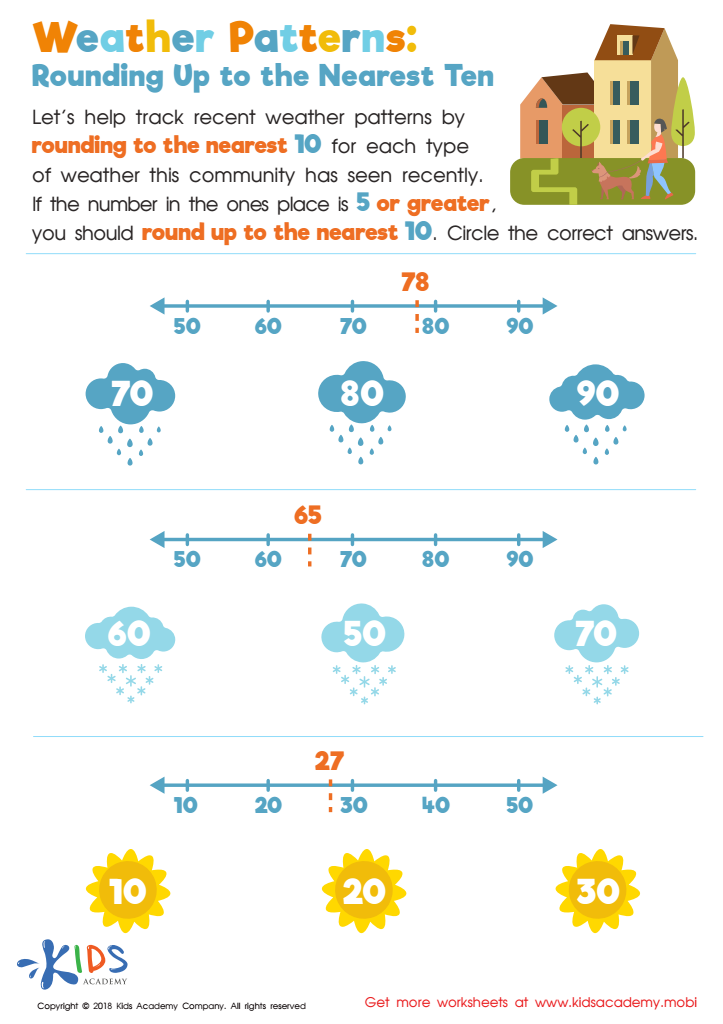
Weather Patterns Worksheet






Normal rounding is a foundational mathematical skill that typically emerges in early childhood, specifically for children ages 3 to 9. Parents and teachers should prioritize this skill because it enhances a child's ability to estimate and make sense of numbers, essential for everyday decision-making and problem-solving.
Understanding normal rounding leads to improved mathematical reasoning. As children learn to round numbers to the nearest ten or hundred, they gain a better grasp of number sizes and relationships, fostering a intuitive understanding of mathematics. This skill not only supports their academic learning but also builds their confidence in handling numerical tasks.
Moreover, rounding is a vital tool for mental math, enabling children to perform calculations more efficiently. It allows them to simplify numbers when estimating sums and differences, which is especially useful in real-world scenarios such as budgeting or distance calculations.
Additionally, mastering rounding strategies lays the groundwork for future mathematical concepts, such as place value and proportional reasoning. In urging children to practice normal rounding, parents and teachers help cultivate critical thinking and logical problem-solving skills. Thus, investing in this skill nurtures a child's overall mathematical literacy, positively impacting their learning trajectory both in school and beyond.