
Normal Color Words Worksheets for Ages 4-5
8 filtered results
Difficulty Level
Grade
Age
-
From - To
Subject
Activity
Standards
Explore our engaging Normal Color Words Worksheets designed specifically for children aged 4-5. These fun and interactive activities introduce young learners to essential color vocabulary while enhancing their reading and writing skills. Perfect for early education settings and home schooling, our worksheets encourage exploration through colorful illustrations and easy-to-follow exercises. Each worksheet fosters creativity and helps reinforce color recognition, making learning enjoyable for little ones. With varying difficulties, these resources cater to diverse learning styles, ensuring every child can thrive. Visit our web page to discover the joy of learning colors through captivating worksheets that make education exciting and effective!
Favorites
With answer key
Interactive
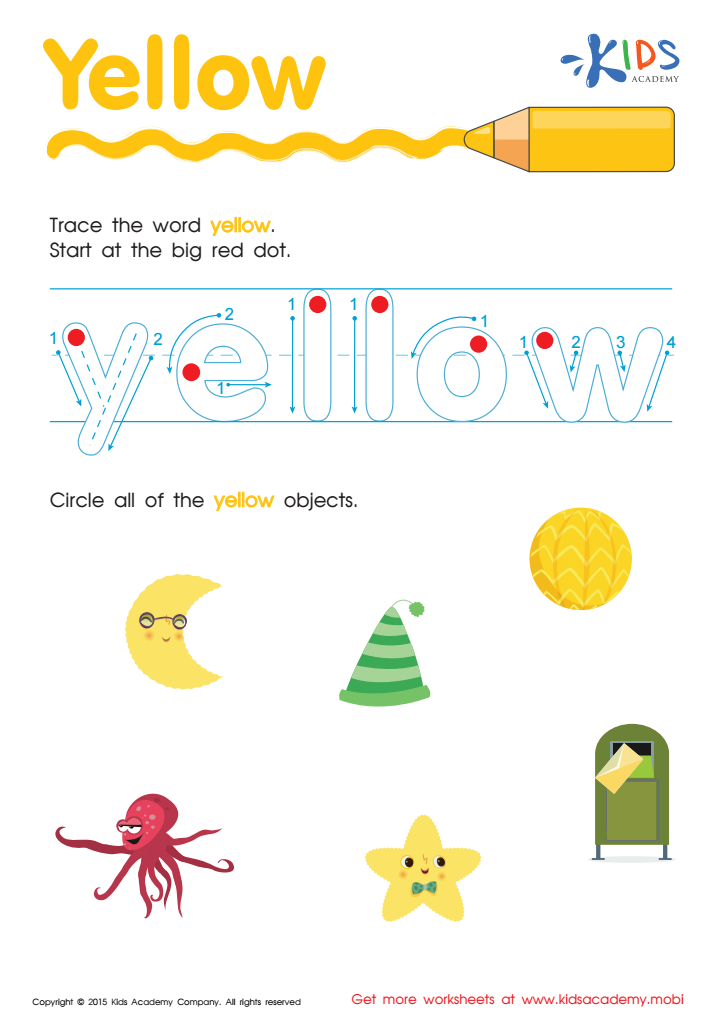
Yellow Tracing Color Words Worksheet
Tracing is a great way to start learning handwriting! Our printable worksheet helps your kindergartener practice and master the basics. They'll trace lines and fill in the word "yellow" with bright colors, sure to captivate and inspire them for more practice. Check out here for more tracing of color words.
 Assign to My Students
Yellow Tracing Color Words Worksheet
Worksheet
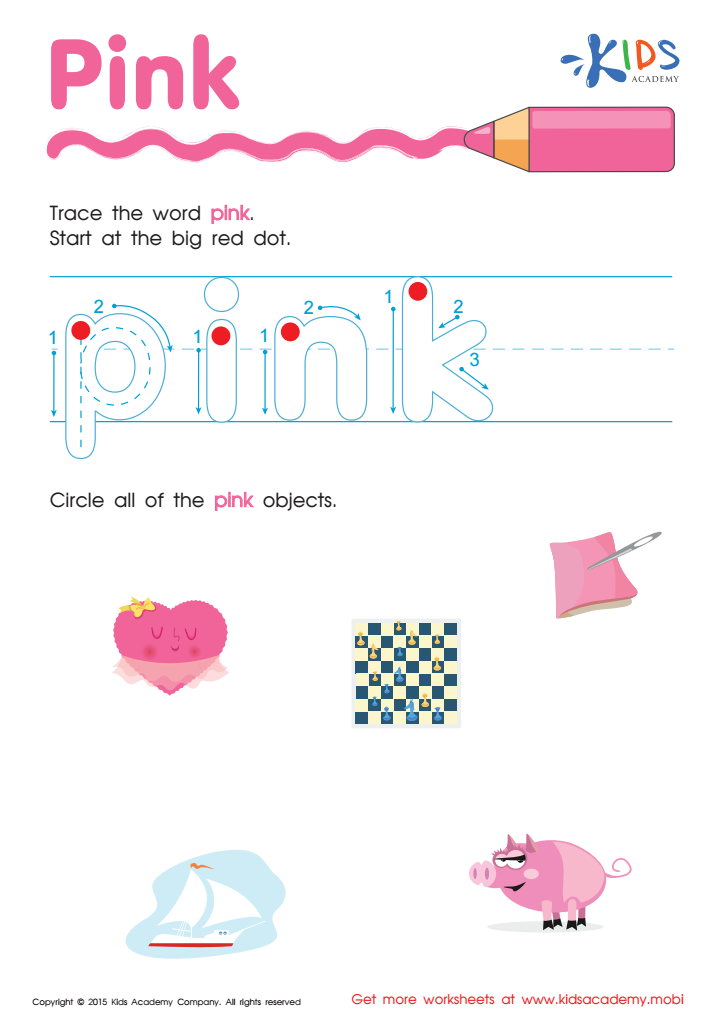
Pink Tracing Color Words Worksheet
Trace 'pink' with a pink crayon for an exciting handwriting lesson! Build fine motor skills and learn about sight words with this fun printable. Get creative and give it a splash of color for a colorful learning experience. For more tracing color words, explore here.
Pink Tracing Color Words Worksheet
Worksheet
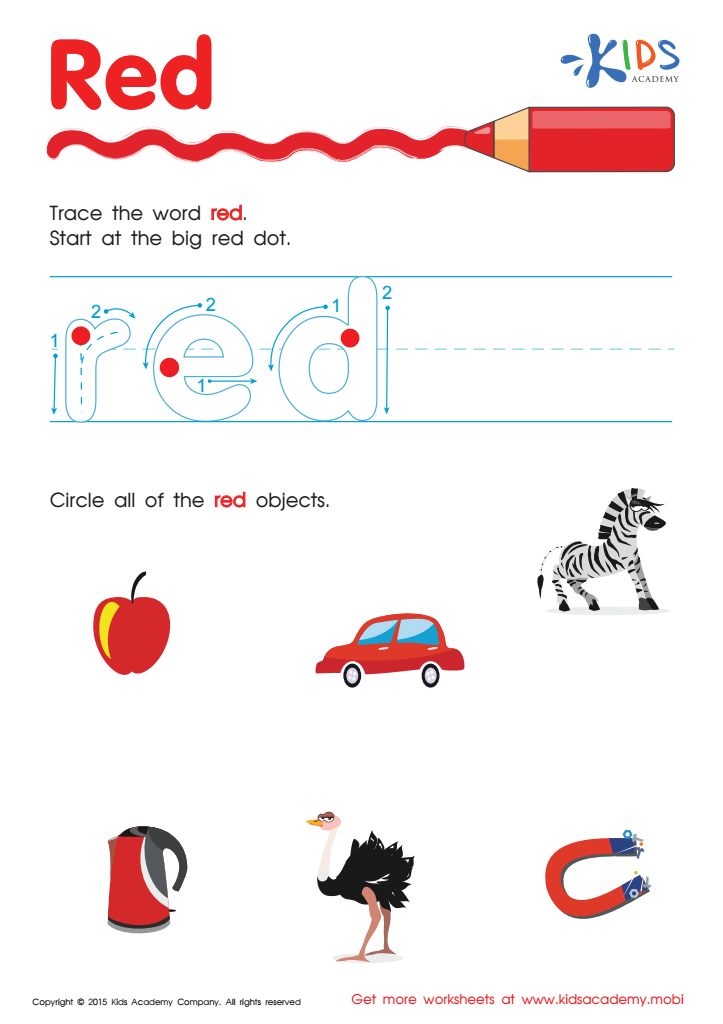
Red Tracing Color Words Printable
Trace red letter by letter, following the arrows and circling all the red objects. Look around your room and find something red. Have fun and become a handwriting master with this worksheet!
Red Tracing Color Words Printable
Worksheet
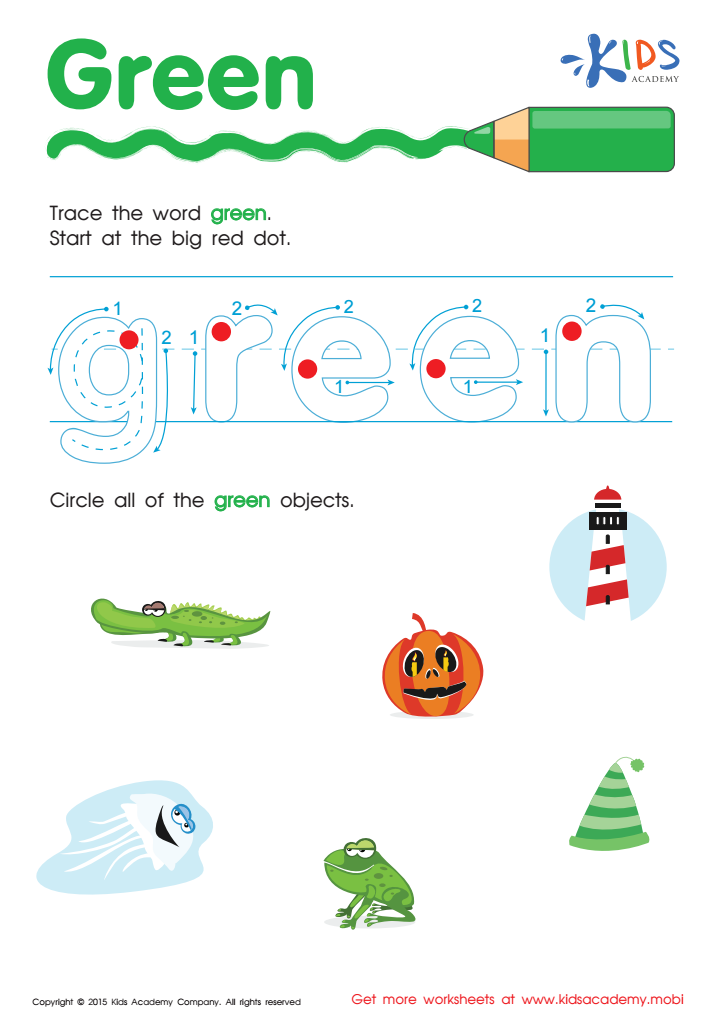
Green Tracing Color Words Worksheet
Encourage writing and spelling practice with this vibrant free handwriting worksheet. Have your child trace the new name of a primary color, "green," and circle green items in the picture. Ask them what else can be green for a challenging activity. Through this worksheet, your kindergartener can learn and play at the same time. For more free printables, look here.
Green Tracing Color Words Worksheet
Worksheet
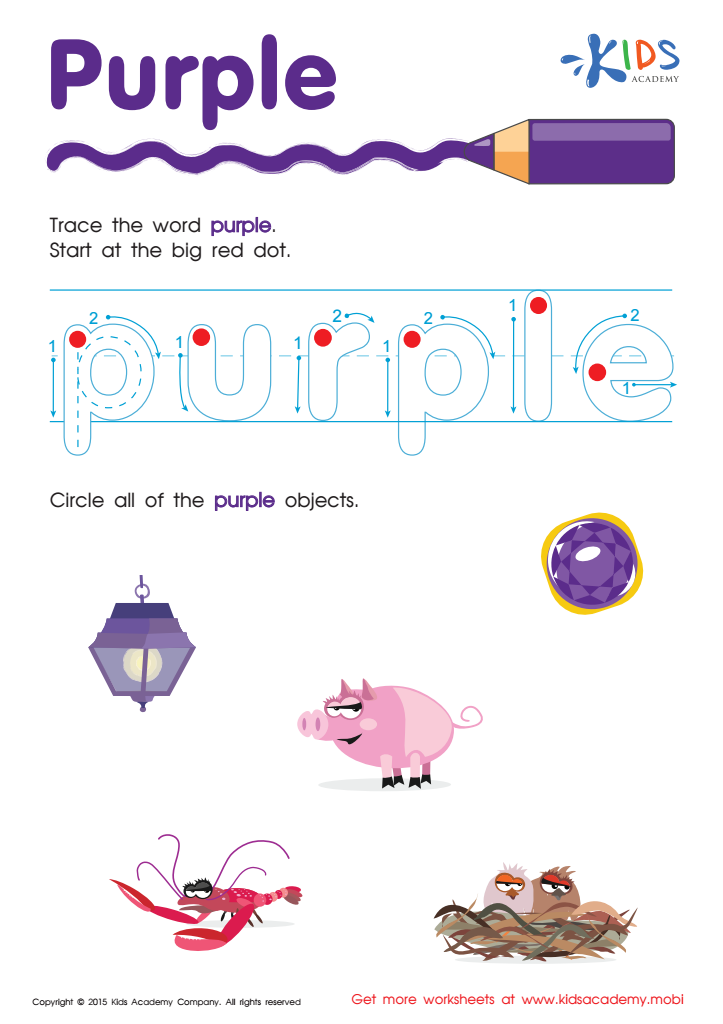
Purple Tracing Color Words Worksheet
Help your kindergartener practice their handwriting with this fun, free printable. They'll trace and color the word “purple”, starting at the big red dots, and pick out and circle all the purple objects they see. They'll get to train their fine motor muscles while having fun! Check out here for more handwriting practice.
Purple Tracing Color Words Worksheet
Worksheet
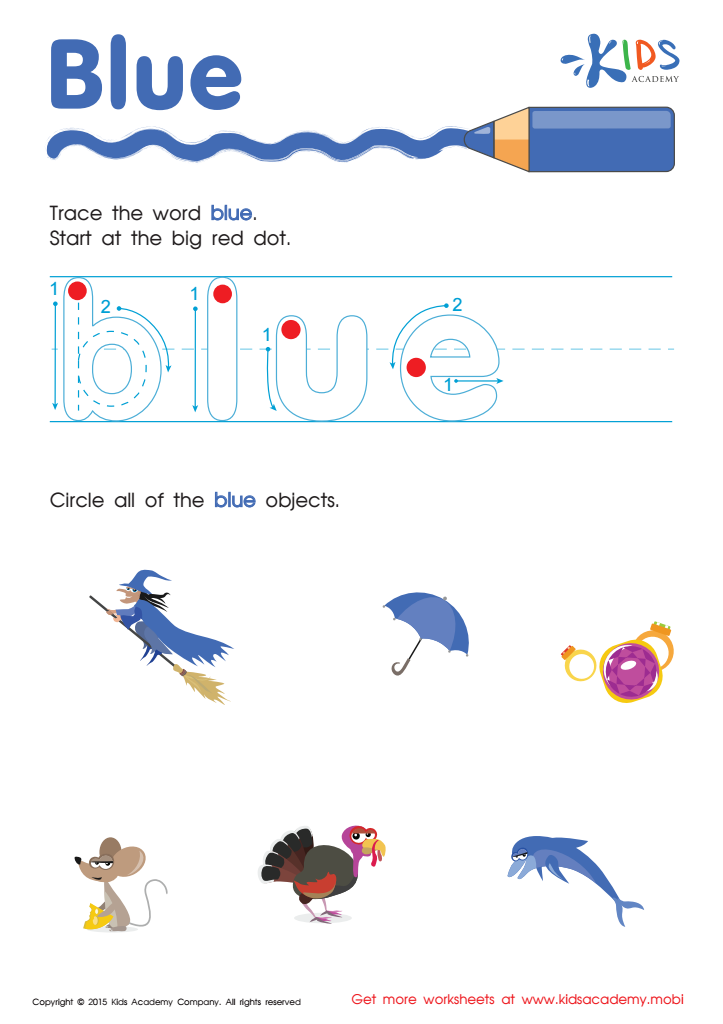
Blue Tracing Color Words Printable
Encourage your child's motor skills by having them trace the word "blue" with their blue crayon on this free printable handwriting worksheet, starting at the red dots. Ask them to circle all the blue objects they see. Check out here for more handwriting practice.
Blue Tracing Color Words Printable
Worksheet
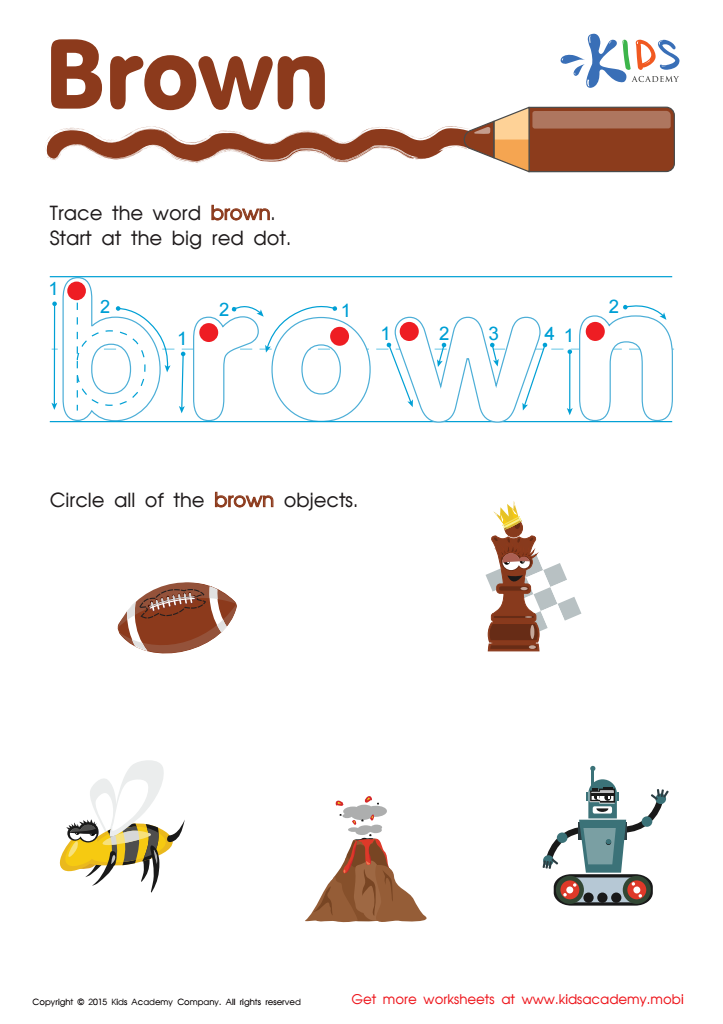
Brown Tracing Color Words Worksheet
This worksheet helps kids develop fine motor muscles and practice writing. Have them trace the word "brown" with a crayon, then find the brown objects in the picture. Ask them to look around and say what's brown in their room to make it more fun. Writing basics and a bit of fun - check out this free printable handwriting worksheet! For more tracing color words, check out here.
Brown Tracing Color Words Worksheet
Worksheet
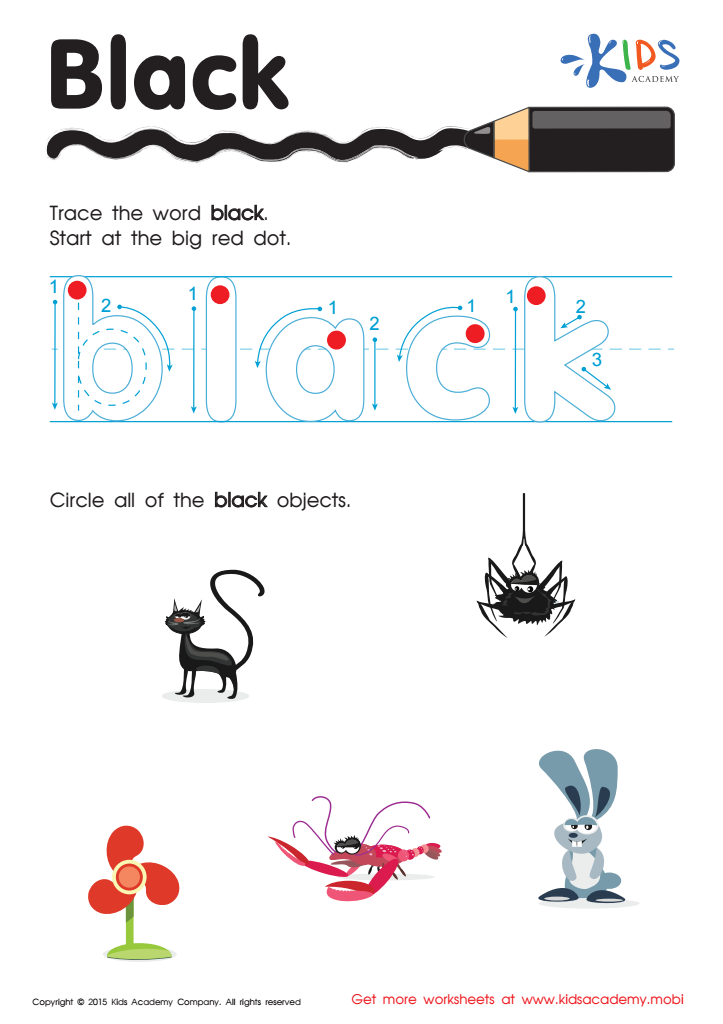
Black Tracing Color Words Printable
Tracing is essential for kids to learn good handwriting and boost their fine motor skills. This handwriting worksheet lets kids trace the word "black" letter by letter using a black crayon and spot all the black items. With this free printable, they'll have fun while writing! For more practice, check out the link.
Black Tracing Color Words Printable
Worksheet
Join Kids Academy for Free
Who is primarily going to use this learning content?



Understanding normal color words is essential for children aged 4-5, as it serves as a foundational element for their language development and cognitive skills. At this early age, children are not only developing their vocabulary but are also beginning to express their thoughts, feelings, and creativity. Color words help them articulate their observations about the world around them, promoting better communication skills.
Moreover, identifying and naming colors enhance children’s ability to categorize and distinguish objects, which is crucial for their cognitive development. This skill is linked to critical thinking, problem-solving, and even mathematical concepts later on. By mastering color words, children also improve their sensory discrimination, an important aspect as they learn to interact with their environment.
For parents and teachers, fostering an understanding of normal color words provides an engaging way to connect and bond with children. Through playful activities involving colors—like coloring, painting, or identifying colors in nature—they can stimulate curiosity and creativity. Furthermore, teaching normal color words lays the groundwork for future learning, such as reading and following instructions, as colors are often referenced in educational materials. By prioritizing color recognition, parents and teachers can significantly enhance a child’s overall development and educational journey.








