Normal Middle Vowel Worksheets for Ages 4-7
4 filtered results
-
From - To
Enhance your child's early reading skills with our Normal Middle Vowel Worksheets, tailor-made for ages 4-7. These engaging and educational worksheets focus on recognizing and using middle vowels (a, e, i, o, u) within simple words. Ideal for young learners, these printables mix fun activities with effective learning strategies, helping kids identify vowel sounds and improve phonics skills. Developed by educational experts and easy to download, our worksheets offer a range of exercises that make learning enjoyable and productive. Equip your child with a solid foundation in reading and spelling by incorporating these valuable resources into their routine.
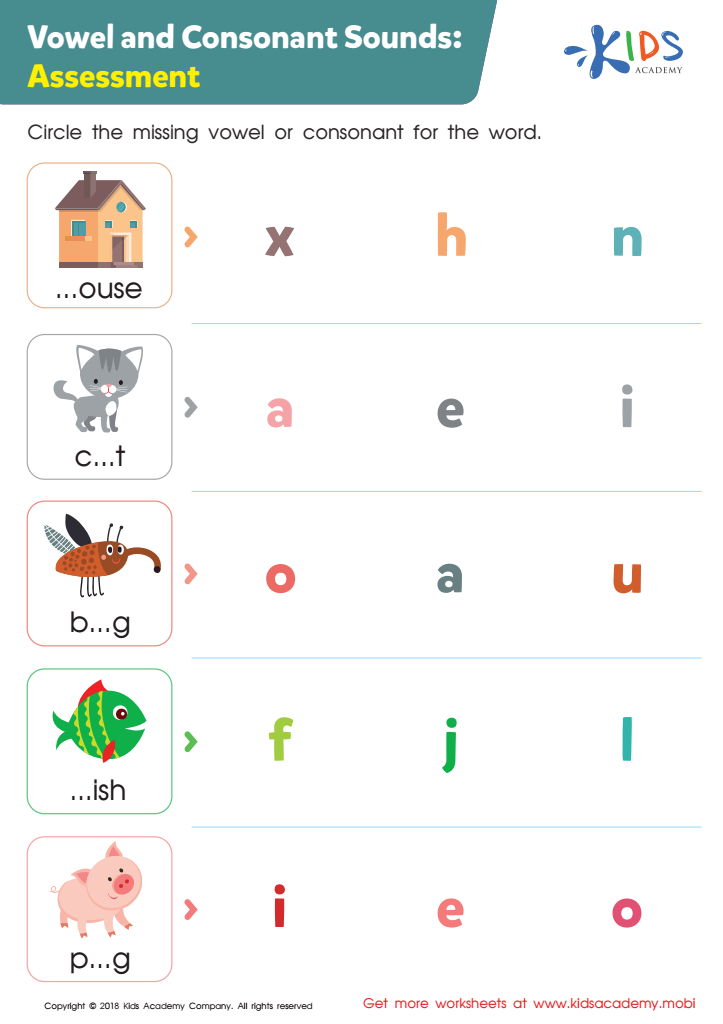
Vowel and Consonant Sounds: Assessment Worksheet
 Assign to My Students
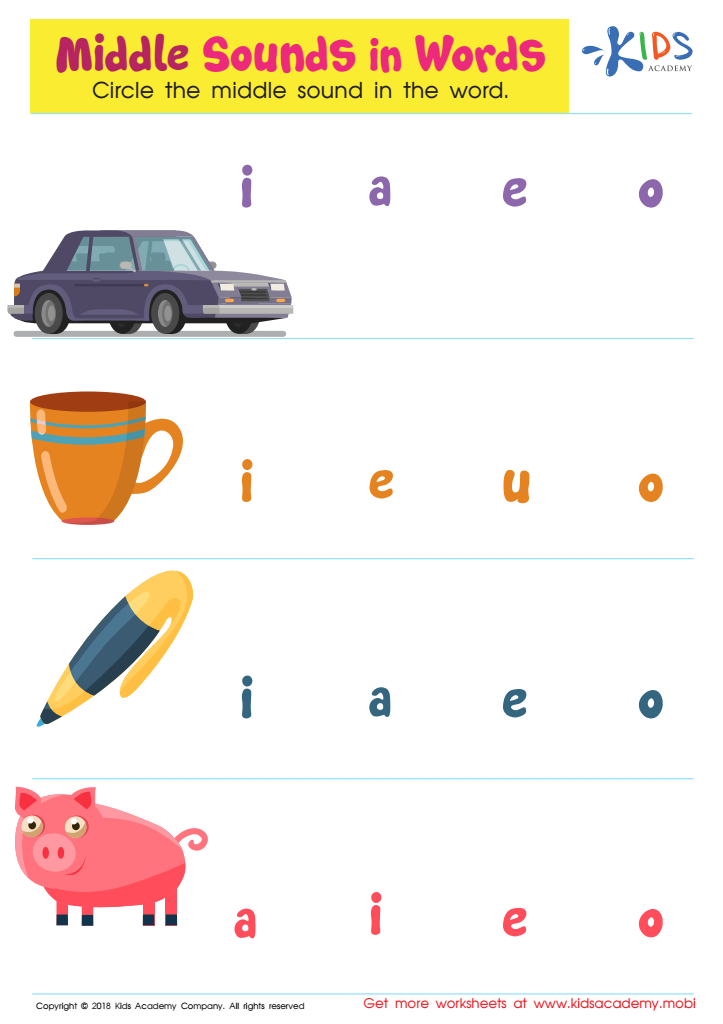
Middle Sounds in Words Worksheet
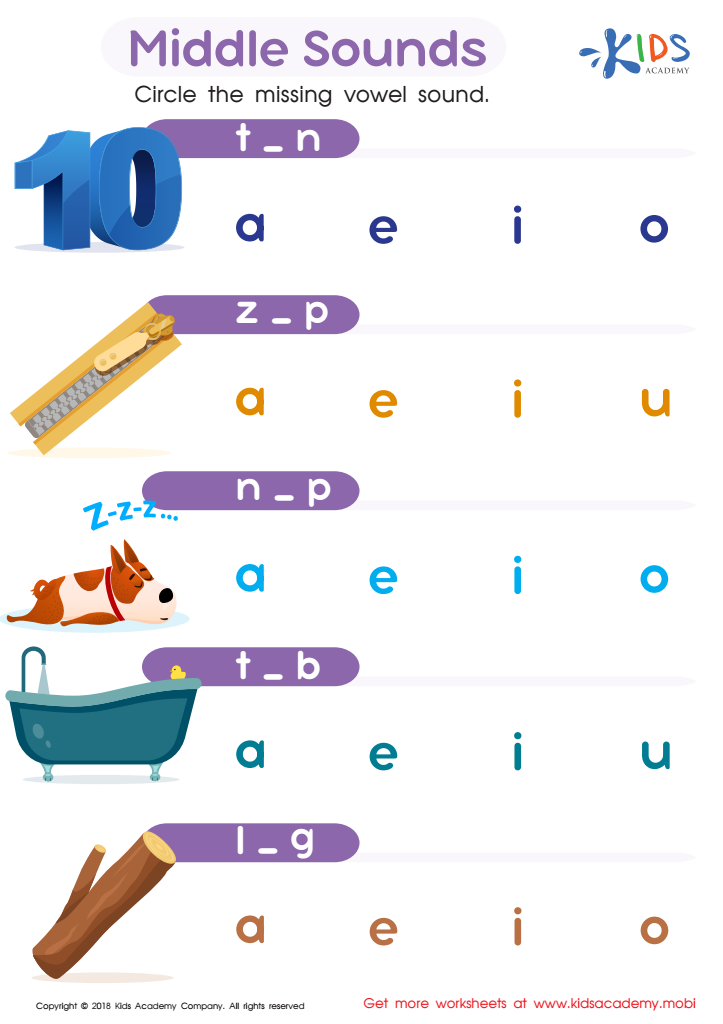
Middle Sounds Worksheet
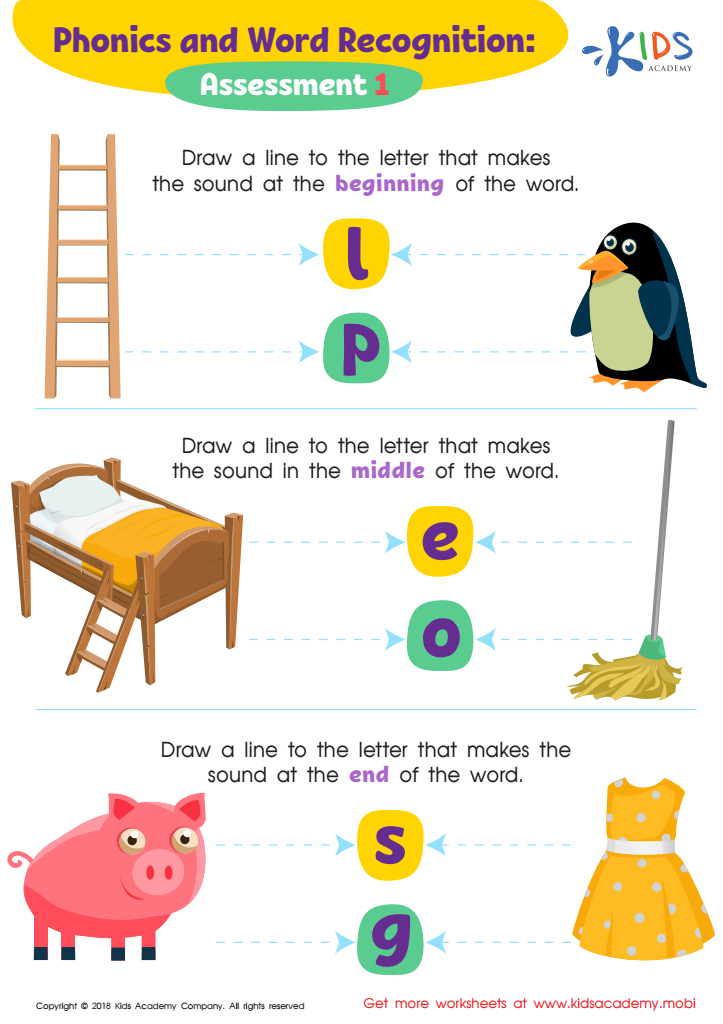
Phonics and Word Recognition: Assessment 1 ELA Worksheet



Parents and teachers play a crucial role in early childhood education, especially when it comes to fostering foundational skills in language development. Normal Middle Vowel acquisition for children aged 4-7 is essential because it significantly impacts their overall literacy skills, including reading fluency and phonemic awareness.
Middle vowels, which are often the sounds most frequently encountered in speech and reading, form the core components of many basic words children first learn to read. Mastery of these vowel sounds enables children to decode new words more effectively, enhancing their reading comprehension and confidence. If children can correctly pronounce and identify middle vowels, they are better equipped to engage in spelling and writing activities, laying the groundwork for effective communication.
Furthermore, understanding middle vowels helps in developing listening skills. When children listen for and recognize these sounds in words, they become more proficient in following spoken instructions and participating in verbal exchanges at home and school.
For parents, engaging with this aspect of language education builds a bridge between home and school learning, reinforcing consistency and practice in an everyday context. Educators benefit by identifying and addressing any discrepancies or delays in a child's understanding of vowels early on, customizing teaching strategies to meet the specific needs of each child for optimal learning outcomes.