
Normal Missing Letters Worksheets for Ages 4-8
5 filtered results
Difficulty Level
Grade
Age
-
From - To
Subject
Activity
Standards
Explore our engaging Normal Missing Letters Worksheets designed for children aged 4-8. These worksheets enhance letter recognition and phonics skills by encouraging kids to identify and fill in the missing letters in a variety of fun activities. Perfect for early learners, our printable worksheets incorporate vibrant illustrations and a progressive difficulty level, catering to diverse learning styles. Teachers and parents can utilize these resources to boost literacy development in a playful way, fostering a love for learning in young children. Download and integrate these worksheets into your lesson plans to make learning the alphabet enjoyable and effective!
Favorites
With answer key
Interactive
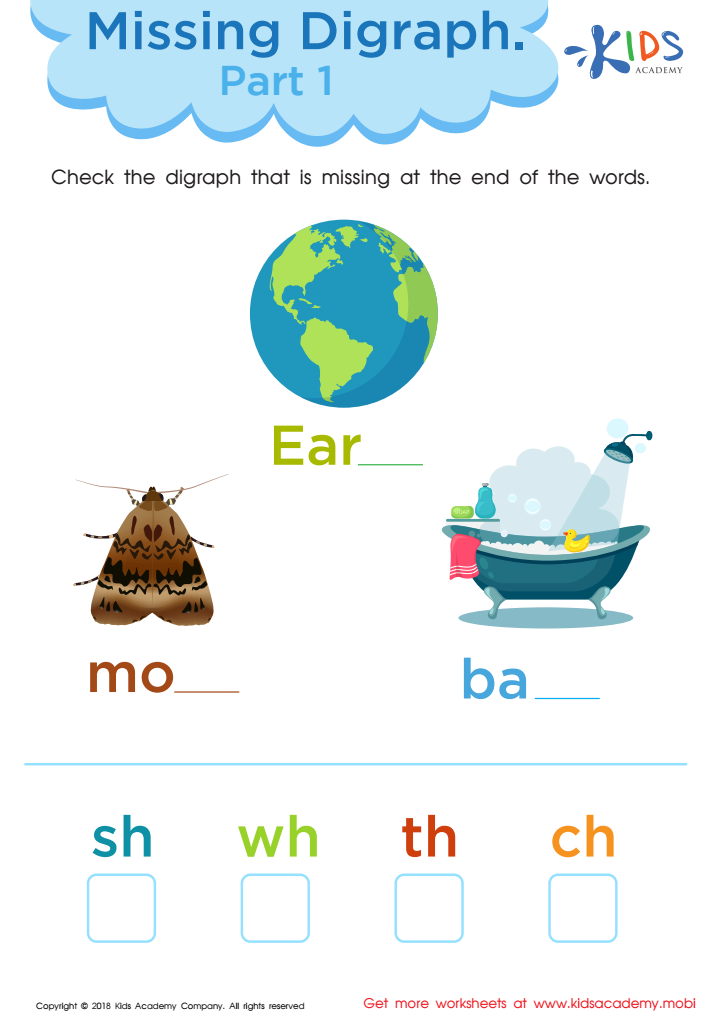
Missing Digraph: Part 1 Worksheet
Practice the 'th' digraph with this worksheet! Ask kids to say the words shown and sound out the letters below each image. Check the box with the correct digraph to complete. Examples include 'earth', 'bath' and 'moth', all ending with the same two letters. Phonics teaches that digraphs are two letters that make one sound.
 Assign to My Students
Missing Digraph: Part 1 Worksheet
Worksheet
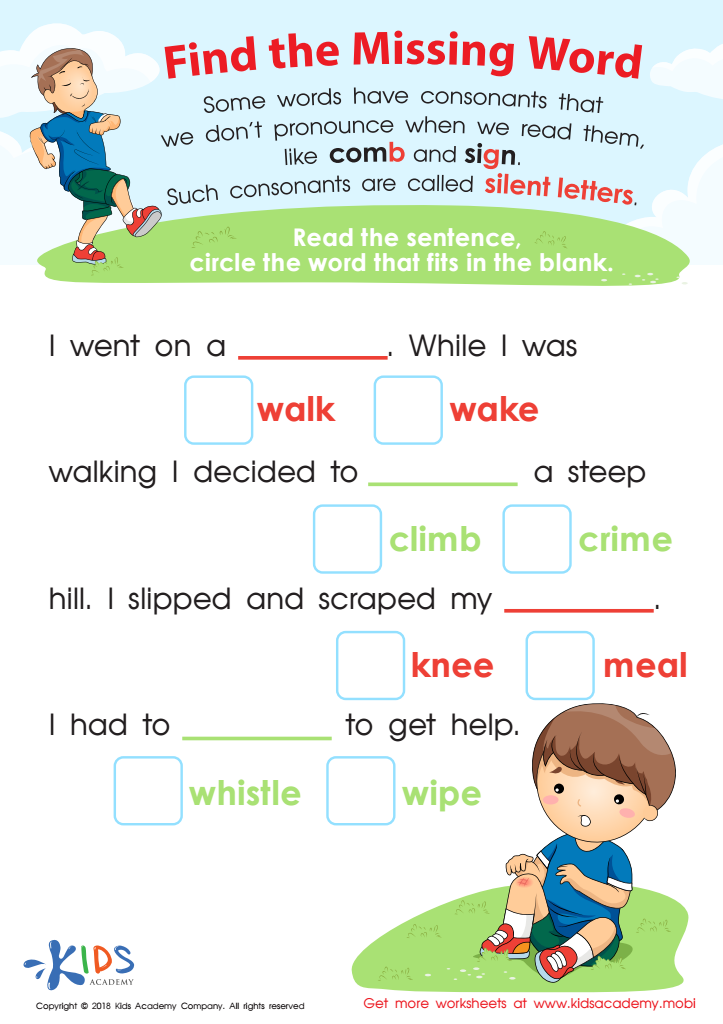
Find The Missing Word Worksheet
Master silent letters like "b" and "k" with this illustrated worksheet! Read the sentences and fill in the blanks with the correct word, checking the box. Read all the way to the bottom and review words containing silent letters. A great way to help your little learner tackle a tough topic!
Find The Missing Word Worksheet
Worksheet
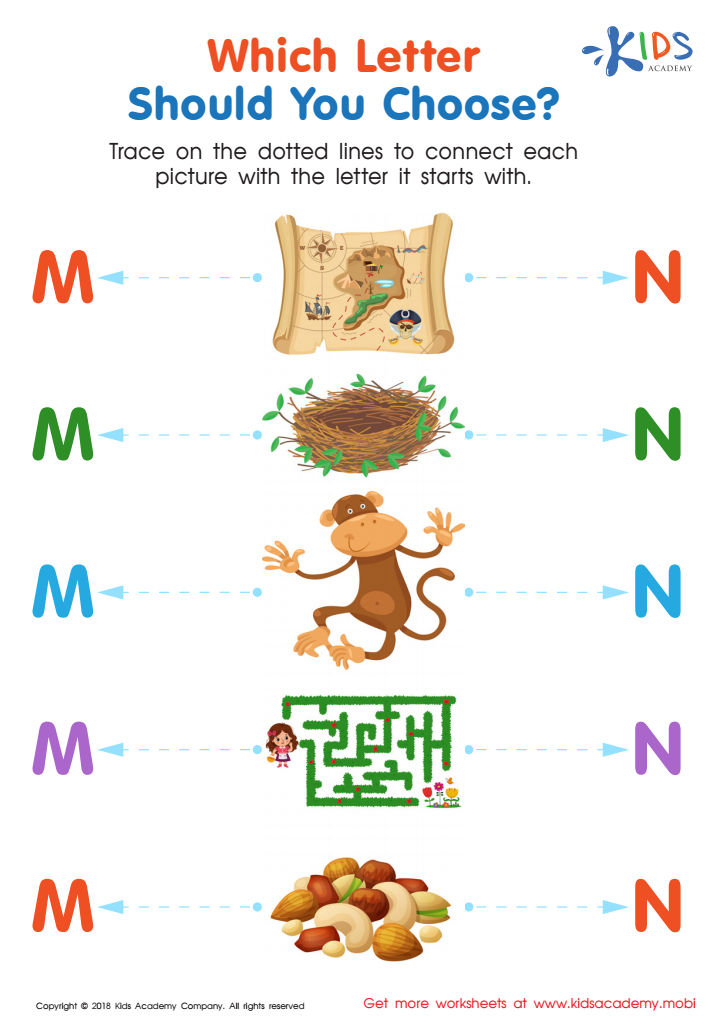
Which Letter Should you Choose? Worksheet
Trace the dotted lines to connect images with their first letter: "n" or "m." Challenge your child to name each picture, then identify the first letter and trace to the right letter! Five images in total.
Which Letter Should you Choose? Worksheet
Worksheet
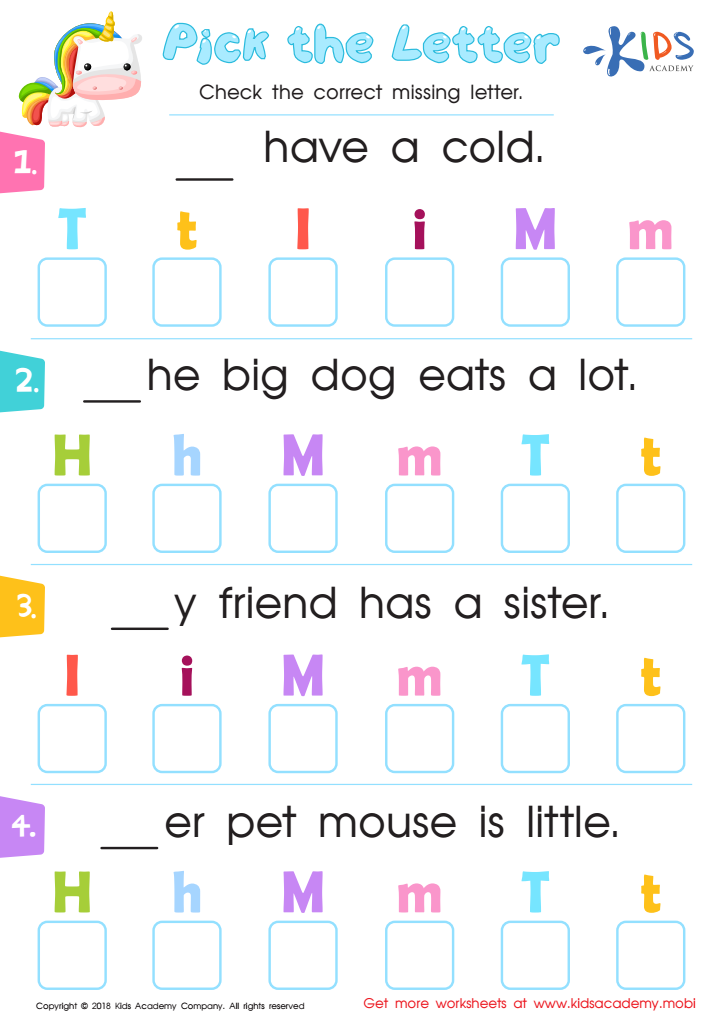
Pick the Letter Worksheet
Put your child's capitalization and reading skills to the test with this missing letter worksheet! Have them look at each sentence, note the blank and review the letters below. Find the uppercase letter that should start each sentence and check the boxes to complete. Fun and colorful, this worksheet is sure to keep your child engaged!
Pick the Letter Worksheet
Worksheet
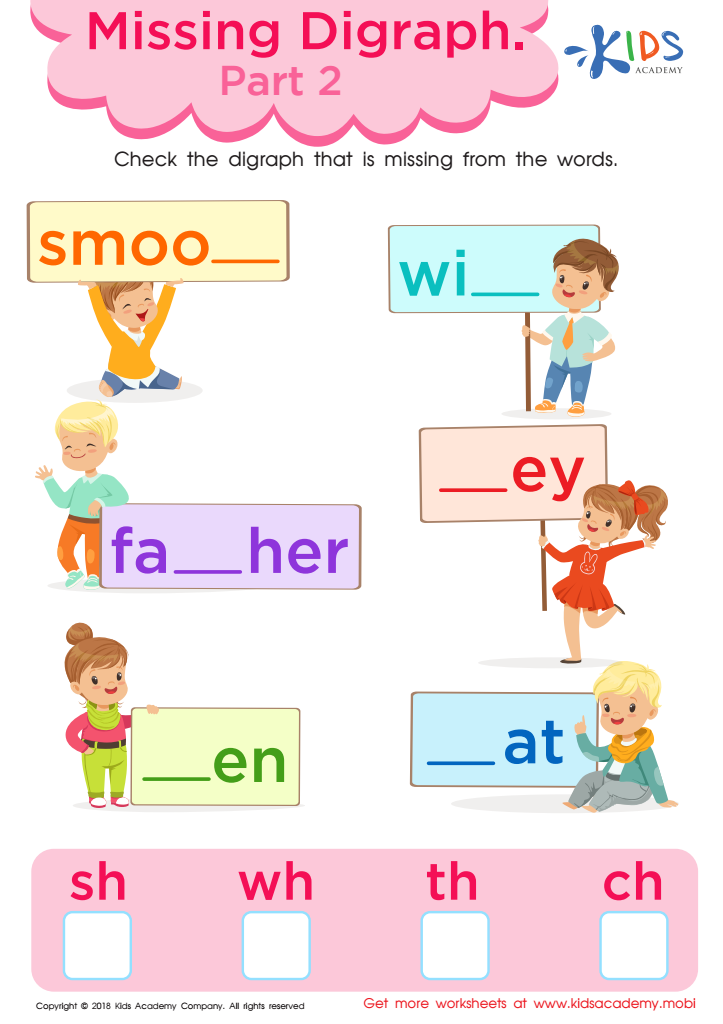
Missing Digraph: Part 2 Worksheet
Practice the "th" digraph with this fun worksheet from Kids Academy! See how it appears at the beginning, middle, or end of words and help learners fill in the blanks. Check if they got it right by finding the th digraph at the bottom!
Missing Digraph: Part 2 Worksheet
Worksheet
Join Kids Academy for Free
Who is primarily going to use this learning content?



Normal Missing Letters activities are crucial for young learners aged 4-8 as they play a significant role in early literacy development. These activities help children recognize and understand letter patterns, enhancing their phonemic awareness—a fundamental skill for reading and writing. By engaging in exercises where they identify and fill in missing letters, students sharpen their decoding abilities, which are essential for phonics.
Moreover, Normal Missing Letters promotes not just recognition but also recall of letters and their sounds, leading to improved vocabulary skills. This interactive approach can evoke curiosity and boost confidence as children see their skills develop over time.
For parents and teachers, incorporating Missing Letters in early education can foster a love for learning. These activities are enjoyable and can easily blend into play, making learning feel less daunting for young children. Furthermore, they can serve as a tool for assessing a child's development and identifying areas that may require additional support. Ultimately, Normal Missing Letters lay a solid foundation for future literacy skills, helping children to become confident readers and writers as they progress through school. Thus, prioritizing these activities can significantly contribute to a child's overall educational experience.







