Normal Geometry Worksheets for Ages 4-8 - Page 4
75 filtered results
-
From - To
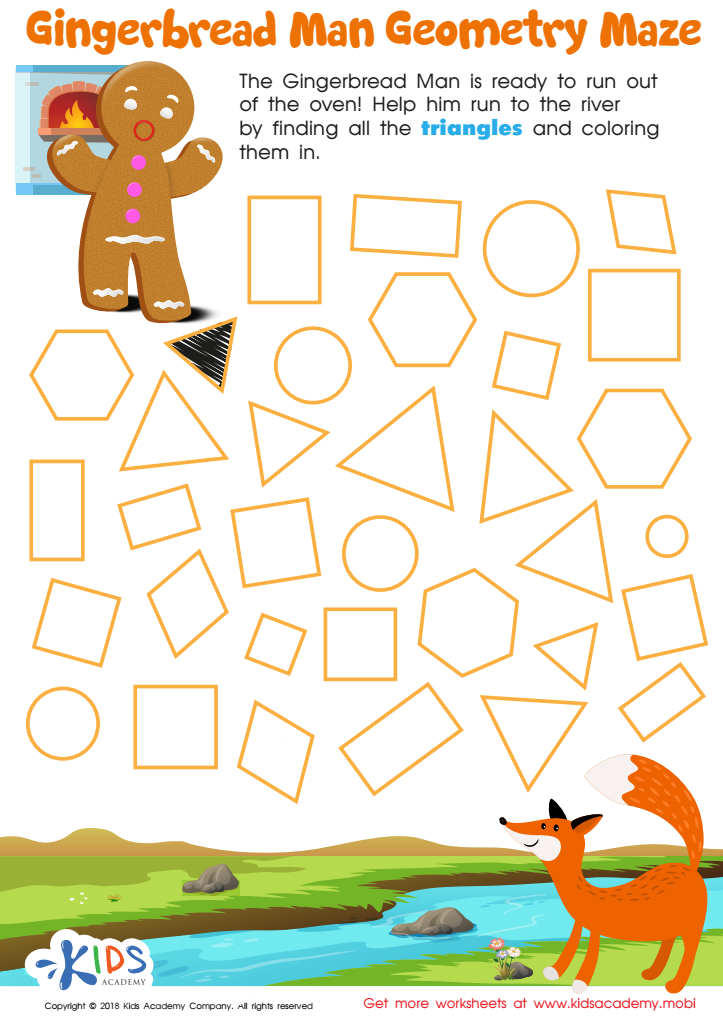
Gingerbread Man Geometry Maze Worksheet
 Assign to My Students











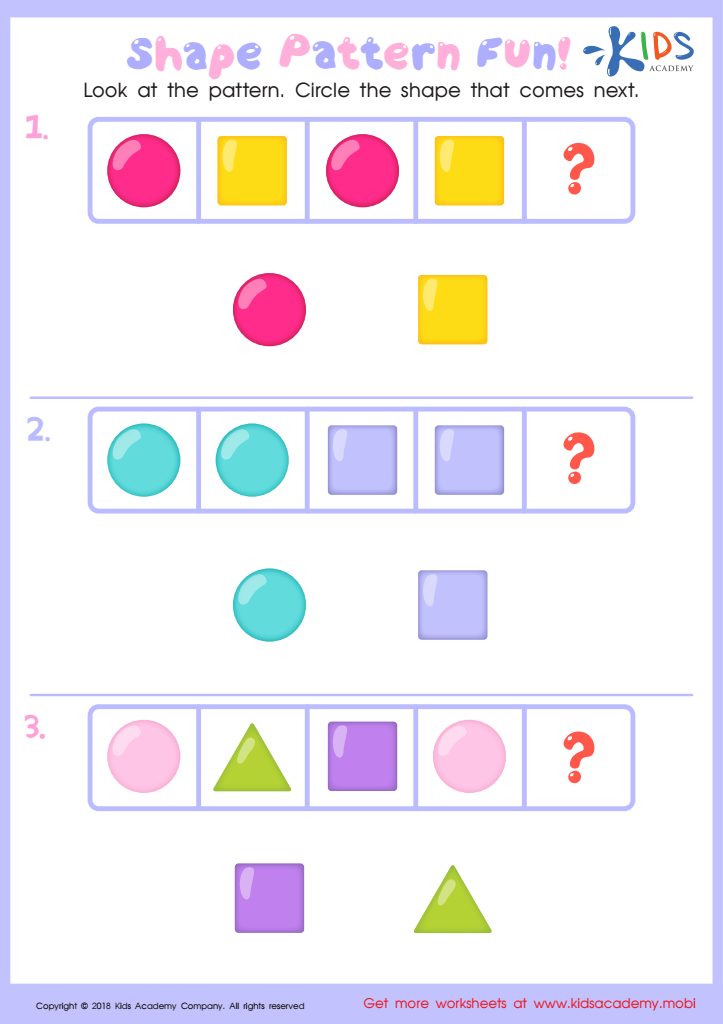
Shape Pattern Fun Worksheet
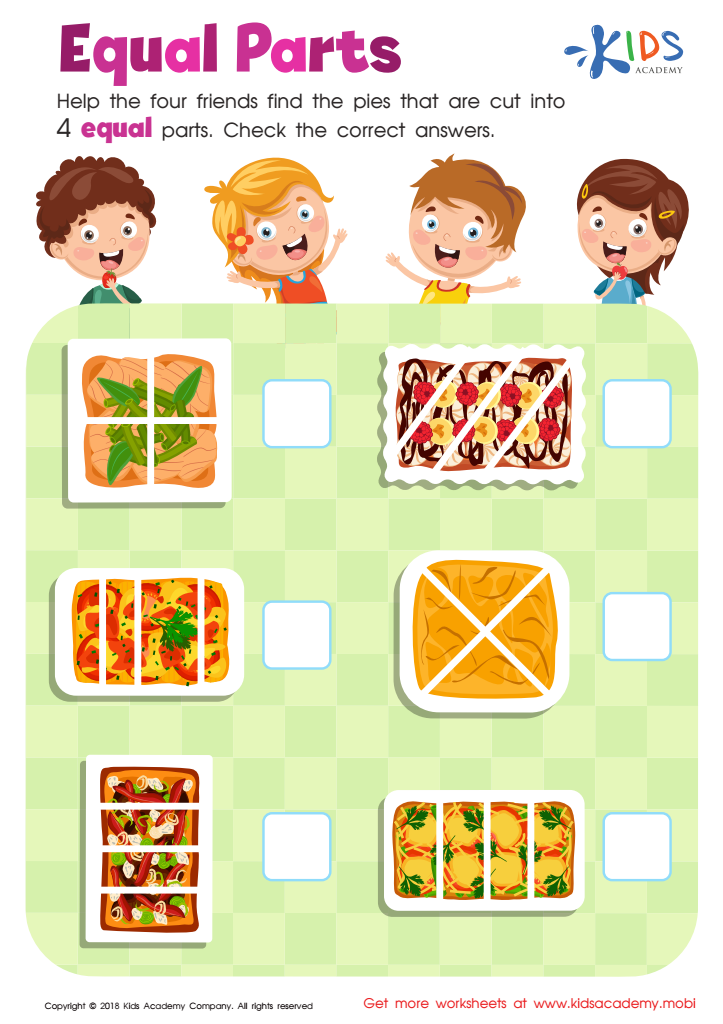
Equal Parts: Food Worksheet








Normal Geometry for ages 4-8 is essential for fostering a foundational understanding of mathematical concepts. During these formative years, children are naturally curious and eager to explore their environments. Exposure to geometry nurtures this curiosity by introducing them to shapes, spatial awareness, and critical thinking skills. Understanding basic geometric concepts helps children to recognize patterns and relationships, which are crucial for problem-solving in math and everyday situations.
Moreover, early engagement with geometry enhances visual-spatial skills, crucial for later stages of learning, particularly in fields like science, technology, engineering, and mathematics (STEM). Research shows that children who develop these skills early are better prepared for advanced mathematics in later grades. Geometry also promotes cognitive development, offering opportunities for creativity and exploration through hands-on activities, such as using blocks and drawings.
Furthermore, teaching geometry aligns with key early learning standards, supporting children's overall development. It encourages collaborative learning and communication as kids discuss shapes and their properties. By prioritizing Normal Geometry, parents and teachers can ensure that children build a strong mathematical base, equipping them with essential skills that will serve them throughout their educational journey and beyond.








