Normal Patterns Worksheets for Ages 4-8
5 filtered results
-
From - To
Introduce your young learners to the exciting world of patterns with our specially designed "Normal Patterns Worksheets for Ages 4-8." These engaging and easy-to-understand worksheets are perfect for developing foundational math skills. Each printable sheet presents a variety of activities ranging from simple to more complex patterns, helping children recognize and predict sequences. Tailored to cater to the developmental stages of kids aged 4-8, these worksheets are great for both classroom and home learning. Ideal for fostering early mathematical thinking while making learning fun and interactive, download your set today to give kids a head start in math.
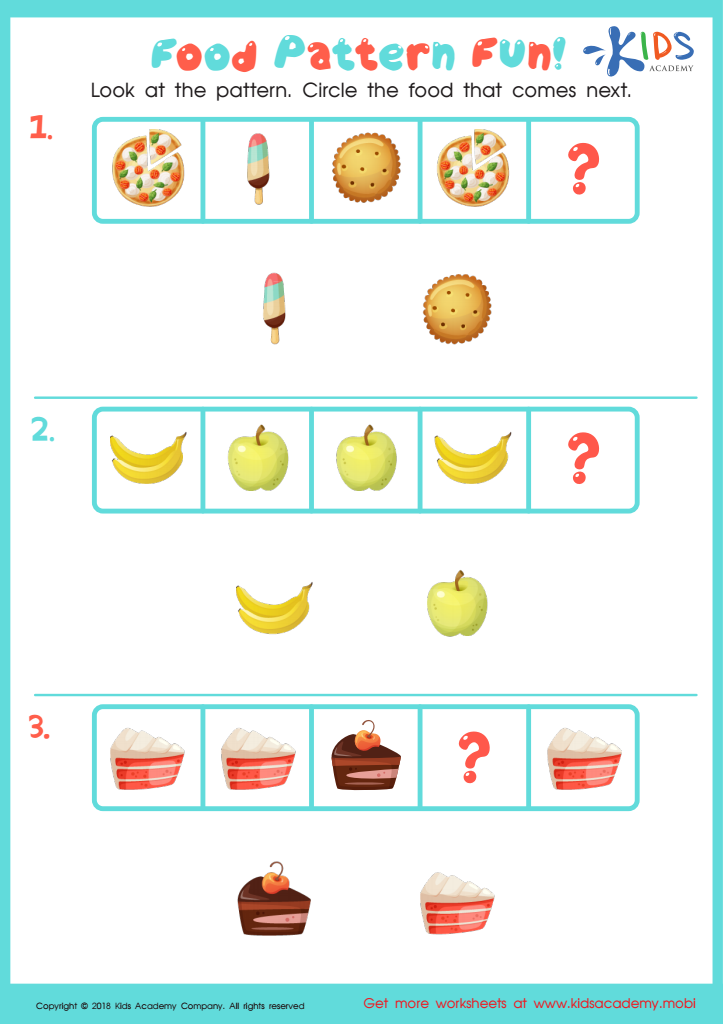
Food Pattern Fun Worksheet
 Assign to My Students
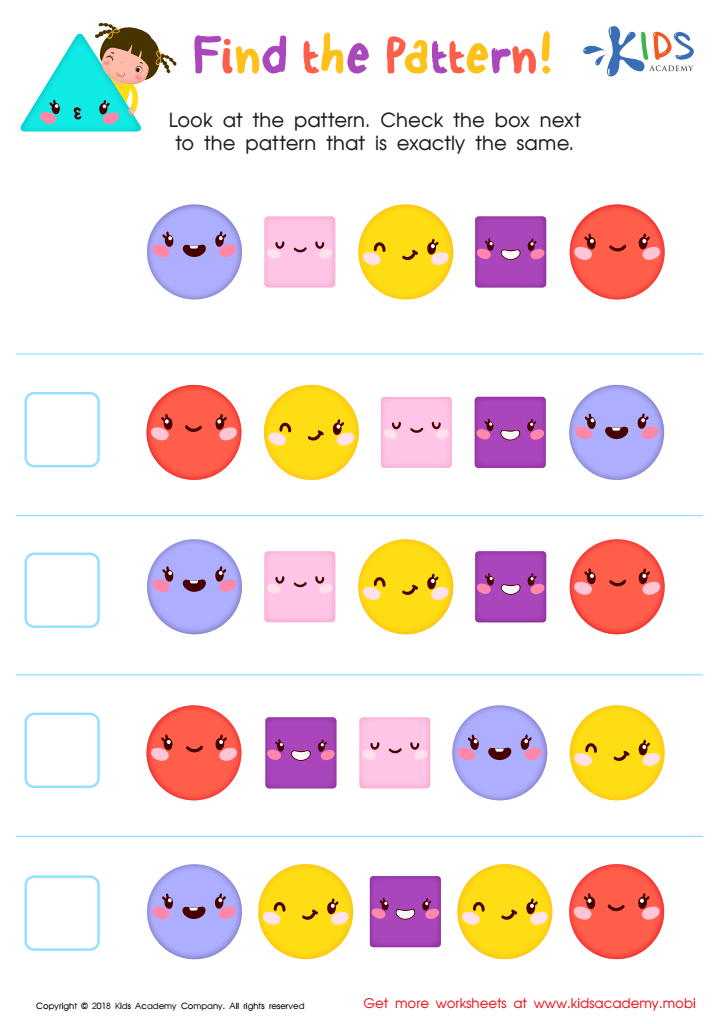
Find the Pattern Worksheet
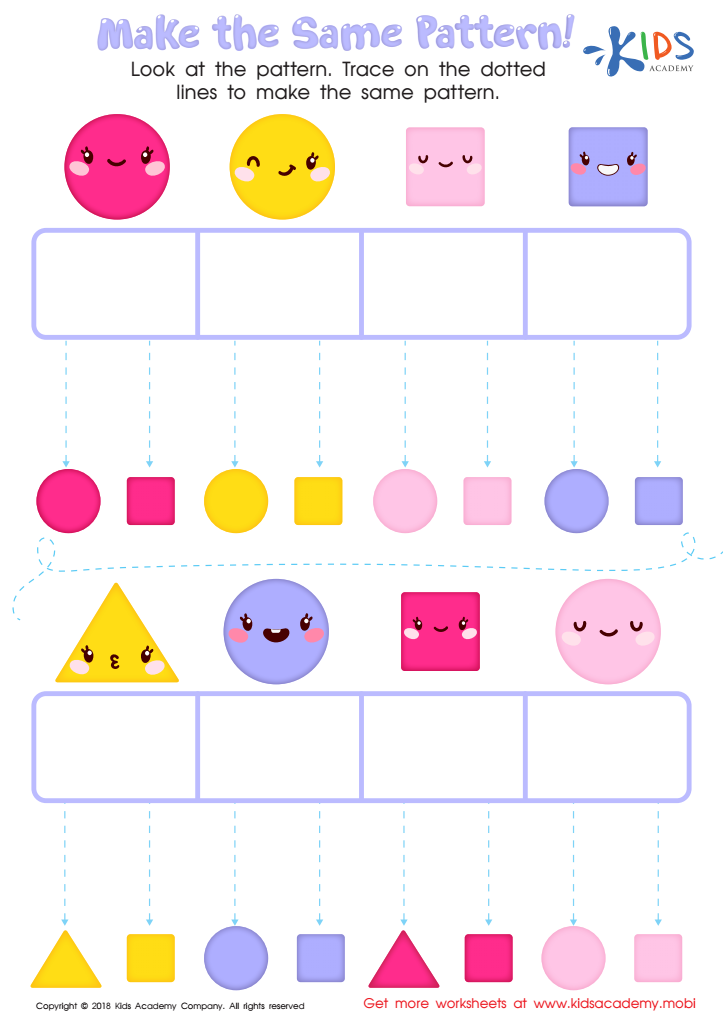
Make the Same Pattern Worksheet
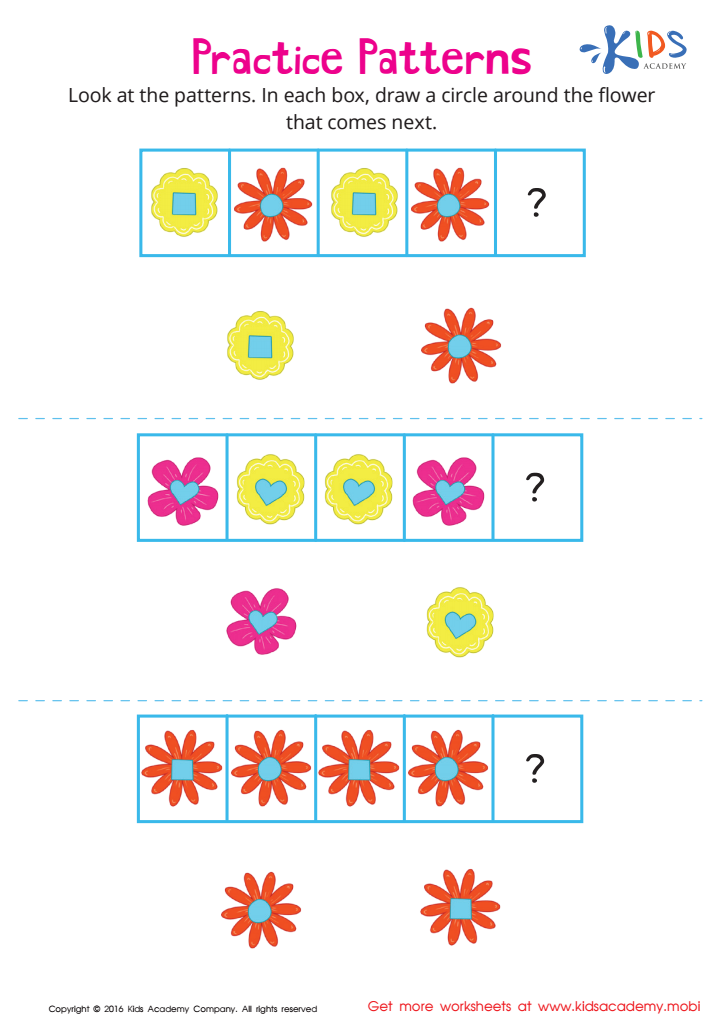
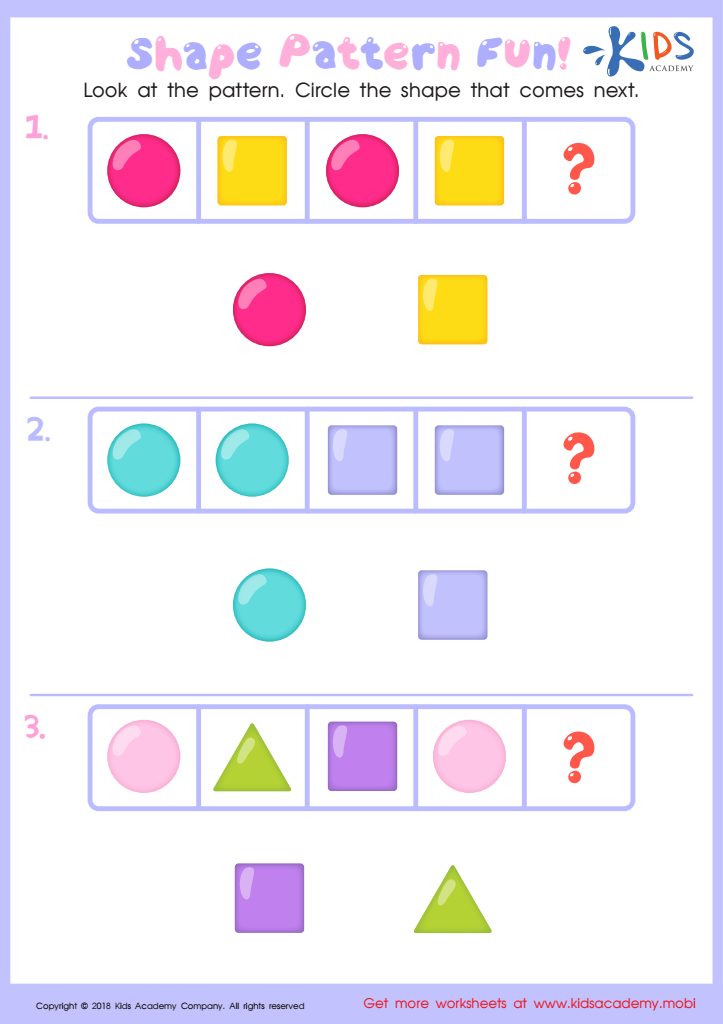
Shape Pattern Fun Worksheet








Understanding normal developmental patterns for children ages 4-8 is crucial for both parents and teachers. These patterns serve as benchmarks for cognitive, social, emotional, and physical development. Awareness of these milestones helps adults to ensure children are progressing appropriately and allows for timely intervention if developmental delays or issues are suspected.
Parents benefit from understanding these patterns by setting realistic expectations and creating supportive home environments that encourage growth. For example, by knowing when children typically start reading, parents can provide age-appropriate books and engage in reading activities that bolster literacy skills.
For teachers, knowledge of normal developmental patterns helps in designing effective lesson plans and activities tailored to their students' levels. It ensures that classroom instructions match children's cognitive and motor skills. Early identification of deviations from these norms enables teachers to address potential learning difficulties early, providing the child with the necessary resources or referrals to specialists.
In short, knowledge of normal developmental patterns for children aged 4-8 fosters a supportive, responsive environment, ensuring every child reaches their full potential. It paves the way for proactive involvement rather than reactive measures, ultimately contributing to both academic success and holistic well-being.








