Normal Subtraction Worksheets for Ages 4-8 - Page 2
29 filtered results
-
From - To
 Assign to My Students
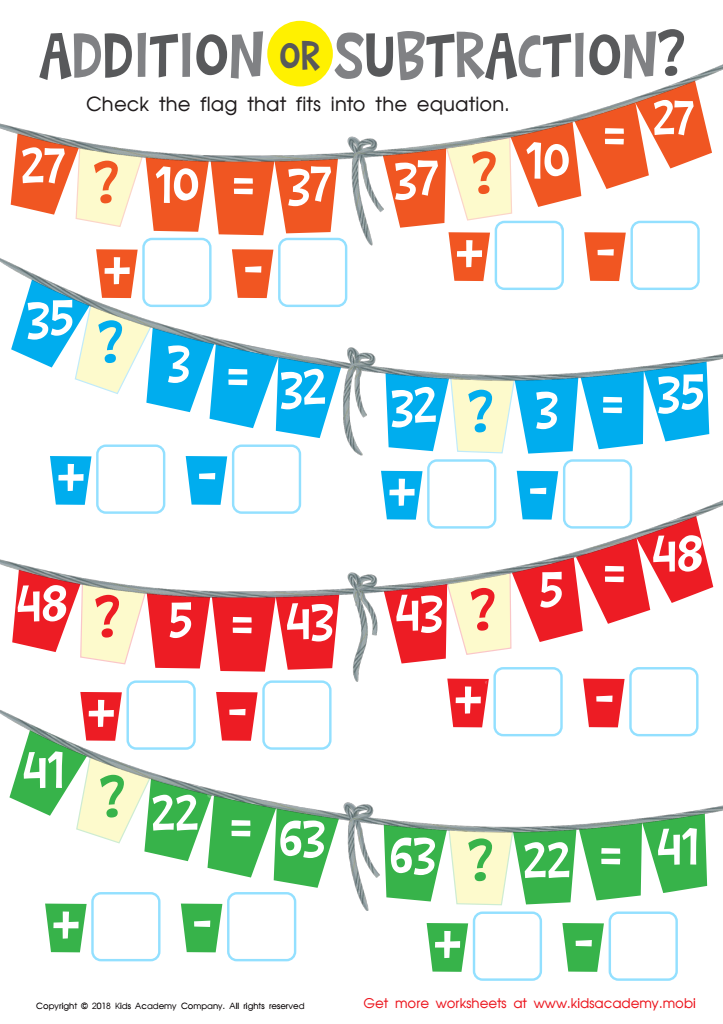
Addition or Subtraction? Worksheet
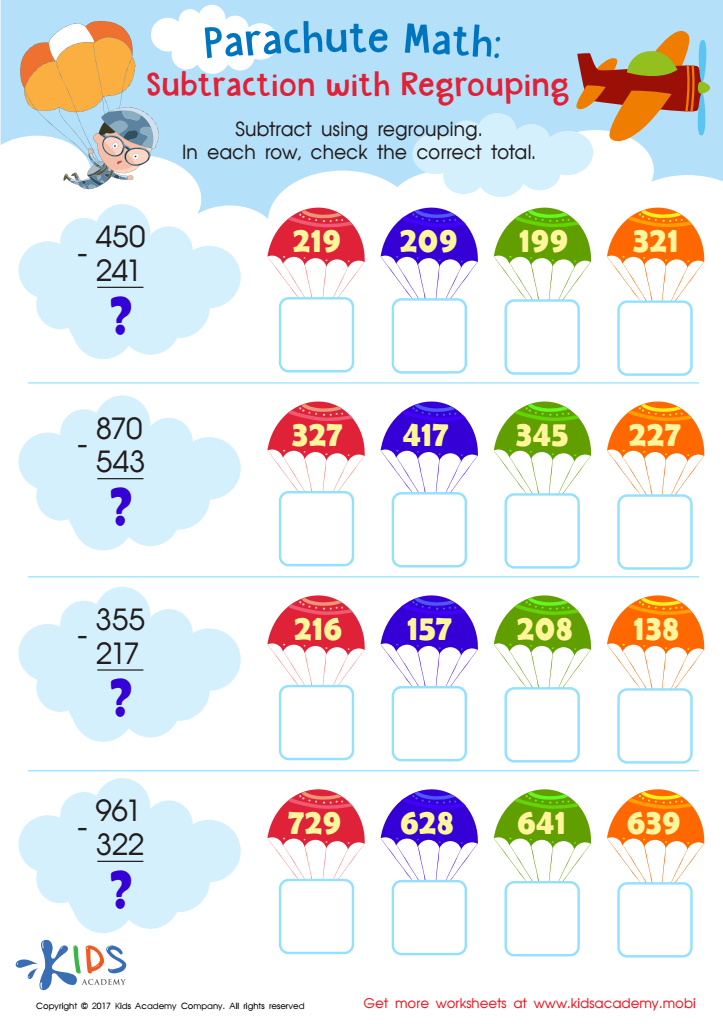
Subtraction with Regrouping for 3rd Grade Worksheet
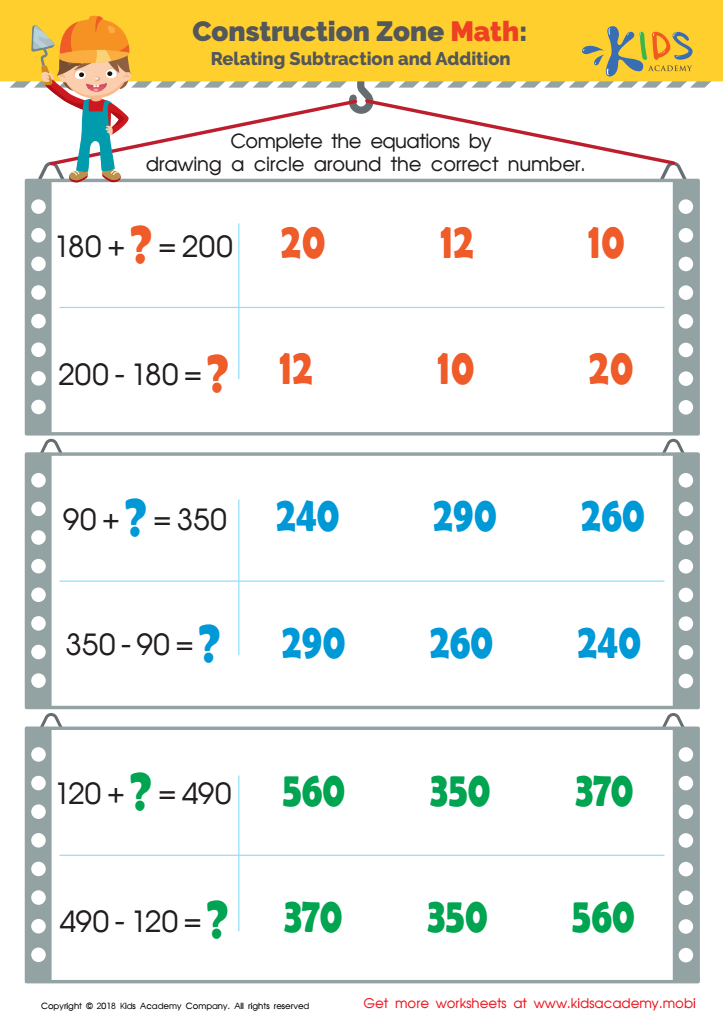
Construction Zone Math: Relating Subtraction and Addition Worksheet
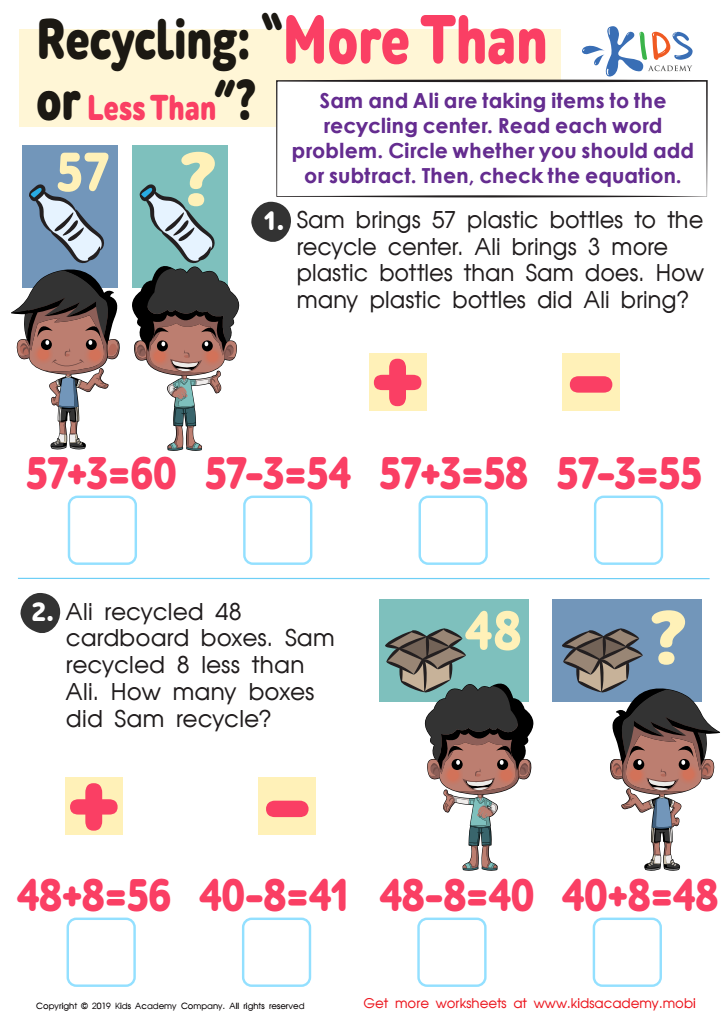
Recycling - More or Less Worksheet








Parents and teachers should care about normal subtraction for ages 4-8 because it's a fundamental building block of mathematical understanding. Early childhood is the critical period when children's brains are highly receptive to learning new concepts, and establishing a solid foundation in subtraction can help set them up for future academic success.
Learning subtraction helps develop essential cognitive skills such as problem-solving, critical thinking, and logical reasoning. For instance, when children learn to subtract, they start to grasp the concept of "taking away" and understanding quantities and values. This kind of practice enhances their number sense and appreciation of the relationships between numbers.
Additionally, learning subtraction at a young age is crucial for everyday life skills, such as calculating change, understanding time, and measuring ingredients. Proficiency in these basic math skills fosters a sense of confidence and independence in children.
Moreover, early competency in subtraction can ease the transition to more complex mathematical concepts like multiplication and division. It ensures that as children grow older, they won't struggle with advanced math because they've missed out on understanding the basics.
Therefore, reinforcing subtraction skills through engaging activities, games, and practical applications can create a positive and enriching learning experience and is vital for a child's academic and personal development.