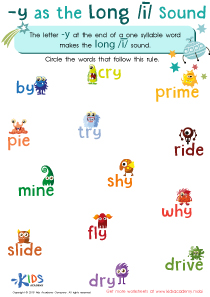
Normal Silent Vowels Worksheets for Ages 4-9
5 filtered results
-
From - To
Enhance your child's phonics skills with our "Normal Silent Vowels Worksheets for Ages 4-9". Specifically designed for young learners, these worksheets make learning silent vowels engaging and fun. Each activity is tailored to help children identify and understand silent vowels within words, enhancing their reading and pronunciation abilities. With colorful visuals and interactive exercises, our worksheets are perfect for classroom use or at-home practice, ensuring that learning remains joyous and impactful. Give your child a head start in phonics with materials created by experts at Kids Academy, ensuring a balanced mix of education and entertainment.
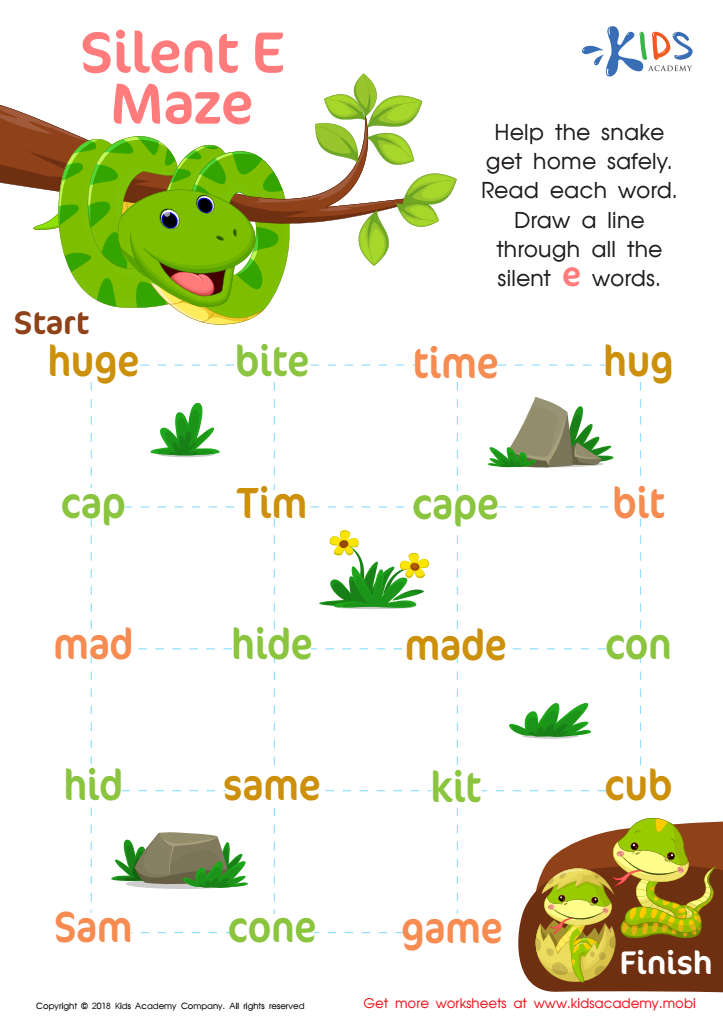
Silent E Maze Worksheet
 Assign to My Students
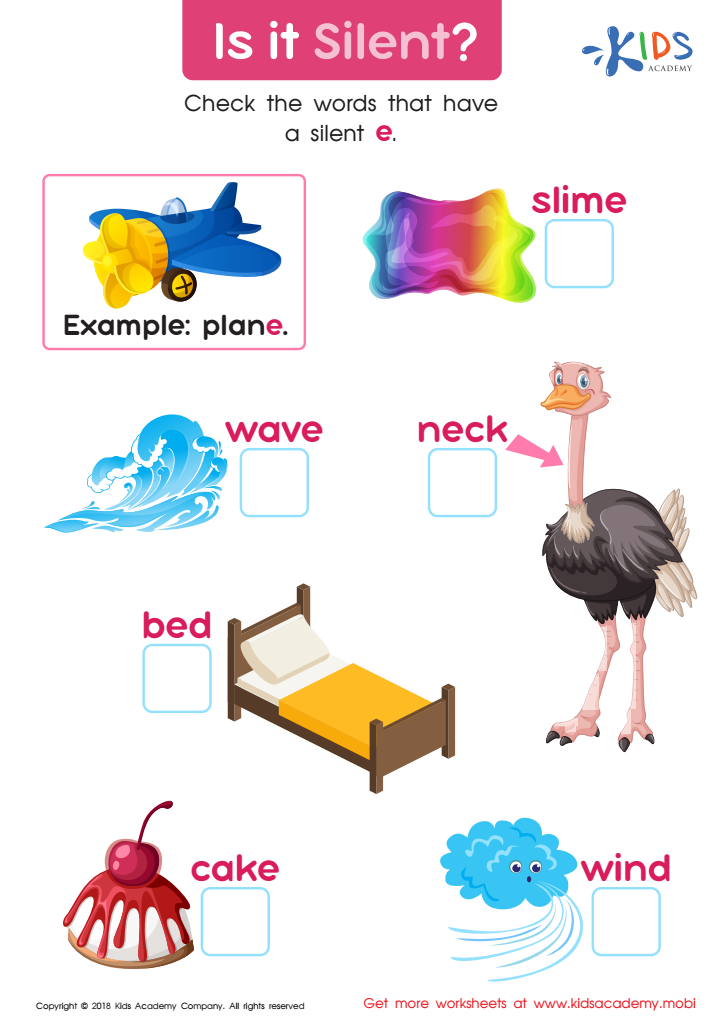
Is It Silent? Worksheet
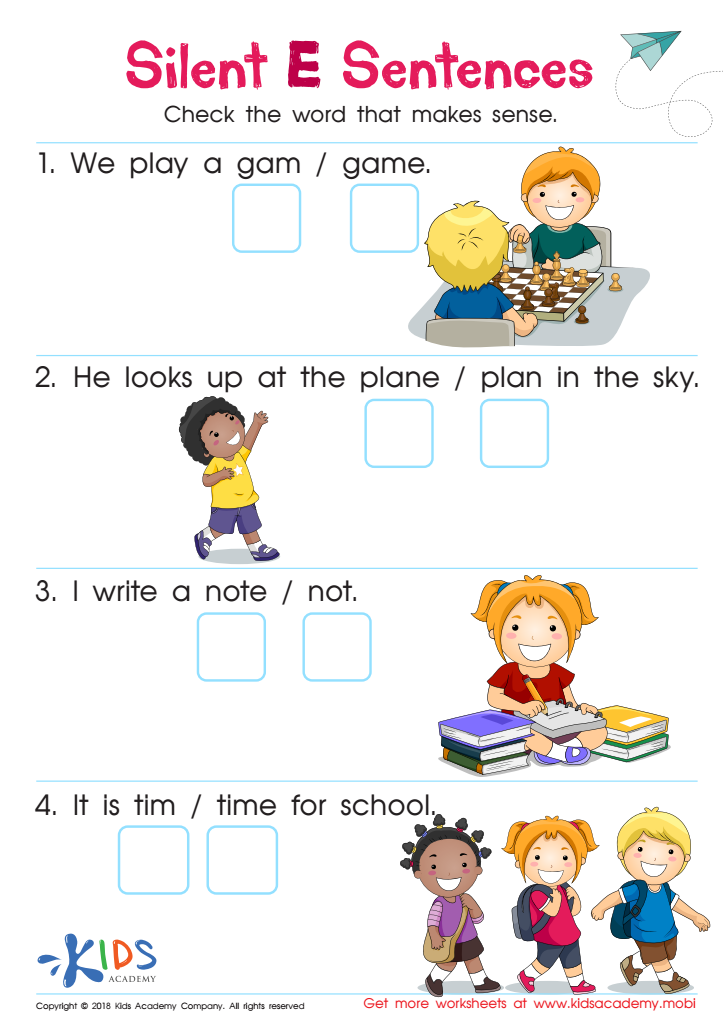
Silent E Sentences Worksheet
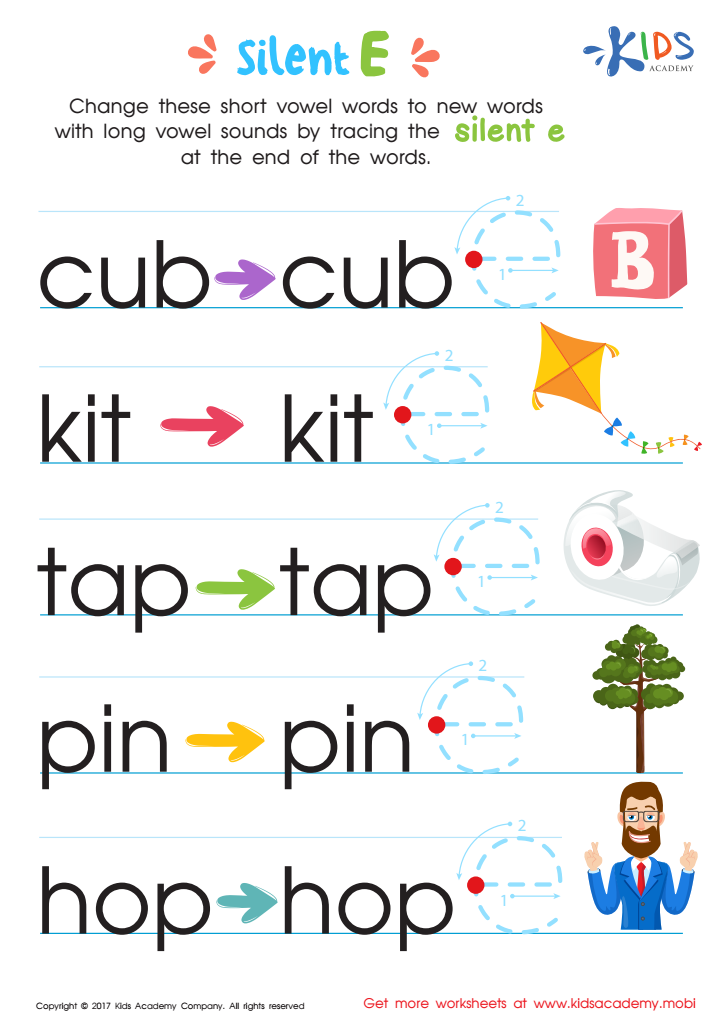
Silent E Words Worksheet
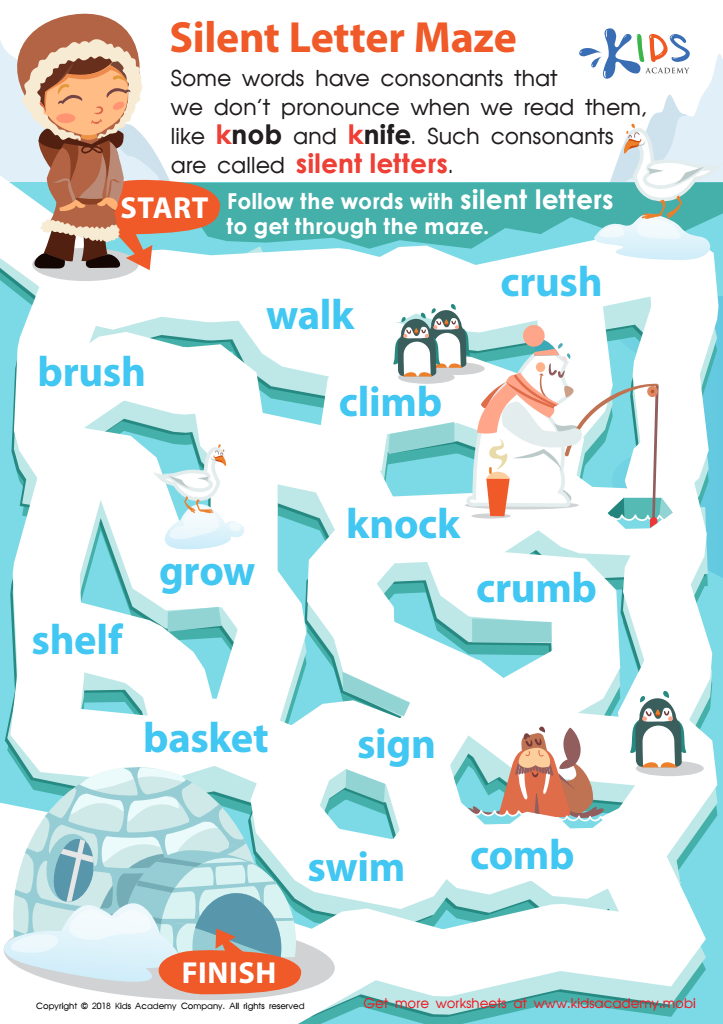
Silent Letter Maze Worksheet


Understanding Normal Silent Vowels is crucial for young children ages 4-9 as they embark on their reading and writing journey. At this formative stage, foundational literacy skills are developed, and grasping the nuances of English orthography—such as silent vowels—is essential for fluency and comprehension.
Silent vowels often appear in common words, like the “e” in “cake” or the "a" in "boat," which means they're regularly encountered in early reading materials. Recognizing these patterns helps children decode words more efficiently, allowing them to shift their focus from decoding to comprehension sooner.
Teachers and parents play a vital role in this learning process. They can provide targeted instruction and support, helping children understand that although these vowels are not pronounced, they serve important functions, like indicating long vowel sounds in adjacent letters. By explicitly teaching these conventions, adults can demystify the complexities of English spelling, reducing student frustration and boosting confidence.
Additionally, familiarity with silent vowels aids spelling accuracy and enriches vocabulary building, contributing to better writing skills. Therefore, investing time in teaching and reinforcing the understanding of Normal Silent Vowels fosters a more comprehensive and robust literacy foundation, paving the way for future academic success.