Normal Patterns Worksheets for 4-Year-Olds
5 filtered results
-
From - To
Introducing our engaging "Normal Patterns for 4-Year-Olds" worksheets, designed meticulously to enhance your child's early learning journey. Crafted specifically for young minds, these worksheets serve as an excellent foundation for recognizing, understanding, and predicting basic patterns. With vibrant illustrations and child-friendly activities, our worksheets are perfect for nurturing cognitive development, attention to detail, and analytical thinking in 4-year-olds. Each page promises a delightful learning experience, encouraging little learners to explore the world of patterns with excitement and curiosity. Dive into our Normal Patterns worksheets and watch your 4-year-old embark on a fun-filled adventure of learning and discovery!
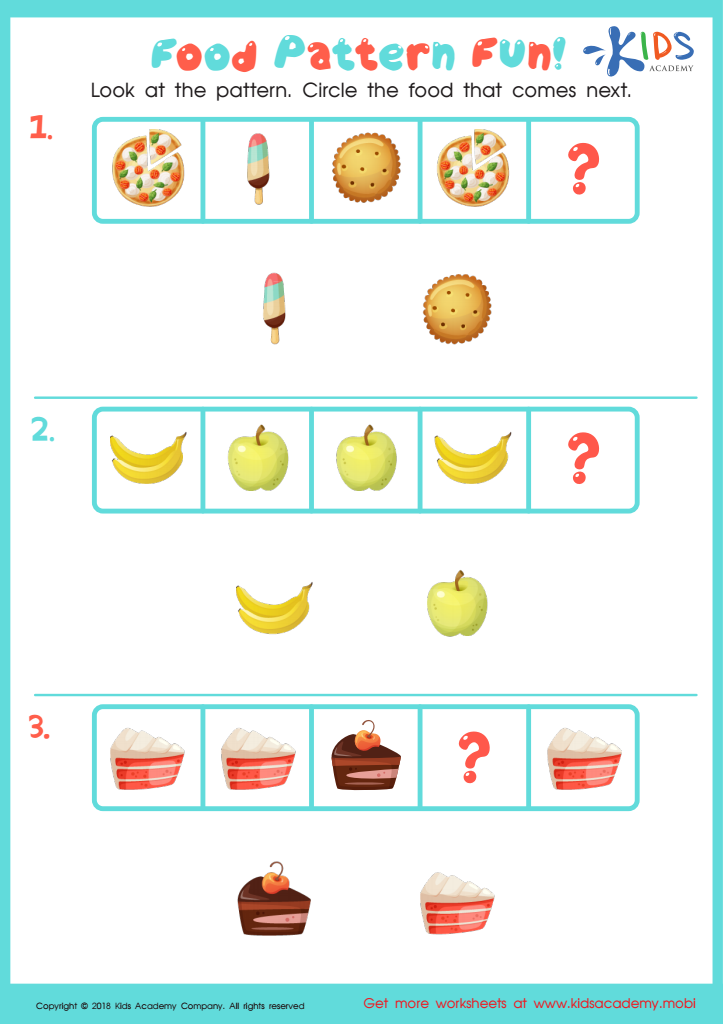
Food Pattern Fun Worksheet
 Assign to My Students
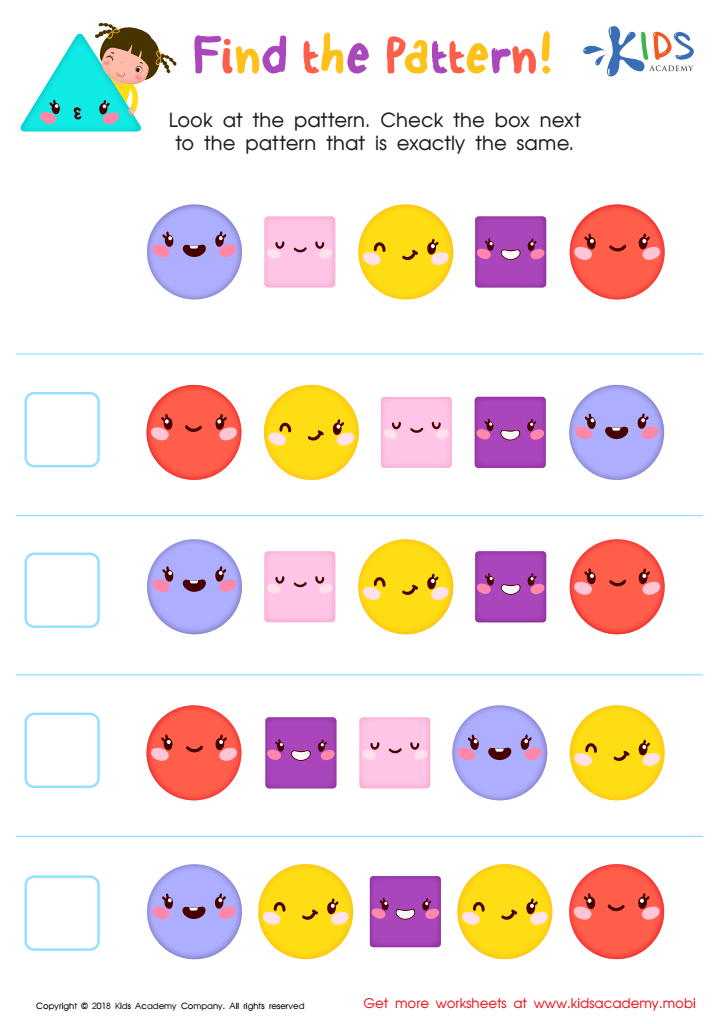
Find the Pattern Worksheet
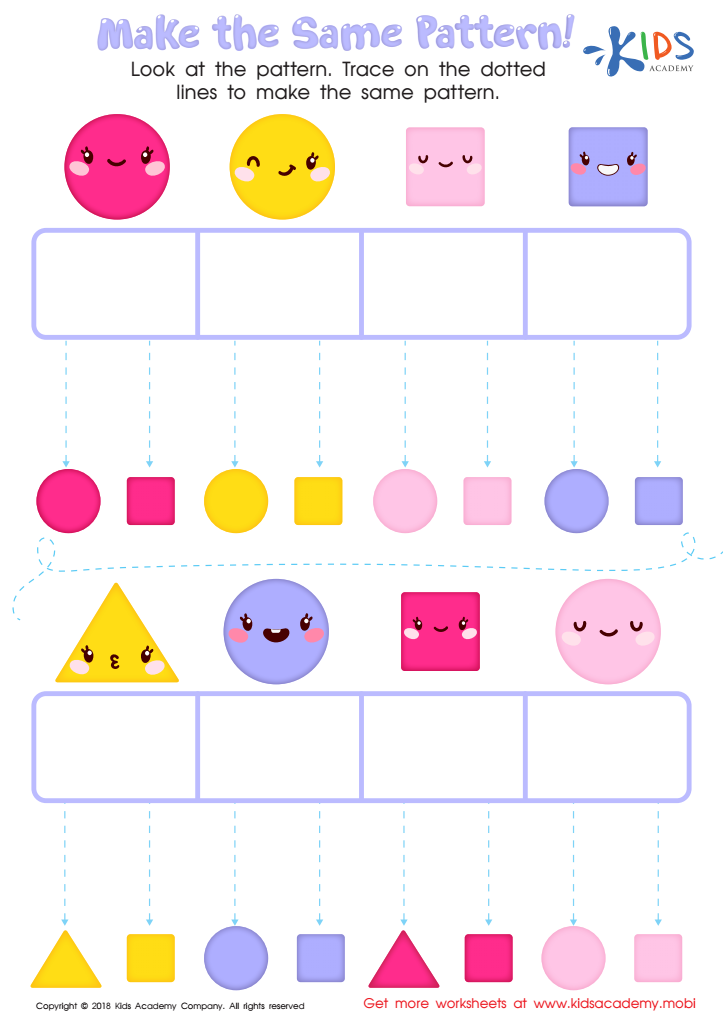
Make the Same Pattern Worksheet
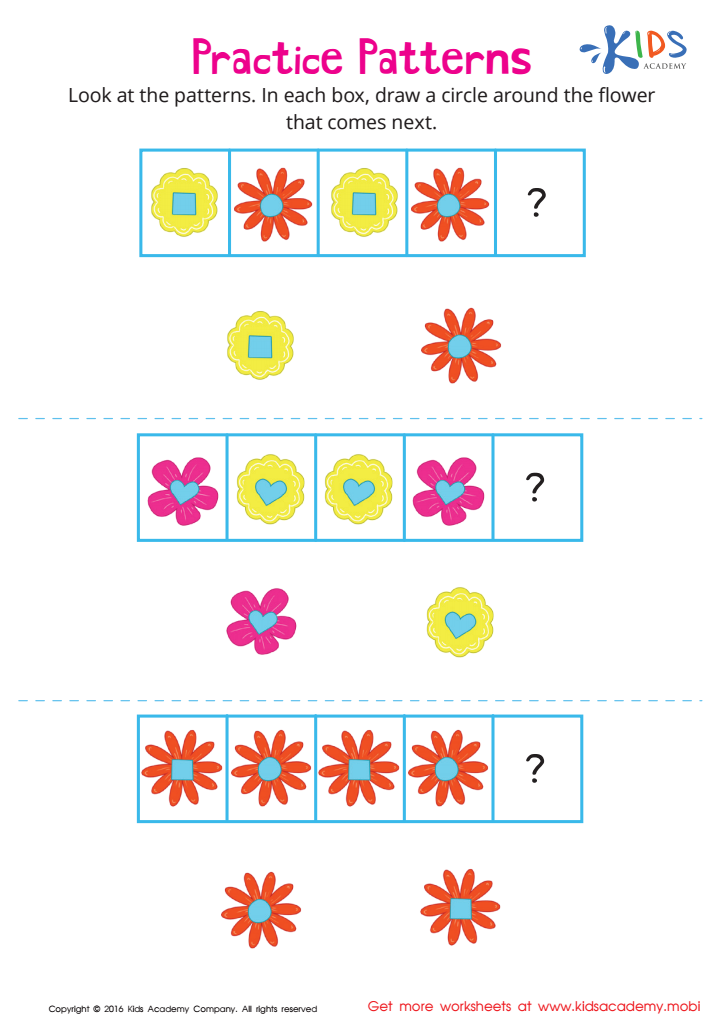
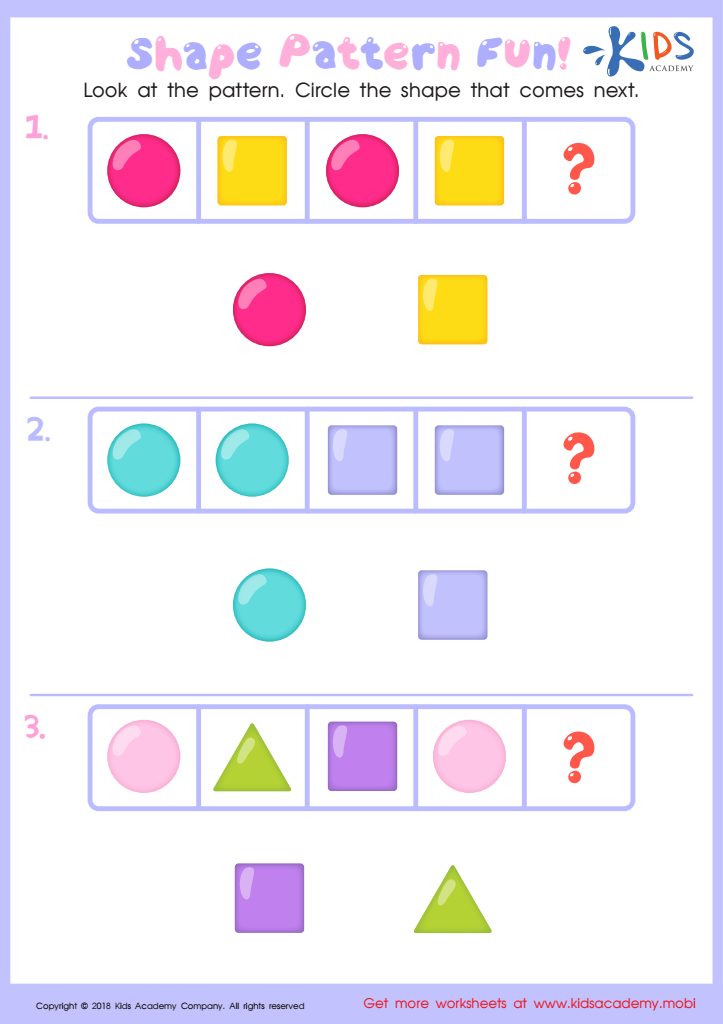
Shape Pattern Fun Worksheet








Normal patterns for 4-year-olds, found on dedicated worksheets, offer an invaluable resource for early childhood development. These worksheets serve a pivotal role in nurturing foundational skills in pattern recognition and logical thinking, aspects critical for a child's intellectual growth. Focusing on normal patterns specifically designed for 4-year-olds ensures the content is age-appropriate, engaging, and effectively meets the developmental needs of preschoolers.
Engaging with patterns through these worksheets helps children understand sequences and anticipate what comes next, which is a fundamental skill not only in math but also in everyday problem-solving and decision-making. By identifying, creating, and extending patterns, children begin to recognize order and predictability in their world, making their environment seem more understandable and less chaotic.
Moreover, normal patterns worksheets tailored for 4-year-olds enhance fine motor skills as children trace, color, and draw to complete the patterns. This hands-on activity supports the development of pencil grip and control, preparing them for writing. Additionally, working through these worksheets can boost a child’s confidence and promote a positive attitude towards learning, laying the groundwork for academic success in more complex subjects.
In summary, normal patterns worksheets for 4-year-olds are not just about learning sequences; they're about building the cognitive and motor skills necessary for a child’s overall development, proving to be an essential tool in early education.








