Normal Numbers 11–20 Worksheets for Ages 5-6
4 filtered results
-
From - To
Discover the world of numbers with our engaging Normal Numbers 11–20 Worksheets, perfectly curated for children Ages 5-6! Designed to inspire young learners, this collection offers a variety of fun, educational activities aimed at strengthening their understanding and mastery of numbers 11 through 20. From intriguing number puzzles to colorful counting tasks, each worksheet is tailored to build confidence and foster a love for math at an early age. Ideal for both classroom use and home learning, these worksheets are your child's companion towards achieving numeric fluency and developing critical thinking skills in a captivating way. Join us on this numeric adventure tailored for young minds!
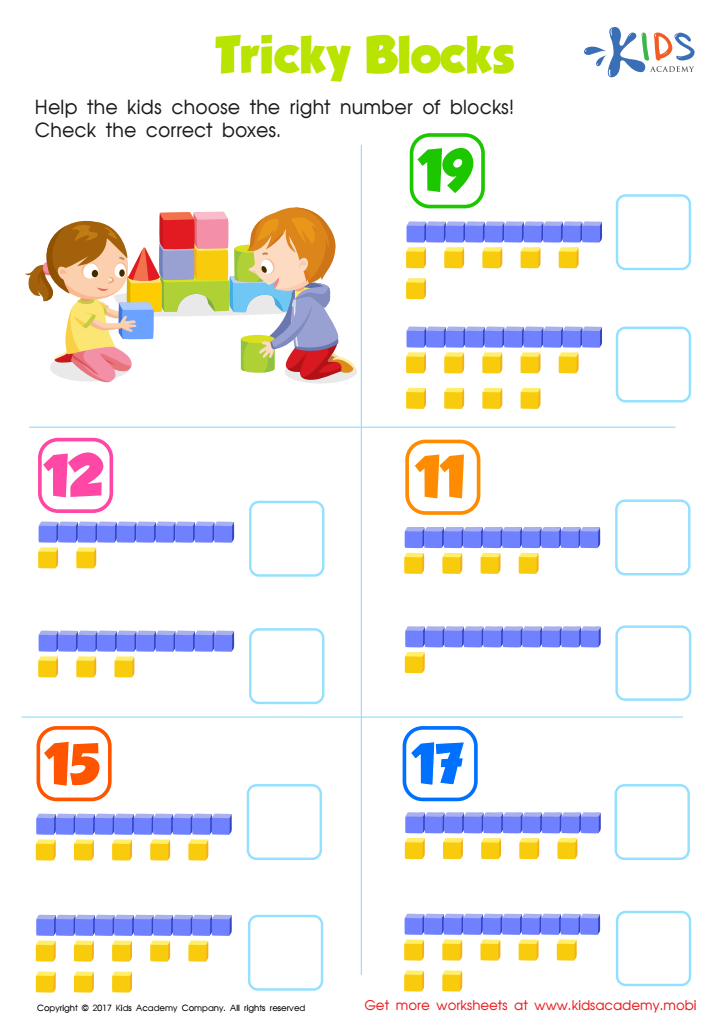
Tricky Blocks Worksheet
 Assign to My Students
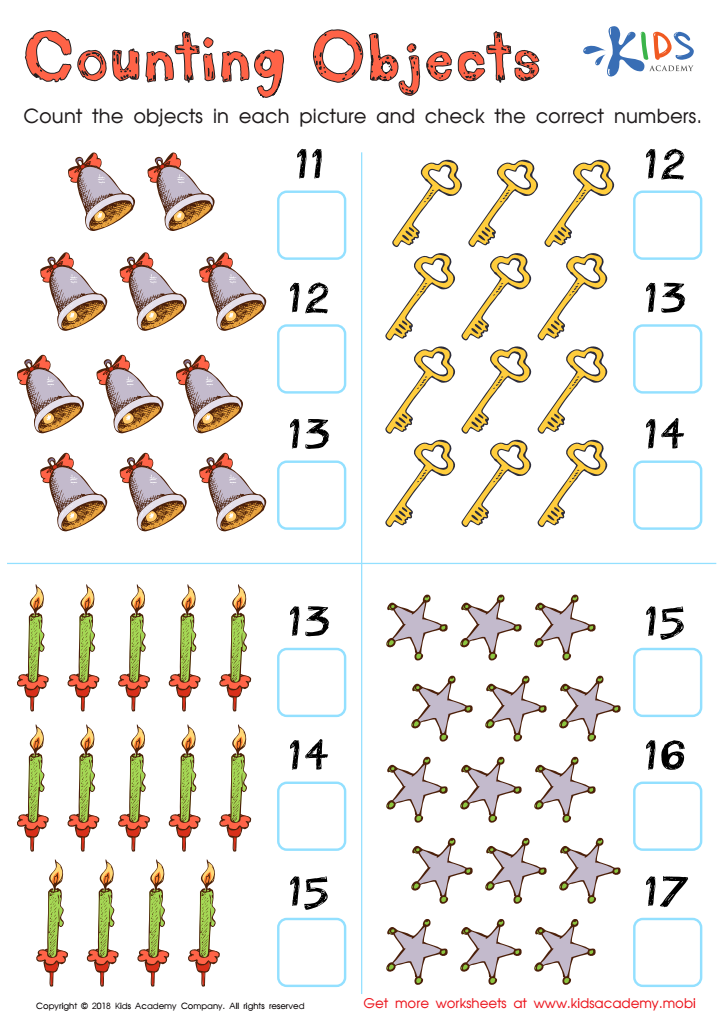
Counting Numbers Worksheet For Kindergarten
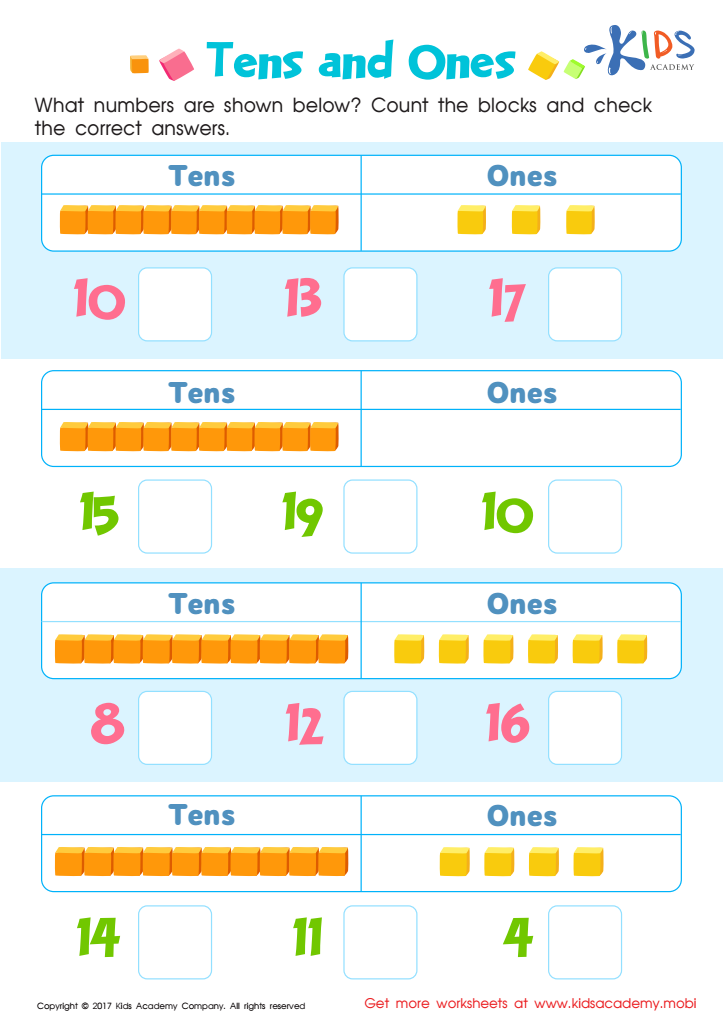
Tens and Ones Worksheet
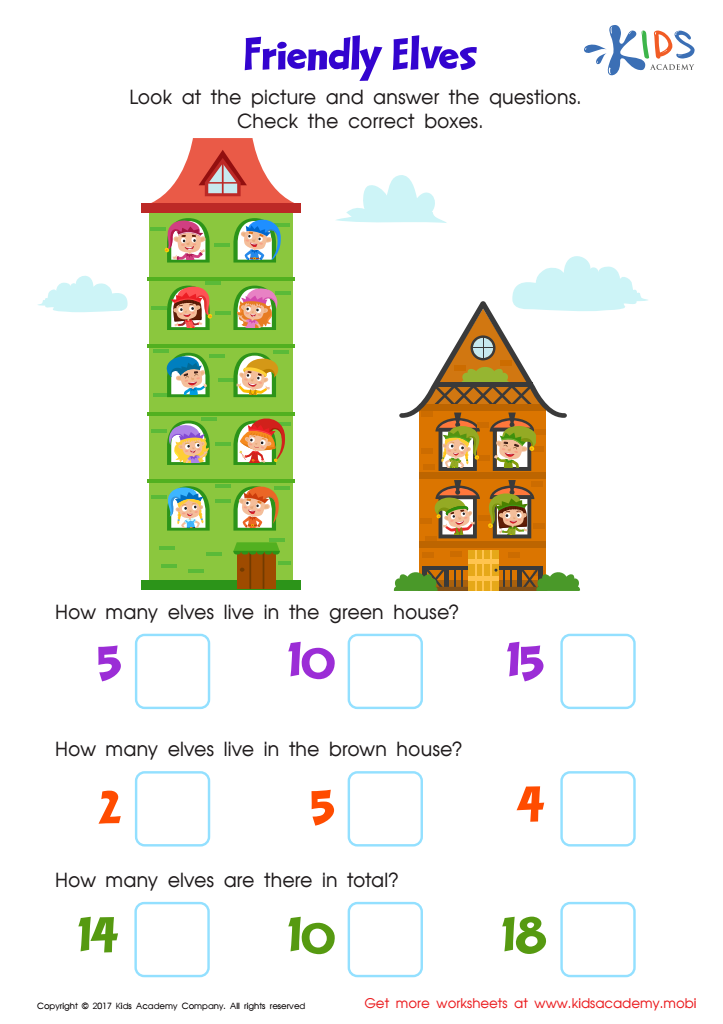
Place Value: Friendly Elves Worksheet



Normal worksheets focusing on Numbers 11–20 for Ages 5-6 serve as an essential tool in laying the foundational stones for early mathematical skills. At this pivotal age, children are expanding their counting abilities beyond the initial ten, venturing into two-digit numbers, which is a significant step in their cognitive development. These worksheets are tailored to meet the unique learning needs of 5 to 6-year-olds, providing them with exercises that are both challenging and engaging.
The importance of mastering Numbers 11–20 cannot be overstated. It is not just about counting; it introduces children to the concept of place value, prepares them for addition and subtraction, and sets the stage for understanding more complex number relationships. Normal worksheets specifically designed for this age group encourage hands-on learning through activities such as matching, sequencing, and simple problem-solving, making the learning process enjoyable and effective.
Moreover, these worksheets build confidence. As children successfully navigate through the tasks, their sense of achievement grows, fostering a positive attitude towards learning math. This early confidence in handling numbers is crucial for their future academic success.
In summary, Normal worksheets on Numbers 11–20 for Ages 5-6 are invaluable for young learners. They not only enhance numerical understanding and skills but also boost confidence and pave the way for a smooth transition into more advanced mathematical concepts.