Comprehensive Printable Physical Science Worksheets & Answer Keys for Ages 5-6 – Boost Learning & Fun

Filters

42 filtered results

Clear all filters
Favorites
With answer key
Interactive

42 filtered results

Difficulty Level

Grade


Introducing our captivating collection of Normal Physical Science Worksheets, meticulously designed for the curious minds of children Ages 5-6. Embark on a thrilling journey through the foundations of physical science, where every page is an adventure waiting to be discovered. These worksheets are not only a treasure trove of knowledge but also a playground for young imaginations to explore the wonders of the physical world. Engage in hands-on activities, experiments, and thought-provoking exercises that make learning both fun and impactful. Perfect for home or classroom use, our Normal Physical Science Worksheets for Ages 5-6 are your child's gateway to becoming a young scientist!

Check out this FREE Trial Lesson on Physical Science for age 5-6!

Observing Patterns and Making Predictions

Favorites
With answer key
Interactive
  • 5-6
  • With answer key
  • Physical Science
  • Normal
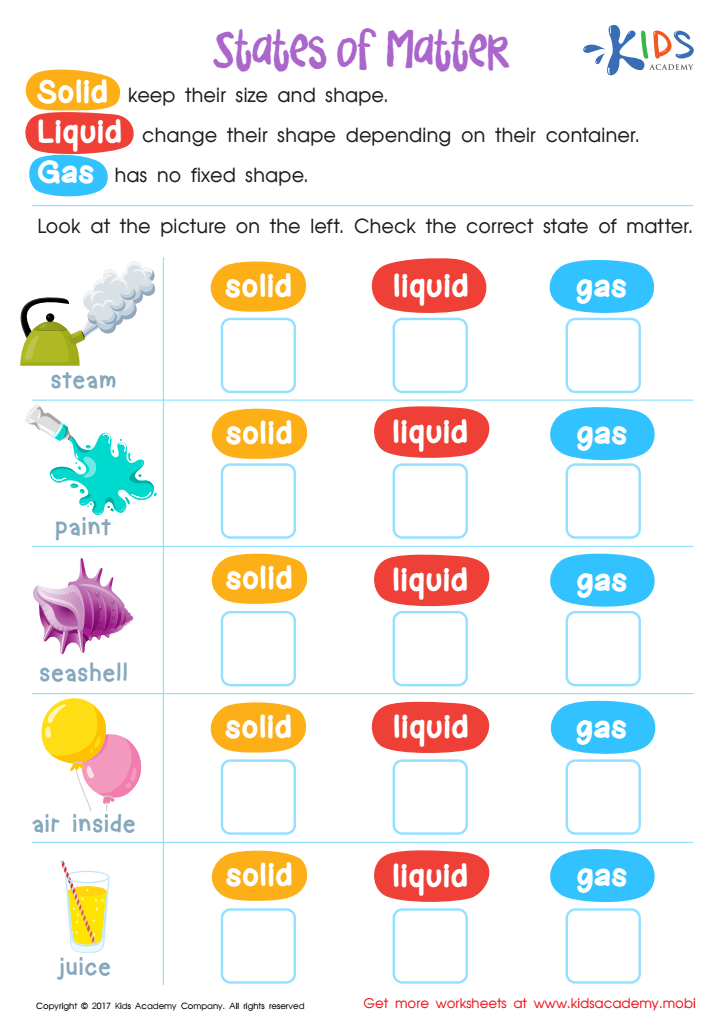
Worksheet: States of Matter

Physical Science: States of Matter Worksheet

Kids must identify a substance as solid, liquid, or gas to master physical science. Help them understand elements in the world with this engaging worksheet!
Physical Science: States of Matter Worksheet
Worksheet
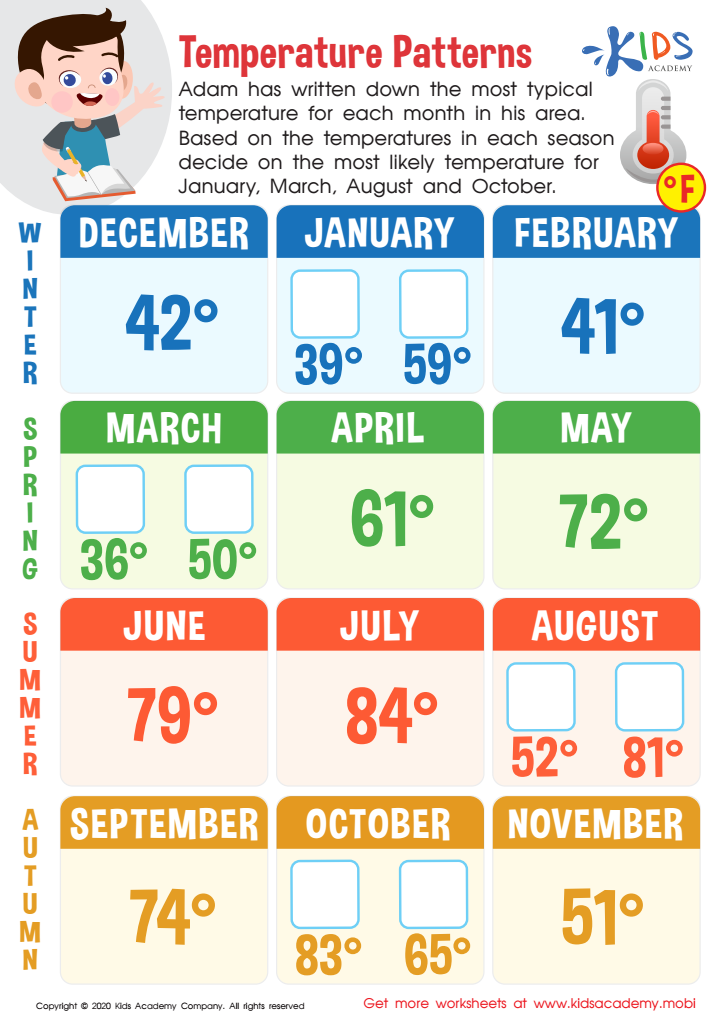
Temperature Patterns Worksheet

Temperature Patterns Worksheet

Adam has recorded temperatures in his area. Help your child use the data to predict temperatures for one month in each season. Check the box next to the correct temperature for each row in this worksheet. In America, temperatures vary by climate and season - colder in winter, hotter in summer.
Temperature Patterns Worksheet
Worksheet
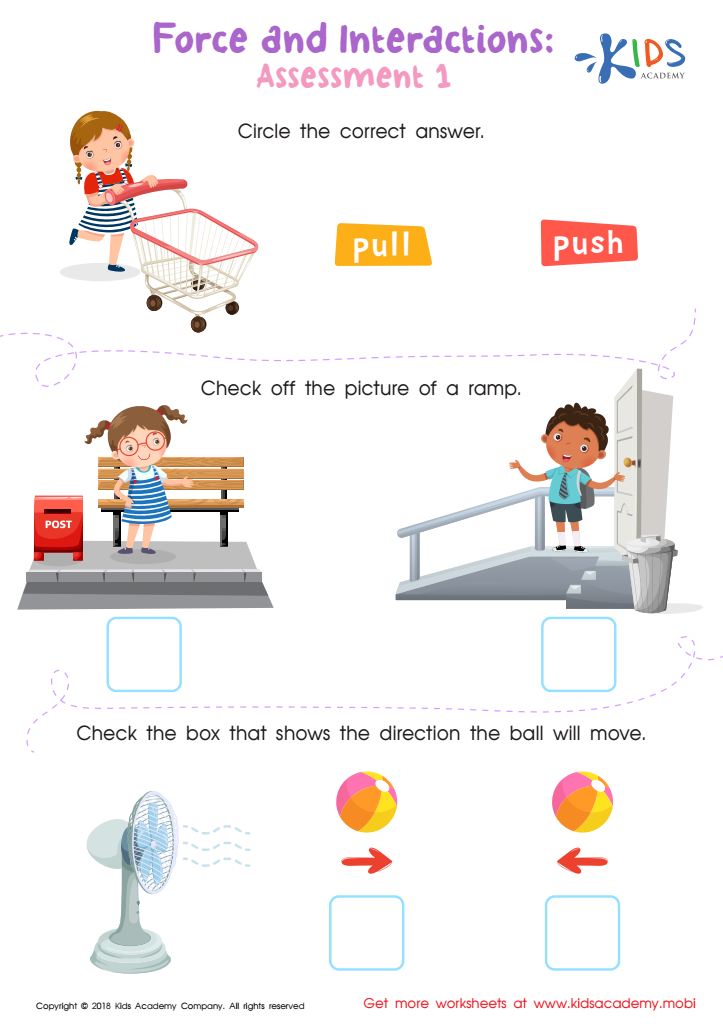
Force and Interactions: Assessment 1 Worksheet

Force and Interactions: Assessment 1 Worksheet

Test your students' knowledge of pushing, pulling, ramps and wind with this worksheet. The first task requires them to identify push or pull pictures. The second asks them to identify a ramp and the third to explain which direction a ball will move when exposed to wind.
Force and Interactions: Assessment 1 Worksheet
Worksheet
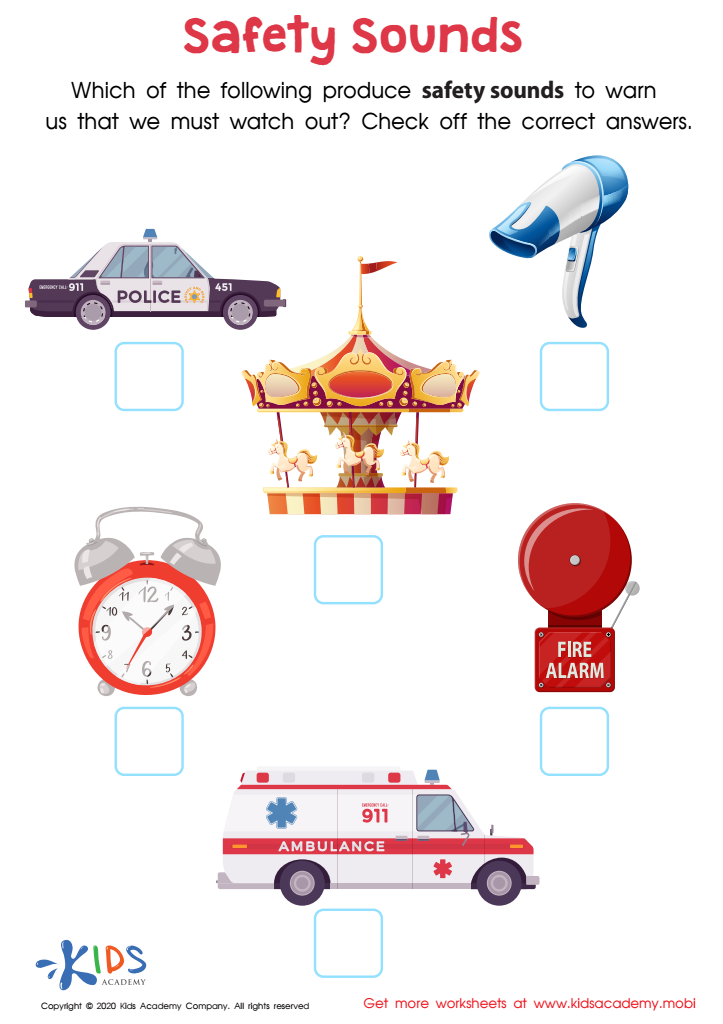
Safety Sounds Worksheet

Safety Sounds Worksheet

Teach your kids about safety. Explain the rules and let them know what sounds to be aware of. Review the worksheet with pictures of objects and ask them to recognize which ones produce safety sounds. Have them check their answers. Doing this will help ensure their safety and that of others.
Safety Sounds Worksheet
Worksheet
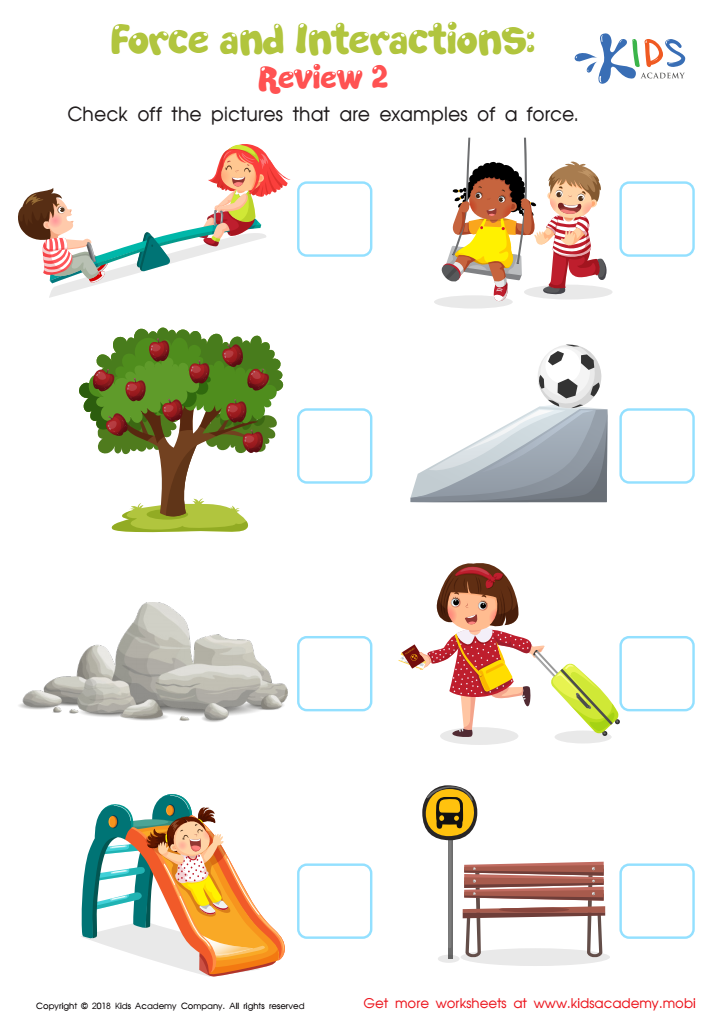
Force and Interactions: Review 2 Worksheet

Force and Interactions: Review 2 Worksheet

Your child can identify force examples by checking the pictures. There are 8 images of kids engaging in activities and objects in motion. Get them to name the activities and objects, or if they know, explain force and interaction.
Force and Interactions: Review 2 Worksheet
Worksheet
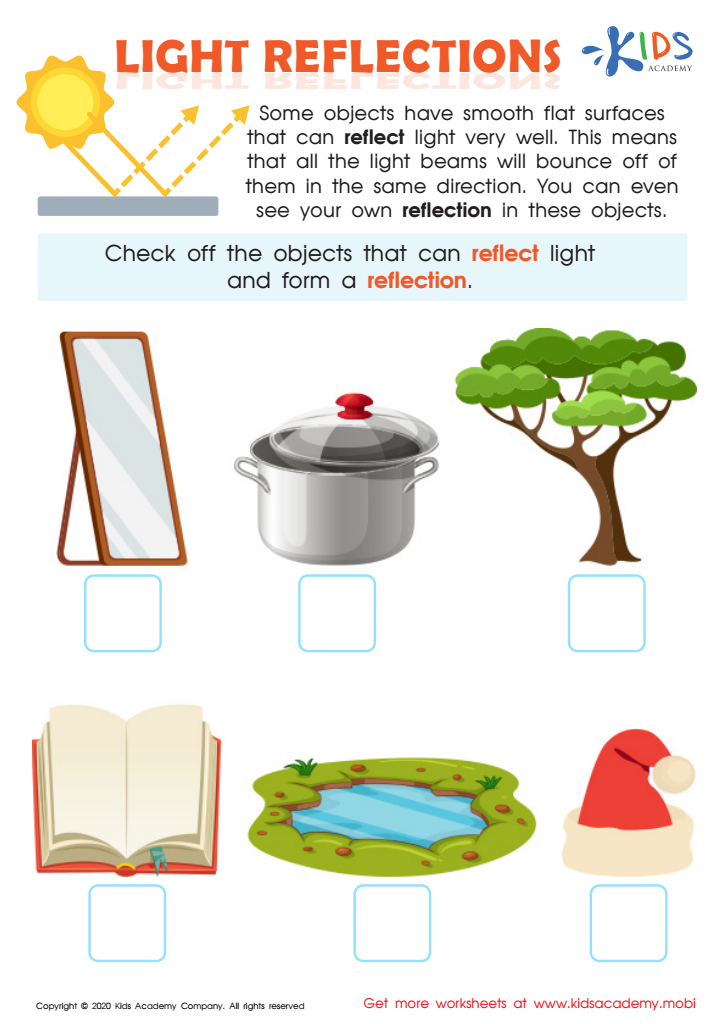
Light Reflections Worksheet

Light Reflections Worksheet

Teach your students that some objects reflect light and form a reflection. Ask them to name examples, then look at pictures and check off which objects can do this. Have them note how the light bounces off these surfaces, and observe their own reflections.
Light Reflections Worksheet
Worksheet
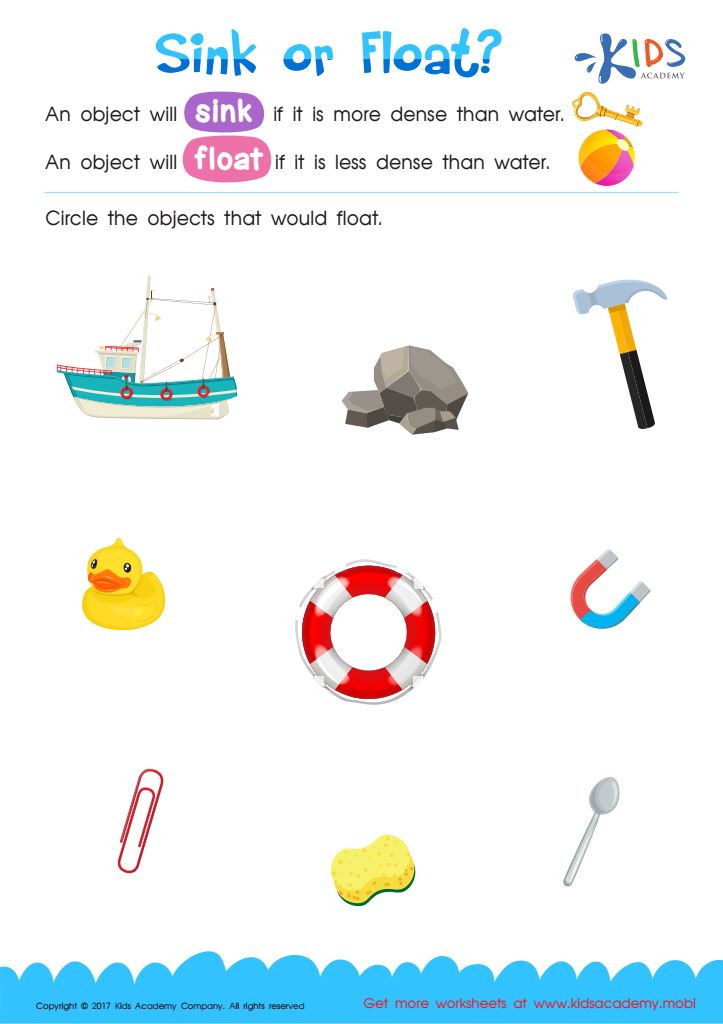
Worksheet: Sink or Float

Sink or Float Printable

They'll learn why some things stay on the surface and others sink to the bottom. (80 words)
Sink or Float Printable
Worksheet
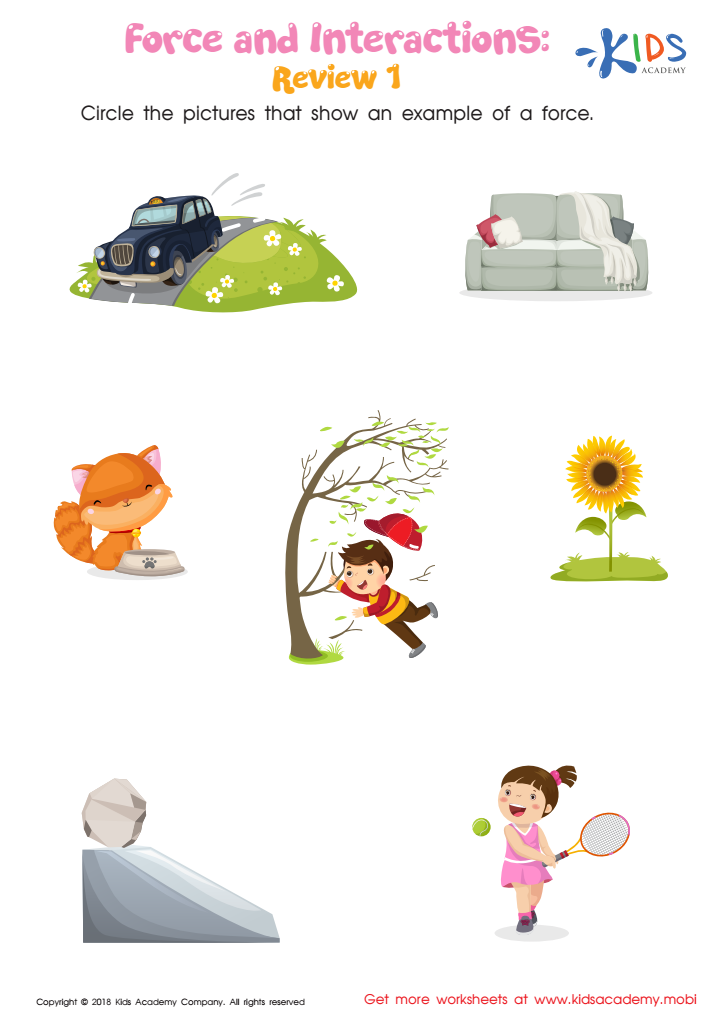
Force and Interactions: Review 1 Worksheet

Force and Interactions: Review 1 Worksheet

See how well your child can identify the different forces. Explain to your child that force is what causes objects to move, such as wind blowing a branch or an object going down a ramp. Ask them to circle images that show a force and assess how well they can identify them.
Force and Interactions: Review 1 Worksheet
Worksheet
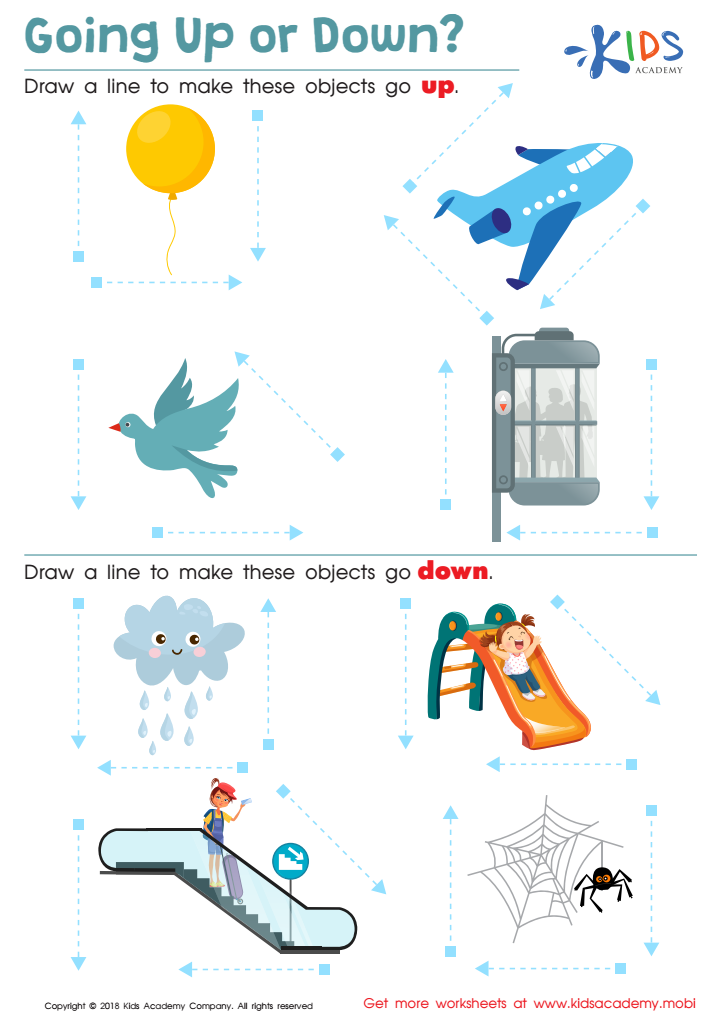
Going up or Down? Worksheet

Going up or Down? Worksheet

Young students learn the concept of up and down with this geometry worksheet. They trace lines to identify relative positioning as an object travels. Kids can use position words to describe an object's movement, enhancing their spatial relationship skills - an important geometry foundation.
Going up or Down? Worksheet
Worksheet
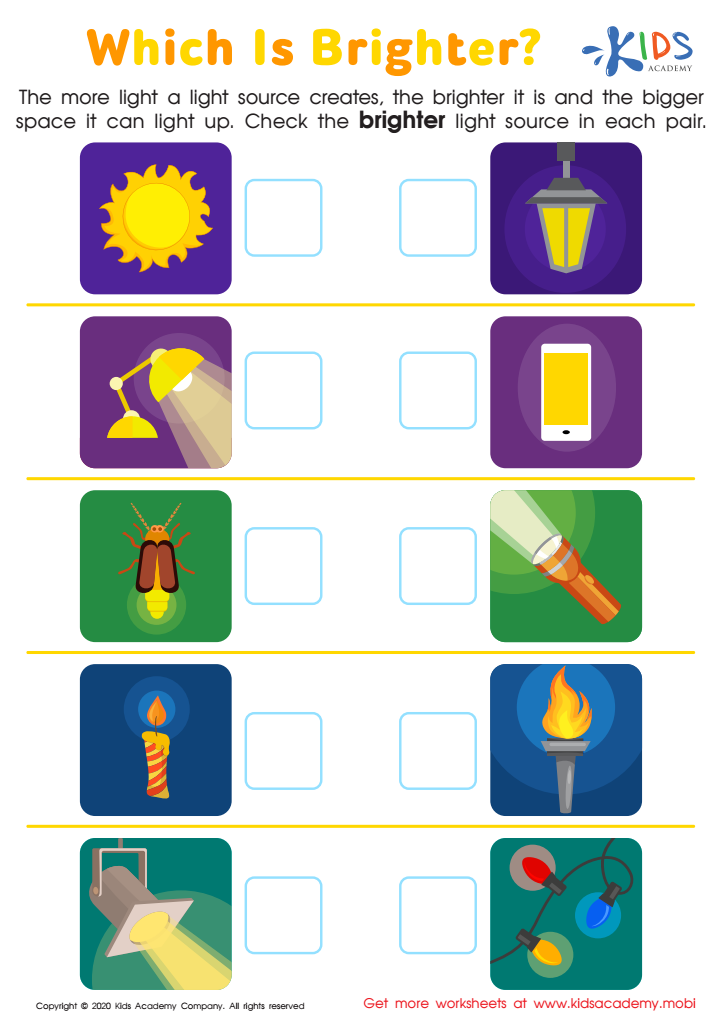
Which Is Brighter? Worksheet

Which Is Brighter? Worksheet

Before the exercise, ask students to recall sources of light. Use this worksheet to explain that the brighter the light source, the more space it can light up. Identify the different light sources in the pictures, then check the brighter light source in each pair. The biggest natural source of light is the sun.
Which Is Brighter? Worksheet
Worksheet
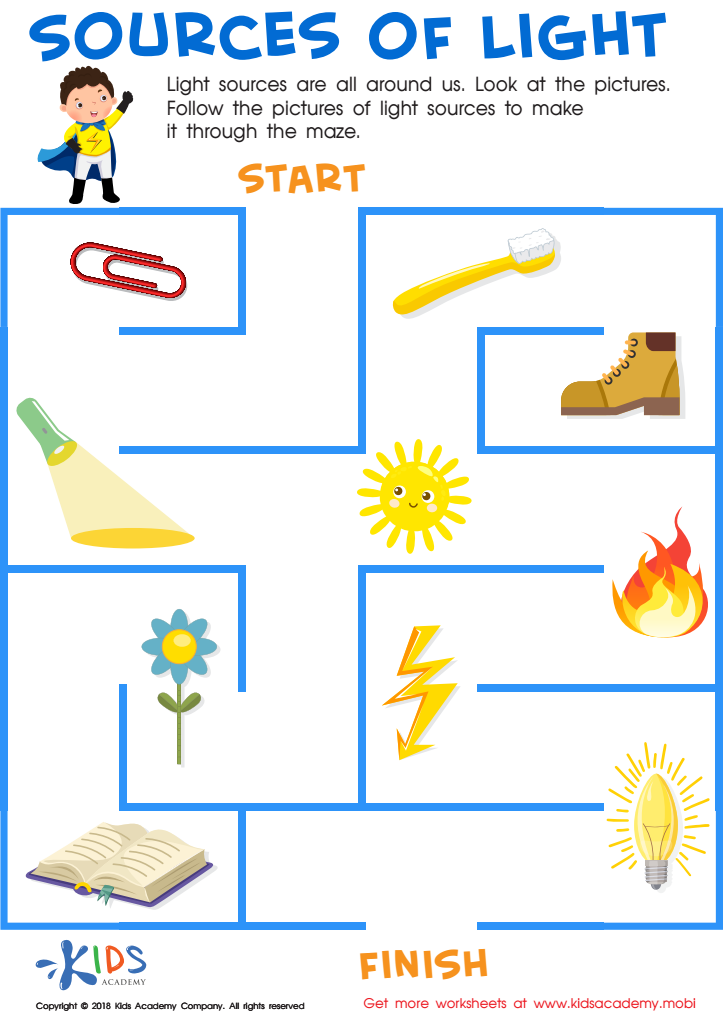
Sources of Light Worksheet

Sources of Light Worksheet

Help your child explore sources of light with this printout exercise. Ask them if they know the sun is the reason for day and night. Then point out other common light sources, then work together to guide them through the maze from start to finish.
Sources of Light Worksheet
Worksheet
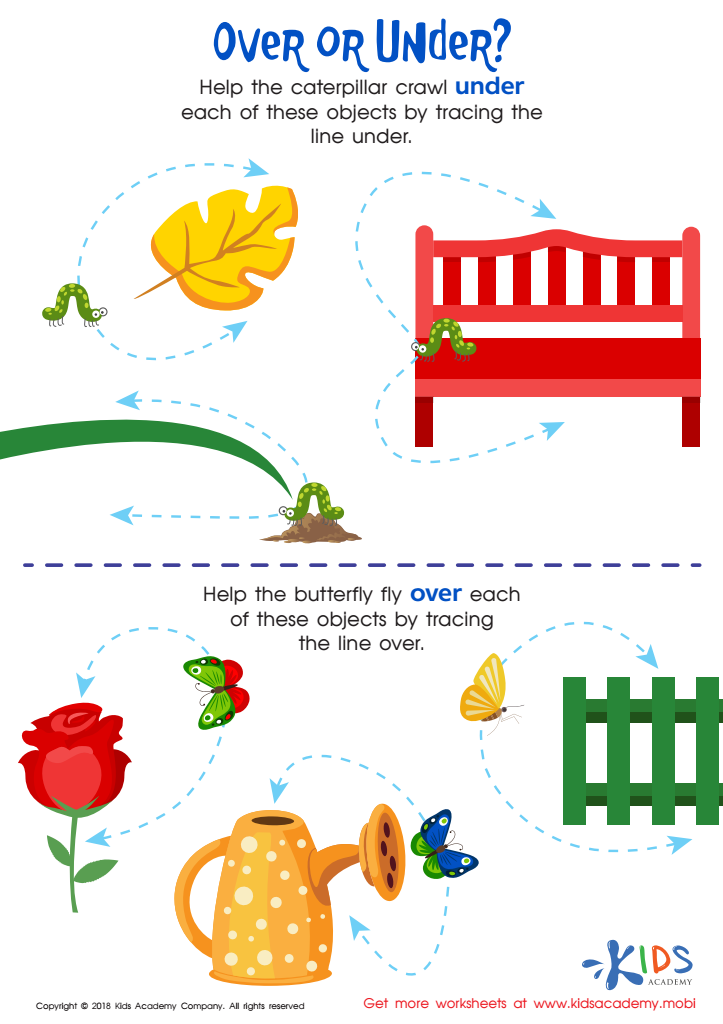
Over or Under? Worksheet

Over or Under? Worksheet

Math for young kids isn't just about numbers and counting, but also spatial concepts like geometry. This worksheet helps students learn "over" and "under" by tracing the movement of caterpillars and butterflies. Downloadable for free, it's an effective teaching tool for early learners.
Over or Under? Worksheet
Worksheet
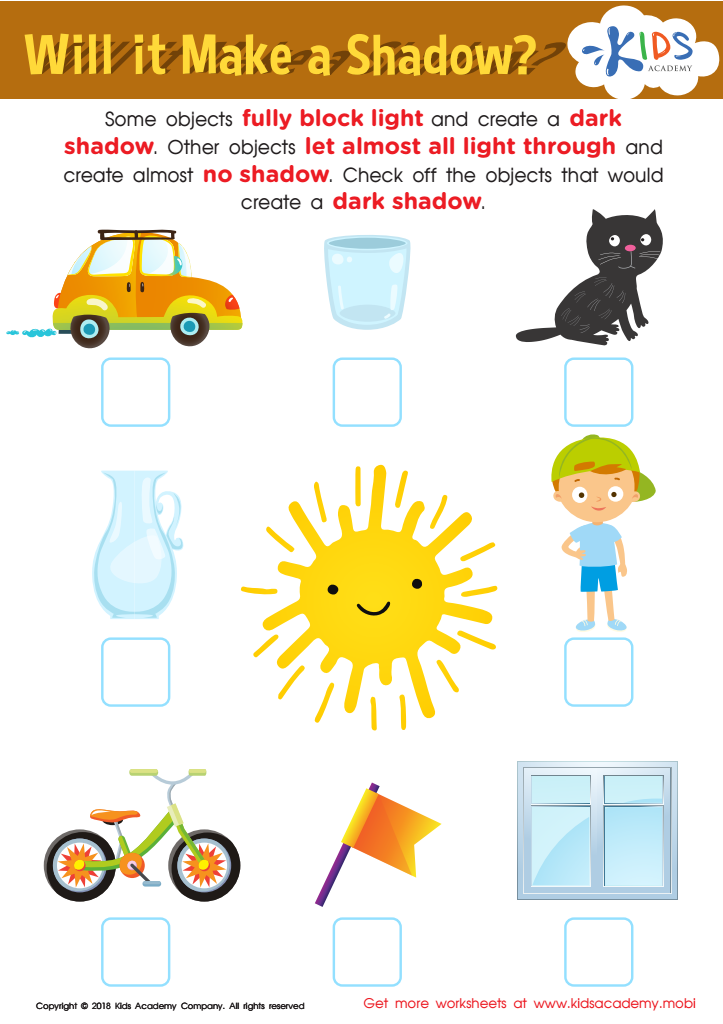
Will It Make a Shadow? Worksheet

Will It Make a Shadow? Worksheet

Teach your students about shadows with this printout. Ask them to check off the boxes next to the pictures that create a shadow. Explain that some objects block light, forming a shadow, while others don't and thus don't create a shadow. Your students are likely already familiar with their own shadow.
Will It Make a Shadow? Worksheet
Worksheet
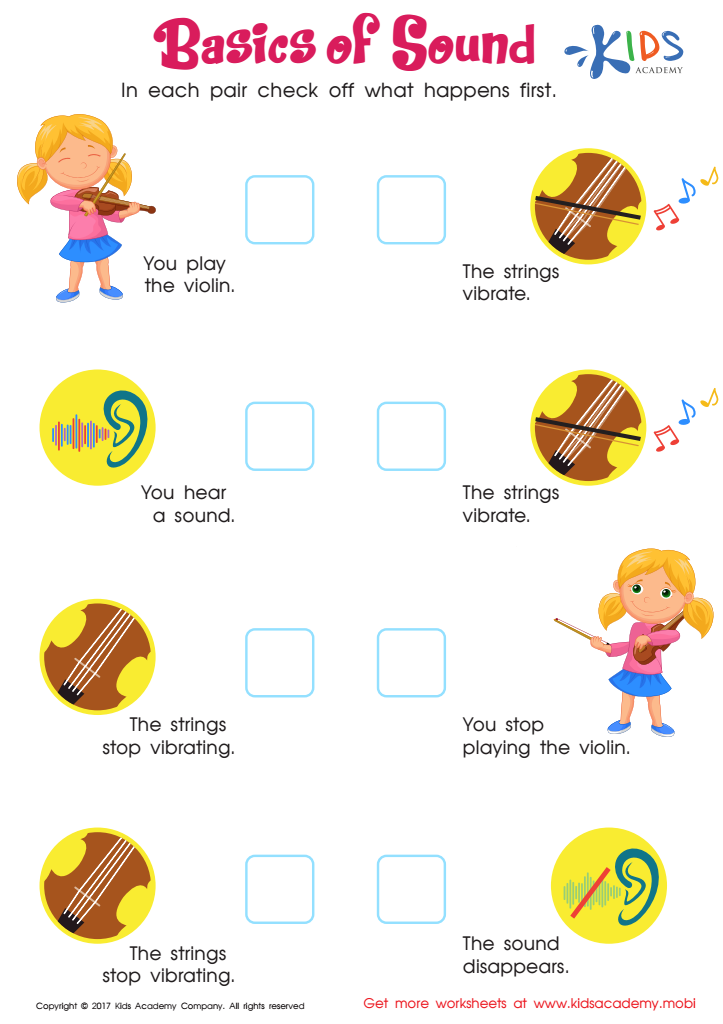
Basics Of Sound Worksheet

Basics Of Sound Worksheet

Sound is the result of vibrations. As a violinist creates music on her instrument, we can observe how the vibrations start and stop, producing a pleasing sound. This worksheet helps kids understand the basics of physical science behind sound.
Basics Of Sound Worksheet
Worksheet
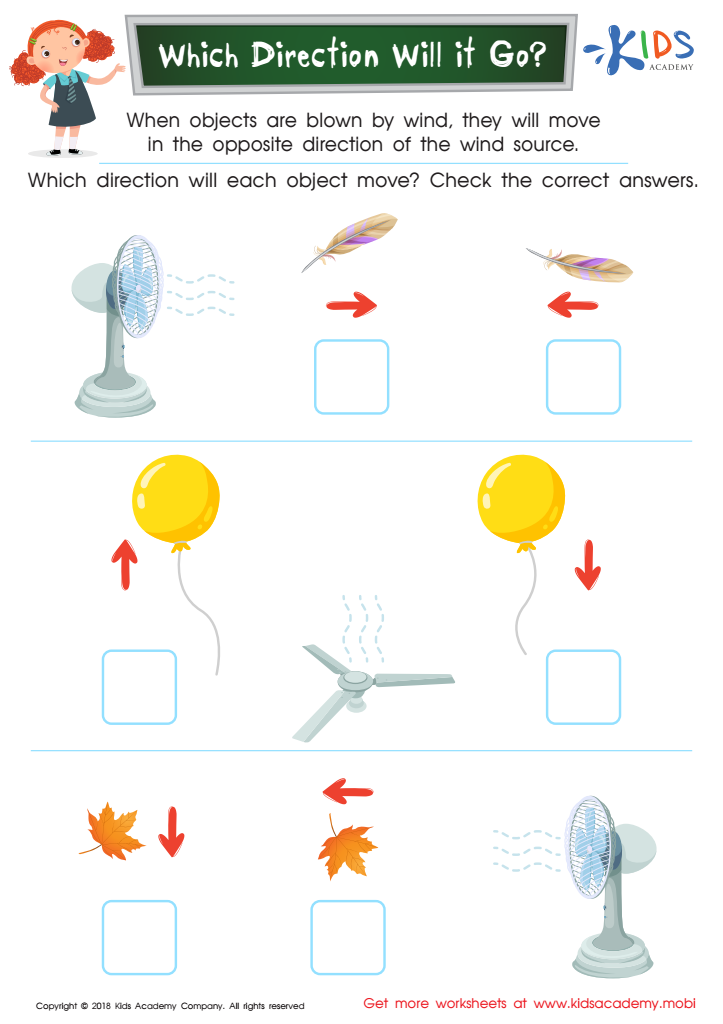
Which Direction Will it Go? Worksheet

Which Direction Will it Go? Worksheet

Explain to your students: when objects are blown by wind, they will move in the opposite direction. In the worksheet, there are pictures of wind sources and objects being blown by the wind. Ask your child to identify and check the direction each object will move.
Which Direction Will it Go? Worksheet
Worksheet
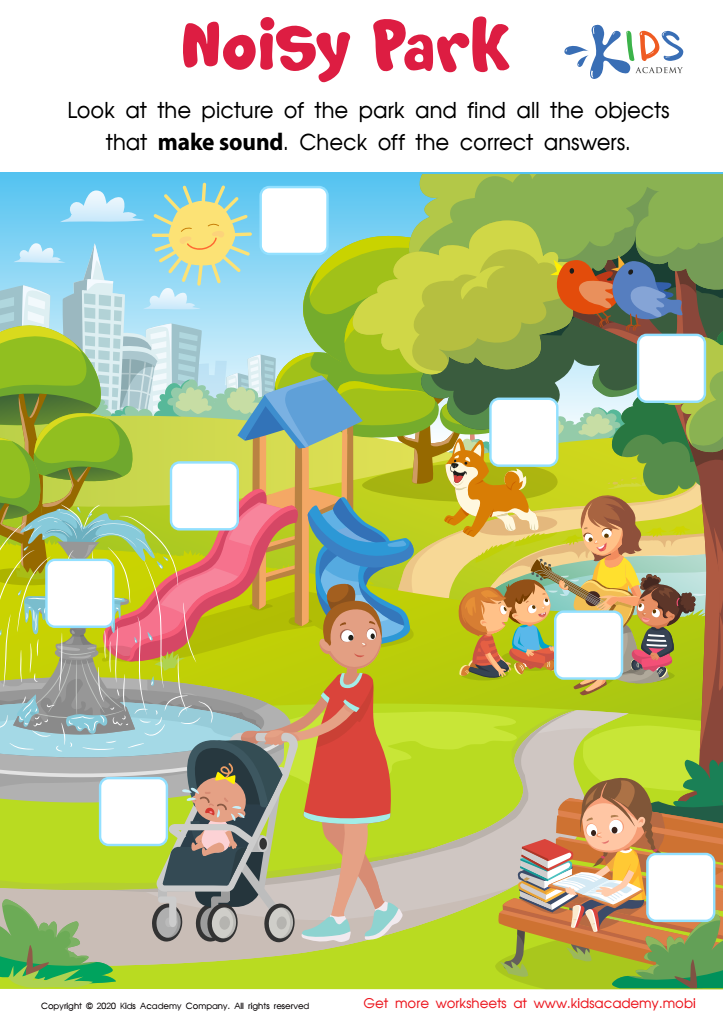
Noisy Park Worksheet

Noisy Park Worksheet

Get your students ready for the exercise by asking them to name things they see and do at the park. Then, have them identify the things in the picture, look for objects that make sounds, and verify the answers.
Noisy Park Worksheet
Worksheet
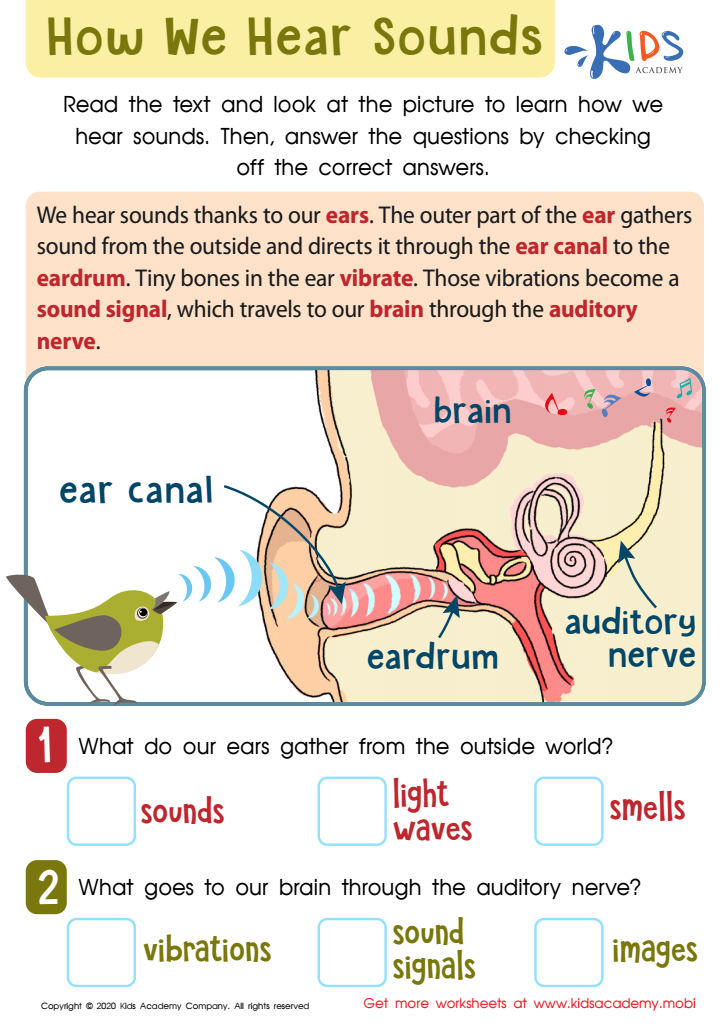
How We Hear Sounds Worksheet

How We Hear Sounds Worksheet

Before beginning this worksheet, make sure your students are aware of the five senses: sight, taste, touch, smell, and hearing. This worksheet will help them explore how we hear sounds with our ears. Read or listen to the text, study the images, and answer the questions. Check off the correct answers.
How We Hear Sounds Worksheet
Worksheet
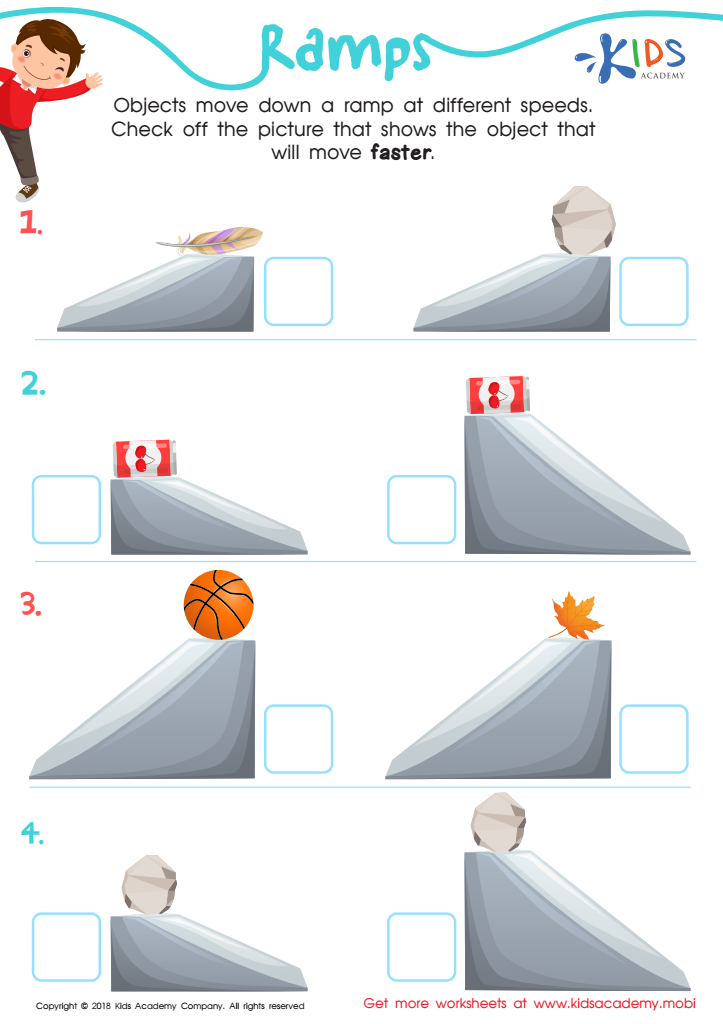
Ramps Worksheet
Ramps Worksheet

Ramps Worksheet

If your child has seen a ramp, they'll find this worksheet easy. A ramp is sloped for objects to move quickly downwards. The printout has images of objects on different ramps. Ask your child to identify which object will move faster.
Ramps Worksheet
Worksheet
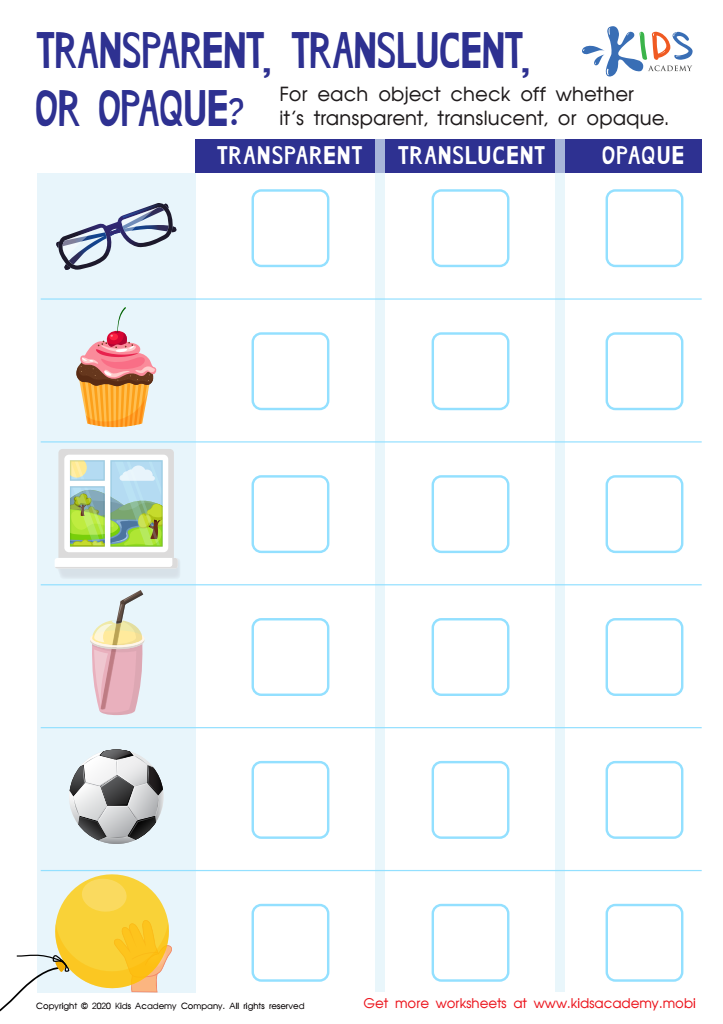
Transparent, Translucent, or Opaque Worksheet

Transparent, Translucent, or Opaque Worksheet

Remind students that transparent objects allow us to see through them, translucent objects let some light pass through, and opaque objects block all light. Have them look at pictures and decide if each object is transparent, translucent, or opaque.
Transparent, Translucent, or Opaque Worksheet
Worksheet
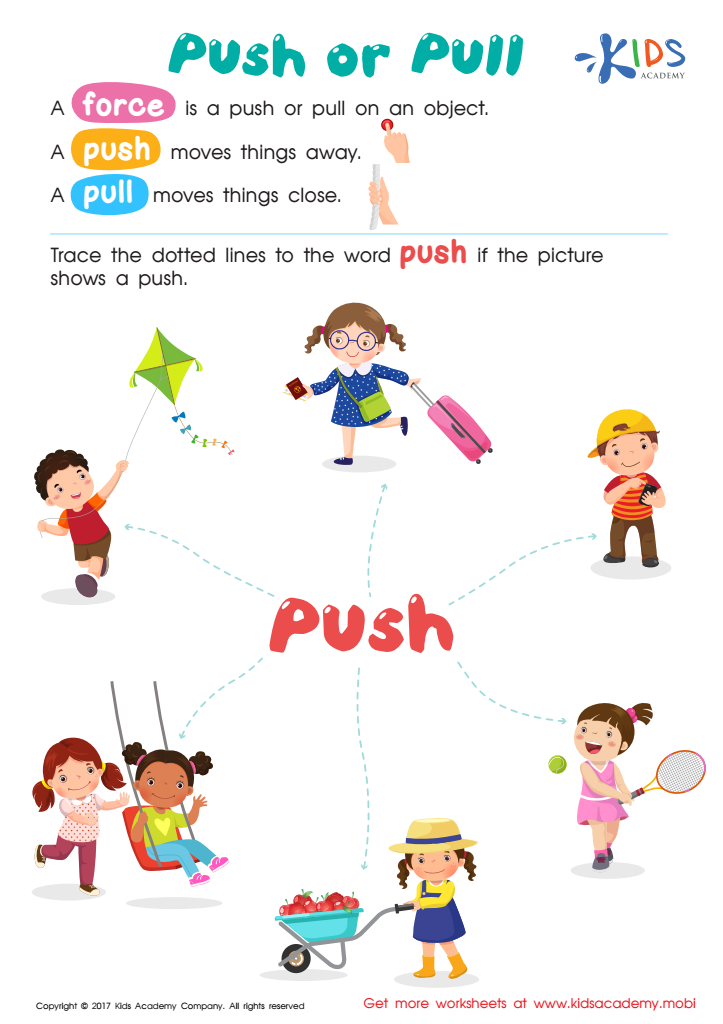
1st grade worksheet: Push or Pull

Push or Pull Worksheet

and which involve pulling! With this fun worksheet, your child will learn about force and its simple application in everyday activities. Get them started with Push or Pull! (80 words)
Push or Pull Worksheet
Worksheet
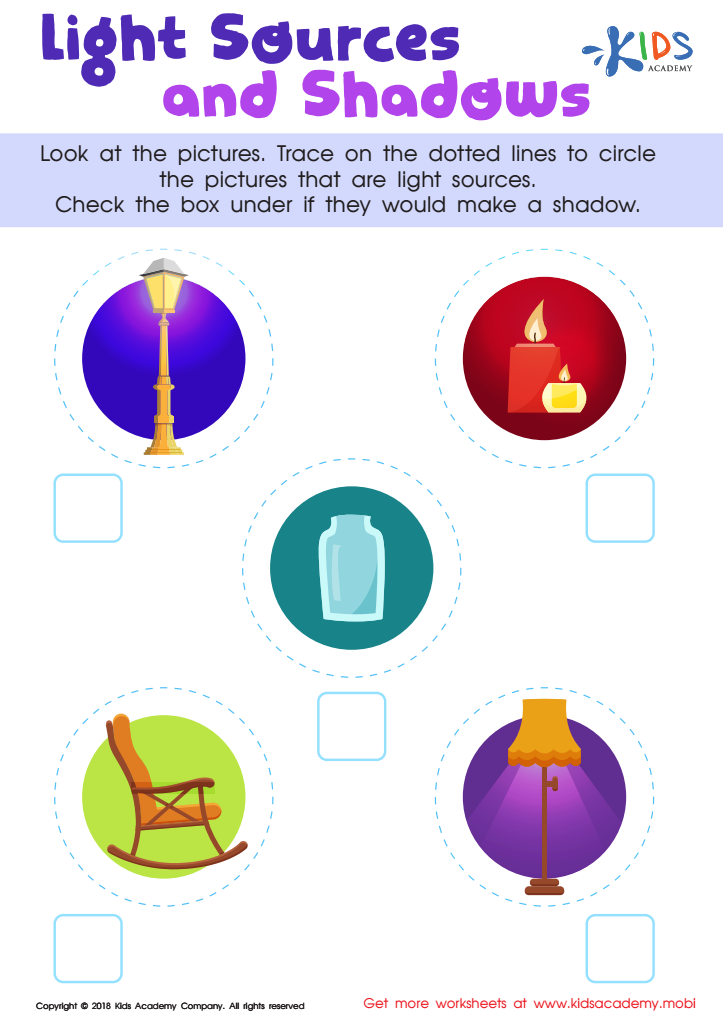
Light Sources and Shadows Worksheet

Light Sources and Shadows Worksheet

During the day, the sun radiates bright light. At night, when it's time for bed, the sun sets and darkness takes over. To light our way, we use other sources of light. With your students, trace the dotted lines around the pictures of light sources and check the boxes under the objects that will cast shadows.
Light Sources and Shadows Worksheet
Worksheet
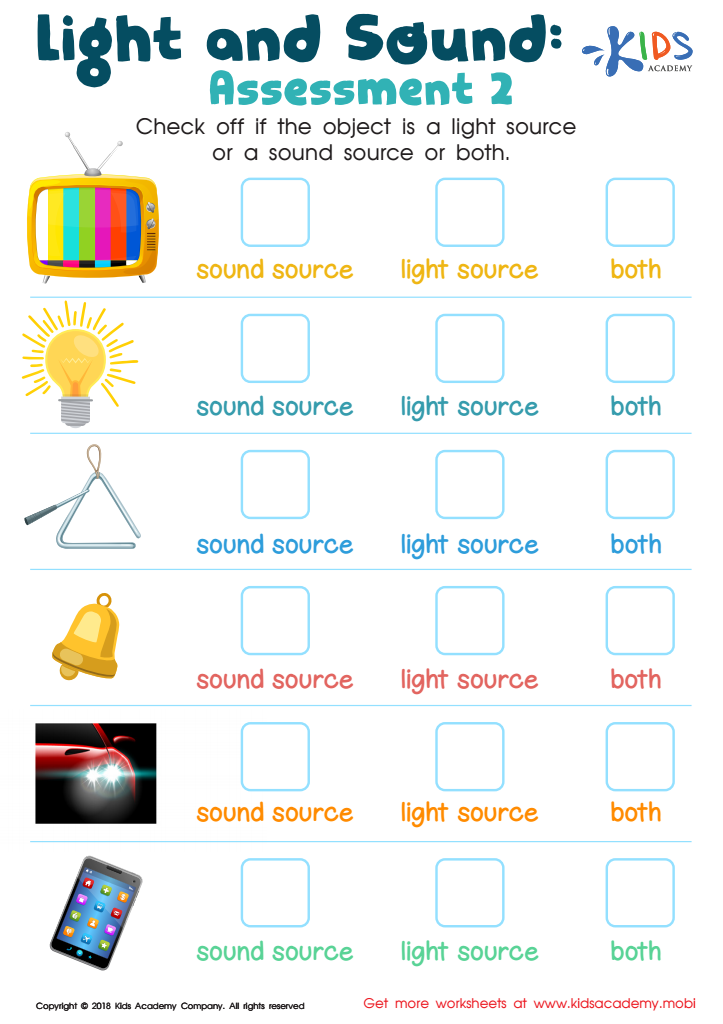
Light and Sound: Assessment 2 Worksheet

Light and Sound: Assessment 2 Worksheet

This worksheet introduces your kids to light and sound, with common sources of each. Identify the objects and help them check if it's a light source, a sound source, or both. Colourful and simple, it's a great way to teach your little ones! (80 words)
Light and Sound: Assessment 2 Worksheet
Worksheet
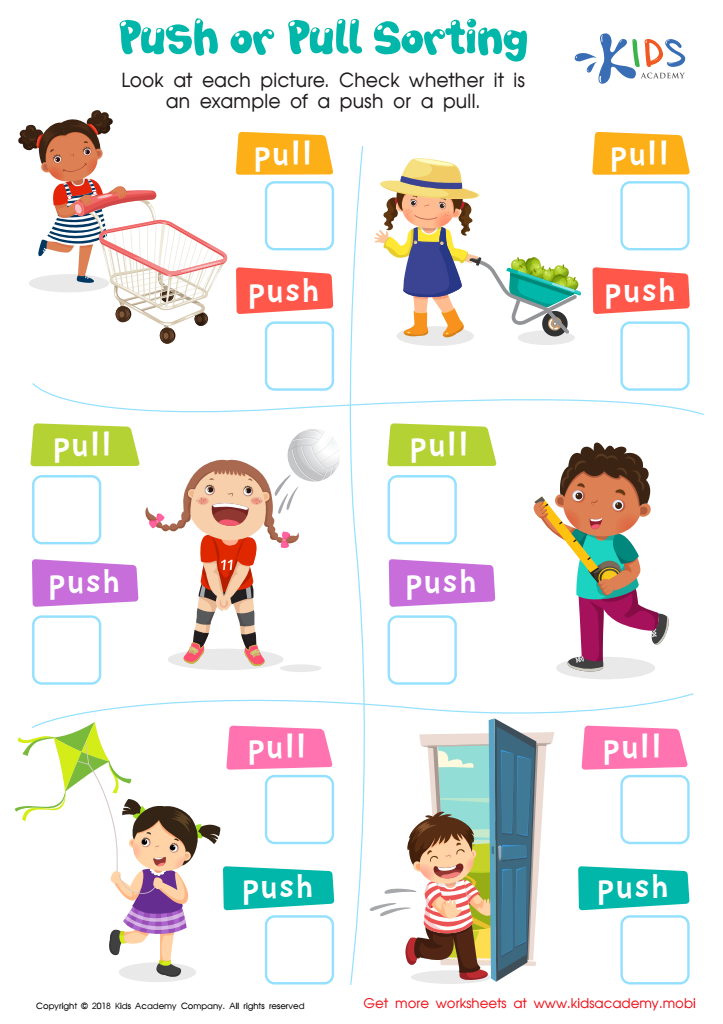
Push or Pull Sorting Worksheet

Push or Pull Sorting Worksheet

Show your child the pictures in this worksheet. Ask them to tell you what each child is doing. Then, ask them to identify whether it's an example of pushing or pulling. Ask if they know what these terms mean and if they can provide examples.
Push or Pull Sorting Worksheet
Worksheet
Vibrations and Sounds Worksheet


Vibrations and Sounds Worksheet
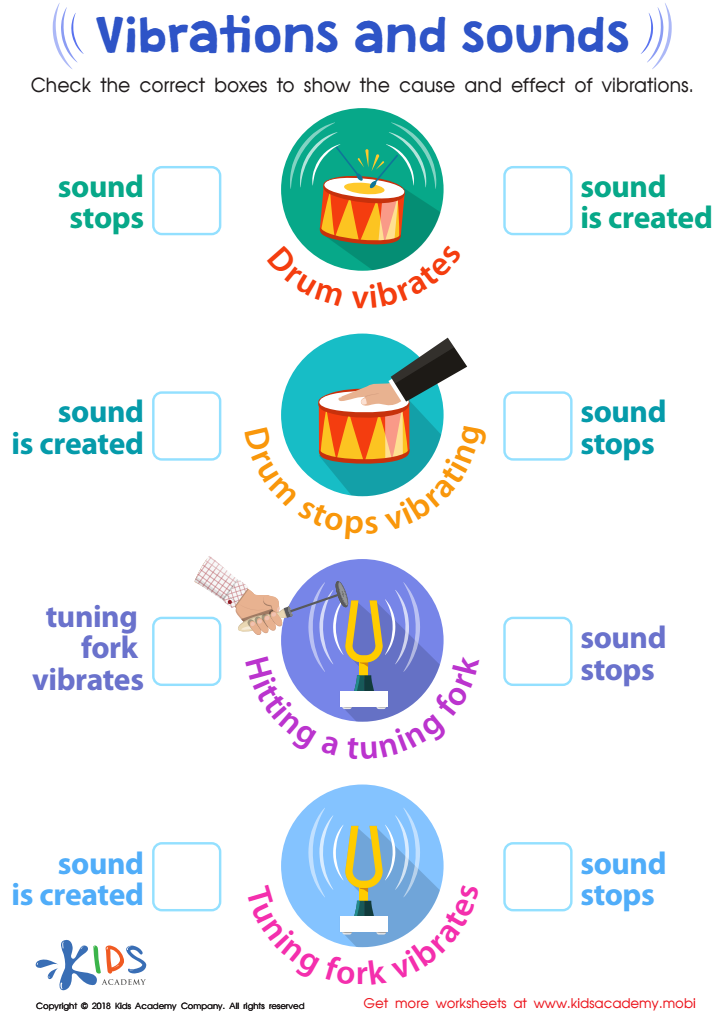
Many objects, creatures, and things make sounds. People talk, animals bark, hiss or meow, and things make sounds too. Ask your students to name others that produce sounds and why they do, such as when a drum is hit with a stick. Get them to learn about vibrations and cause/effect in this fun worksheet and check the answers.
Vibrations and Sounds Worksheet

Worksheet


Normal Physical Science worksheets for Ages 5-6 are incredibly valuable learning tools that lay the foundation for a lifetime of scientific curiosity and understanding. At this critical age, children are naturally inquisitive, constantly exploring the world around them. These worksheets are designed to harness that curiosity, guiding young learners through the basics of physical science in a manner that is both engaging and age-appropriate.

The worksheets cover a range of topics tailored to young minds, from understanding the properties of different materials to basic principles of motion and energy. This variety ensures that children are not only exposed to fundamental scientific concepts but also learn to appreciate the diversity and richness of the physical world. Moreover, these worksheets employ a combination of visual aids, simple experiments, and interactive activities that make learning both fun and memorable.

By integrating Normal Physical Science worksheets into their learning routine, children aged 5-6 develop critical thinking and problem-solving skills early on. These skills are essential not just for science but for all areas of learning and development. Furthermore, these worksheets are designed to encourage questions and discussions, helping children to develop communication skills and a vocabulary to express their observations and ideas about the physical world. In summary, Normal Physical Science worksheets for Ages 5-6 are an indispensable tool in sparking young learners' interest in science, setting them on a path of discovery and learning that will benefit them throughout their educational journey and beyond.