Normal Silent Vowels Worksheets for Ages 5-7
4 filtered results
-
From - To
Discover our engaging "Normal Silent Vowels Worksheets" designed for ages 5-7! These worksheets offer a fun way for young learners to identify and practice silent vowels in words. With colorful illustrations and interactive activities, children will develop their reading skills while enhancing their phonics understanding. Perfect for home or classroom use, these worksheets encourage independent learning and help build confidence in young readers. From tracing letters to completing sentences, each activity is crafted to captivate and educate. Explore our collection and watch your child's literacy skills soar as they master the concept of silent vowels!
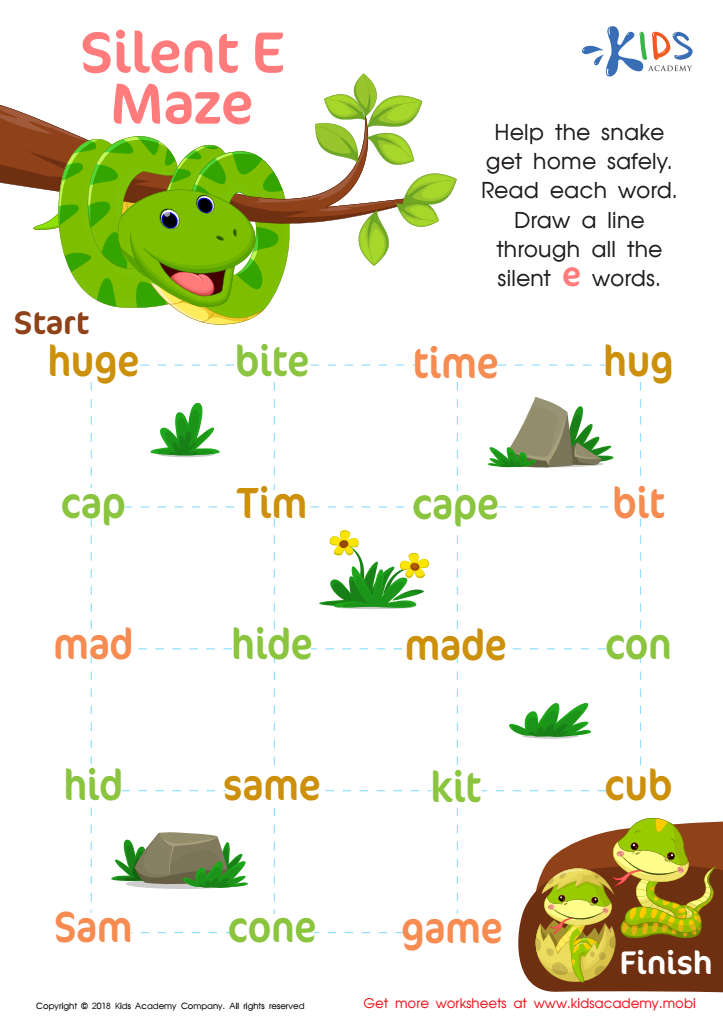
Silent E Maze Worksheet
 Assign to My Students
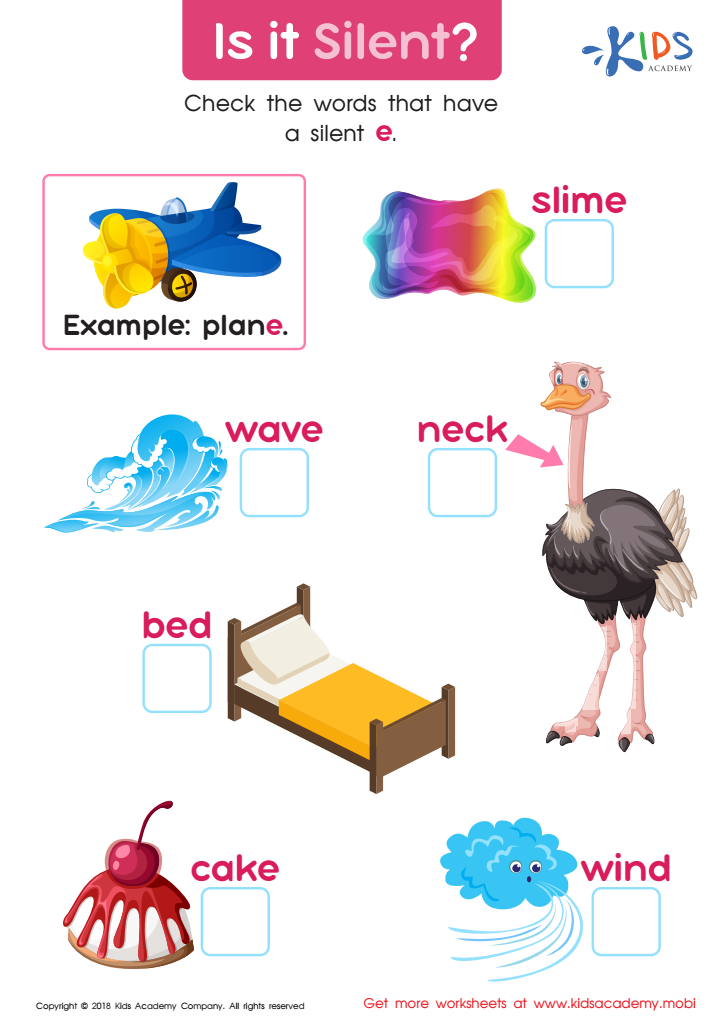
Is It Silent? Worksheet
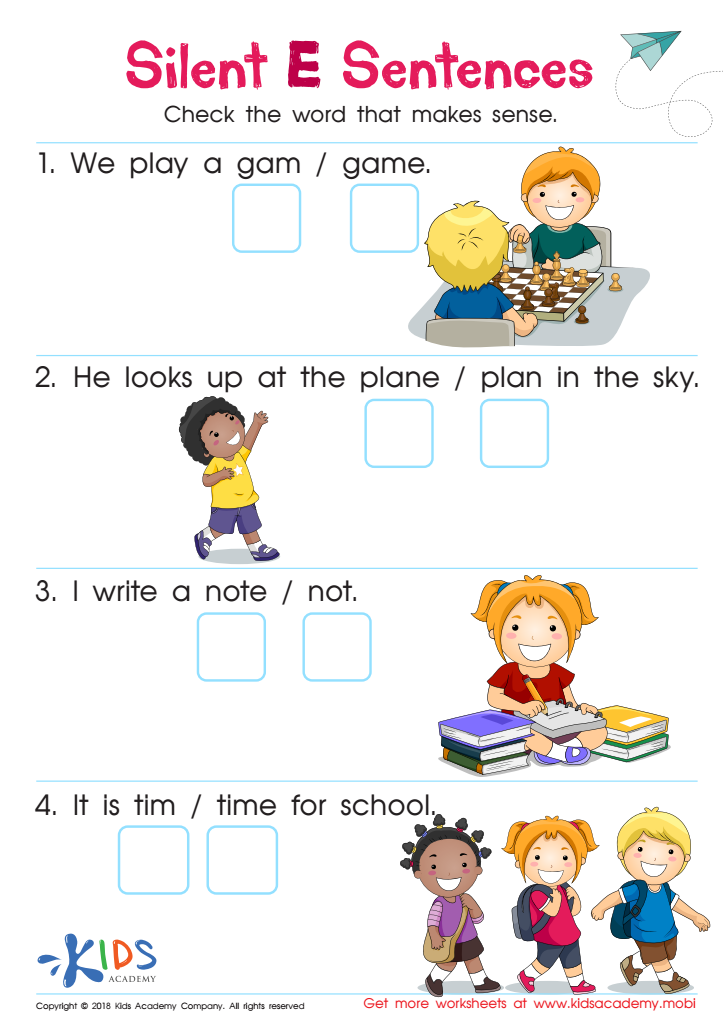
Silent E Sentences Worksheet
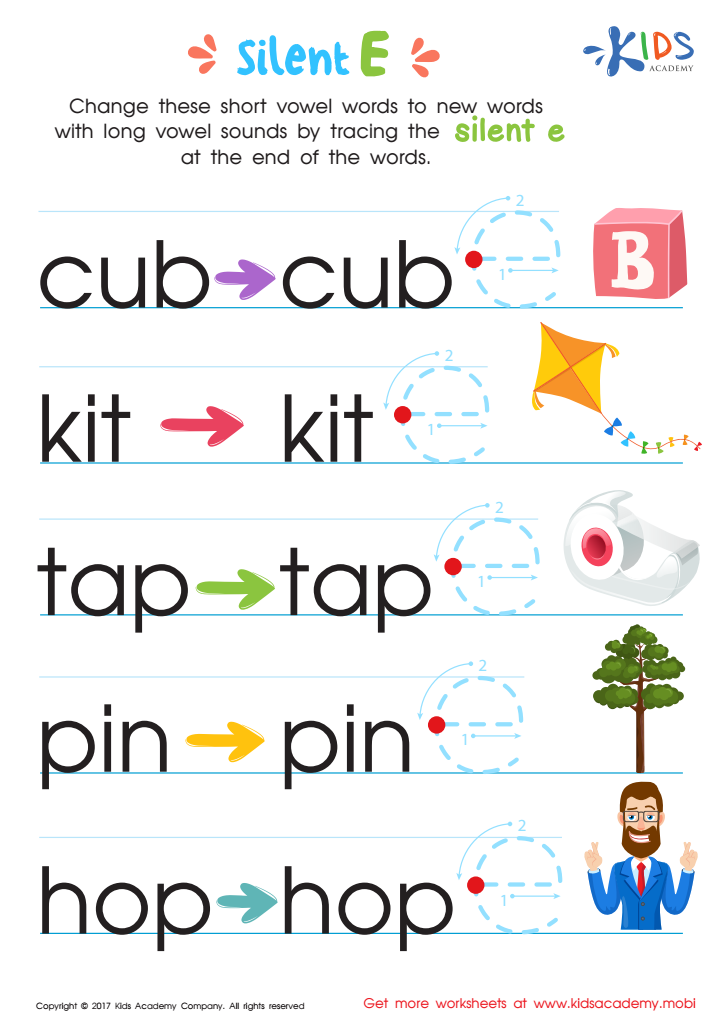
Silent E Words Worksheet


Normal silent vowels, often referred to in literacy instruction, play a crucial role in the reading and writing development of children ages 5-7. Understanding the concept of silent vowels helps young learners decode words effectively, which is foundational for fluent reading. When children learn that certain vowels in words like "cake" or "ride" are silent, they become better equipped to recognize and pronounce complex words, improving their confidence and motivation in literacy tasks.
Furthermore, a grasp of normal silent vowels encourages phonemic awareness, as children learn to distinguish between sounds and letters. This awareness is linked to enhanced spelling skills, enabling them to write with greater accuracy. Teachers and parents should also recognize that mastering silent vowels contributes to a child's overall language development, enhancing their written and verbal communication abilities.
Engaging students with fun activities that incorporate silent vowels, such as interactive games or storytelling, can make learning enjoyable and memorable. By emphasizing silent vowels, teachers and parents provide essential tools that empower children in their educational journey, laying a solid foundation for future literacy success. Ultimately, a focus on these vocal nuances fosters individual growth, making it imperative for educators and caregivers to prioritize this area in their instruction.