Normal Governance and Civics Worksheets for Ages 5-7 - Page 2
28 filtered results
-
From - To
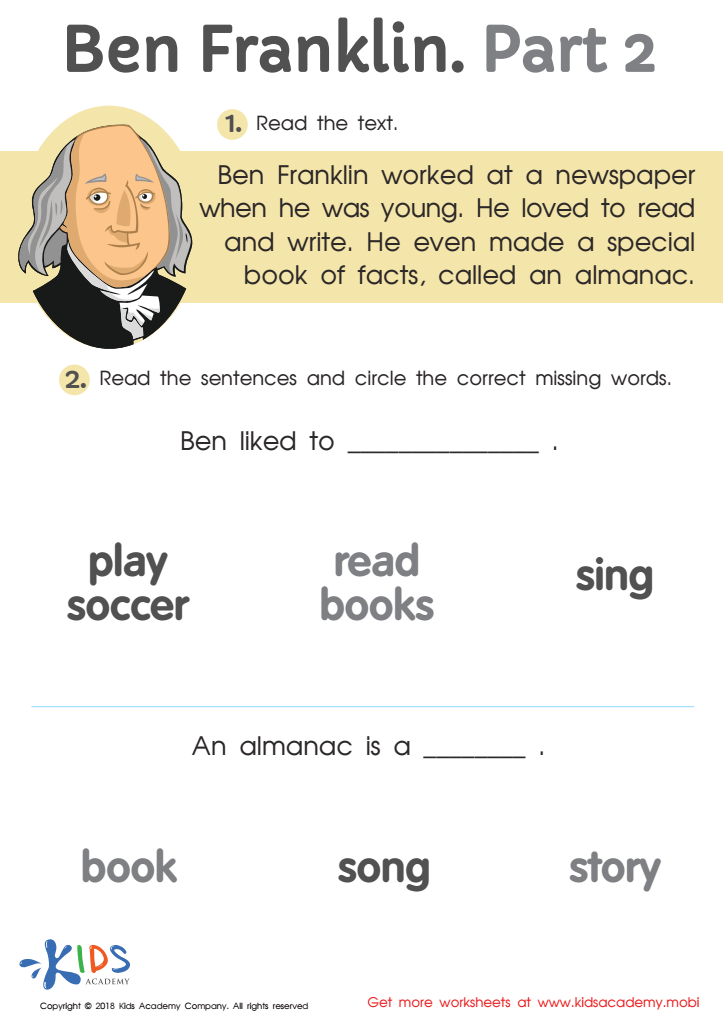
Ben Franklin Part 2 Worksheet
 Assign to My Students
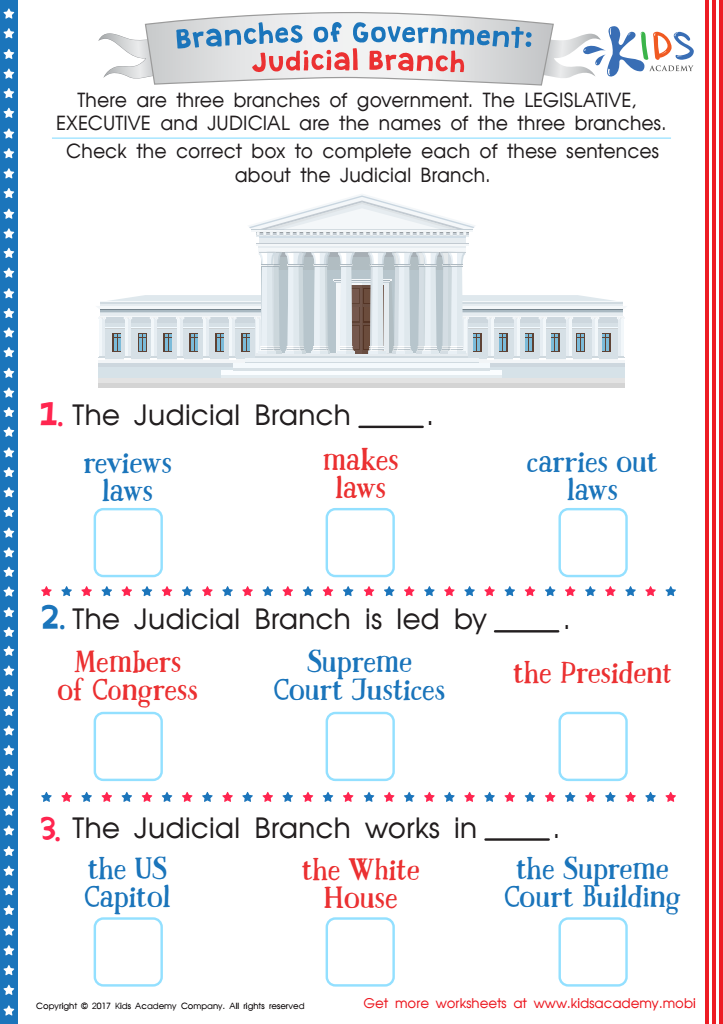
Braches of the Government: Judicial Branch Worksheet
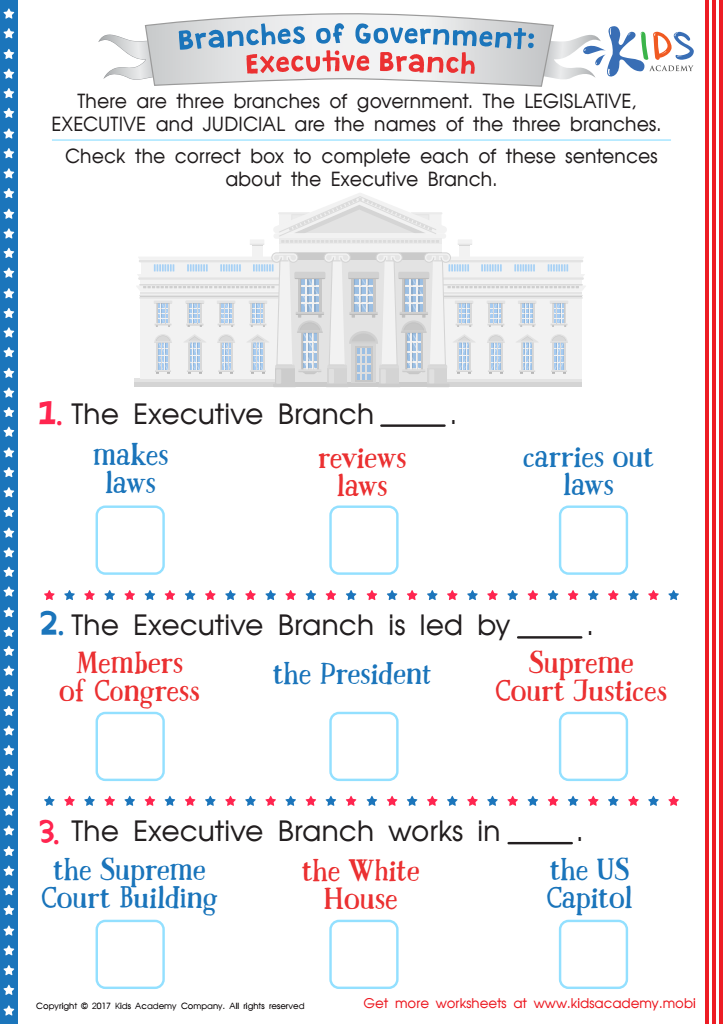
Branches of the Government: Executive Branch Printable
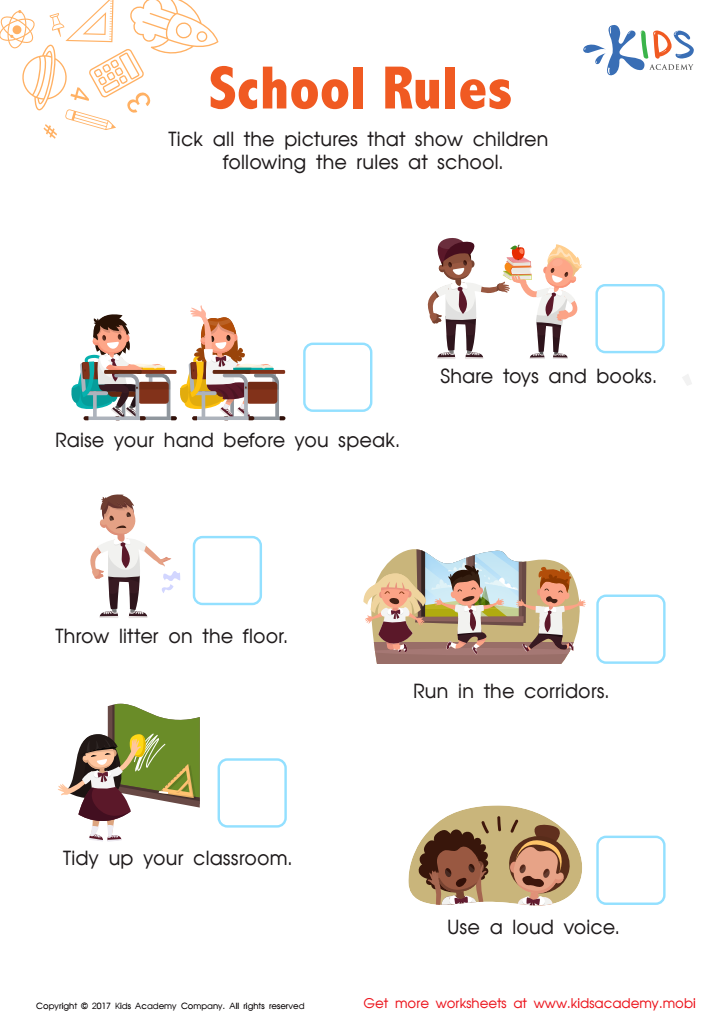
School Rules Worksheet


Normal Governance and Civics education for ages 5-7 is crucial in fostering responsible citizens who understand their rights and responsibilities from an early age. At this stage of development, children are naturally curious and eager to learn about the world around them, making it an ideal time to introduce concepts of governance, community, and social responsibility.
Teaching young students about civics helps them understand authority figures, the importance of rules, and how decisions in their communities impact their lives. It encourages respect for diversity and equips them with problem-solving skills for resolving conflicts amicably. Parents and teachers play a critical role in this process by providing a supportive learning environment that promotes discussion, critical thinking, and empathy.
Moreover, introducing these concepts lays the foundation for engagement in civic duties later in life. As children learn to identify and articulate their needs and beliefs, they become more confident individuals who are comfortable participating in democratic processes. Overall, investing in civics and governance education for young children not only enhances their social-emotional skills but also fosters a sense of belonging and active participation in their communities.








