Normal Subtraction Worksheets for Ages 5-8 - Page 2
29 filtered results
-
From - To
 Assign to My Students
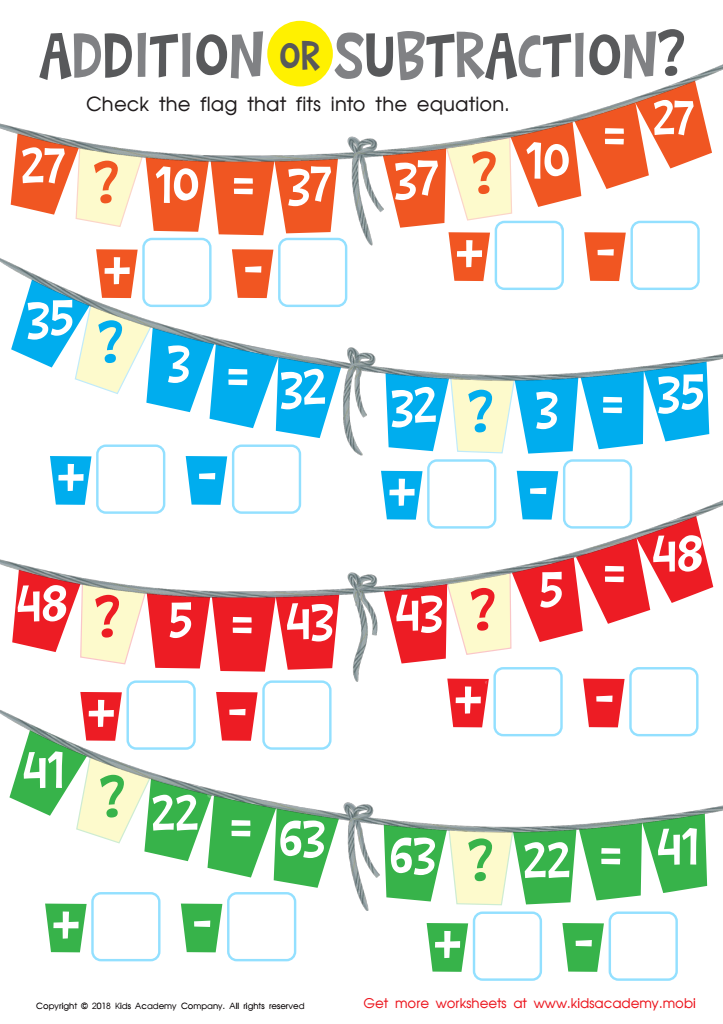
Addition or Subtraction? Worksheet
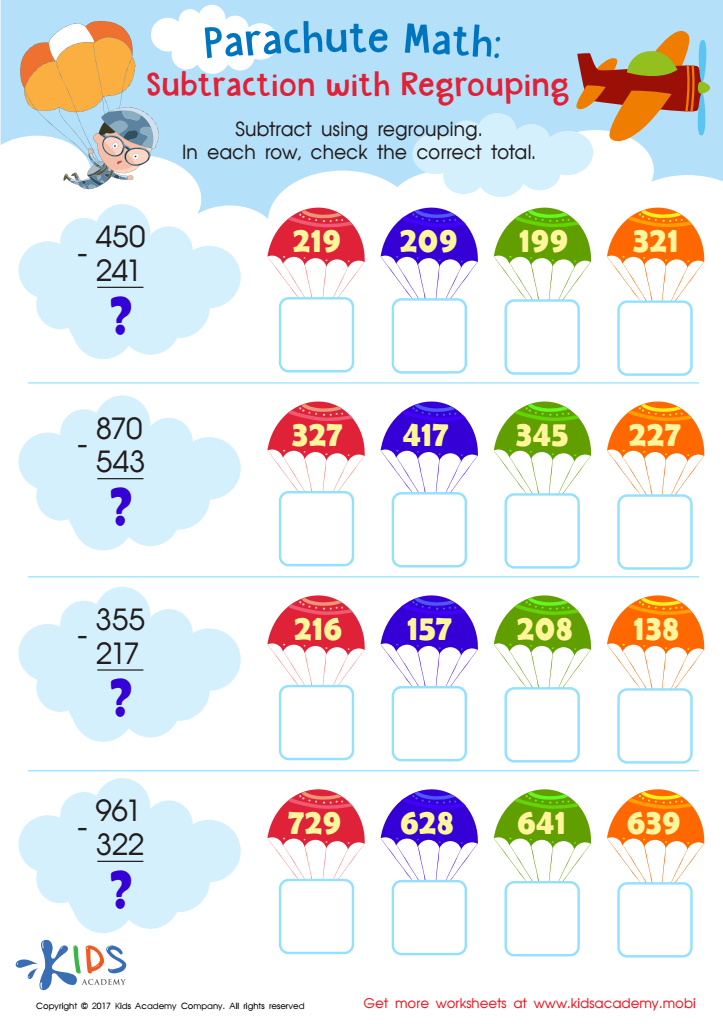
Subtraction with Regrouping for 3rd Grade Worksheet
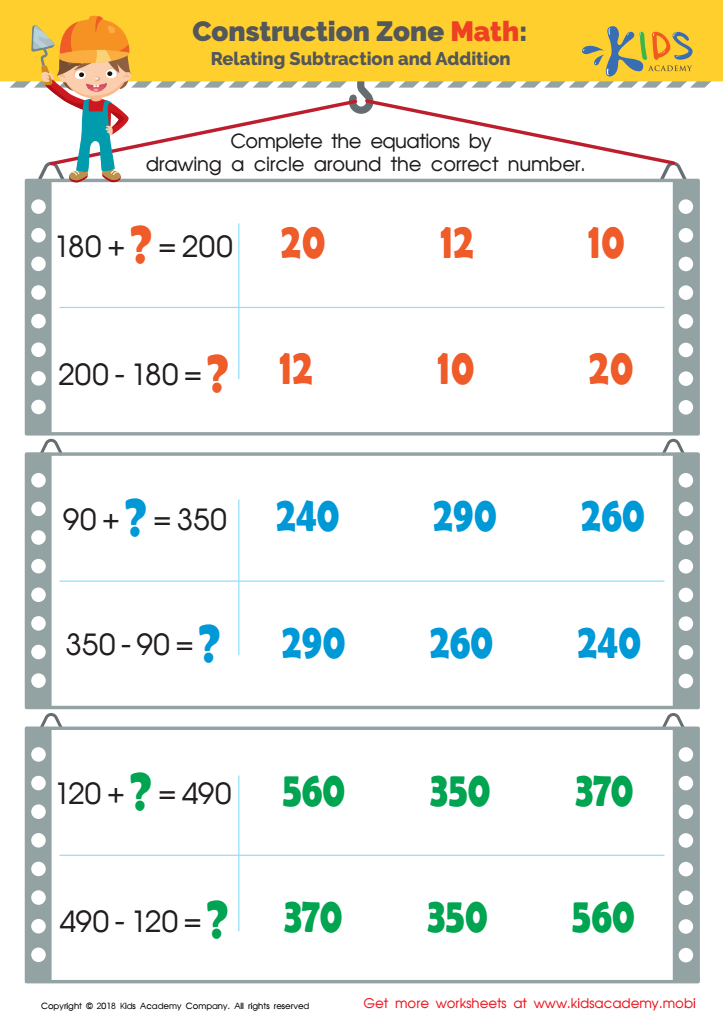
Construction Zone Math: Relating Subtraction and Addition Worksheet
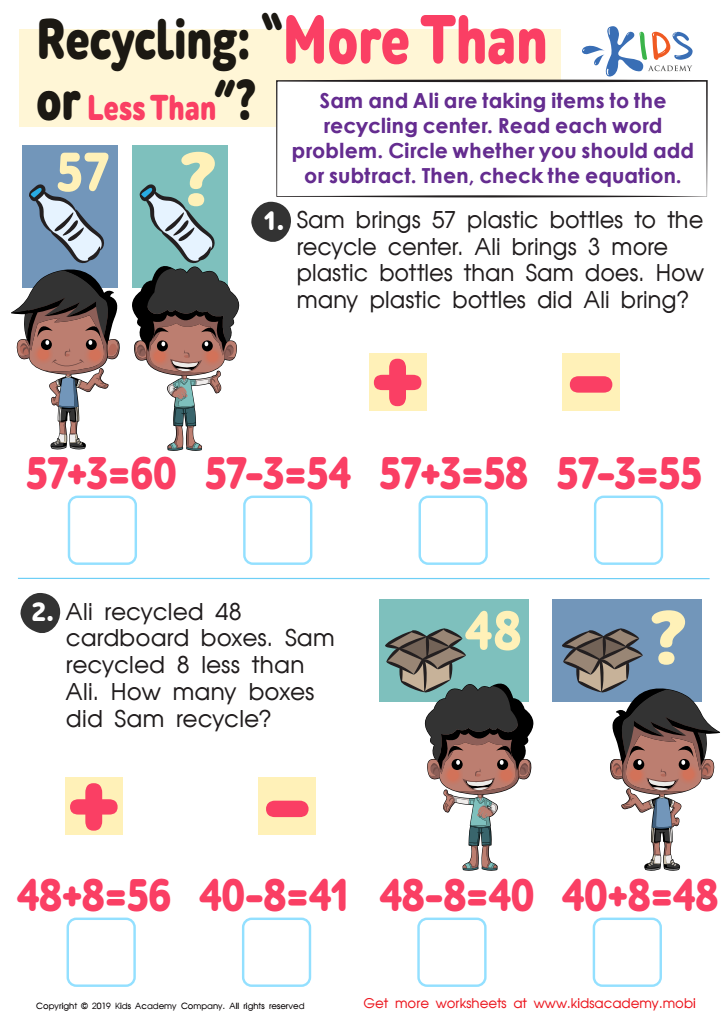
Recycling - More or Less Worksheet








Normal subtraction, the traditional arithmetic operation of finding the difference between numbers, is an essential skill that children ages 5-8 need to master. At this fundamental stage of their education, understanding subtraction sets the stage for numerical literacy, critical thinking, and problem-solving skills.
Firstly, normal subtraction helps build a strong mathematical foundation, as it is a core component of arithmetic that children will use frequently in everyday life. For instance, calculating change when shopping or understanding distances and time requires basic subtraction skills.
Secondly, learning subtraction early enhances cognitive development. It encourages children to think logically, understand numbers, and develop mental math strategies. The process of breaking apart numbers and finding differences helps strengthen their memory and attention to detail.
Moreover, subtraction is interconnected with other mathematical concepts, such as addition, multiplication, and division. Proficiency in subtraction supports these related areas, fostering more comprehensive mathematical understanding.
For teachers and parents, emphasizing normal subtraction through engaging activities, practical examples, and consistent practice is vital. This early exposure not only boosts children’s confidence in dealing with numbers but also equips them with essential life skills, paving the way for academic success and making everyday experiences more manageable and understandable.