Normal Time Worksheets for Ages 6-9
5 filtered results
-
From - To
Welcome to our collection of Normal Time Worksheets designed specifically for children aged 6 to 9! These engaging and interactive worksheets aim to help young learners develop a solid understanding of time concepts, including reading analog and digital clocks, understanding AM and PM, and recognizing time intervals. Each worksheet is crafted to promote math skills through fun activities that both challenge and inspire students. Perfect for home or classroom use, our normal time worksheets provide clear instructions and colorful visuals to enhance learning. Dive into the world of time-telling and build confidence with math while having fun!
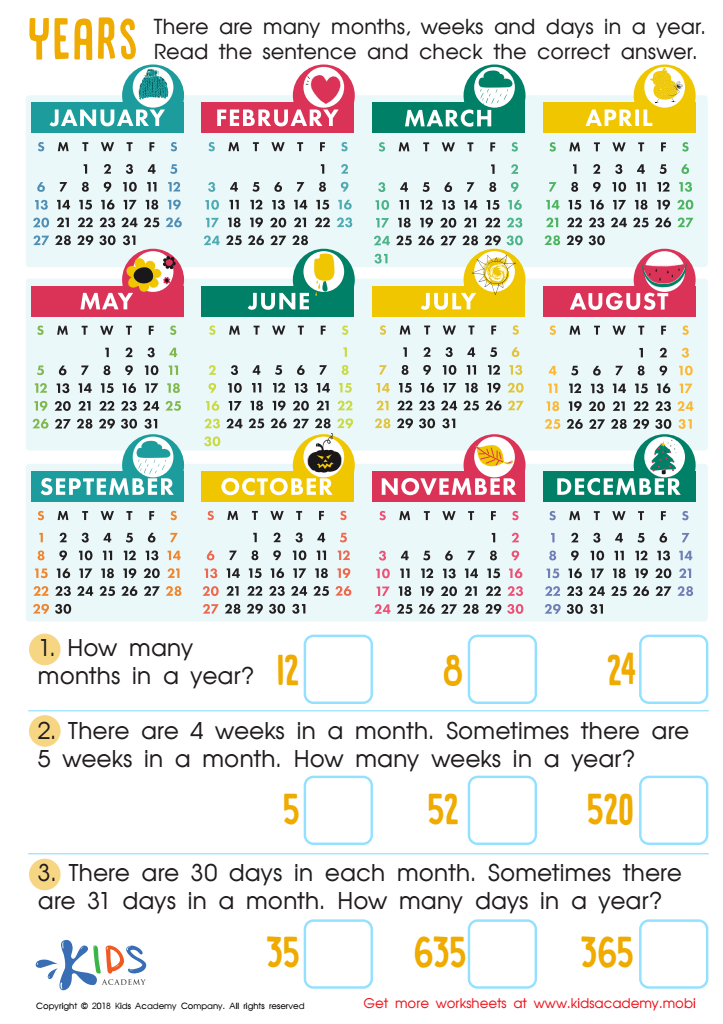
Years Worksheet
 Assign to My Students
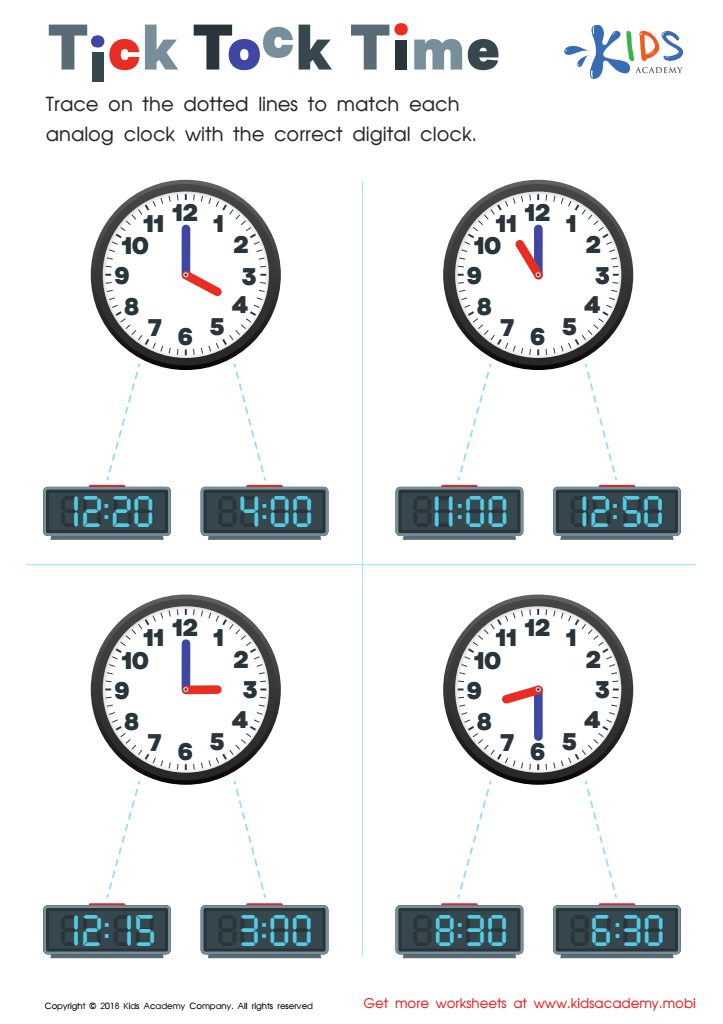
Tick Tock Time Worksheet
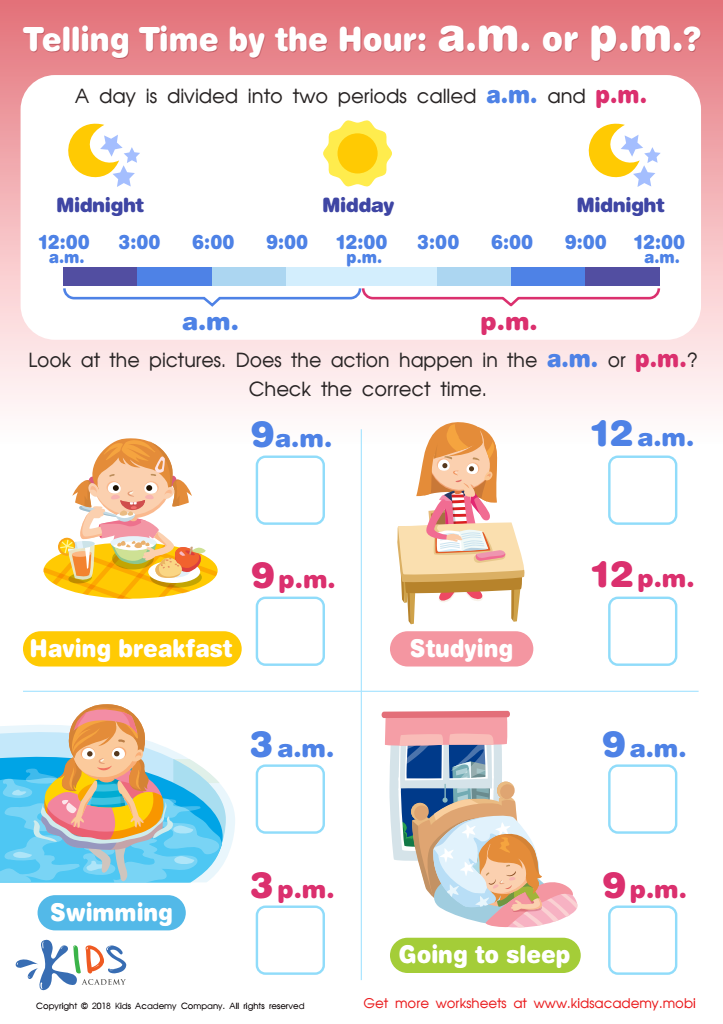
Tilling Time by the Hour: a.m. or p.m.? Worksheet
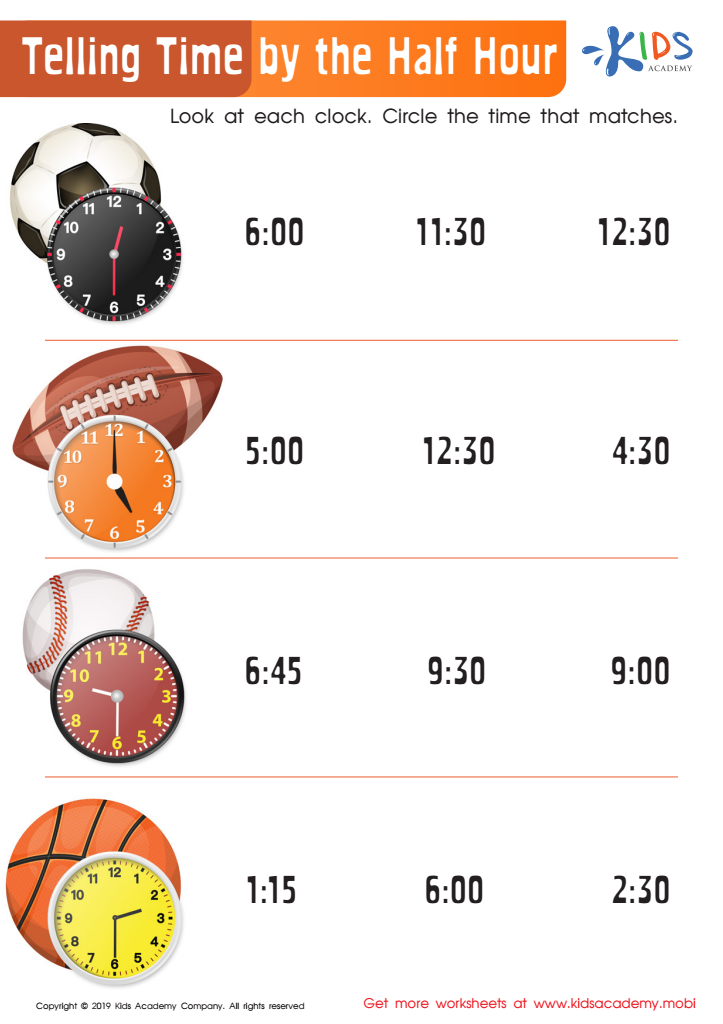
Telling Time by the Half Hour Worksheet
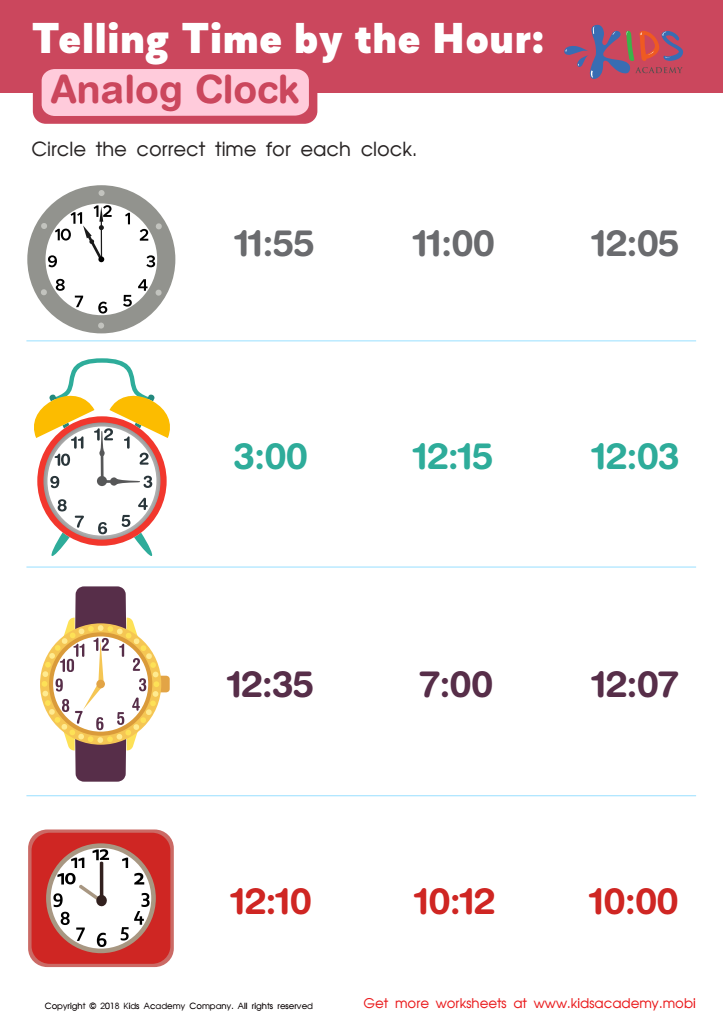
Telling Time by the Hour: Analog Clock Worksheet




.jpg)

%20(1).jpg)

Normal Time for Ages 6-9 is crucial for the development of young children, as it nurtures their emotional, social, and cognitive growth during a formative stage in life. Parents and teachers should care about this developmental milestone because it lays the groundwork for essential skills needed later in life.
At this age, children begin to develop a sense of time, which contributes to their organizational and planning abilities. Understanding normal time helps children grasp concepts such as routines, schedules, and the sequencing of events, aiding them in a structured learning environment. It also encourages the development of responsibility and time management skills that are vital for independent learning.
Furthermore, when parents and teachers collaboratively reinforce the idea of normal time, it cultivates a sense of security in children. Routines and predictable patterns provide comfort and certainty, enabling children to thrive both academically and socially. Consistent discussions and activities related to time also promote language development and critical thinking.
By prioritizing normal time within this age group, adults facilitate crucial skills that contribute to well-rounded, confident individuals ready to engage with the world, making it a vital focus in early education and parenting roles.








