
Normal Missing Letters Worksheets for Ages 7-9
4 filtered results
Difficulty Level
Grade
Age
-
From - To
Subject
Activity
Standards
Help your child master the alphabet with our Normal Missing Letters Worksheets for Ages 7-9 from Kids Academy! Perfect for enriching literacy skills, these engaging exercises challenge students to identify and fill in missing letters, reinforcing their understanding of alphabetical order. Carefully designed by educators, our worksheets enhance phonics, spelling, and critical thinking. With a variety of fun and interactive themes, children will maintain focus while eagerly progressing through each activity. Ideal for both classroom and at-home learning, our worksheets are a valuable addition to any educational routine. Download today and watch your child’s confidence in reading soar!
Favorites
With answer key
Interactive
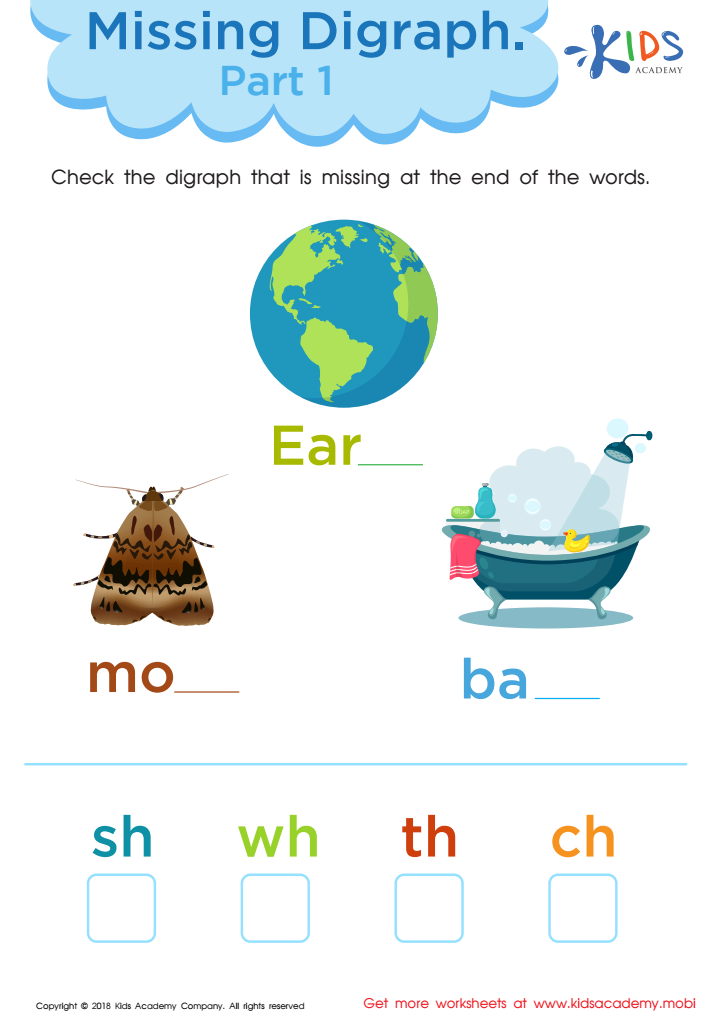
Missing Digraph: Part 1 Worksheet
Practice the 'th' digraph with this worksheet! Ask kids to say the words shown and sound out the letters below each image. Check the box with the correct digraph to complete. Examples include 'earth', 'bath' and 'moth', all ending with the same two letters. Phonics teaches that digraphs are two letters that make one sound.
 Assign to My Students
Missing Digraph: Part 1 Worksheet
Worksheet
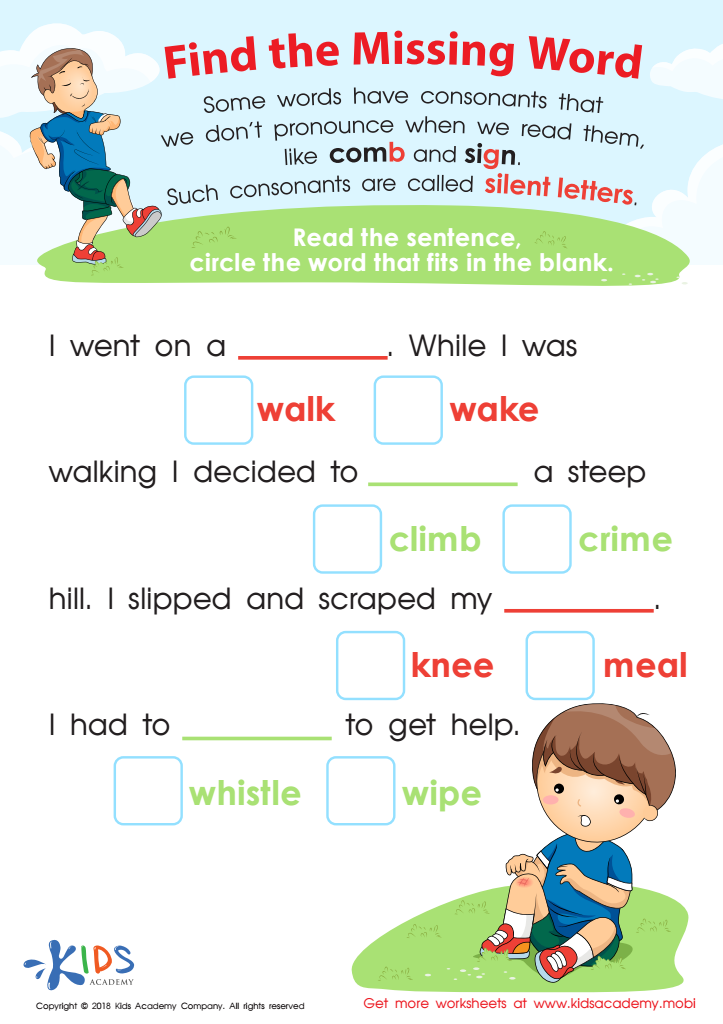
Find The Missing Word Worksheet
Master silent letters like "b" and "k" with this illustrated worksheet! Read the sentences and fill in the blanks with the correct word, checking the box. Read all the way to the bottom and review words containing silent letters. A great way to help your little learner tackle a tough topic!
Find The Missing Word Worksheet
Worksheet
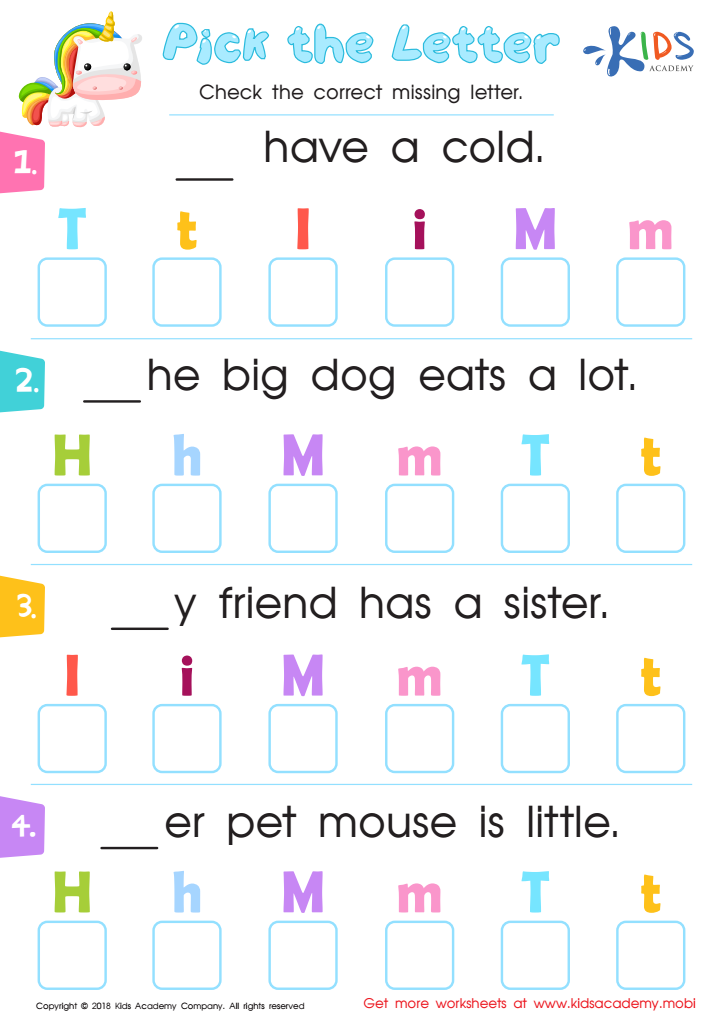
Pick the Letter Worksheet
Put your child's capitalization and reading skills to the test with this missing letter worksheet! Have them look at each sentence, note the blank and review the letters below. Find the uppercase letter that should start each sentence and check the boxes to complete. Fun and colorful, this worksheet is sure to keep your child engaged!
Pick the Letter Worksheet
Worksheet
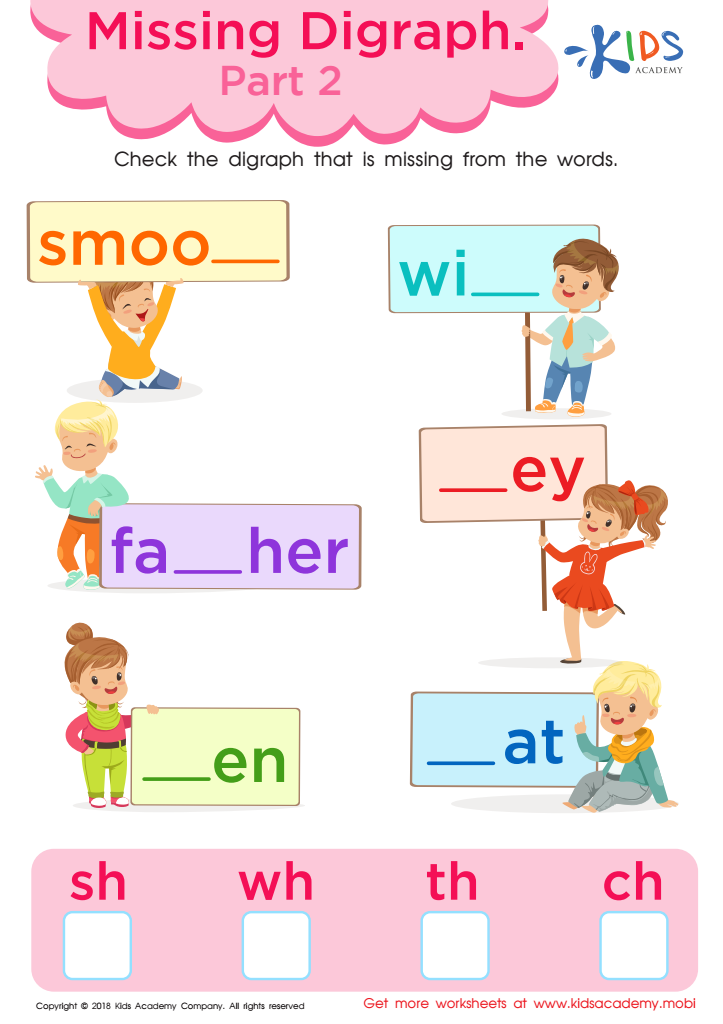
Missing Digraph: Part 2 Worksheet
Practice the "th" digraph with this fun worksheet from Kids Academy! See how it appears at the beginning, middle, or end of words and help learners fill in the blanks. Check if they got it right by finding the th digraph at the bottom!
Missing Digraph: Part 2 Worksheet
Worksheet
Join Kids Academy for Free
Who is primarily going to use this learning content?



Normal Missing Letters activities, designed for ages 7-9, are essential in a child's early education as they significantly bolster literacy development. During this critical stage, children transition from recognizing letters and sounds to forming words and reading fluidly. Parents and teachers should prioritize these activities because they enhance a child's phonetic awareness and spelling skills.
By engaging in Missing Letters tasks, children learn to identify the correct letters that fit into various words, reinforcing their understanding of letter-sound relationships and word structures. This contributes to more confident and accurate spelling capabilities. Moreover, such exercises stimulate mental agility and cognitive development, fostering problem-solving and pattern-recognition skills that are crucial in reading and other academic areas.
Additionally, Missing Letters activities can be tailored to different difficulty levels, ensuring that each child is appropriately challenged according to their proficiency. This individualized approach helps in maintaining engagement and motivation.
Teachers and parents should care about these activities as they lay a strong foundation for reading and writing, essential components of academic success. Strengthening these skills early on helps children tackle more complex texts and express their thoughts clearly and effectively, setting them up for long-term educational achievements.







