Free Normal Difficulty Reading Worksheets With Answer Keys - Page 11
344 filtered results
Difficulty Level
Grade
Age
-
From - To
Subject
Activity
Standards
Favorites
With answer key
Interactive
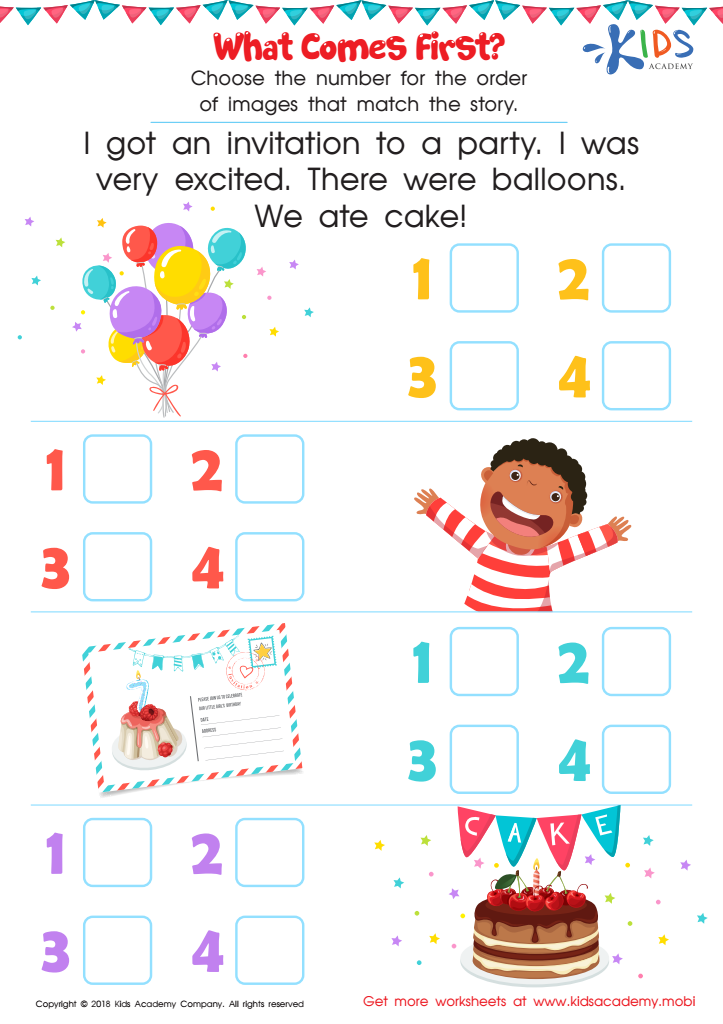
What Comes First Worksheet
Before you start, ask your child what they see in the picture. Read the story aloud together, then show them the images in order, numbered 1-5. Ask them to choose the numbers that match the story. Have fun and enjoy this party worksheet with your little one! (80 words)
 Assign to My Students
What Comes First Worksheet
Worksheet
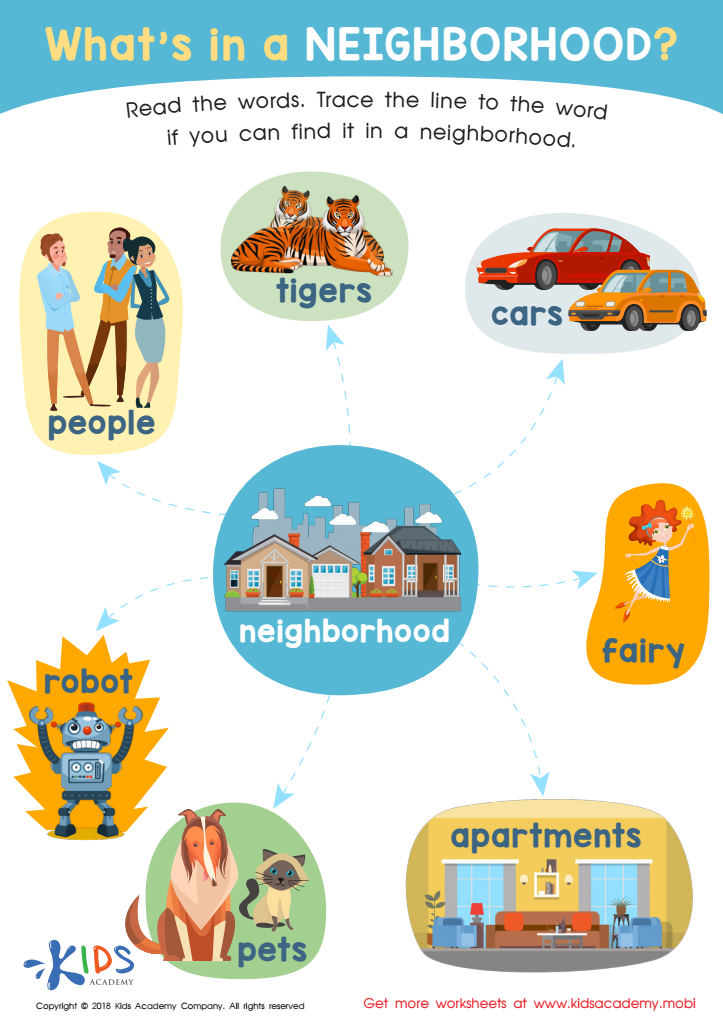
What's in a Neighborhood? Worksheet
This fun worksheet uses picture clues and traceable lines to help kids learn neighborhood words. Kids will match the neighborhood pictures to the correct words and practice connecting the two. The bright colors make it a great way for kids to practice understanding the qualities of a neighborhood.
What's in a Neighborhood? Worksheet
Worksheet
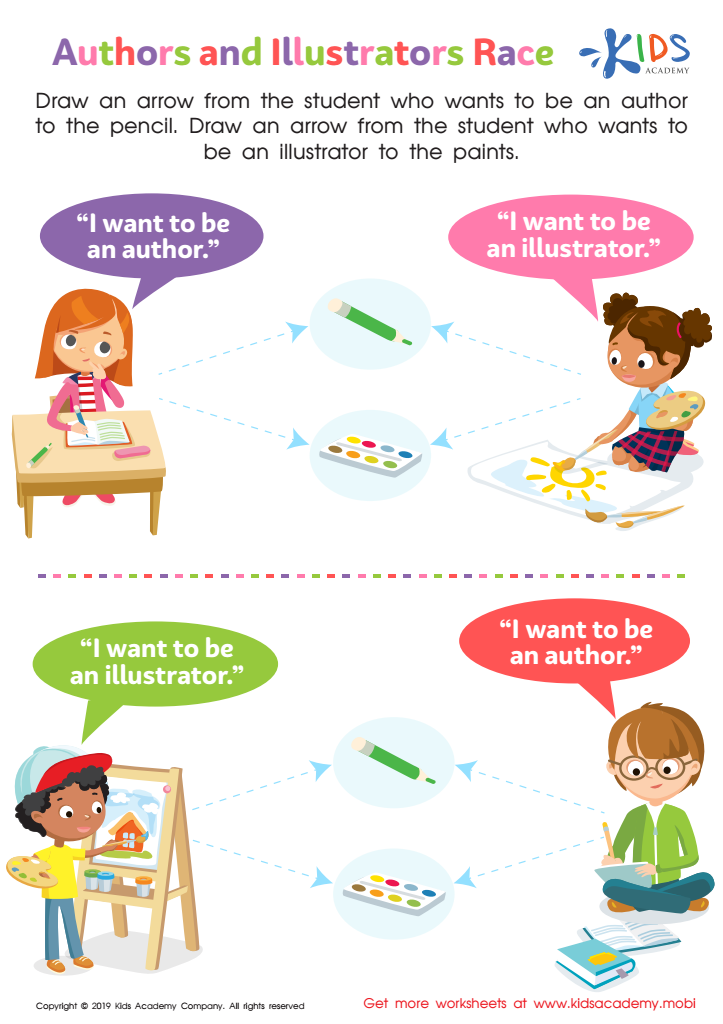
Authors and Illustrators Race Worksheet
Help your child learn about the author and illustrator of a book with this free and colorful worksheet. They'll trace lines to pick the tools used by each and understand the difference between them. It's a great way to introduce fundamental concepts of reading.
Authors and Illustrators Race Worksheet
Worksheet
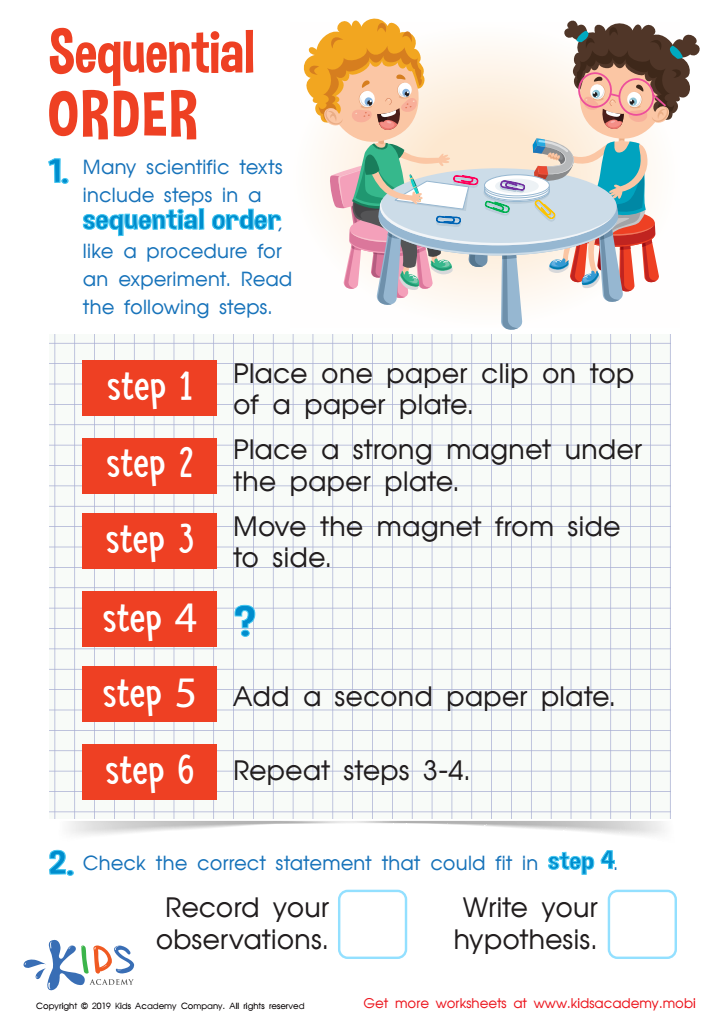
Sequencential Order Worksheet
This worksheet is perfect for science-lovers: it'll test how good your child is at following instructions by asking them to complete the steps in the right order. Have them read the steps and then choose the statements that correctly fill in the blanks. It's more than just fun experiments and results - science also requires careful procedure.
Sequencential Order Worksheet
Worksheet
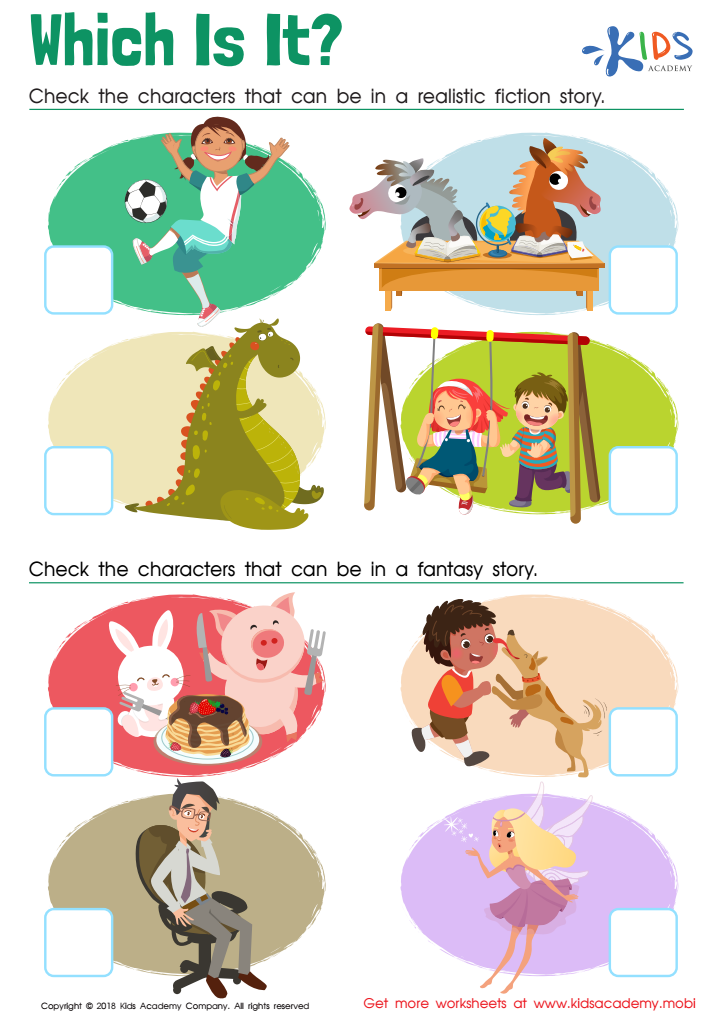
Which Is It? Worksheet
This colorful worksheet helps young readers identify elements of fact and fiction using fun picture clues. They can check off characters who exist in realistic fiction stories, which makes learning the difference between the two genres fun and engaging.
Which Is It? Worksheet
Worksheet
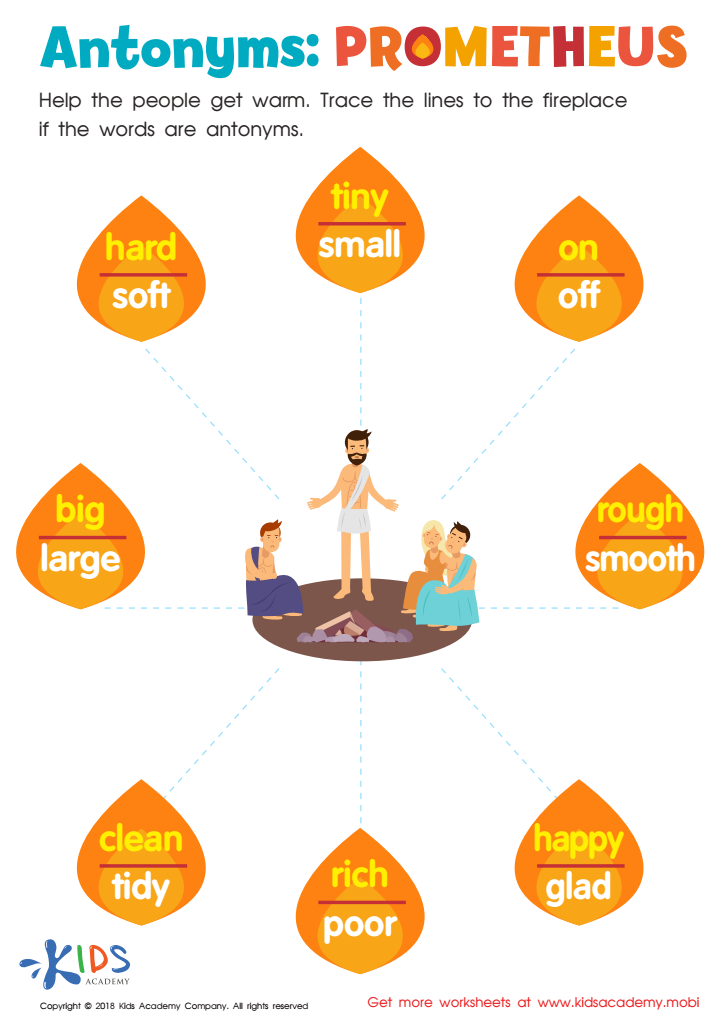
Antonyms: Prometheus Worksheet
Antonyms are words with opposite meanings to another. For example, the antonyms of 'good' are 'bad', 'poor' and 'wicked'. Ask your child to give you antonyms for 'Prometheus', which relates to fire. Invite your kids to trace the lines to the fireplace if the words are antonyms, helping the people in the tracing sheet get warm.
Antonyms: Prometheus Worksheet
Worksheet
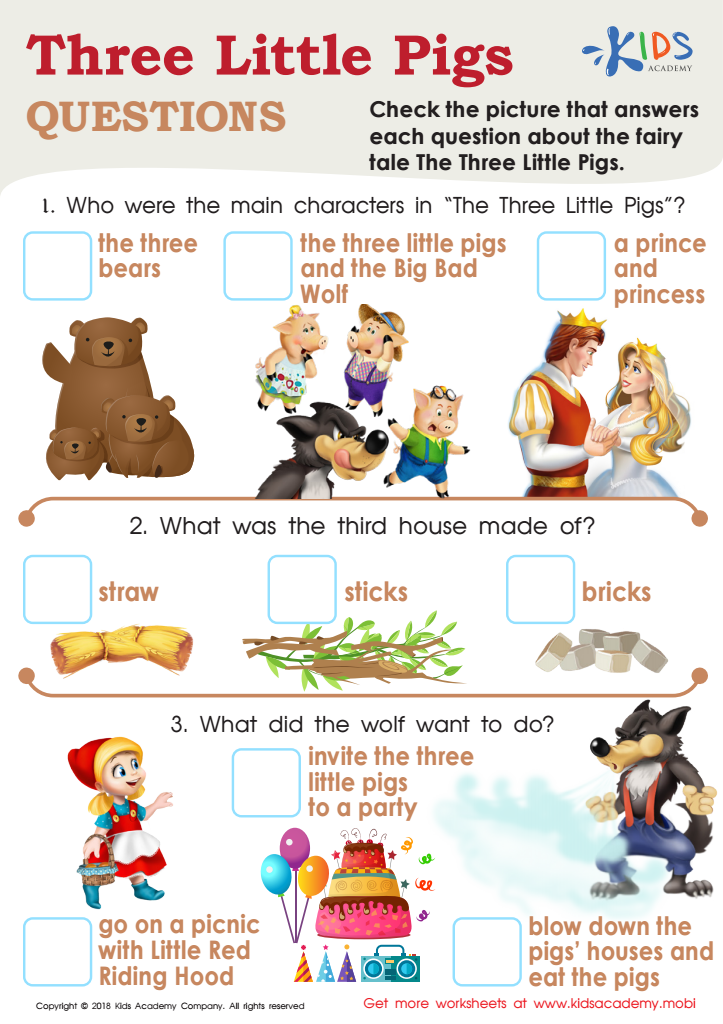
Three Little Pigs Questions Worksheet
Does your kid love bedtime stories? Test their classic fairytale knowledge with this worksheet! If they mention The Three Little Pigs, they're in luck - this pdf has them answering questions based off the classic fairytale. They'll check the picture that answers each question about the story. Is their fairytale knowledge up to scratch?
Three Little Pigs Questions Worksheet
Worksheet
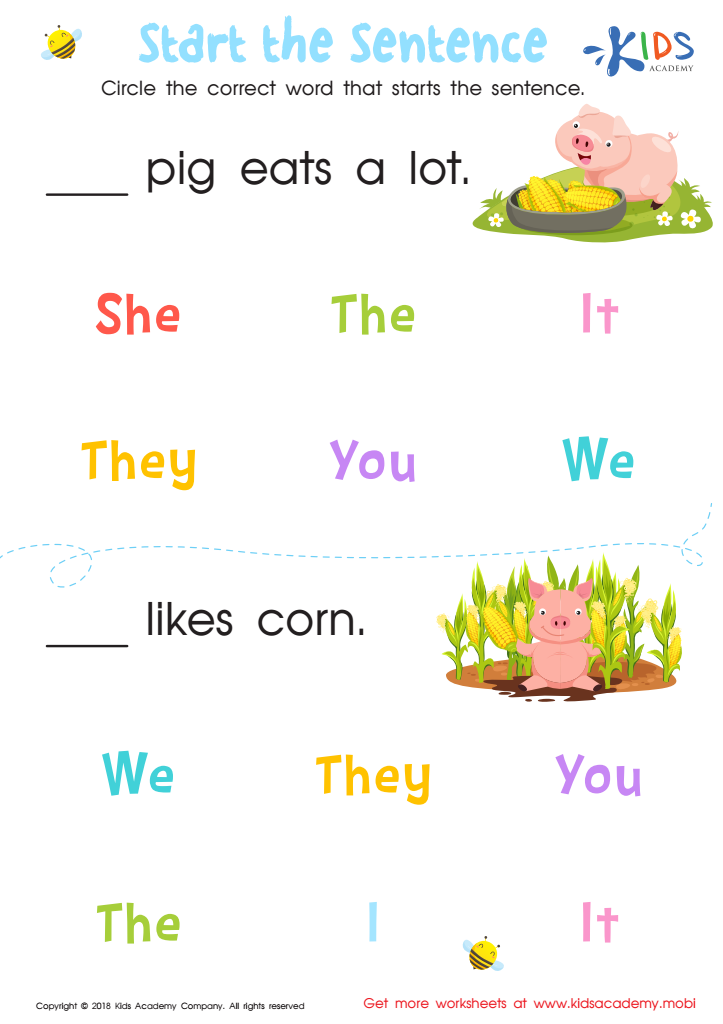
Start the Sentence Worksheet
Test your students' understanding of sentences with this easy worksheet. Ask them to read the sentences and circle the correct word that starts each. This will show how well their lessons have paid off and if they can construct short simple sentences.
Start the Sentence Worksheet
Worksheet
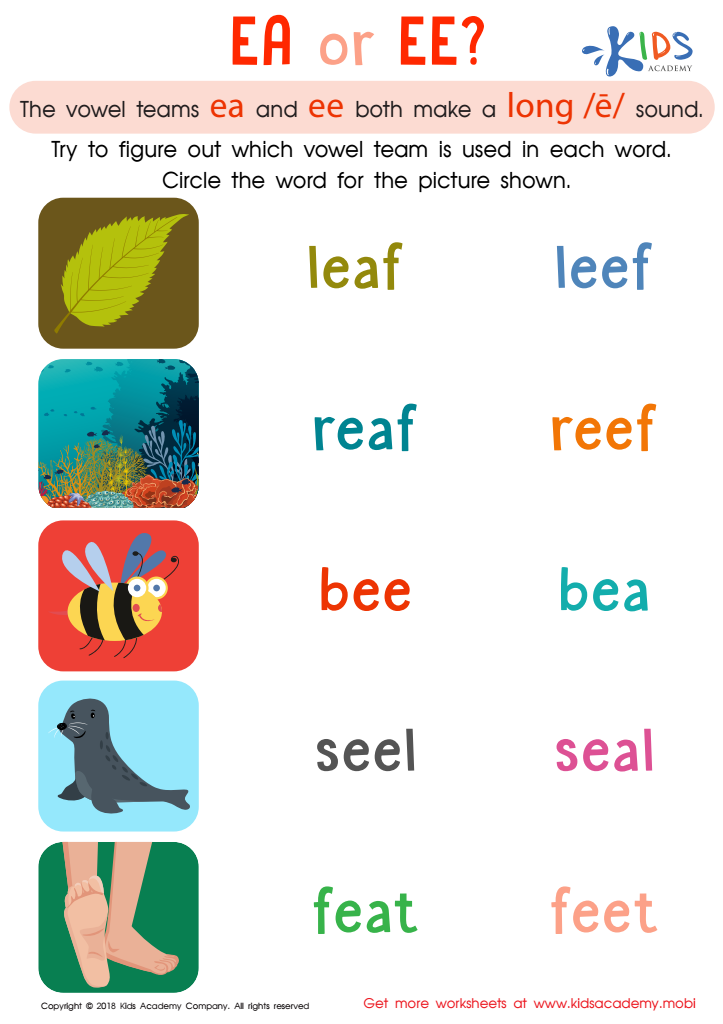
Reading: EA and EE Worksheet
Confused by the long E sound's varying spellings? Give students practice with this printable. It will improve their reading and spelling skills by helping them identify the correct spellings for words with the /ee/ and /ea/ vowel teams. Clear up the confusion and sharpen their skills.
Reading: EA and EE Worksheet
Worksheet
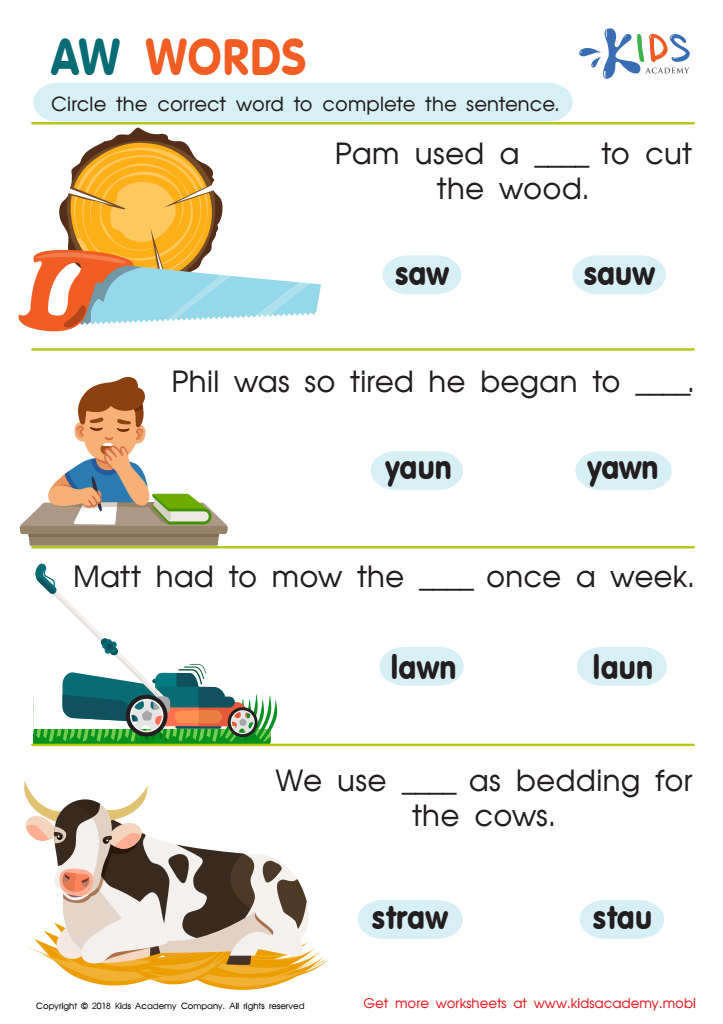
Reading: AW Words Worksheet
Practice decoding the /aw/ digraph with this printable. Students read sentences and select the word with the correct spelling to complete each one. Note, /aw/ is sometimes spelled /au/, so this worksheet helps prevent confusion. Have fun, and practice hard!
Reading: AW Words Worksheet
Worksheet
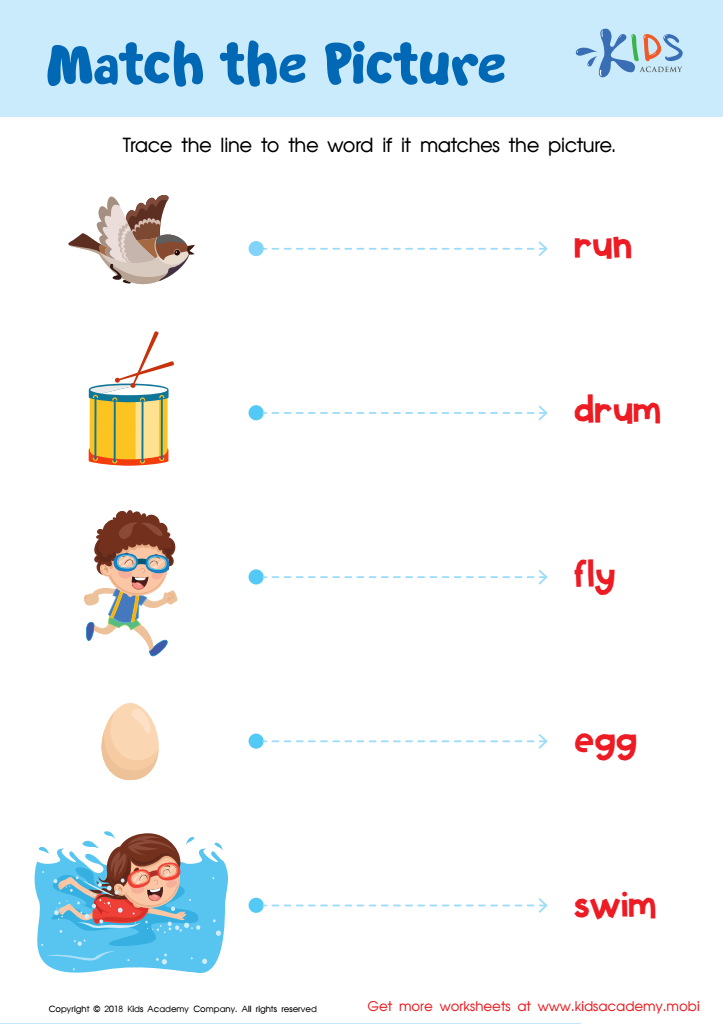
Match the Picture Worksheet
This tracing worksheet is a fun way to teach little ones that learning can be fun! Ask them to name the five images on the left and then read the words on the right. Do they match? Help them trace the line connecting the picture to the word that matches. Learning doesn't have to mean stuffy classrooms and drudgery!
Match the Picture Worksheet
Worksheet
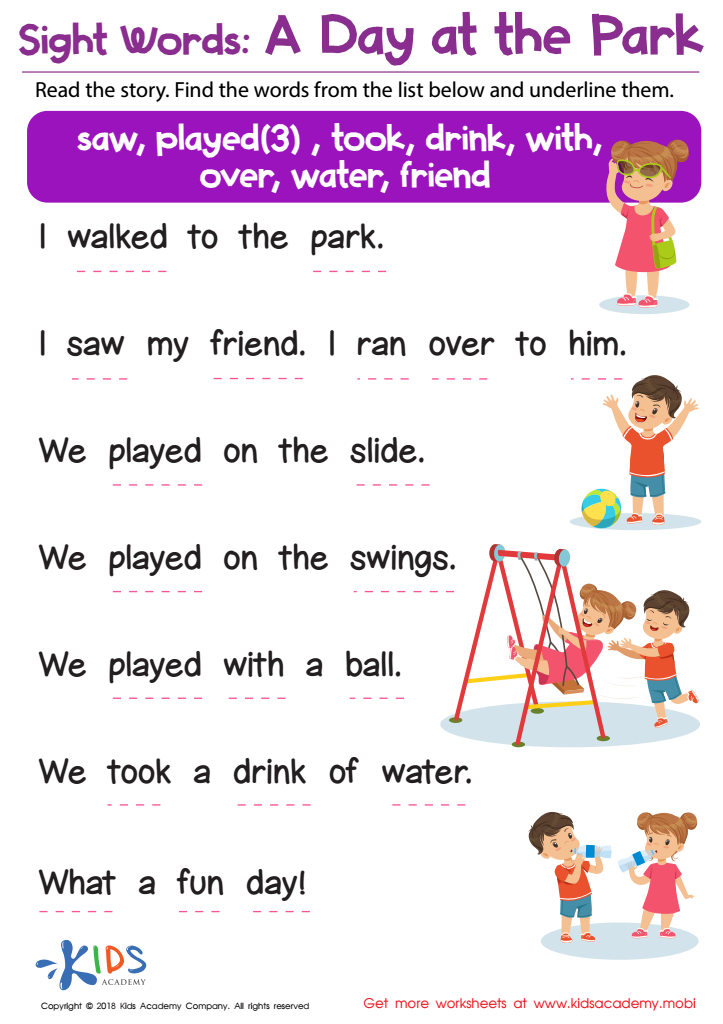
Sight Words: A Day at the Park Worksheet
This worksheet offers kids practice reading sight words in a story. With picture clues and repetitive wording, they'll work with words that can't be sounded out to reinforce their learning. This is an important step in the reading process that helps kids become more confident readers.
Sight Words: A Day at the Park Worksheet
Worksheet
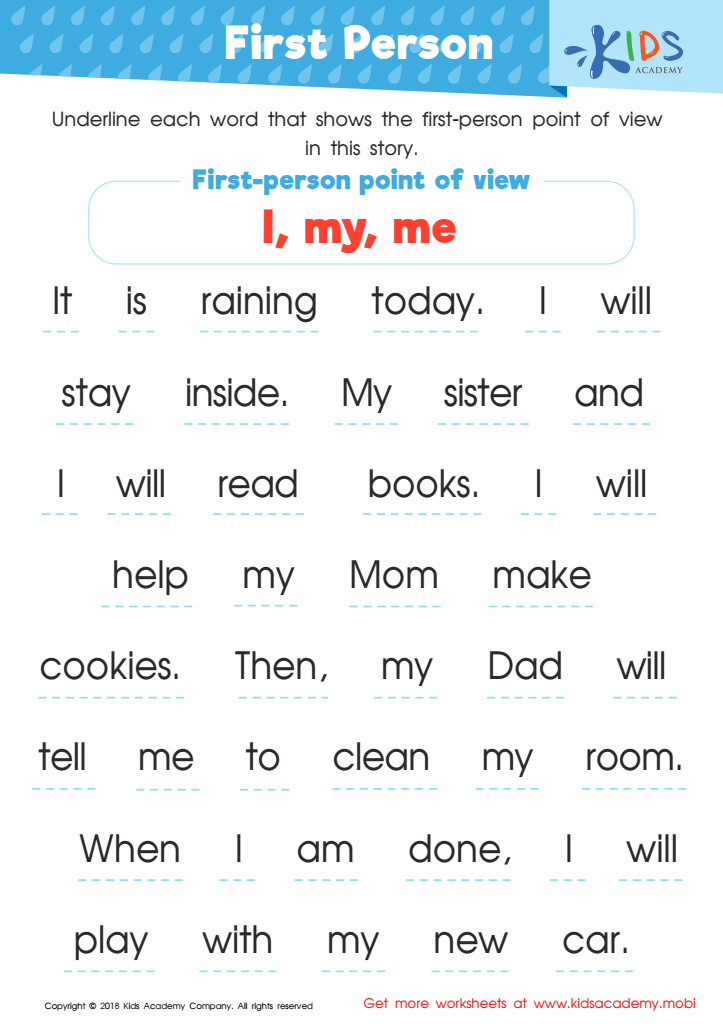
First Person Worksheet
Teachers help students understand and recognize why authors choose different points of view. This worksheet focuses on first person point of view and its pronouns (I, me and my). Students will read a story, then circle each first-person pronoun. Through this activity, they'll practice identifying the POV in a text.
First Person Worksheet
Worksheet
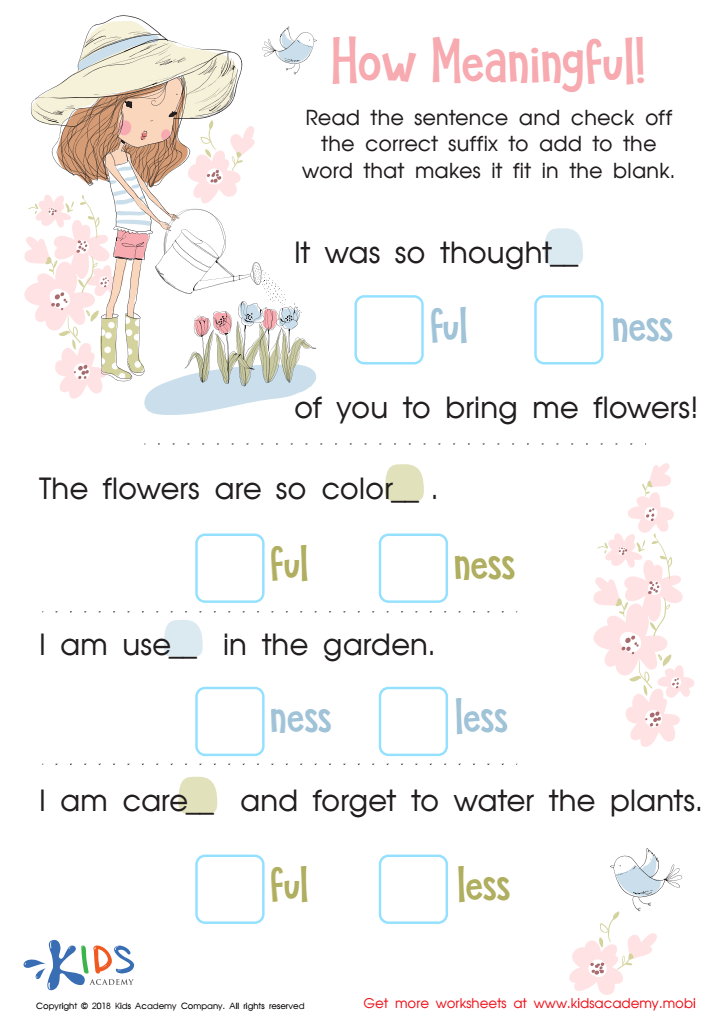
How Meaningful! Worksheet
'Meaningful' is used to describe something that carries importance to someone else. For example, calling friends on their birthdays. The suffix -ful can also be added to other words to create new meanings; try this with your kids and help them check the correct suffix to complete the sentence.
How Meaningful! Worksheet
Worksheet
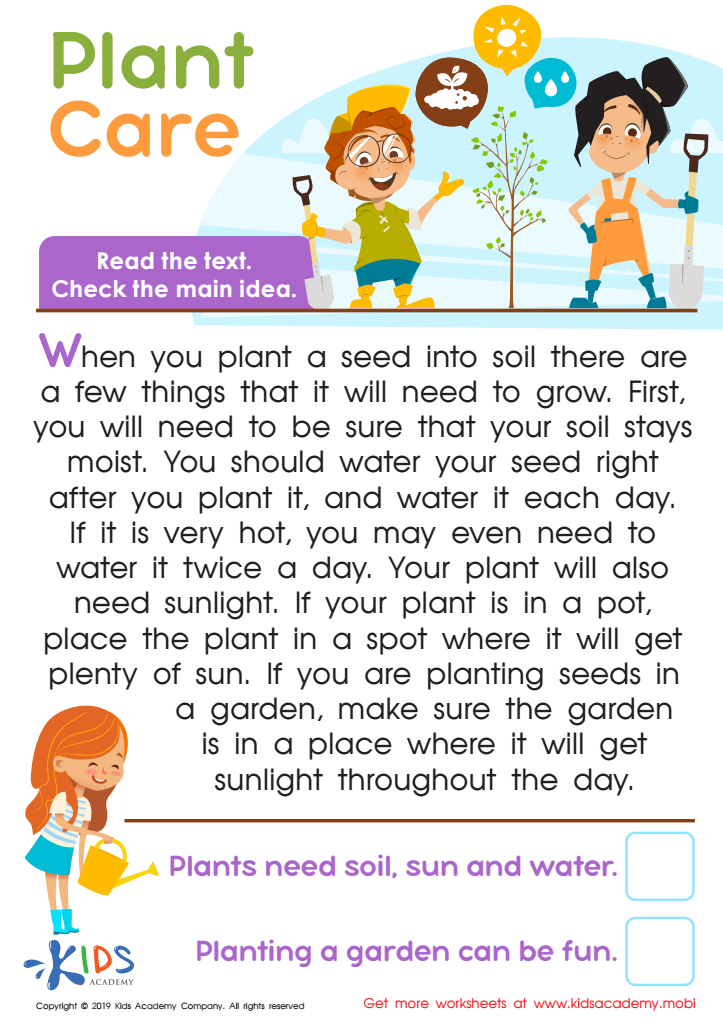
Plant Care Worksheet
Encourage your children to read by helping them practice. Print out the worksheet and read the text with them. Help them understand the words and find the main idea. This will improve their reading skills and prepare them for school.
Plant Care Worksheet
Worksheet
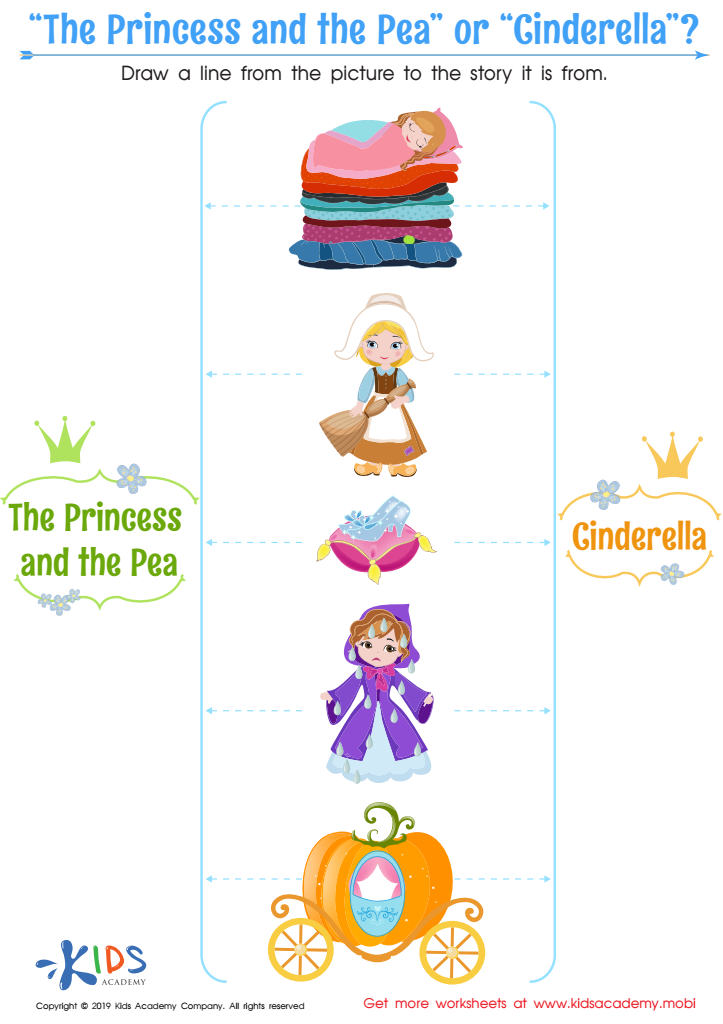
“The Princess and the Pea” or “Cinderella” Worksheet
Help your child identify the characters and objects from both the Princess and the Pea and Cinderella. Ask them to draw a line from the pictures to the story it's from on the tracing sheet. Encourage them to tell you the similarities between the two stories. Enjoy the tale with your daughter and watch her be fascinated by these two classic children's stories.
“The Princess and the Pea” or “Cinderella” Worksheet
Worksheet
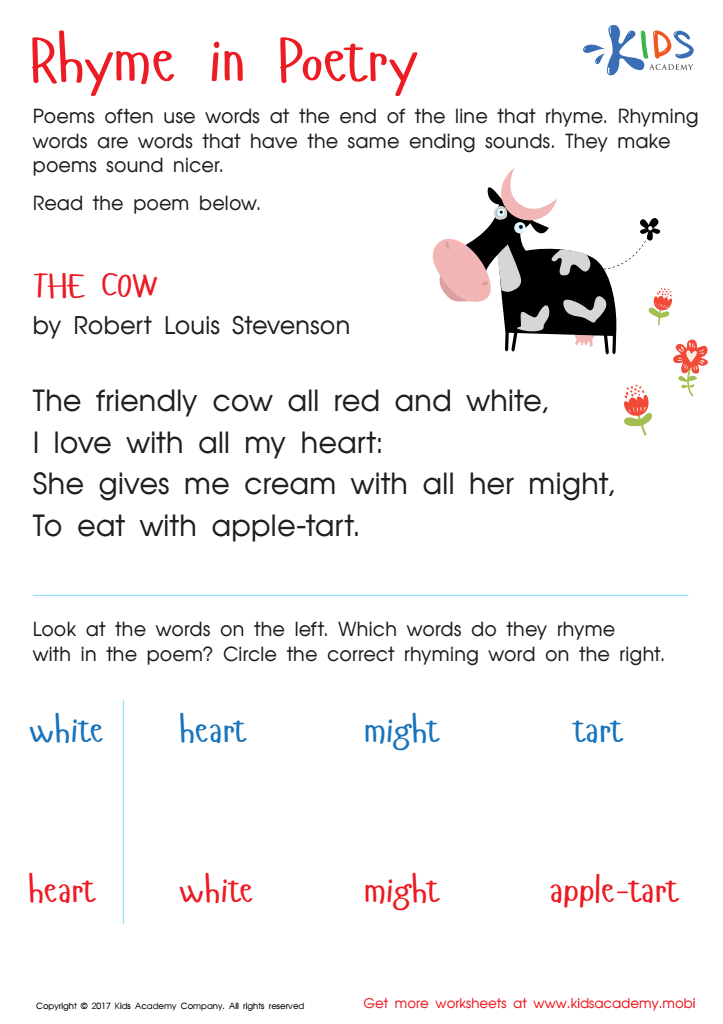
Rhyme In Poetry Worksheet
Introduce your child to poetic devices and help build their ear for poetry with Robert Louis Stevenson's adorable poem about a cow! Through this rhyming worksheet, your child will gain an appreciation for poetry and language.
Rhyme In Poetry Worksheet
Worksheet
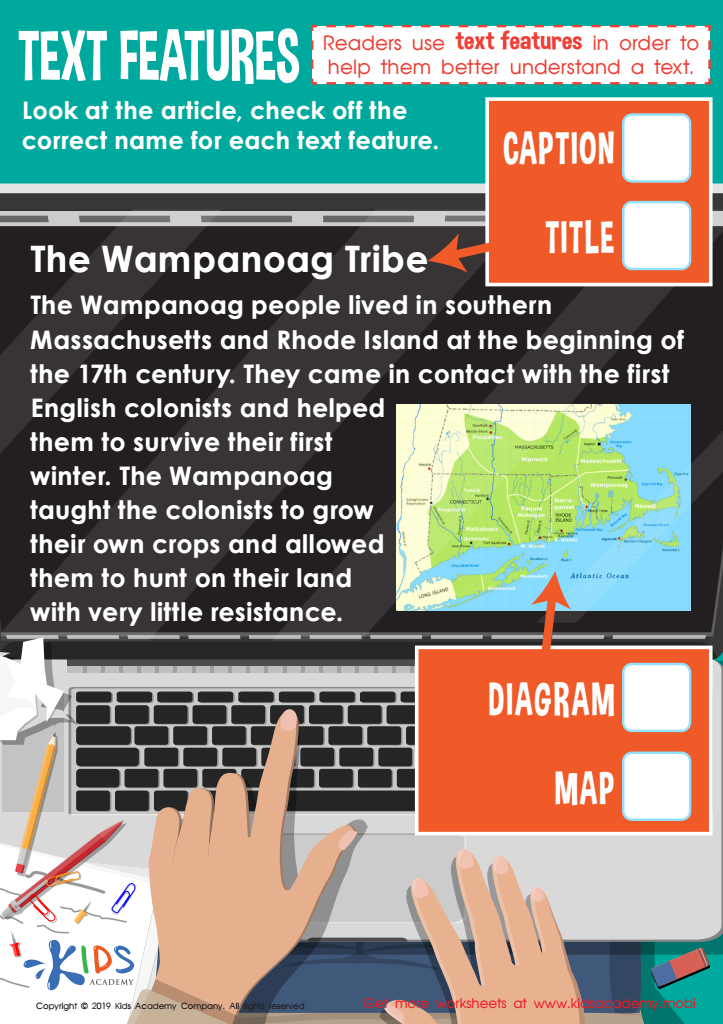
Text Features Worksheet
Encourage your child to read- it'll pay off! Reading teaches us new words, spelling, and information on various topics. Plus, readers use text features- such as tables, indexes, and diagrams- to help comprehend. Read the worksheet with your child and help them identify and understand the different features.
Text Features Worksheet
Worksheet
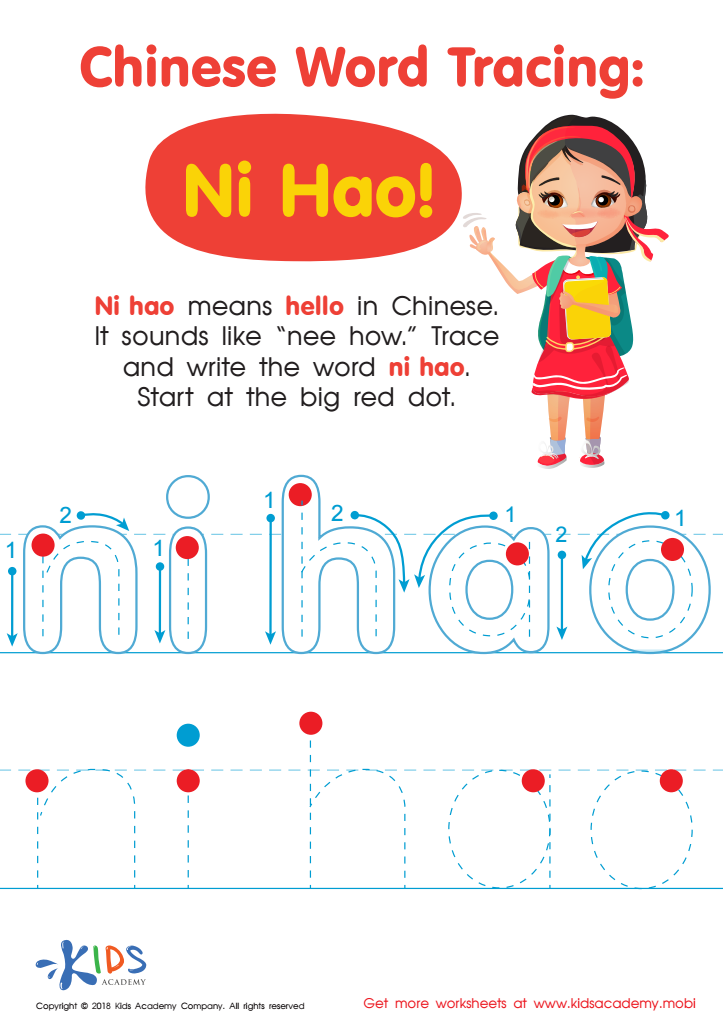
Chinese Word Tracing: Ni Hao Worksheet
Kids can learn to say "Ni hao" with this fun tracing worksheet. The free PDF helps kids write and say the Chinese greeting while also developing fine-motor, handwriting and reading skills. With red guide dots and traceable lines, kids will learn top-to-bottom and left-to-right patterning for fluent reading.
Chinese Word Tracing: Ni Hao Worksheet
Worksheet
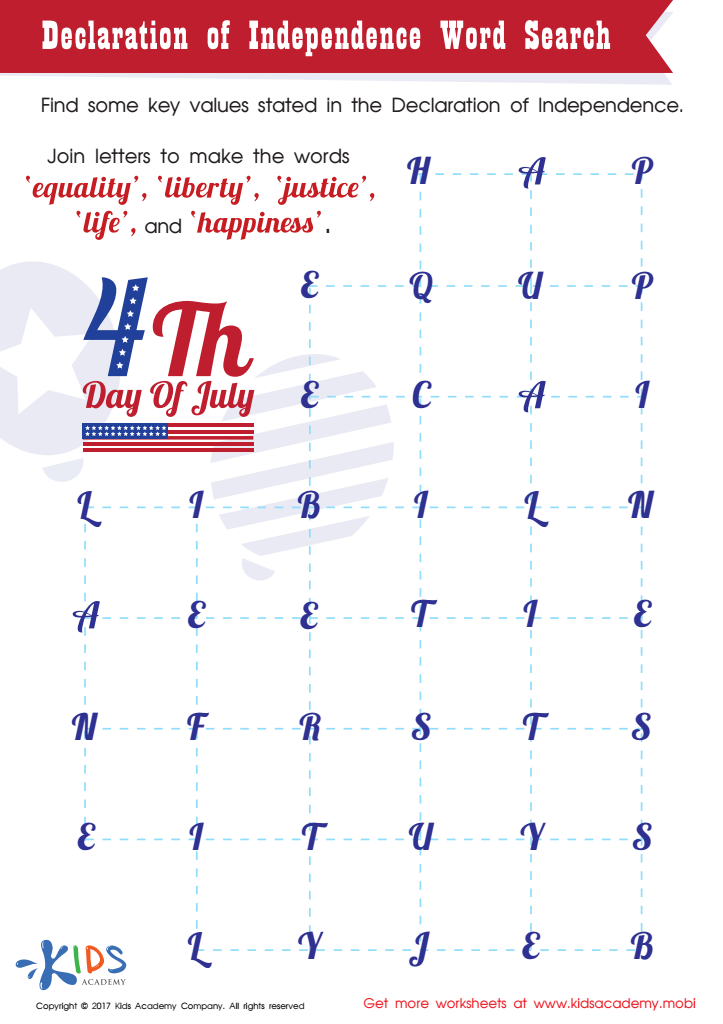
Declaration of Independence Word Search Printable
Help your child explore the principles of American life and history with this Declaration of Independence word search PDF! It contains important keywords that signal The Founding Fathers' intentions for the USA.
Declaration of Independence Word Search Printable
Worksheet
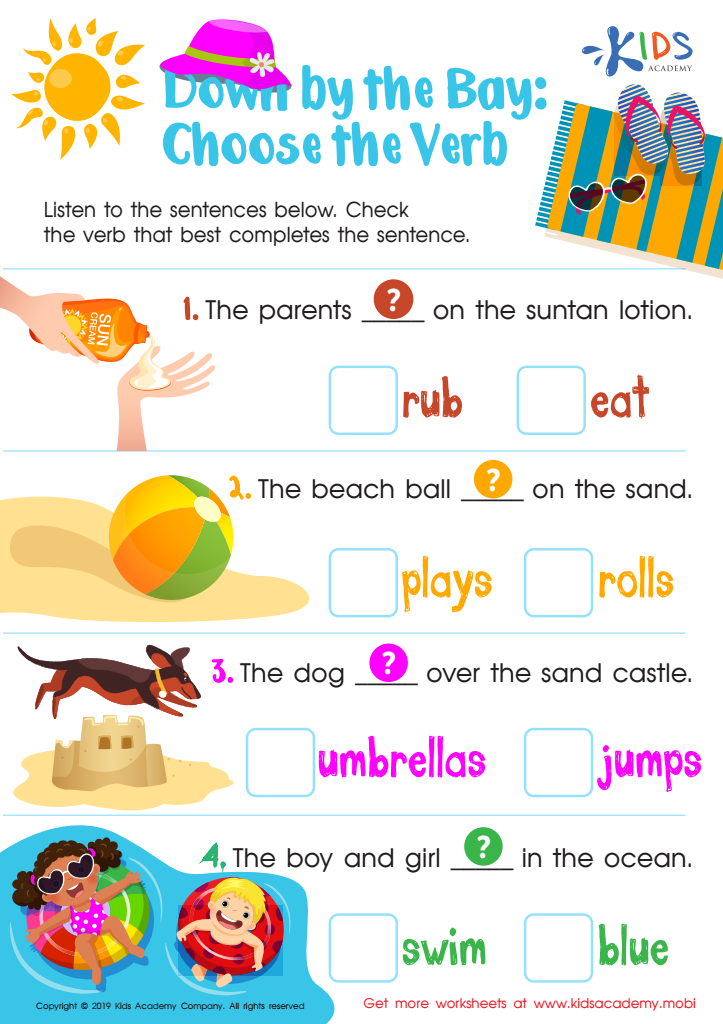
Down by the Bay: Choose the Verb Worksheet
Teach your kids about verbs: words that describe actions, like 'playing', 'eating', 'talking'. Ask your child to give their own verbs, then read the sentences in a worksheet and help them pick the best one for each question.
Down by the Bay: Choose the Verb Worksheet
Worksheet
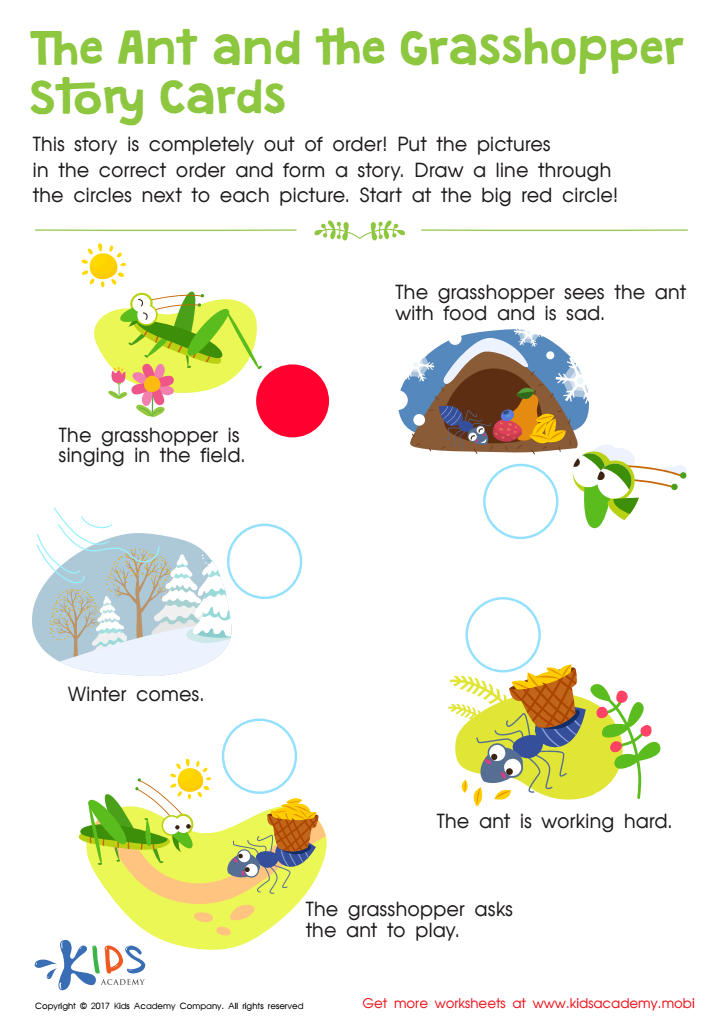
The Ant and The Grasshopper Worksheet
This worksheet uses the beloved childhood fable "The Ant and the Grasshopper" to teach your child about plot and order of events. Your child must read the events and put them in the right order. Once completed, review the story with your child to ensure its accuracy.
The Ant and The Grasshopper Worksheet
Worksheet
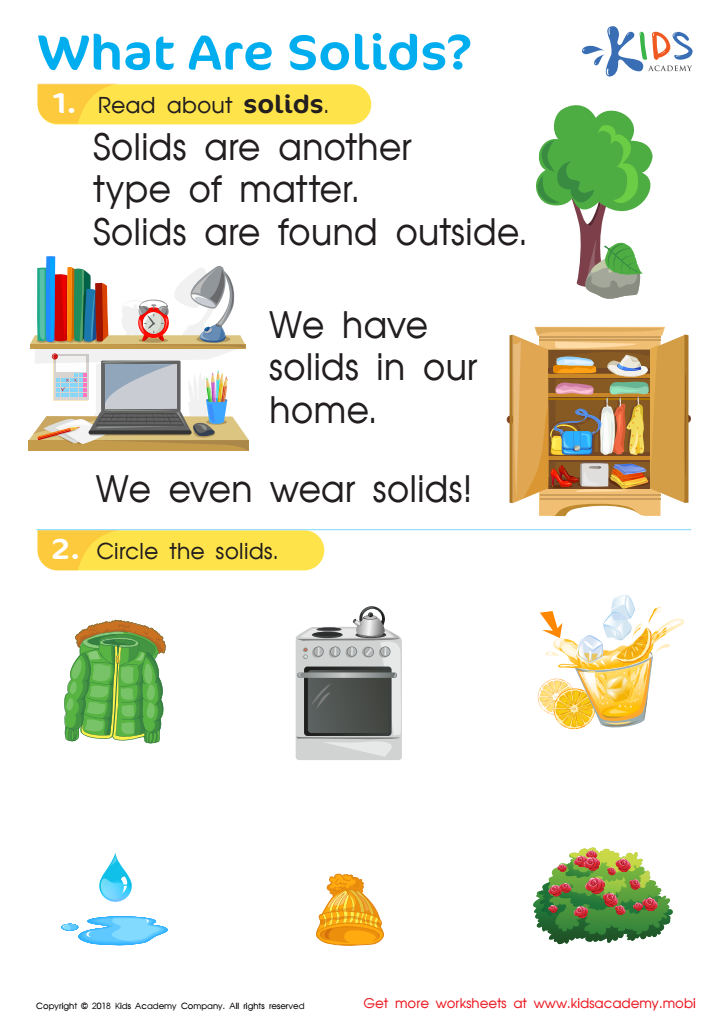
What Are Solids? Worksheet
Help your kids understand matter's three forms - solid, liquid, and gas - with examples. Ask them to give their own and where to find them. Then, read and discuss the worksheet's facts about solids. Afterward, have them circle the solids among the provided objects.
What Are Solids? Worksheet
Worksheet
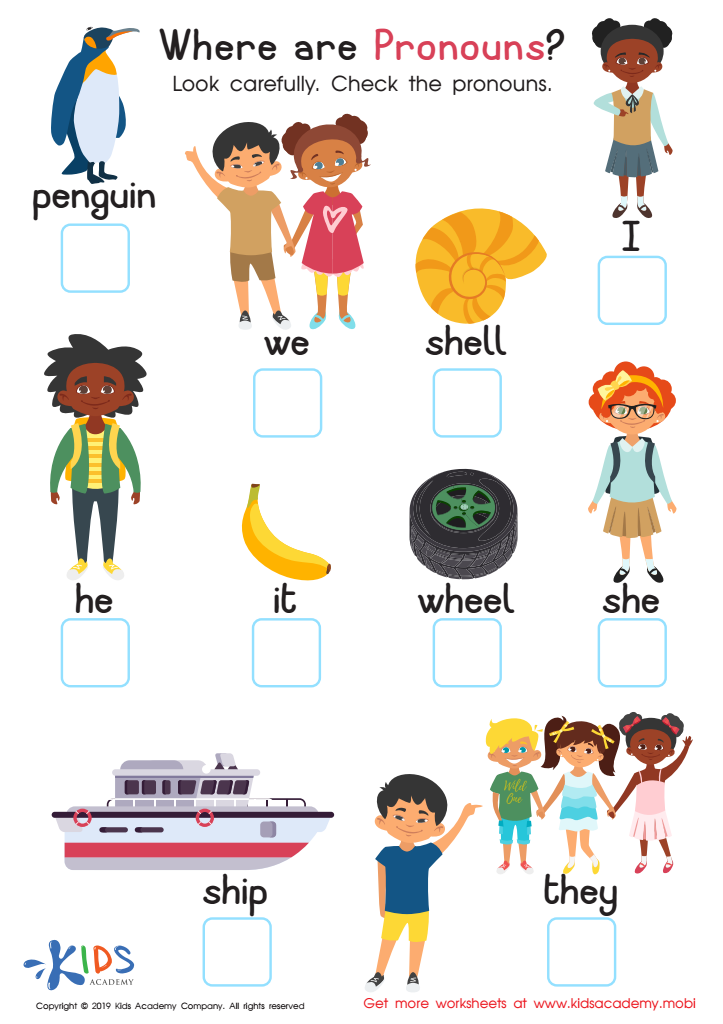
Where Are Pronouns? Worksheet
Pronouns make language flow, substituting "he" or "she" for names. Kids know and use them in their speech, but identifying pronouns in grammar helps build writing skills. This worksheet challenges kids to pick out pronouns from other nouns. Go through the worksheet, view the pictures and read the words. Ask kids to check boxes in front of pronouns to mark answers.
Where Are Pronouns? Worksheet
Worksheet
Join Kids Academy for Free
Who is primarily going to use this learning content?













