Improving counting skills Easy Worksheets for Ages 3-5
3 filtered results
-
From - To
Explore our "Improving Counting Skills Easy Worksheets" designed specifically for children aged 3-5! These engaging and interactive worksheets provide a fun and effective way for young learners to develop essential counting skills. With a variety of colorful activities and visually stimulating designs, children will enjoy tracing numbers, counting objects, and completing exciting exercises that reinforce their understanding of numbers. Ideal for both home and classroom use, these worksheets foster a love for learning and build a solid foundation in mathematics. Help your child gain confidence and enjoyment in counting with our carefully crafted resources! Start their counting adventure today!
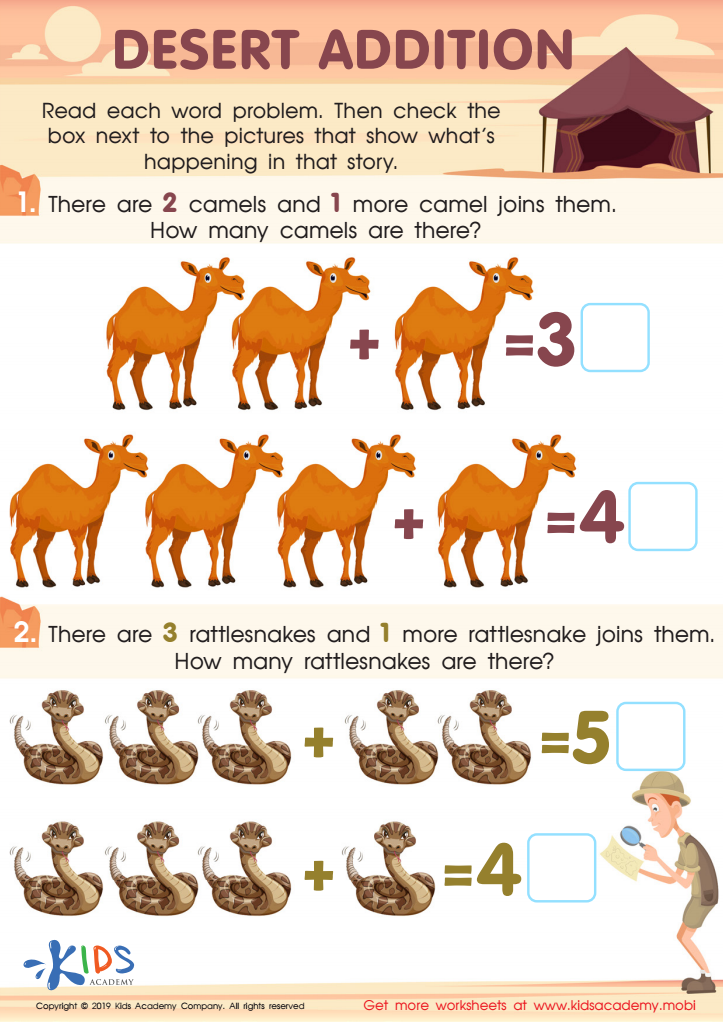
Desert Addition Worksheet
 Assign to My Students
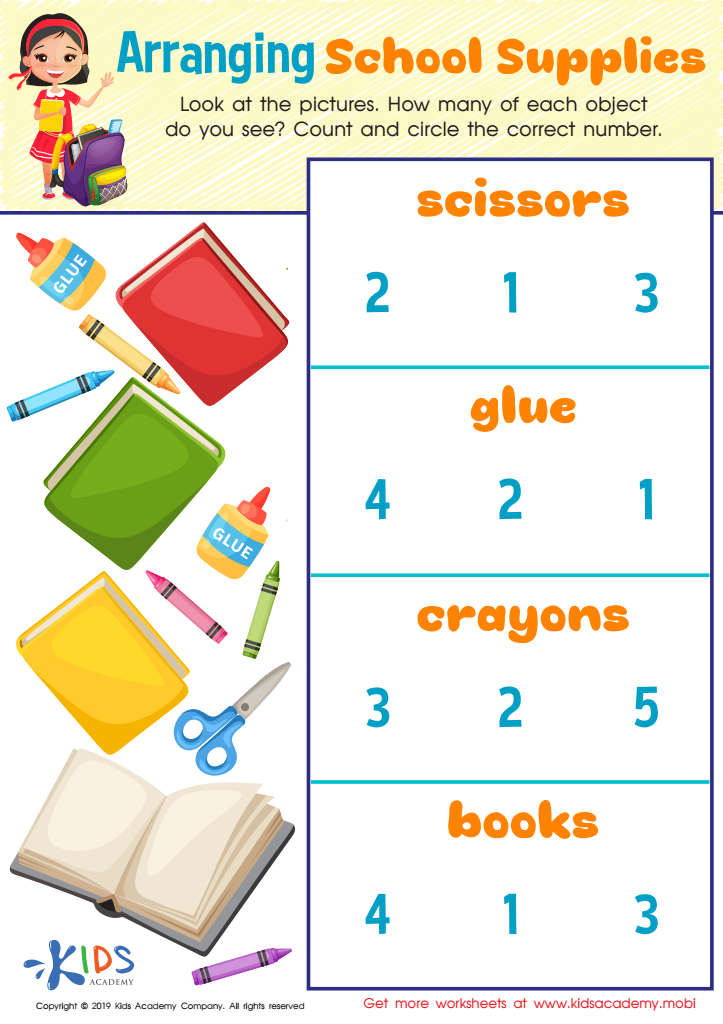
Arranging School Supplies Worksheet
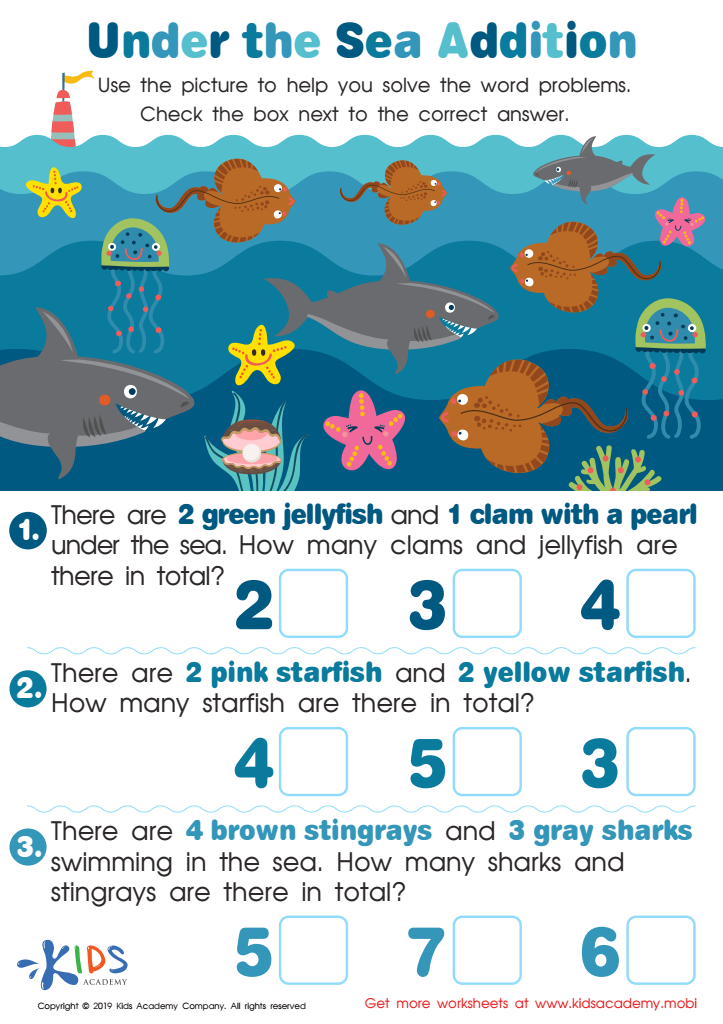
Under the Sea Addition Worksheet








Improving counting skills in children aged 3-5 is crucial for their overall cognitive development and future academic success. Early counting lays the foundation for mathematics, fostering a love for numbers that can carry into later schooling. By engaging with numbers now, children develop essential skills such as one-to-one correspondence, number recognition, and the ability to compare quantities—all key components of early numeracy.
Furthermore, counting encourages critical thinking and problem-solving skills. It helps children make logical connections and understand patterns, supporting their ability to relate to the world around them. For parents and teachers, cultivating these skills can make learning engaging and fun, through interactive games and everyday activities, enhancing children's motivation to learn.
Improved counting skills also build children's confidence in tackling mathematical concepts, making them better equipped for more complex topics as they progress in their education. Additionally, shared counting experiences strengthen parent-child and teacher-student bonds, creating a supportive learning environment. Ultimately, fostering counting skills empowers children, giving them the foundational tools they need to navigate academic challenges confidently as they grow. Therefore, it is vital for parents and teachers to prioritize these skills in early childhood education.








