Addition Practice Easy Word Problems Worksheets for Ages 3-5
5 filtered results
-
From - To
Introducing our "Addition Practice Easy Word Problems Worksheets for Ages 3-5", specially designed to nurture early math skills in young learners! These engaging and colorful worksheets focus on simple addition through relatable scenarios, making math fun and accessible. Each sheet presents an easy-to-understand word problem using familiar objects to help children grasp basic concepts. Tailored for ages 3-5, these worksheets not only build foundational arithmetic skills but also promote critical thinking and problem-solving abilities. Perfect for parents and educators looking to make learning enjoyable, our worksheets ensure a solid mathematical foundation for your child's future success!
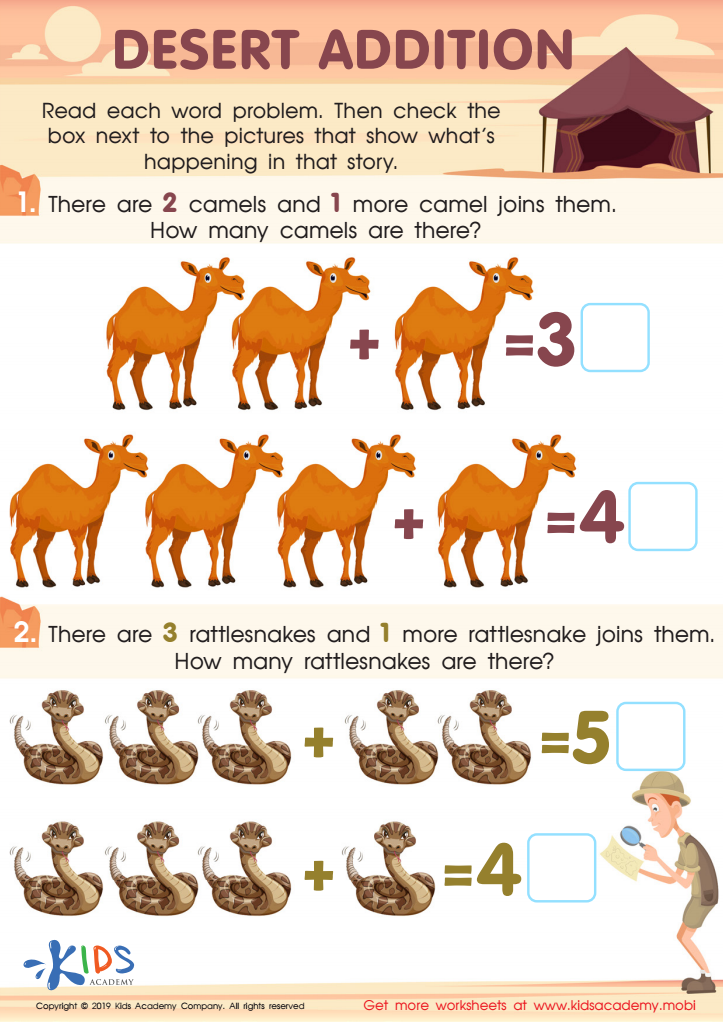
Desert Addition Worksheet
 Assign to My Students
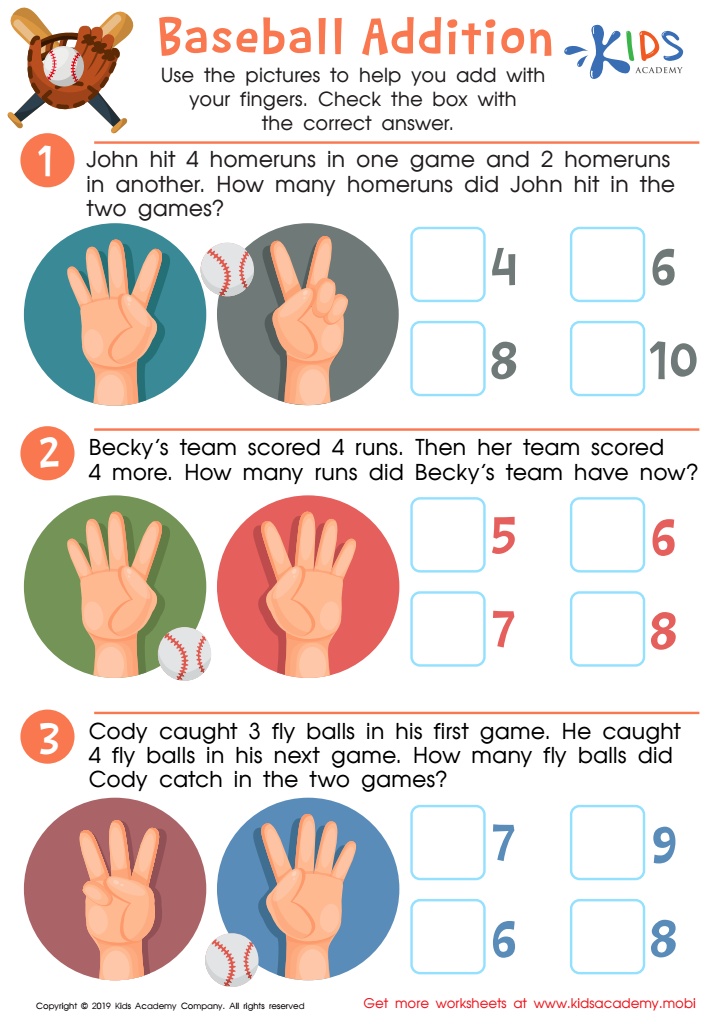
Baseball Addition Worksheet
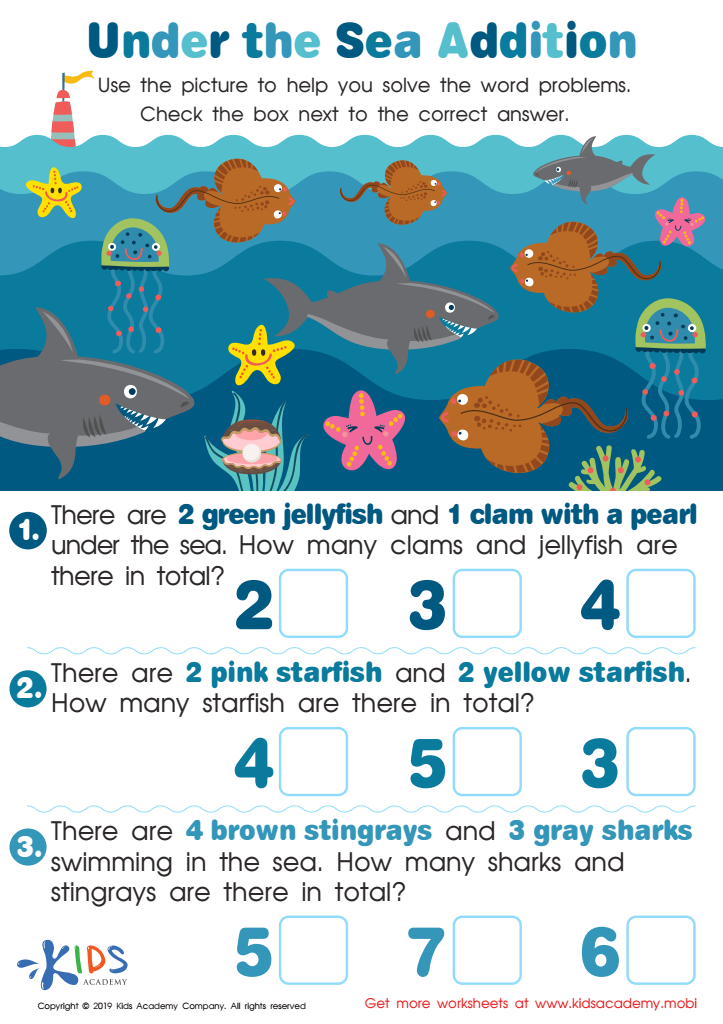
Under the Sea Addition Worksheet
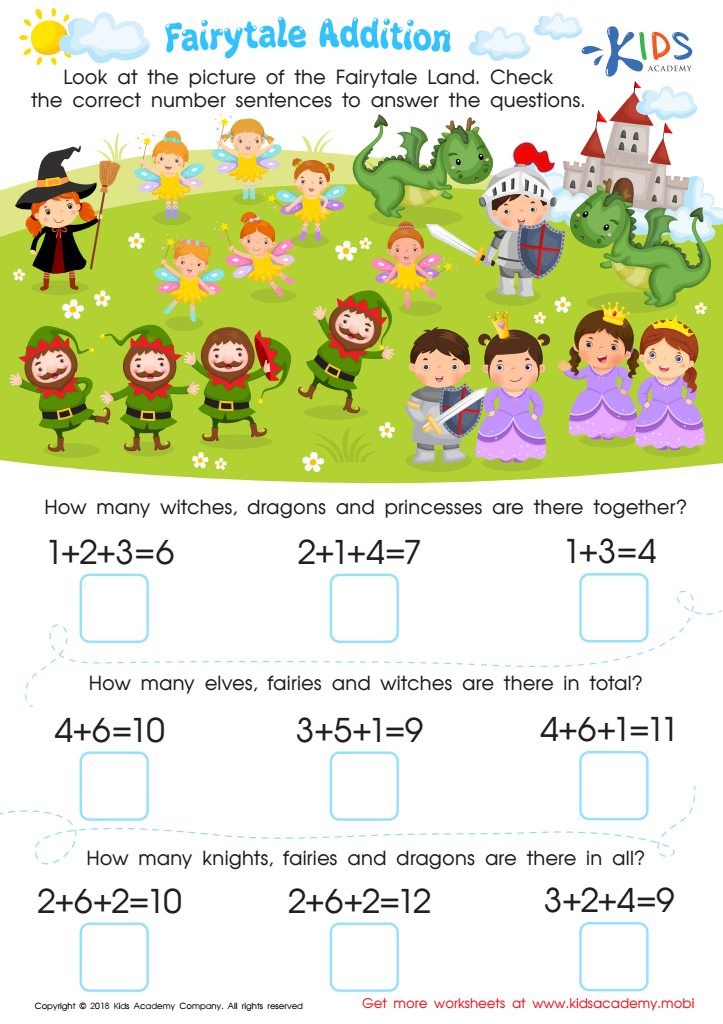
Fairytale Addition Worksheet
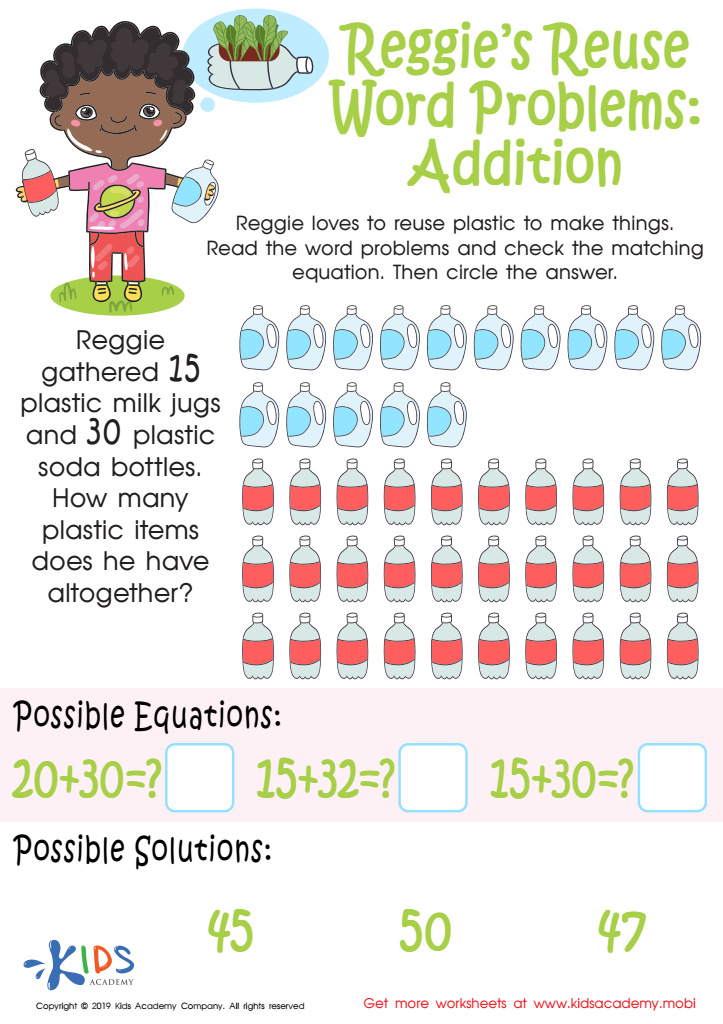
Reggie's Reuse Word Problems: Addition Worksheet



.jpg)




Addition practice with easy word problems is crucial for children aged 3-5 because it lays the foundational blocks for their future in mathematics and critical thinking. At this young age, their brains are rapidly developing, and introducing them to mathematics in a fun and engaging way can spark a lifelong interest in the subject.
Firstly, word problems teach children how to apply math in real-life scenarios, which is more meaningful than rote memorization. By asking questions like, “You have 3 apples, and you get 2 more. How many apples do you have now?” kids see math's relevance, making abstract concepts concrete and relatable.
Secondly, solving word problems enhances cognitive development. It requires children to listen, understand the story, identify the key numerical components, and employ logical thinking to find a solution. This process develops language skills, comprehension, and boosts their problem-solving abilities.
Furthermore, the confidence kids gain from successfully solving word problems promotes a positive attitude towards learning. They feel a sense of accomplishment which encourages perseverance when faced with more challenging tasks in the future.
For parents and teachers, integrating easy addition word problems into daily activities helps children develop a solid mathematical foundation, promotes critical thinking, and makes learning both enjoyable and relevant, setting them on a path to future academic success.








