
Fine Motor Skills Easy Numbers Worksheets for Ages 3-7
28 filtered results
Difficulty Level
Grade
Age
-
From - To
Subject
Activity
Standards
Boost your child's fine motor skills with our engaging Easy Numbers Worksheets designed for ages 3-7. These interactive printables are specially crafted to enhance small muscle coordination while teaching essential number recognition and writing skills. Each worksheet combines fun tracing activities, simple counting exercises, and vibrant illustrations to captivate young minds. Ideal for preschoolers and early elementary students, our worksheets support confident, independent learning and readiness for more advanced math concepts. Make early math practice enjoyable and effective with our expertly designed resources, perfect for home and classroom use. Visit Kids Academy for more educational printables today!
Favorites
With answer key
Interactive
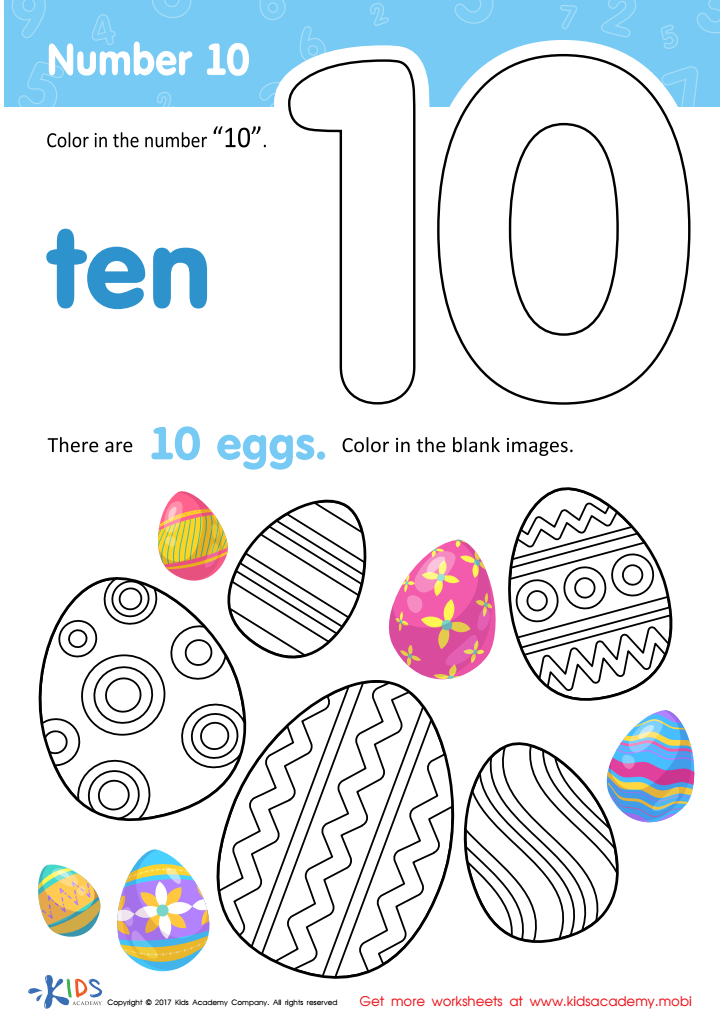
Number 10 Printable
Easter eggs are a great way to combine creativity and learning! Help your child explore the number 10 with our fun coloring page. The intricate designs will spark their imagination and fuel their artistic side, while they practice important numeracy basics. Get creative with eggs and enjoy the fun, no matter the time of year!
Download (PDF)
 Assign to My Students
Assign to My Students
Number 10 Printable
Worksheet
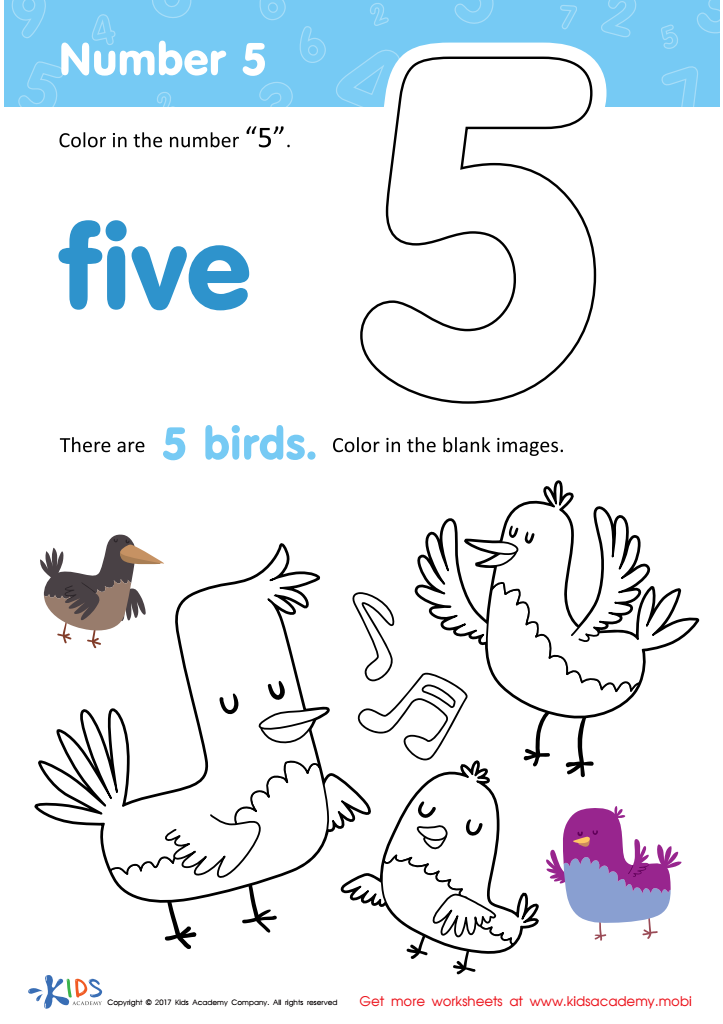
Number 5 Printable
Let your child have fun with this number 5 coloring page! They'll adore coloring the birds and music notes, while learning to recognize the number 5. Enjoy listening to the birds sing their beautiful songs!
Download (PDF)
Assign to My Students
Assign to My Students
Number 5 Printable
Worksheet
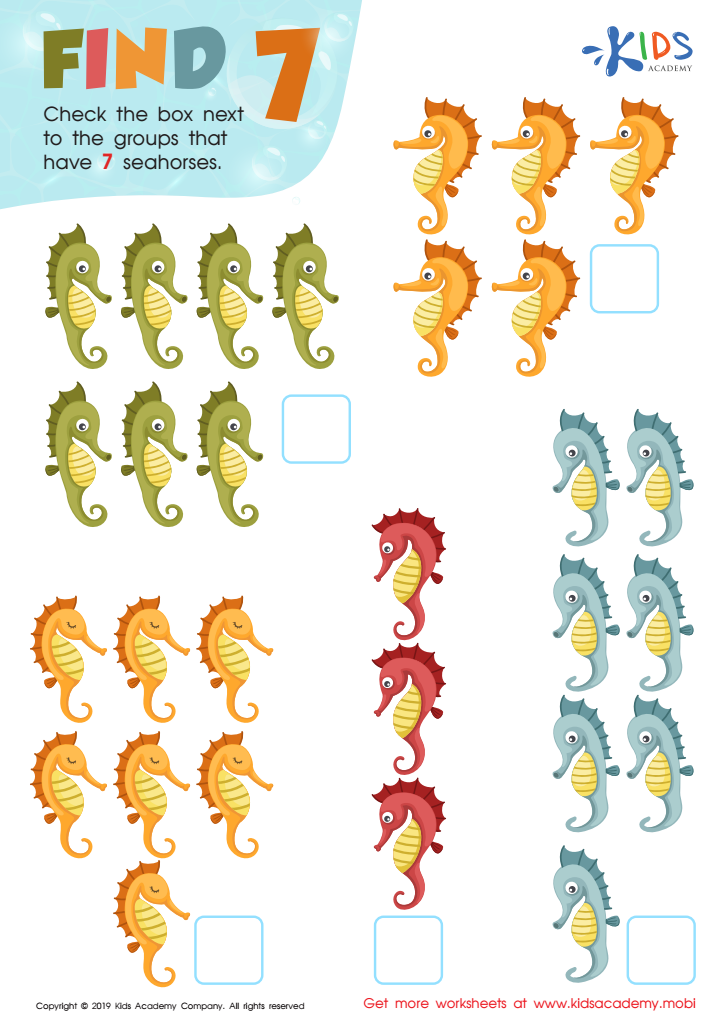
Find 7 Worksheet
Counting seahorses in groups of 7 is fun and educational with this free worksheet. Kids practice counting, one-to-one number representation, and check off the correct answers, all while admiring the brightly colored seahorses. A great way to make learning enjoyable!
Find 7 Worksheet
Worksheet
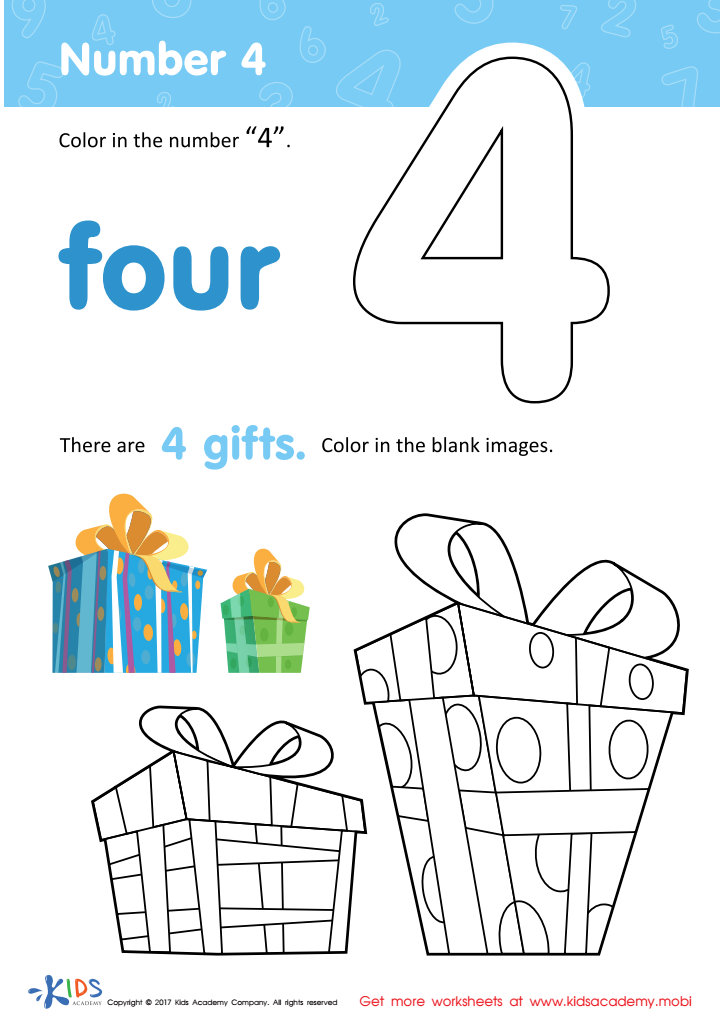
Number 4 Printable
Kids love gifts! Give your child a learning opportunity with this number 4 coloring page. As they design their own wrapping paper, they'll learn to read and recognize the number four. An exciting way to have fun and learn at the same time!
Download (PDF)
Assign to My Students
Assign to My Students
Number 4 Printable
Worksheet
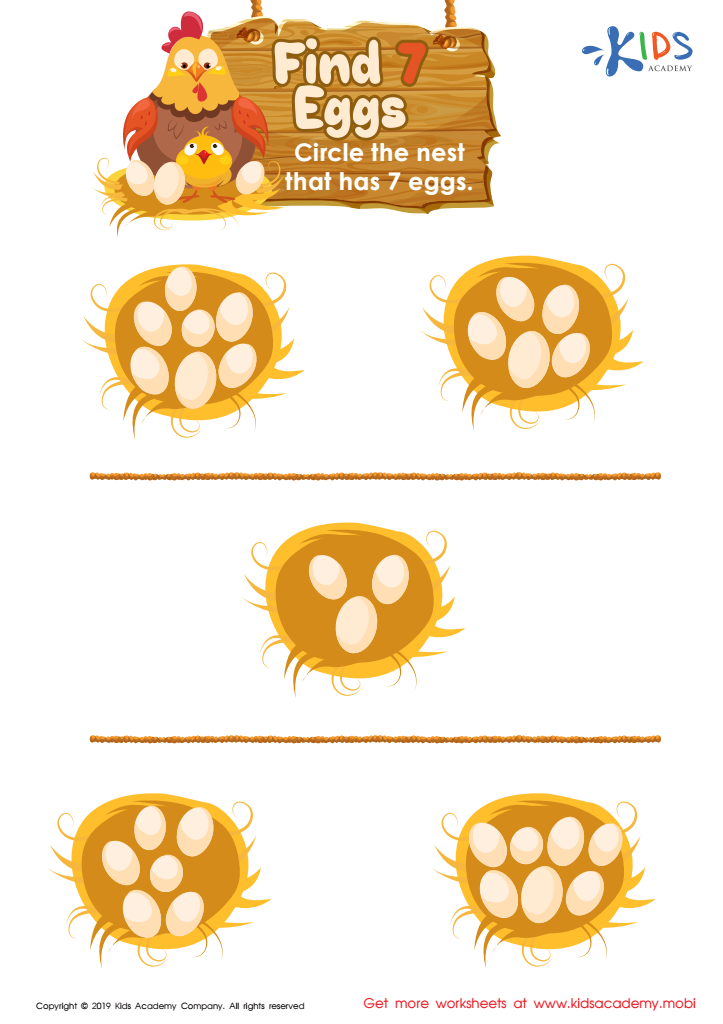
Find 7 Eggs Worksheet
Mama chicken needs help counting her eggs! Have your child use one-to-one number representation to count and circle the nests that have seven eggs with this free and fun worksheet. Picture representation is a great way to start building math skills. Download this PDF and make math time fast and enjoyable!
Find 7 Eggs Worksheet
Worksheet
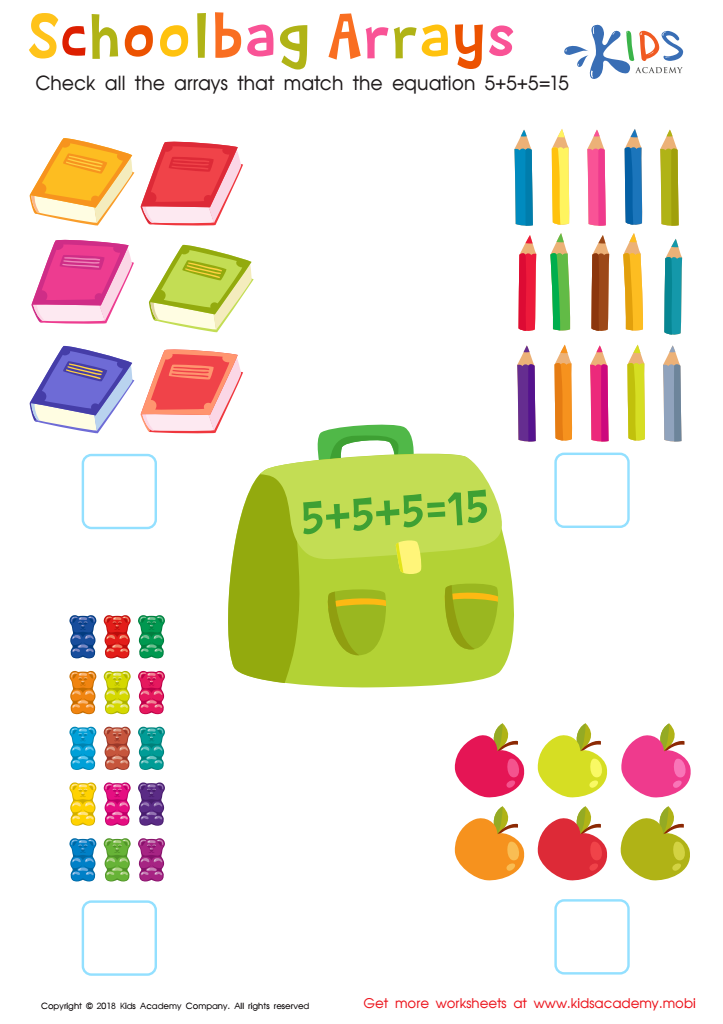
Schoolbag Arrays Worksheet
Help your child spot the correct arrays in this worksheet: having them count the items in each and check the boxes for the ones with 15 objects. Ask them to differentiate between rows and columns and explain which ones match the equation 5+5+5=15.
Schoolbag Arrays Worksheet
Worksheet
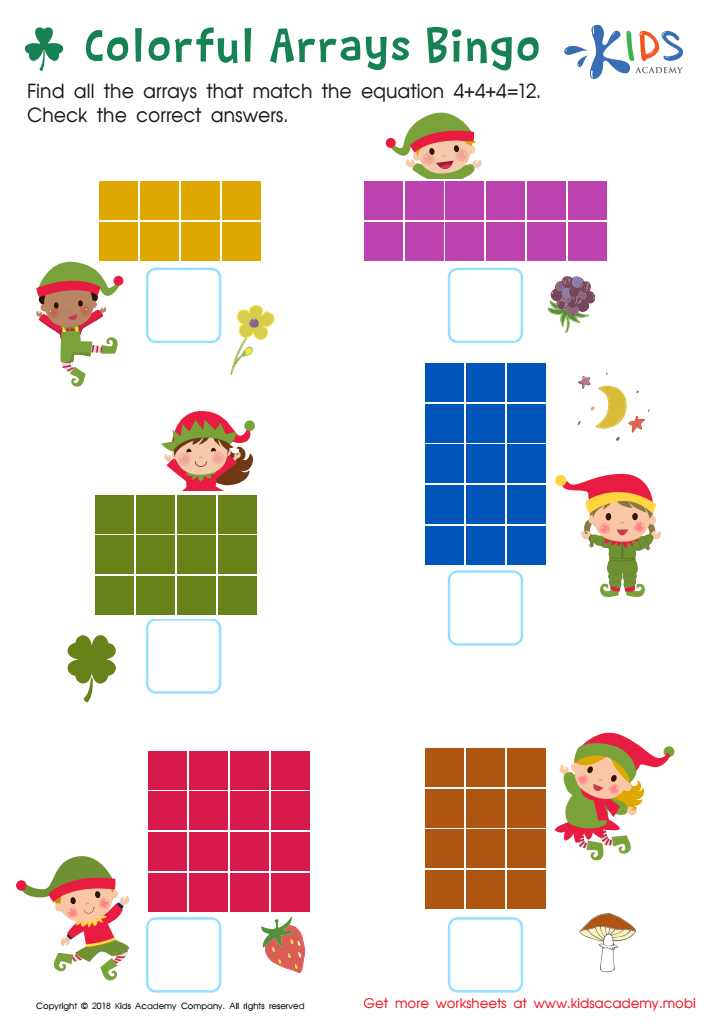
Colorful Arrays Bingo Worksheet
This worksheet stimulates thinking about arrays and how to represent them. Instruct students to count the 6 arrays and find which ones sum up to 12. Ask them to check the answers for accuracy.
Colorful Arrays Bingo Worksheet
Worksheet
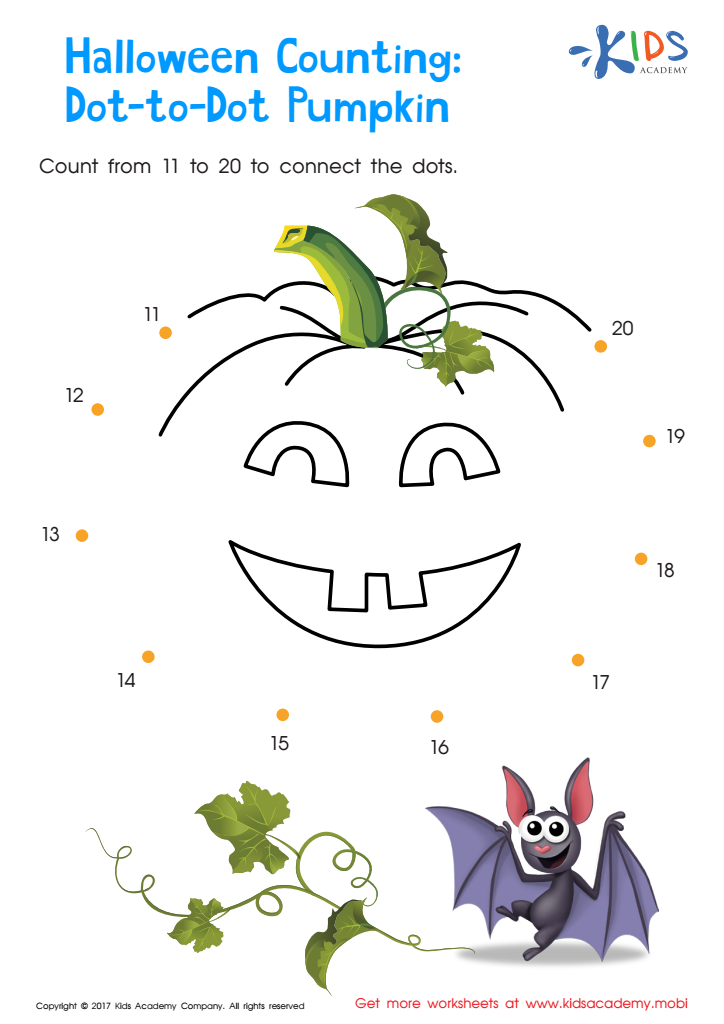
Ordering 11–20: Halloween Counting Worksheet
No matter the time of year, help your child get ready for Halloween with this worksheet. They'll practice counting from 11 to 20, recognizing numbers, and using a pencil to draw. By connecting the dots, they'll create a pumpkin picture, while unknowingly strengthening their early math skills. Print it today for an educational and fun experience!
Ordering 11–20: Halloween Counting Worksheet
Worksheet
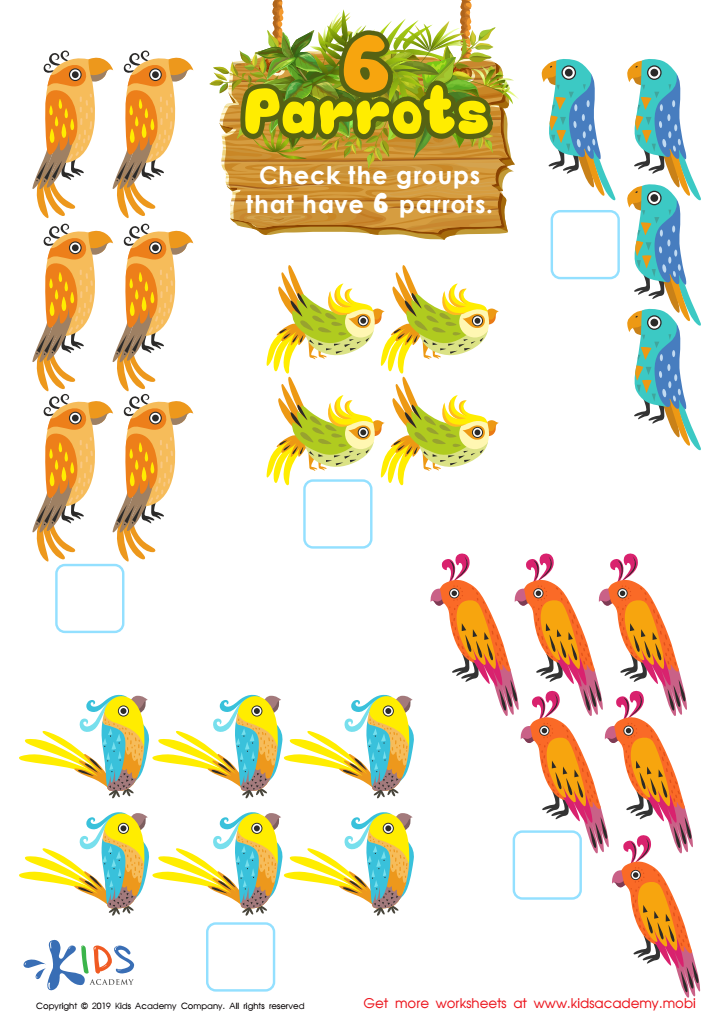
6 Parrots Worksheet
Love parrots? Here's a free worksheet to help your children practice counting to six with colorful parrot representations! Kids will adore counting the parrots and checking off groups of six - and it won't even feel like math! Just a fun way to make some new and exciting friends.
6 Parrots Worksheet
Worksheet
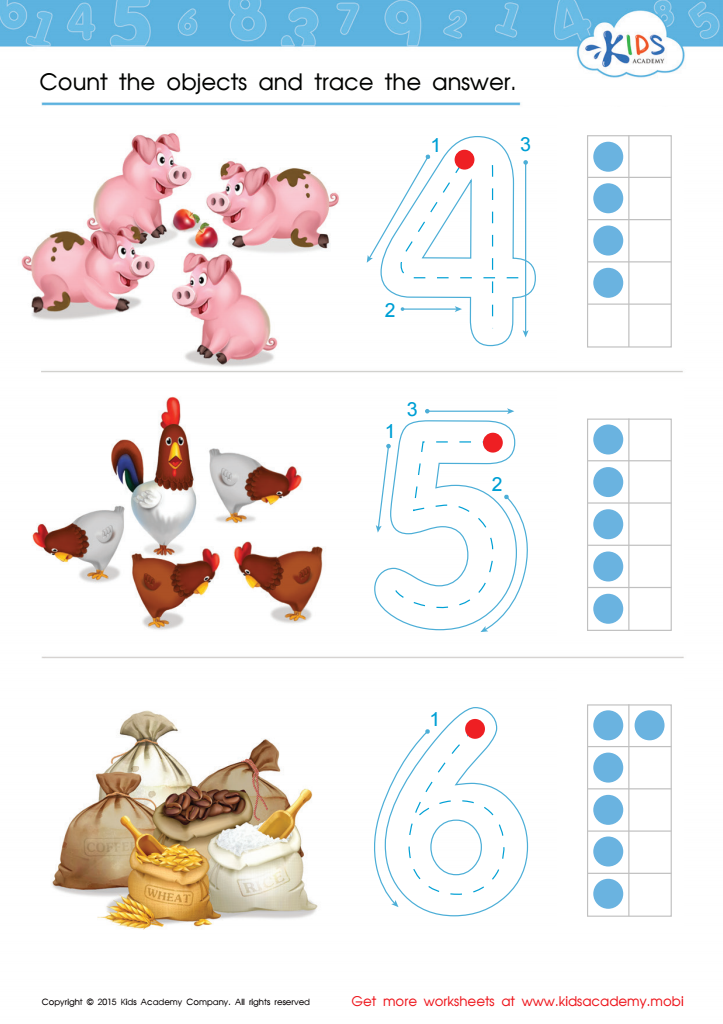
Count and Trace 4 – 6 Worksheet
Download Kids Academy's brightly colored math worksheet for a fun and rewarding math experience for your little learner. Using Singapore Math, this worksheet helps children visualize, solve and practice fine motor skills. Click here for more math worksheets!
Count and Trace 4 – 6 Worksheet
Worksheet
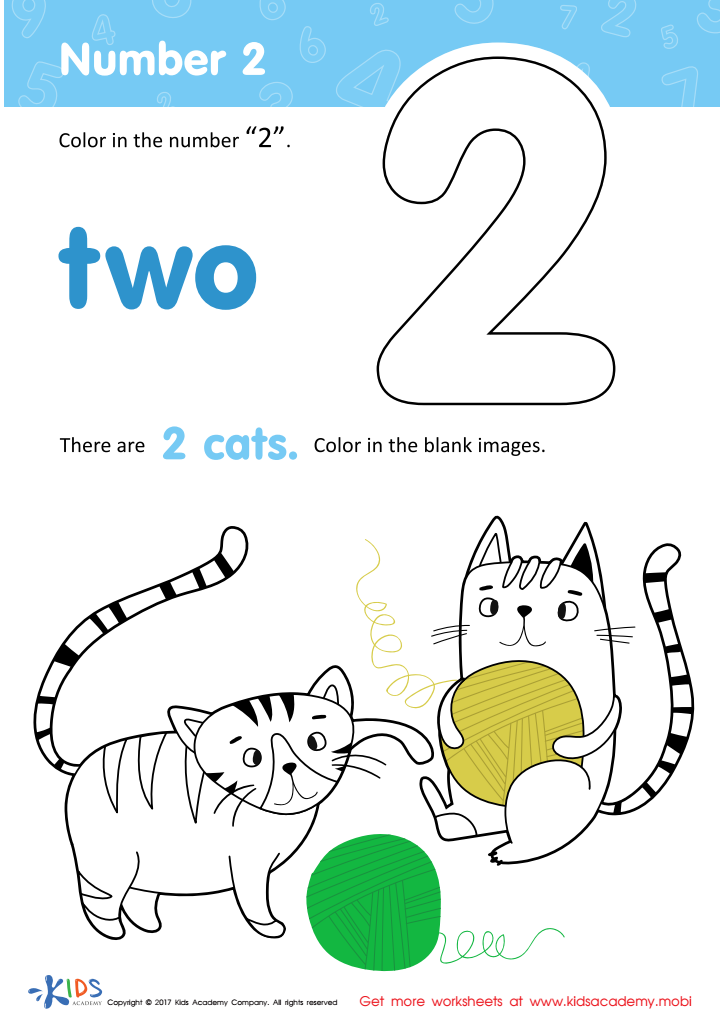
Number 2 Printable
Help your child learn to recognize the number two with these cats and their yarn balls. Print this coloring page – it's great for counting and coloring fun! Your child will develop basic numeracy skills as they visually see numbers in action.
Download (PDF)
Assign to My Students
Assign to My Students
Number 2 Printable
Worksheet
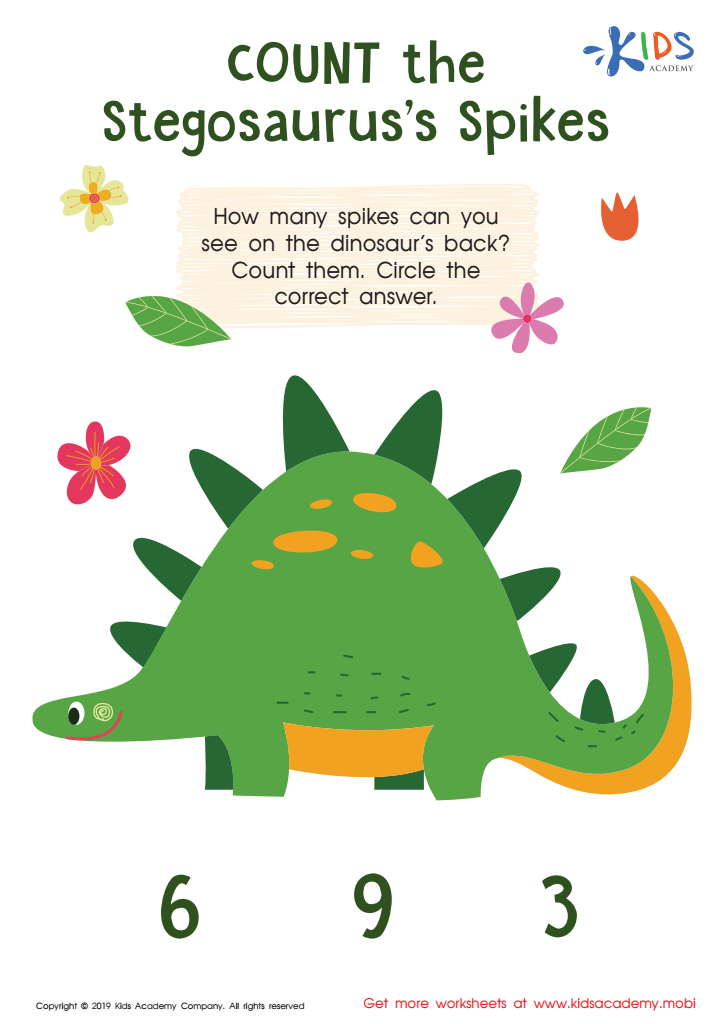
Count the Stegosaurus's Spikes Worksheet
Dinosaurs walked the earth long before humans, meaning no contact was made before they became extinct. Scientists have used research and diggings to find out about these animals, even giving them names. In this worksheet, help your students count the spikes on the stegosaurus and circle the correct answer.
Count the Stegosaurus's Spikes Worksheet
Worksheet
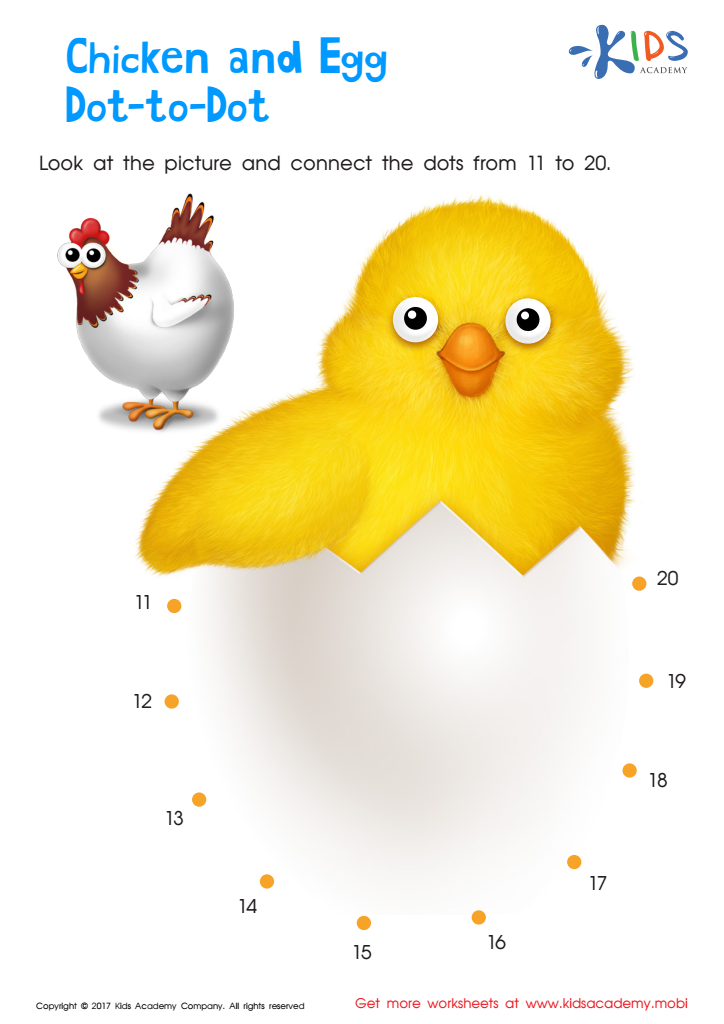
Ordering 11–20: Chicken & Egg Dot–to–dot Worksheet
Help your child hatch the chick and practice their counting skills with this dot to dot worksheet – the chicken came first! Connect the dots 11-20 to have fun and learn at the same time. Experience meaningful practice and gain confidence while drawing great pictures.
Ordering 11–20: Chicken & Egg Dot–to–dot Worksheet
Worksheet
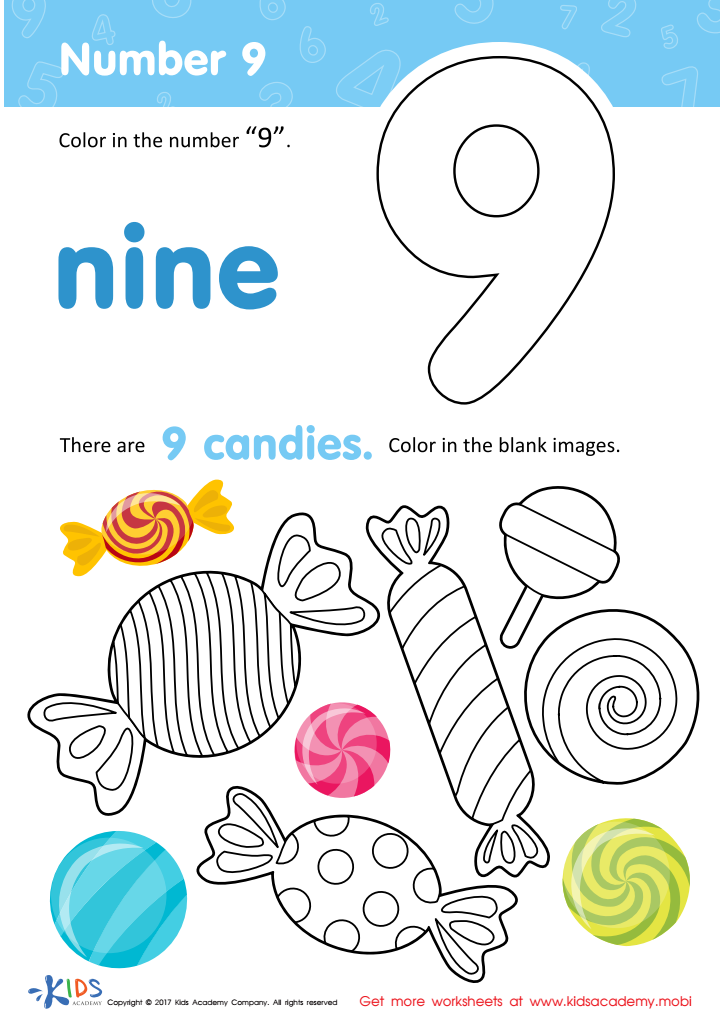
Number 9 Printable
Let your child hone their reading and counting skills with this fun coloring page! With the number 9 candies, your child can decorate their own favorite treats. Make learning a sweet experience and let their mouth water! Help them count and recognize the numbers while having fun.
Download (PDF)
Assign to My Students
Assign to My Students
Number 9 Printable
Worksheet
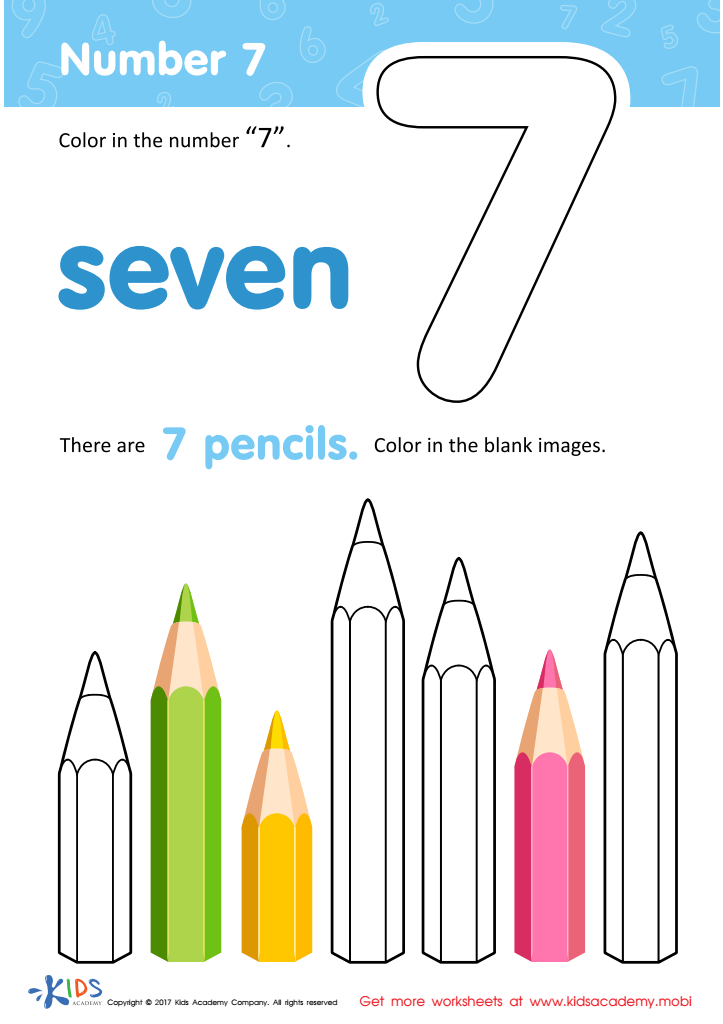
Number 7 Worksheet
Introduce beginning math to your child with this fun number 7 coloring page! Coloring the crayons and using the blank pencils for math equations will bring a creative twist to learning. Your child will love this worksheet!
Download (PDF)
Assign to My Students
Assign to My Students
Number 7 Worksheet
Worksheet
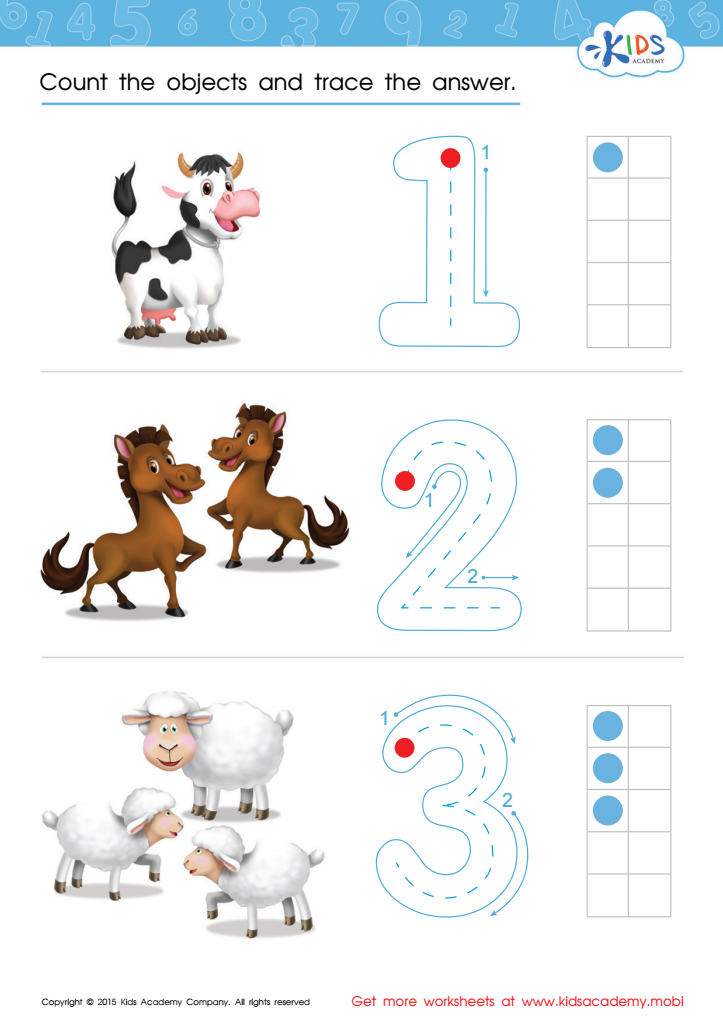
Count and Trace 1 – 3 Worksheet
Get your preschooler started on math with Kids Academy's newest worksheet! It's an enjoyable way for kids to learn how to count and trace numbers 1-3. Print it out and watch your learner have fun as they trace the lines. For more free math worksheets, click here.
Count and Trace 1 – 3 Worksheet
Worksheet
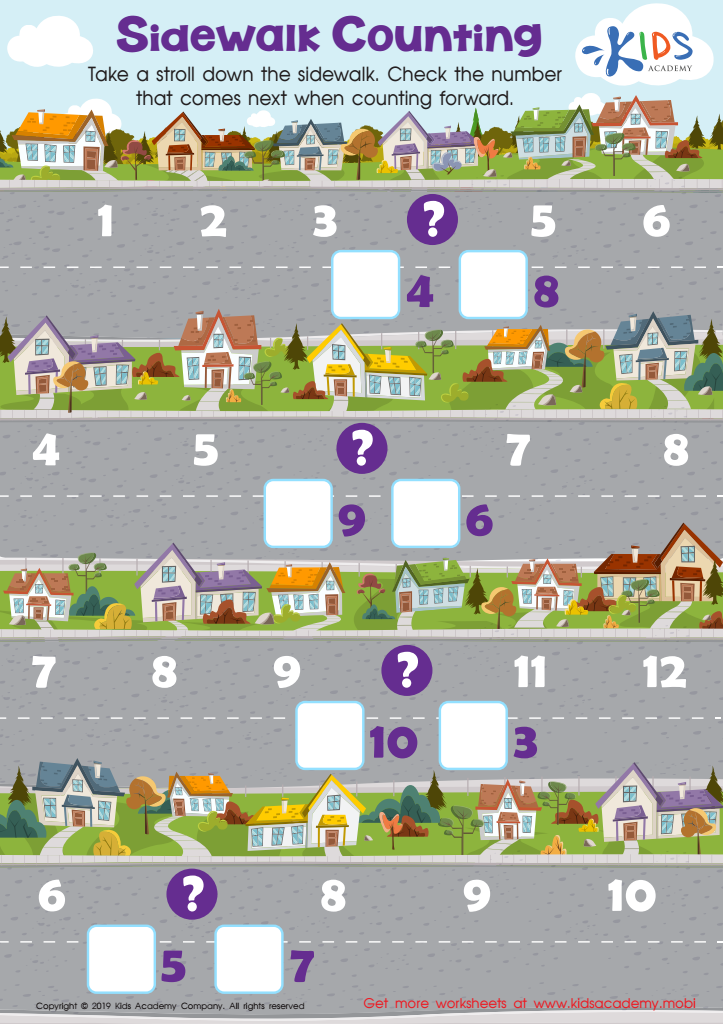
Sidewalk Counting Worksheet
Counting is a vital math skill, helping kids with addition and improving their speed when solving math problems. Let them practice with this fun sidewalk counting worksheet: have them take a walk and fill in the next number in the sequence as they count.
Sidewalk Counting Worksheet
Worksheet
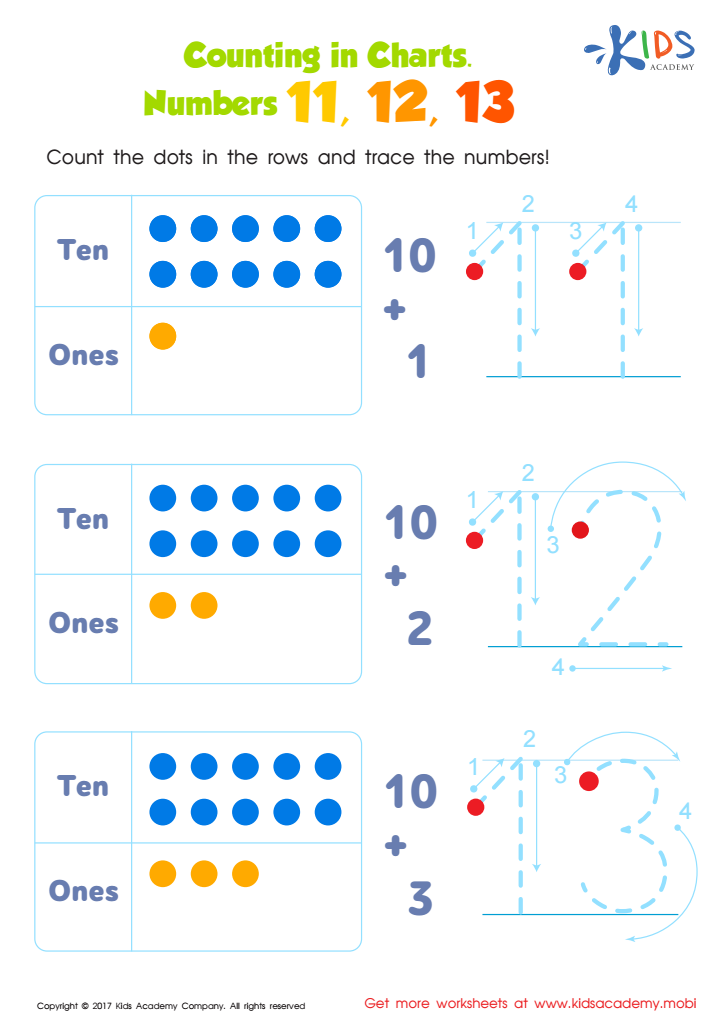
Number Tracing Worksheet For Kindergarten
Help your child develop addition skills and improve number recognition with this easy-to-use worksheet. Have them count the dots and add to solve each problem. Then, trace over the number to complete each row! It's a fun and simple way for kindergarteners to practice their math skills.
Number Tracing Worksheet For Kindergarten
Worksheet
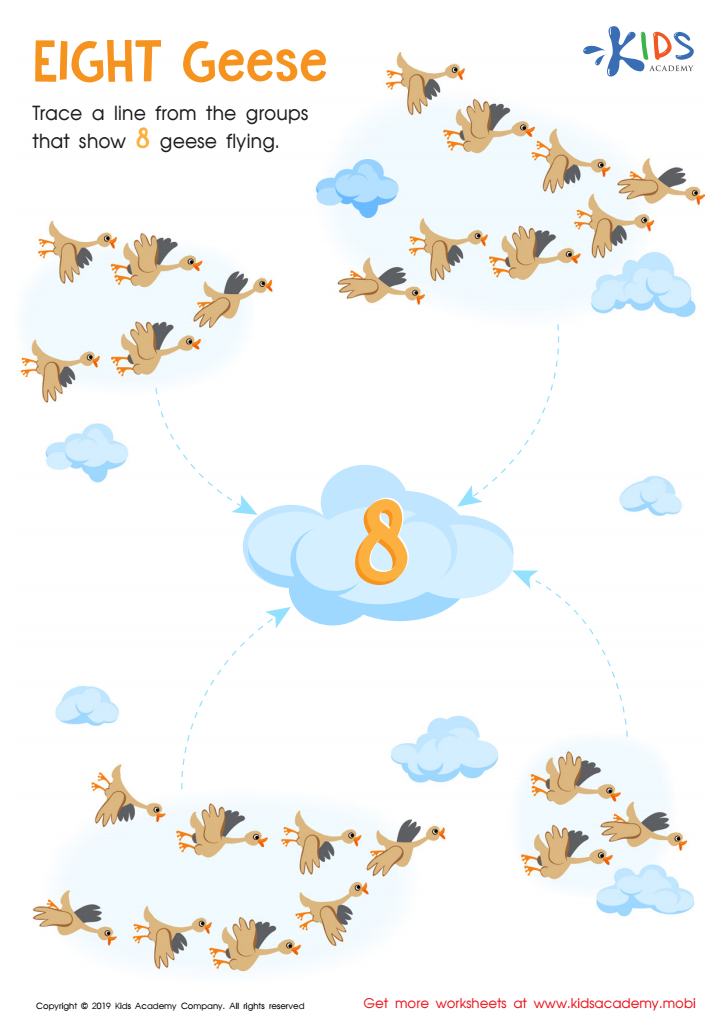
Eight Geese Worksheet
Assess your child's counting skills with this worksheet. Help them count the geese in each group, then trace a line from the groups showing 8. Give your kids a boost by providing lots of exercises and learning aids to help with counting. They likely count objects they come across, like spoons and stones. Use this opportunity to give them practice and help them learn.
Eight Geese Worksheet
Worksheet
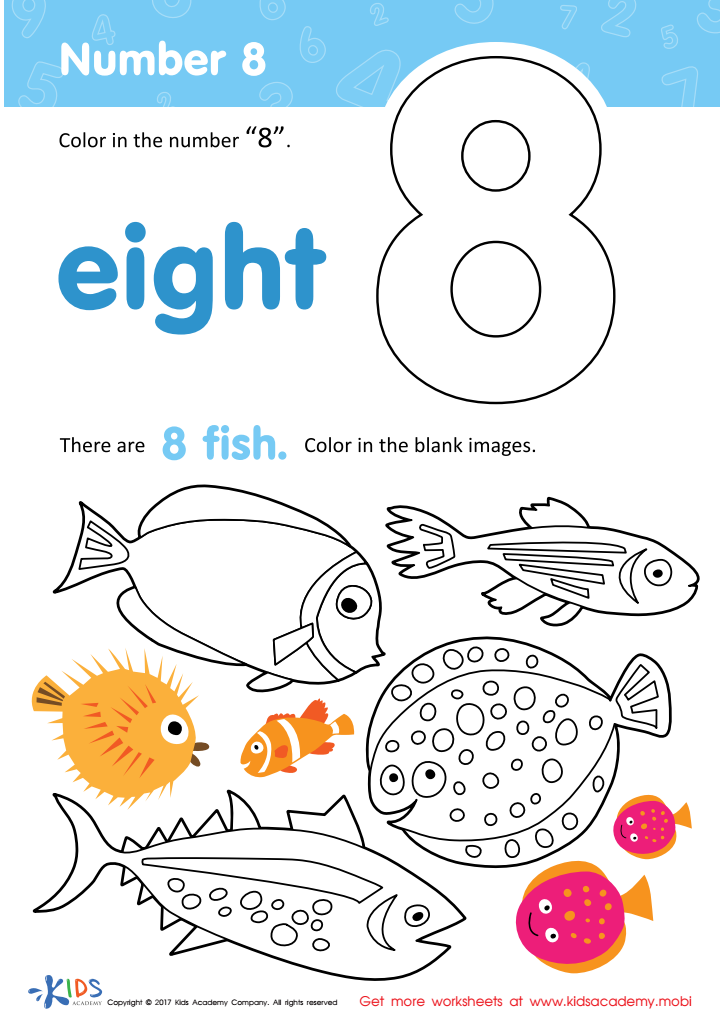
Number 8 Printable
Dive into the deep sea and learn to read and recognize the number eight! Challenge your child's creativity by having them create beautiful fish. They'll love counting and coloring with number 8.
Download (PDF)
Assign to My Students
Assign to My Students
Number 8 Printable
Worksheet
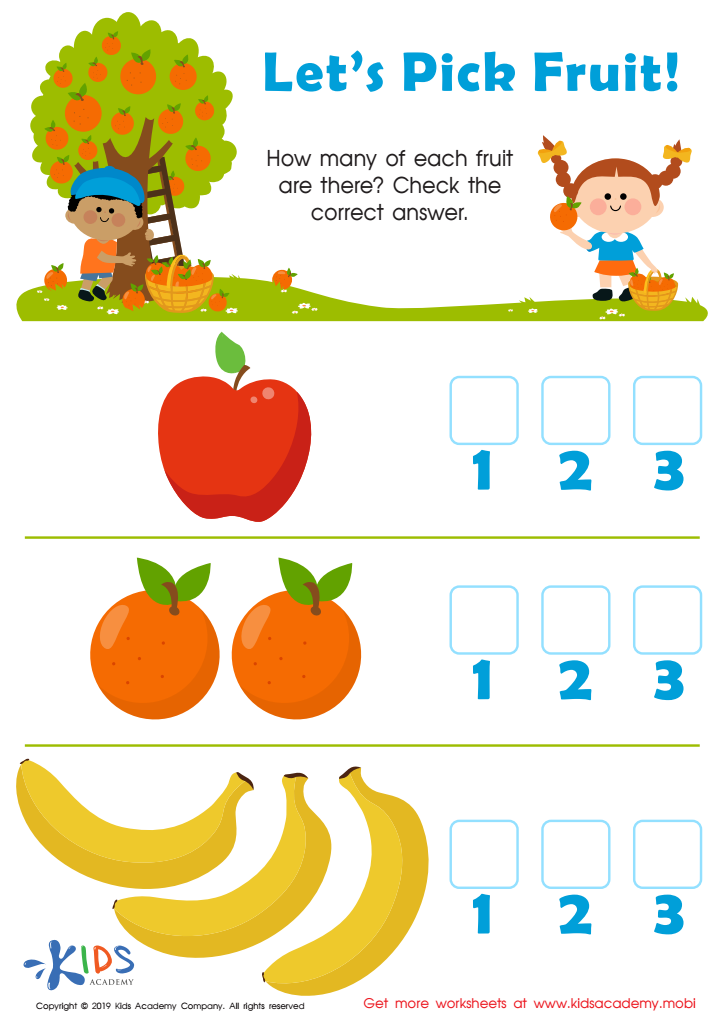
Let's Pick Fruit Worksheet
Picking fruit is fun - and counting it is even better! This free worksheet is perfect for young math learners. They'll use picture representation to count the fruit in each problem and then select the correct answer from the multiple-choice boxes. It's a great way to teach number sense in an easy, fun way!
Let's Pick Fruit Worksheet
Worksheet
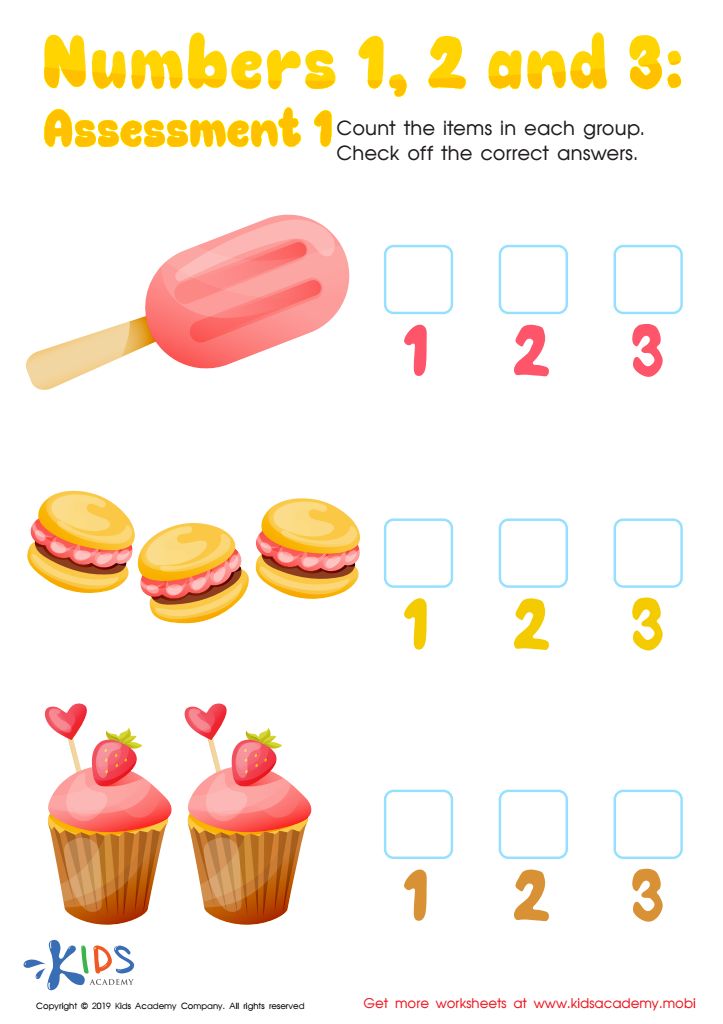
Numbers 1, 2 and 3: Assessment 1 Worksheet
This bright and colorful numbers assessment worksheet is a great way to assess your child's numeracy skills. It provides a sweet treat for them, and helps them recognise 1, 2 or 3 objects. One-to-one representation is key for foundational math skills, and this PDF helps your child build these essential skills.
Numbers 1, 2 and 3: Assessment 1 Worksheet
Worksheet
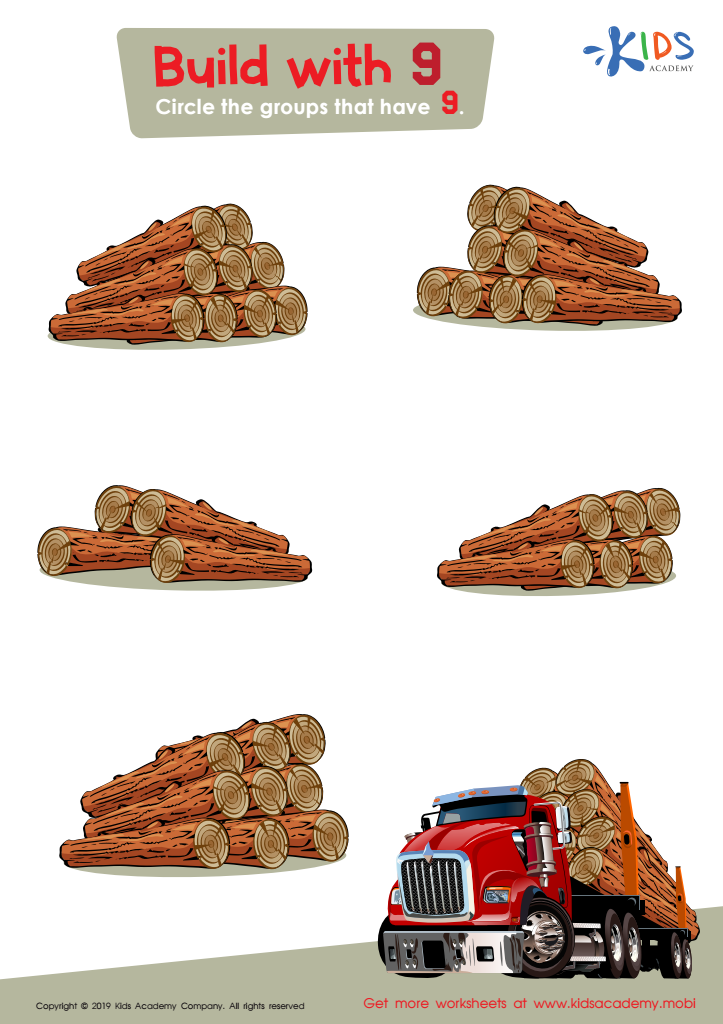
Build with 9 Worksheet
Your students' learning journey can be challenging, but ultimately rewarding. This worksheet helps them practice counting: count the logs in all the groups and circle those with 9 logs.
Build with 9 Worksheet
Worksheet
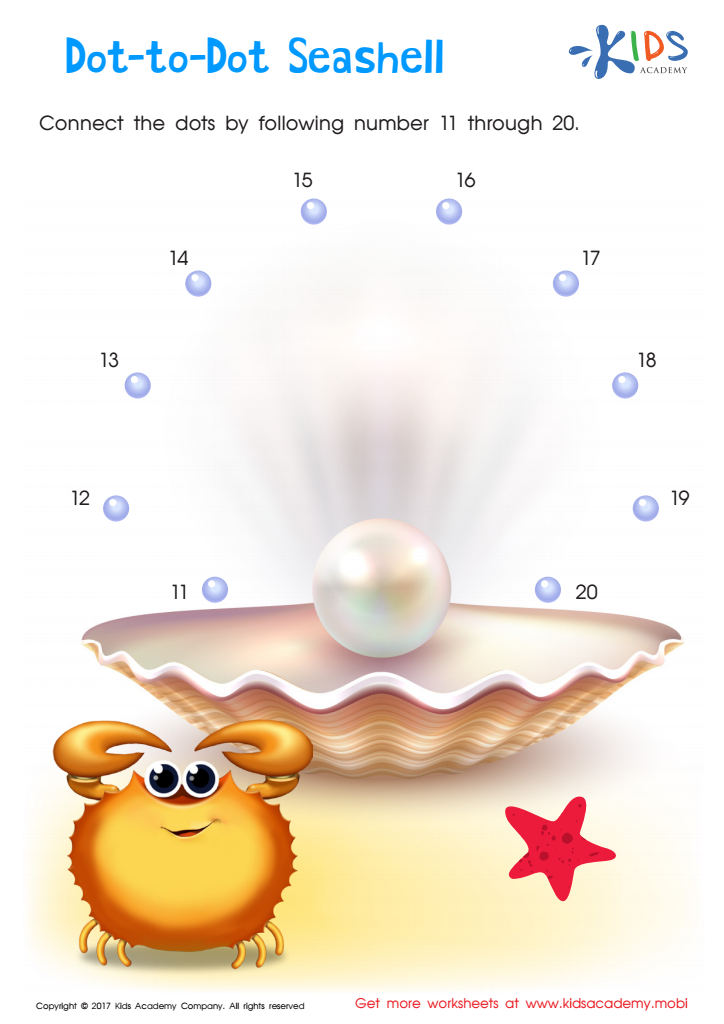
Ordering 11–20: Dot–to–dot Seashell Printable
Connecting the dots 11 to 20 is rewarding for kids, helping them practice counting, identifying numbers and gain cognitive and logical skills. Our worksheet features a vibrant image of a seashell, crab and sea star, and your child will feel rewarded creating it while honing their counting skills!
Ordering 11–20: Dot–to–dot Seashell Printable
Worksheet
Join Kids Academy for Free
Who is primarily going to use this learning content?







Parents and teachers play a vital role in fostering the development of children's fine motor skills, especially during the critical ages of 3-7. Fine motor skills refer to the small movements of the hands, wrists, fingers, feet, toes, lips, and tongue. These skills are essential for performing everyday tasks such as writing, buttoning clothes, tying shoelaces, and opening lunch boxes.
Focusing on fine motor skill development at an early age helps prepare children for academic success. At ages 3-7, children are introduced to numbers, letters, and basic handwriting. Developing strong fine motor skills makes it easier for children to hold a pencil correctly, form letters and numbers accurately, and develop hand-eye coordination.
Moreover, activities that encourage fine motor skills—such as tracing numbers, using manipulatives, or engaging in crafts—are cognitively stimulating. They enhance a child’s ability to concentrate, follow instructions, and understand spatial relationships, laying the groundwork for more complex math and science concepts in later years.
Additionally, strengthening fine motor skills early can boost children's confidence and independence. When children can perform tasks without significant struggle, they gain a sense of achievement and are more inclined to explore new learning opportunities with enthusiasm.
In summary, parents and teachers should prioritize fine motor skill development in early childhood, as it is fundamental to academic achievement, cognitive processing, and self-confidence.








