Cognitive Development Easy Addition Worksheets for Ages 3-8
3 filtered results
-
From - To
Explore our engaging Cognitive Development Easy Addition Worksheets, specifically designed for children aged 3-8. These worksheets foster essential math skills while stimulating cognitive growth through playful and interactive activities. Enriched with colorful visuals and age-appropriate problems, our resources ensure that young learners grasp the fundamentals of addition. Tailored to keep little minds stimulated, these worksheets promote critical thinking and problem-solving abilities, laying a solid foundation for future math success. Ideal for at-home learning or classroom settings, our resources offer a fun and effective way to reinforce addition skills while nurturing cognitive development in your child. Discover the joy of learning today!
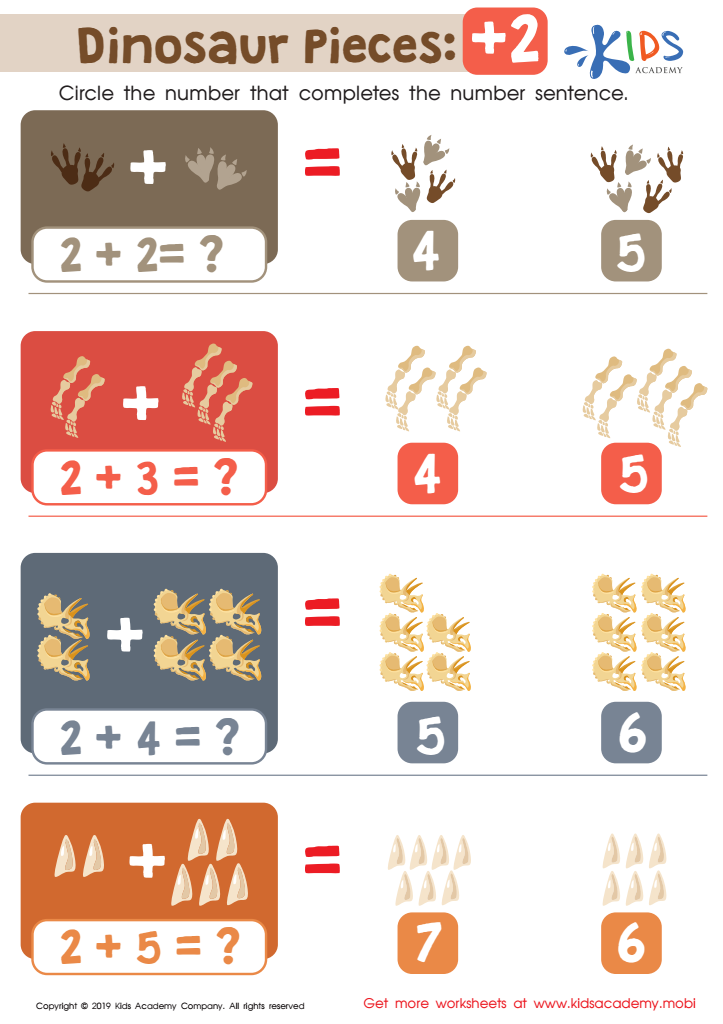
Dinosaur Pieces: +2 Worksheet
 Assign to My Students
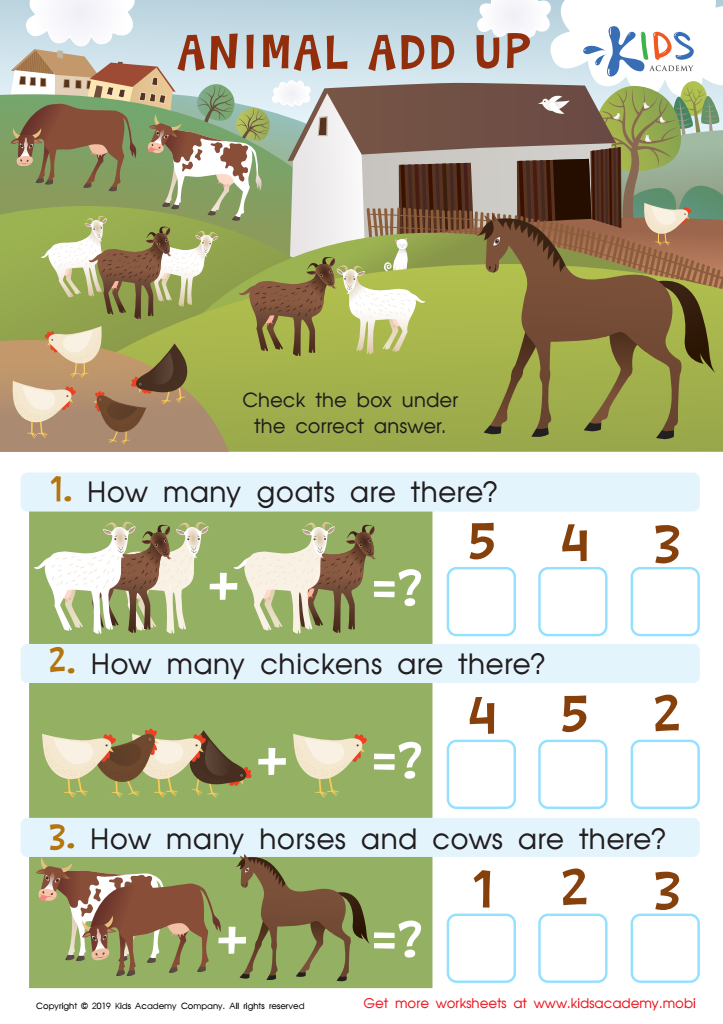
Animal Add Up Worksheet
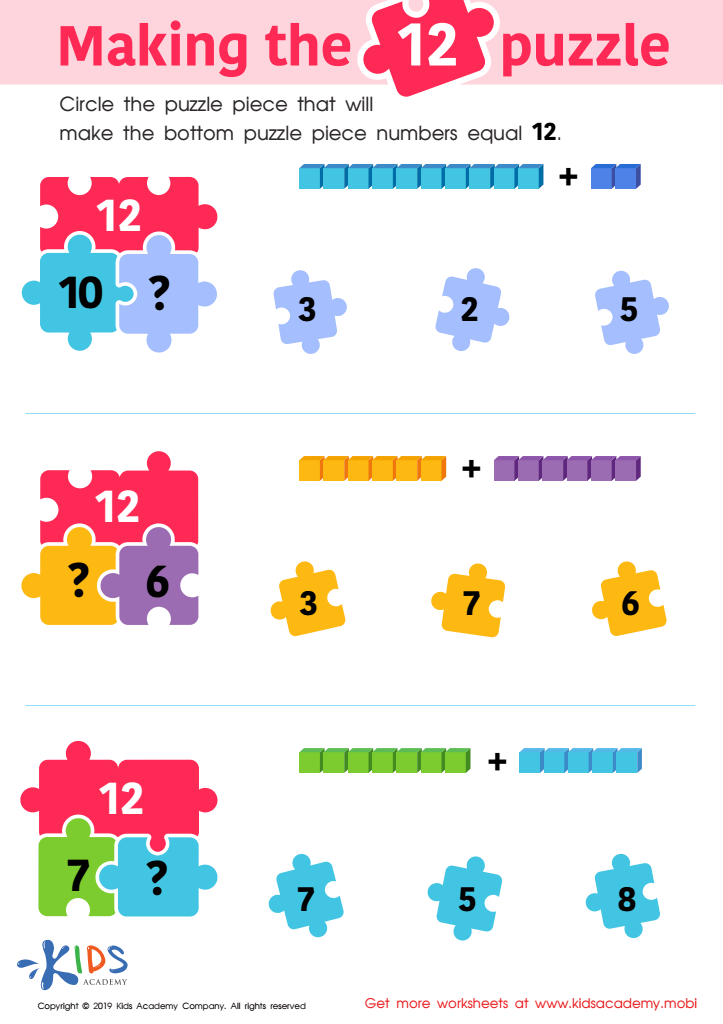
Making the 12 Puzzle Worksheet








Cognitive development is crucial for children aged 3-8, particularly regarding foundational skills like easy addition. During these formative years, children's brains undergo rapid growth, and engaging them in activities that promote mathematical understanding not only enhances their numeracy skills but also sharpens their problem-solving and critical thinking abilities. When parents and teachers emphasize easy addition, they provide children with essential tools for future mathematical concepts, laying a strong groundwork for their academic success.
Moreover, learning arithmetic can significantly boost children’s confidence. As they grasp simple addition, they experience a sense of achievement that encourages persistence in tackling more complex tasks. This positive reinforcement fosters a love for learning and can influence their attitudes towards math throughout their education.
Additionally, socially, when children work on addition through group activities, they improve their communication and cooperative skills. They learn to share ideas, ask questions, and help each other, which are vital interpersonal skills.
Ultimately, investing time in easy addition not only supports cognitive development but also nurtures a child's overall growth—emotionally, socially, and academically—ensuring they are well-prepared for the challenges of higher education and real-world situations.








