Counting skills Easy Tracing Numbers Worksheets for Ages 3-8
4 filtered results
-
From - To
Our "Counting Skills Easy Tracing Numbers Worksheets" designed for ages 3-8 provide an engaging way to develop essential math skills. These printable sheets offer fun tracing activities that enhance number recognition, counting proficiency, and fine motor development. Perfect for early learners, they support foundational skills to help children excel in math. With bright, kid-friendly designs, these worksheets make learning numbers enjoyable and interactive. Ideal for use at home or in the classroom, they offer parents and educators an effective resource to lay a strong arithmetic foundation. Give your child a head start with our comprehensive tracing number activities!
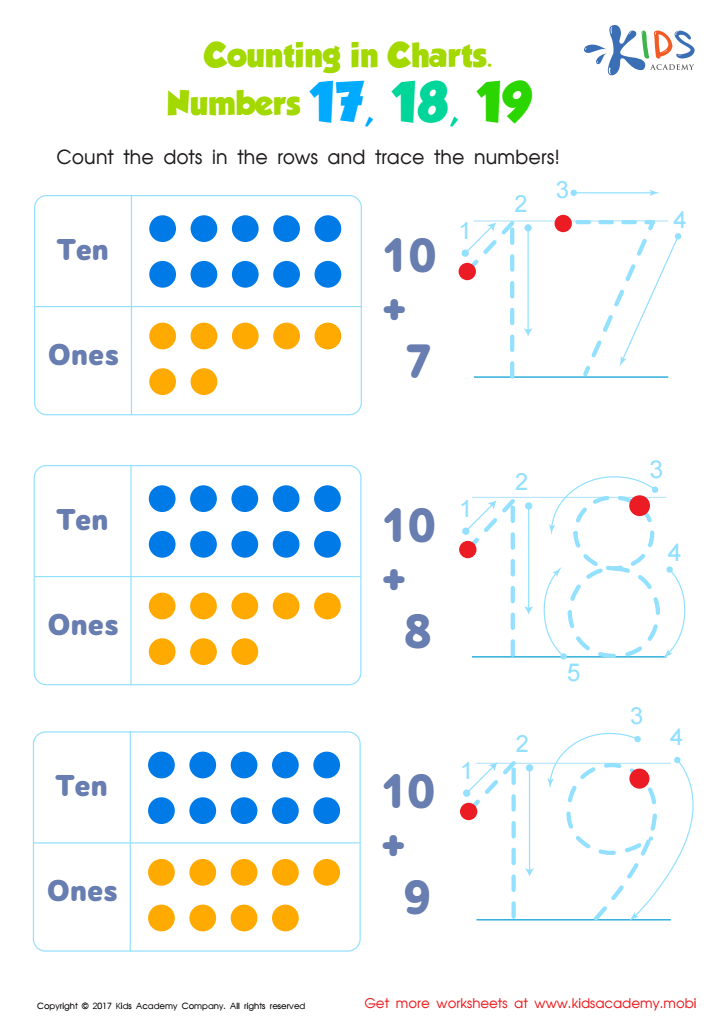
Kindergarten Number Tracing: Counting in Charts Worksheet
 Assign to My Students
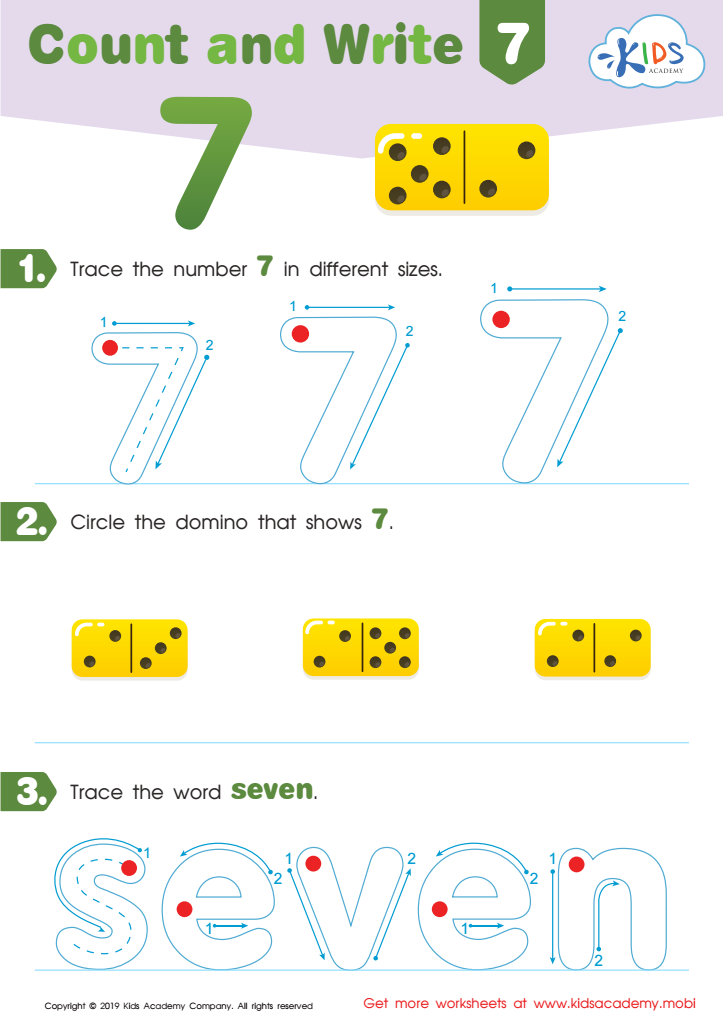
Count and Write 7 Worksheet
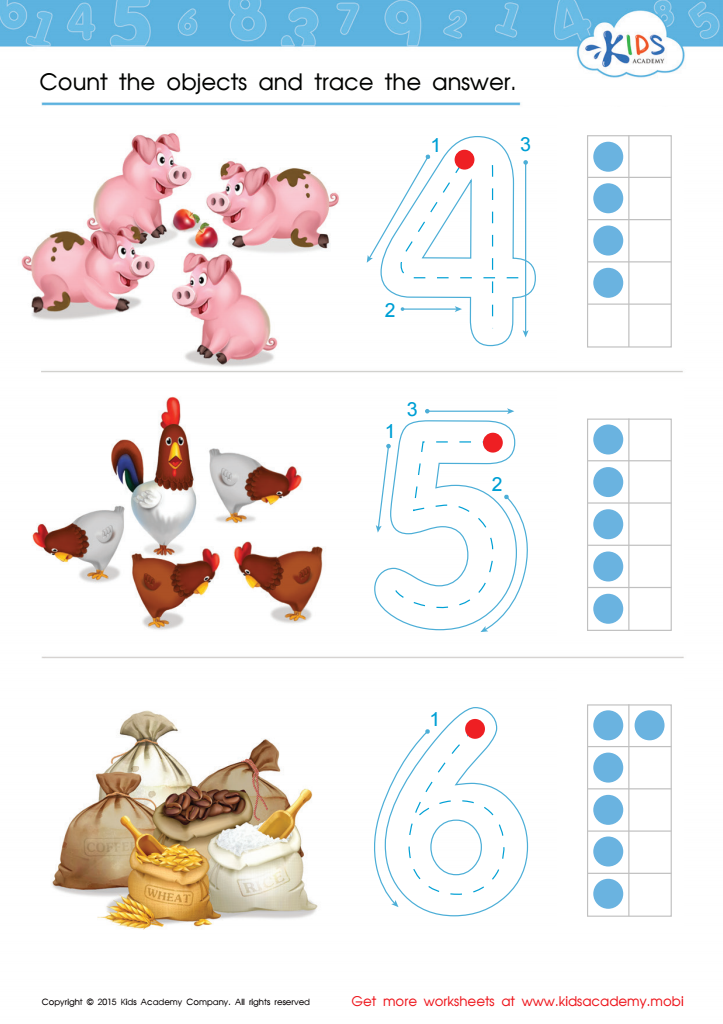
Count and Trace 4 – 6 Worksheet
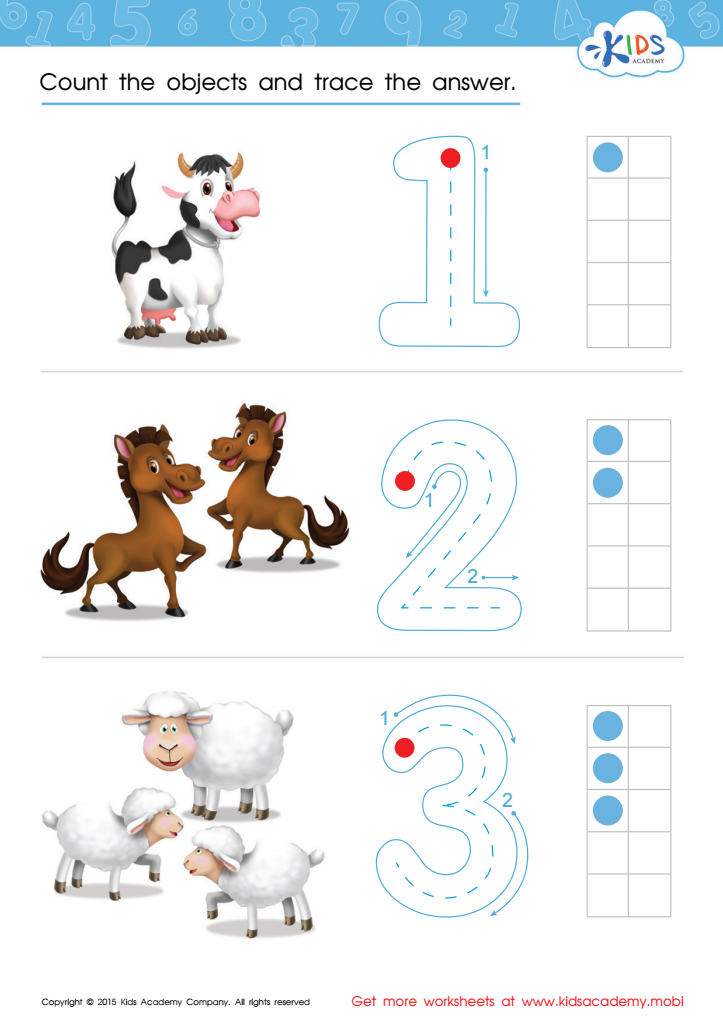
Count and Trace 1 – 3 Worksheet








Counting skills and easy number tracing are foundational for children aged 3-8. At this formative stage, young children’s brains are highly plastic and primed for learning, making it a crucial period for developing essential mathematical skills. Parents and teachers should care about these activities as they foster early numeracy, which is the precursor to more complex mathematics and logical reasoning.
Counting provides children not only with the ability to recite numbers in sequence but also deeply enhances their understanding of quantity, relationships, and order. This fundamental skill supports day-to-day activities like sharing toys or dividing snacks, providing a practical sense of the world around them.
Tracing numbers, on the other hand, develops fine motor skills and hand-eye coordination, paving the way for writing proficiency. Easy tracing activities help children recognize number shapes, improving their numerical literacy. When children trace and write numbers, they also practice patience and attention to detail, qualities that are beneficial in all areas of learning.
Early exposure to these activities helps build a solid mathematical foundation, giving children the confidence and competence essential for more advanced concepts. For parents and teachers, investing time in nurturing these skills can ensure children are well-prepared for academic success, fostering a positive attitude towards education and problem-solving.