Number Recognition Easy Tracing Numbers Worksheets for Ages 3-8
8 filtered results
-
From - To
Help your child master number recognition with our "Number Recognition Easy Tracing Numbers Worksheets for Ages 3-8." These engaging worksheets are designed to introduce and reinforce early math skills through fun and easy tracing activities. Perfect for young learners, each worksheet features visually appealing designs and clear instructions that make learning numbers from 0 to 20 an enjoyable experience. These printable worksheets enhance fine motor skills and build a strong foundation in numeracy, setting your child up for future math success. Ideal for use at home or in the classroom, they are a valuable resource for parents and teachers alike.
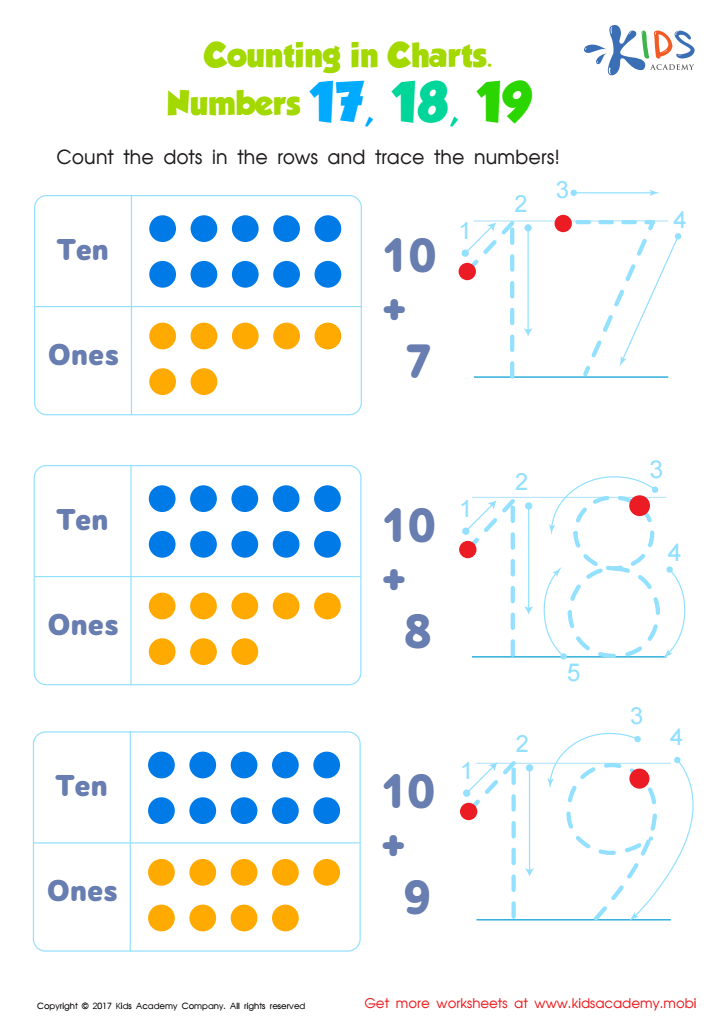
Kindergarten Number Tracing: Counting in Charts Worksheet
 Assign to My Students
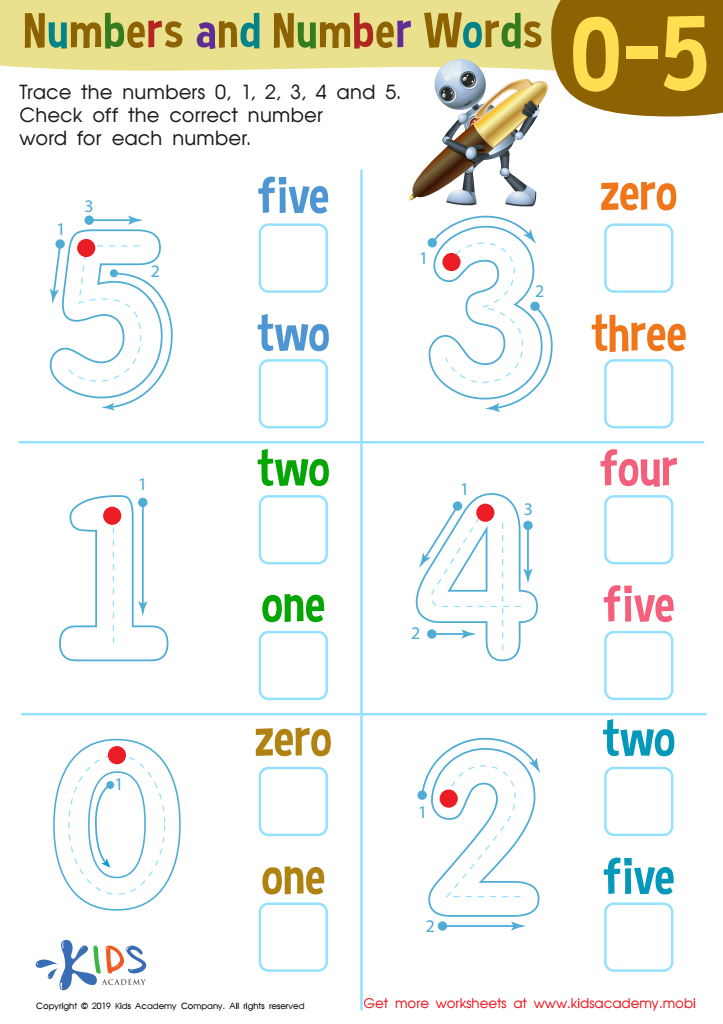
Numbers and Number Words Worksheet
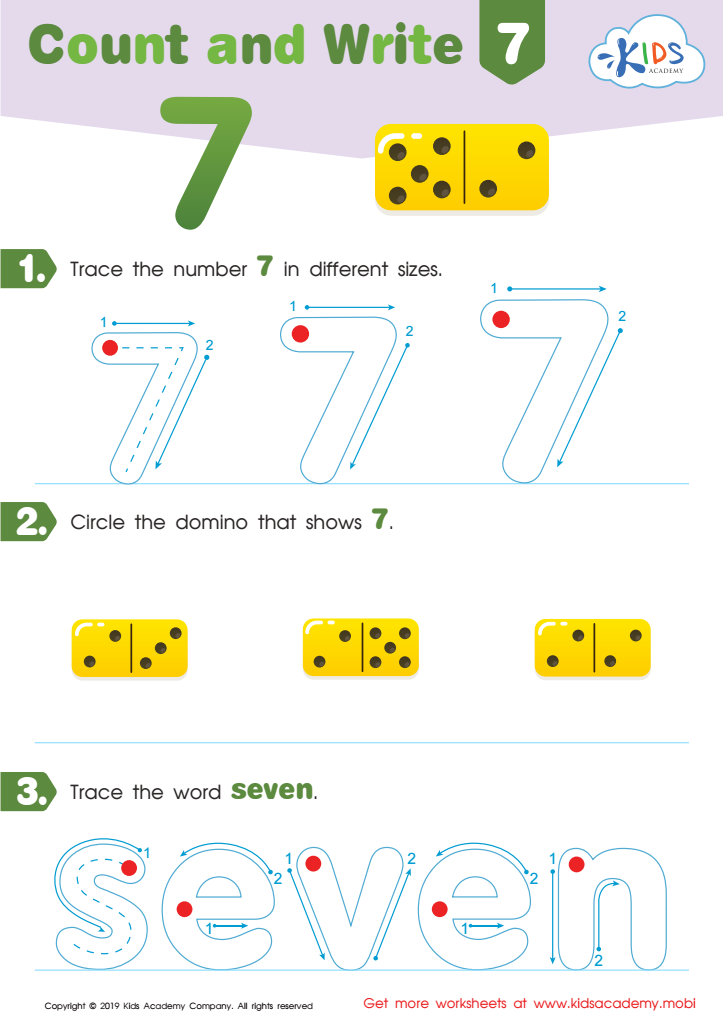
Count and Write 7 Worksheet
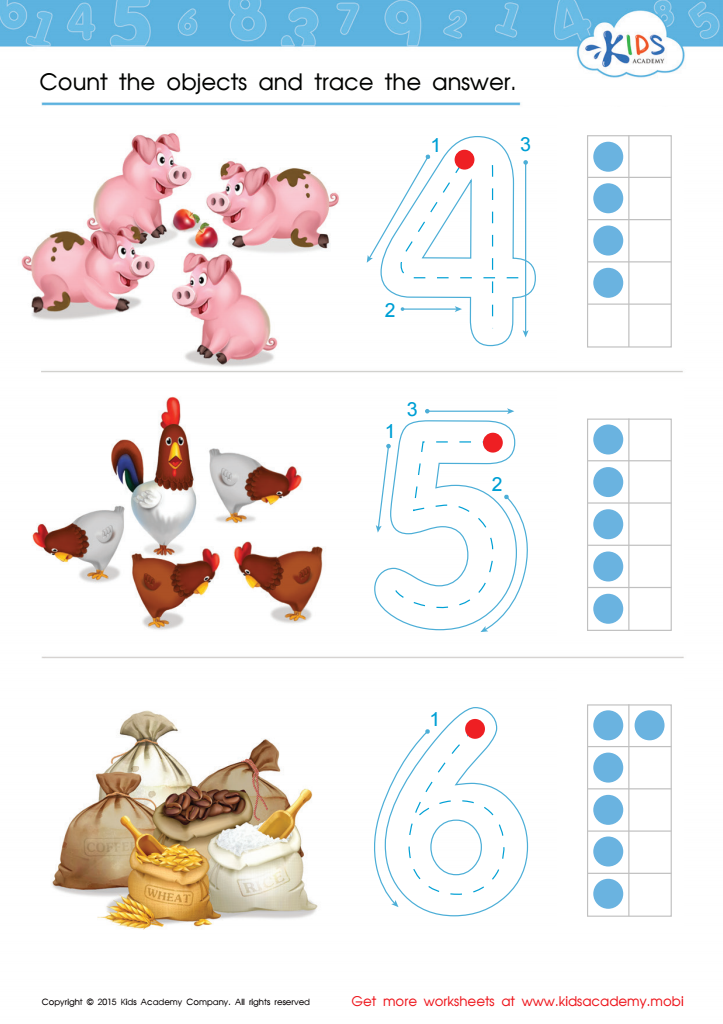
Count and Trace 4 – 6 Worksheet
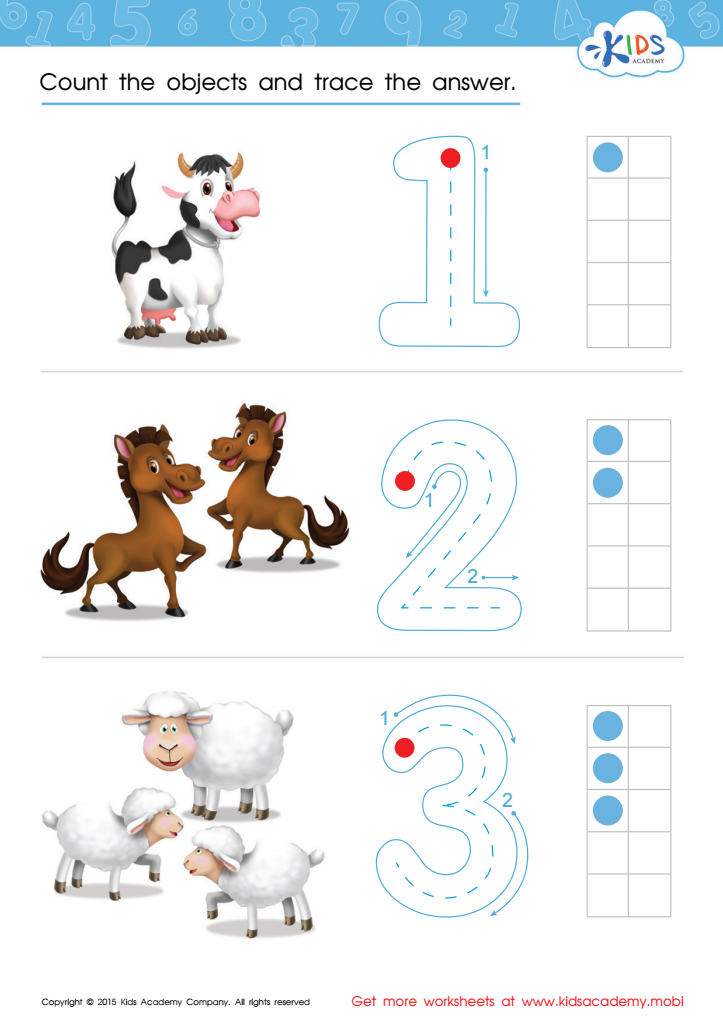
Count and Trace 1 – 3 Worksheet
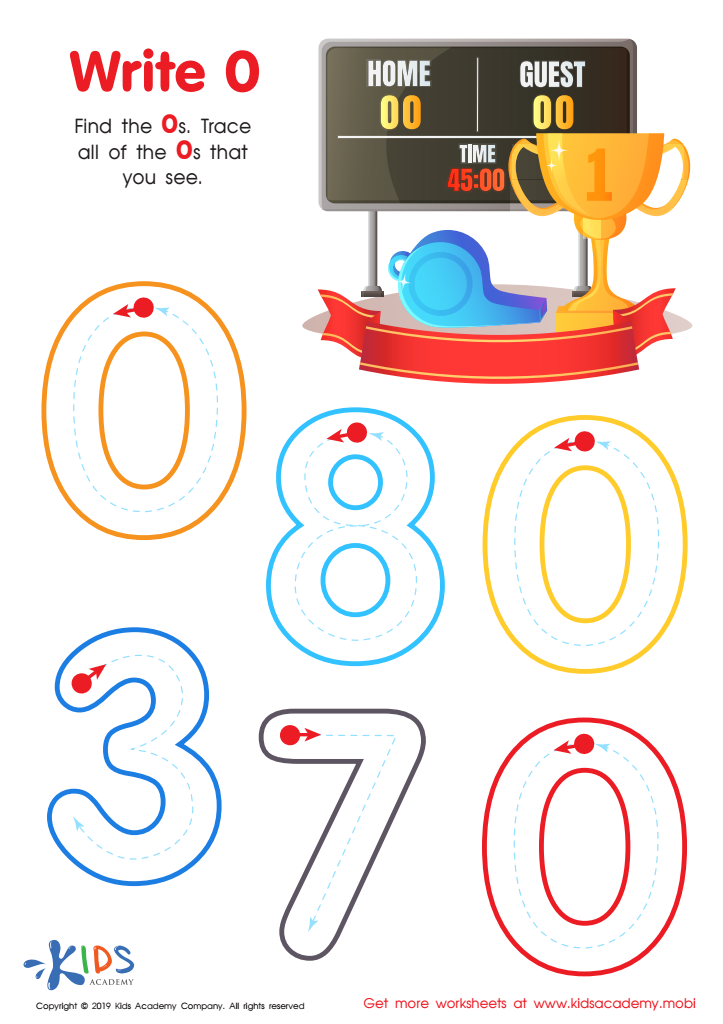
Write 0 Worksheet
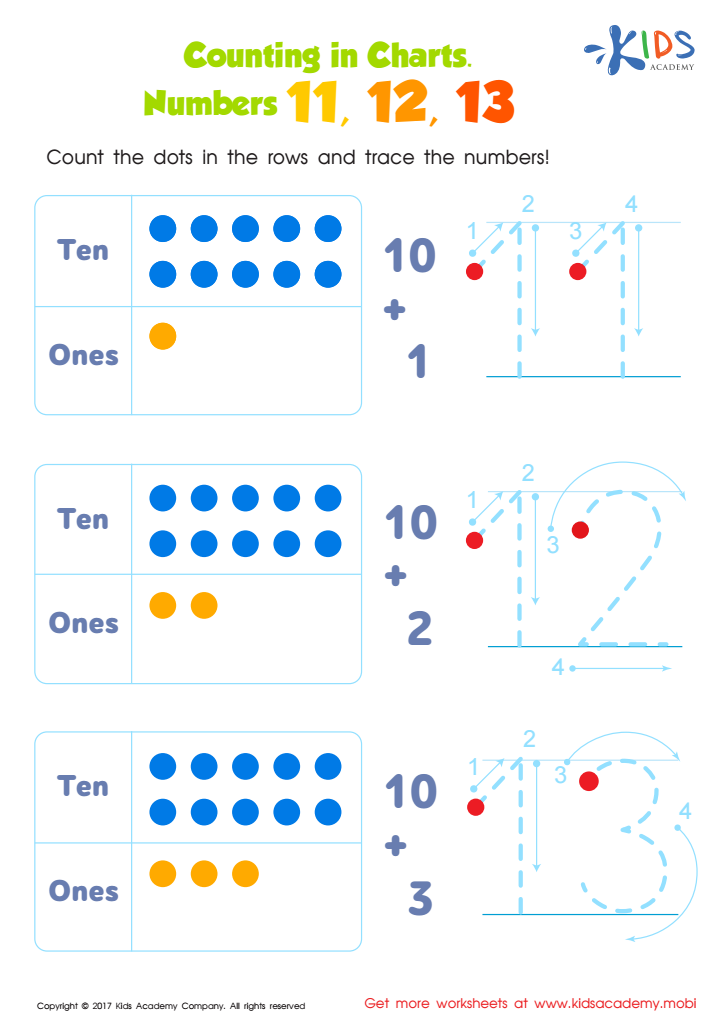
Number Tracing Worksheet For Kindergarten
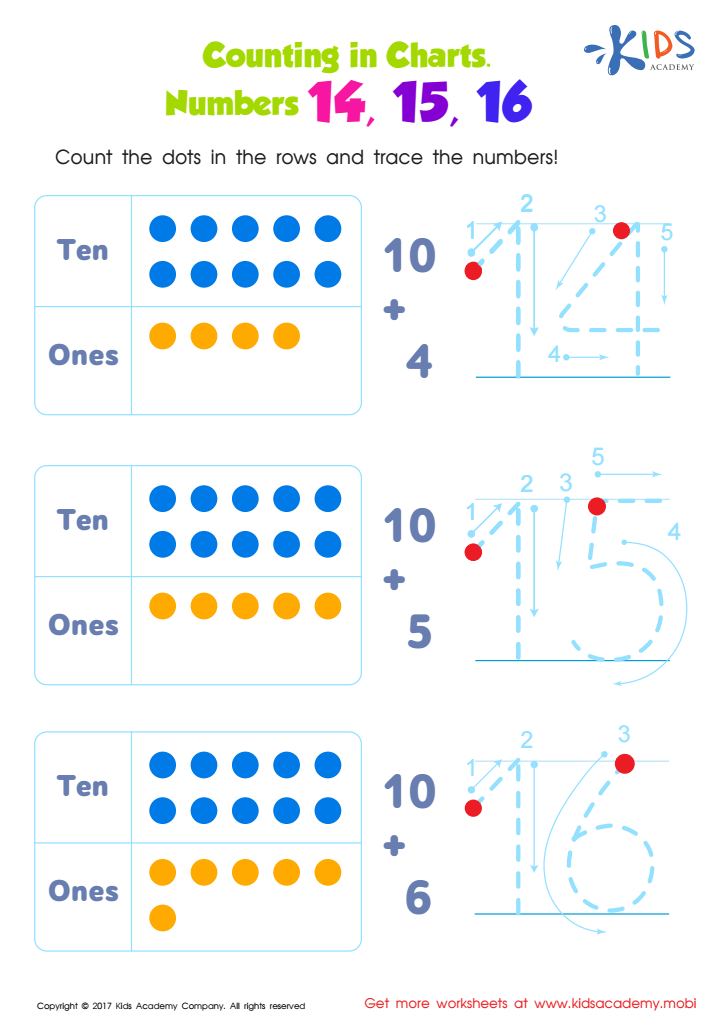
Number Tracing Worksheet








Number recognition and easy tracing numbers for children aged 3-8 are critical foundational skills that significantly influence their future academic success and everyday functioning. During these formative years, young minds are remarkably receptive to learning visual and motor skills, making it an ideal period to introduce these concepts.
Firstly, recognizing numbers is the bedrock of mathematical literacy. It allows children to understand basic numerical concepts, such as counting, ordering, and comparing quantities, which are pivotal for more advanced math skills they'll encounter later in school. Secure number recognition aids in efficient learning of complex operations like addition, subtraction, and eventually multiplication and division.
Secondly, tracing numbers develops fine motor skills. The act of tracing helps children refine hand-eye coordination and dexterity, essential for writing clearly and accurately. This dual focus on cognitive and motor aspects ensures a holistic development, creating a stronger foundation for future learning activities.
Thirdly, incorporating fun tracing activities engages children and keeps learning enjoyable. Positive early interactions with numbers can inspire a lifelong love of mathematics and learning in general.
Ultimately, when teachers and parents prioritize number recognition and easy tracing, they set children up for not only academic achievement but also confident, capable navigation of everyday tasks requiring numerical understanding.