Comprehension skills Easy Worksheets for Ages 4-5
4 filtered results
-
From - To
Enhance your child's understanding with our "Comprehension Skills Easy Worksheets" designed specifically for ages 4-5. These engaging worksheets foster essential reading and comprehension abilities through fun and interactive activities. Each worksheet is carefully crafted to introduce concepts such as story sequencing, character identification, and answer questions about short passages, making learning enjoyable and effective. Ideal for early learners, these resources promote confidence and critical thinking while building a strong literacy foundation. Perfect for home or classroom use, our easy-to-follow materials align with early education standards, ensuring your child is prepared for their educational journey. Download and start exploring today!
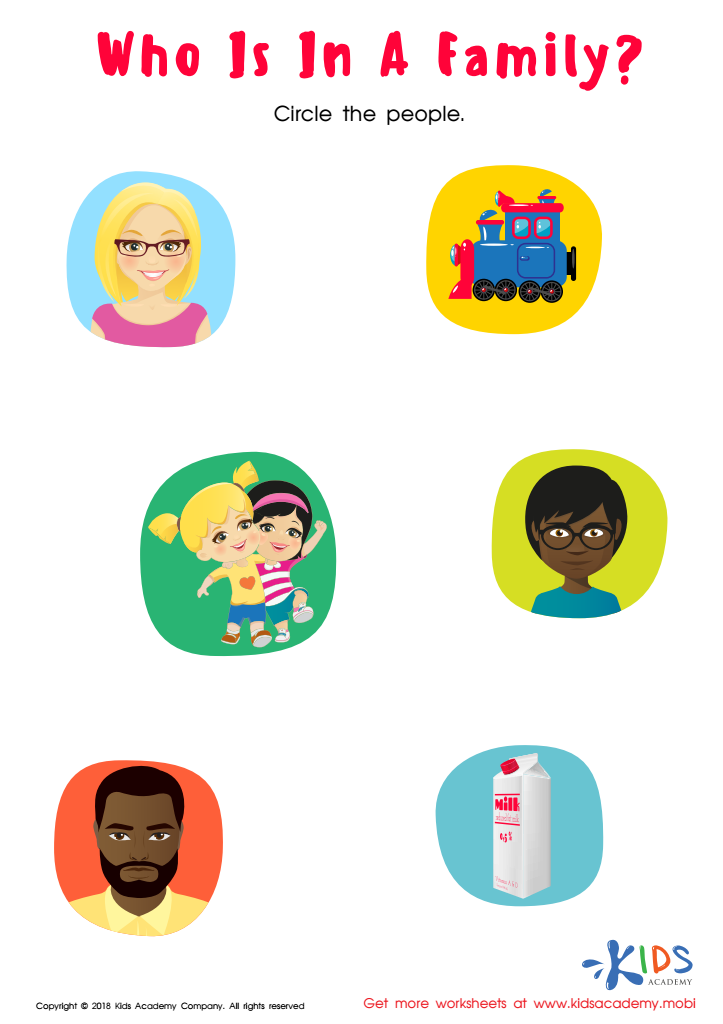
Who Is in a Family? Worksheet
 Assign to My Students
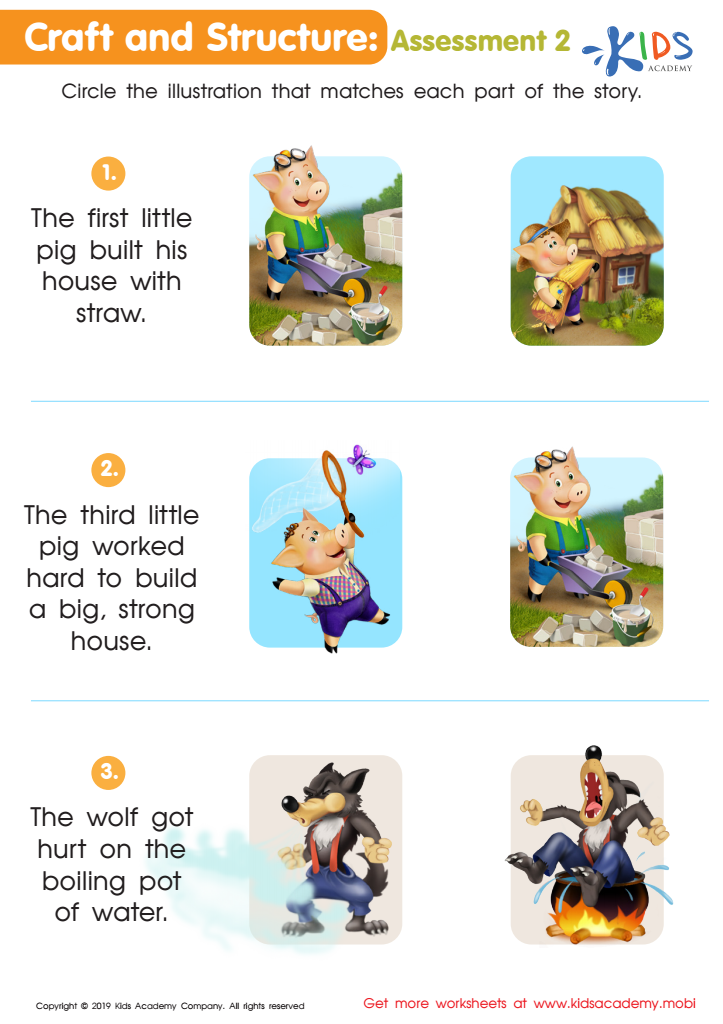
Craft and Structure: Assessment 2 Worksheet 2
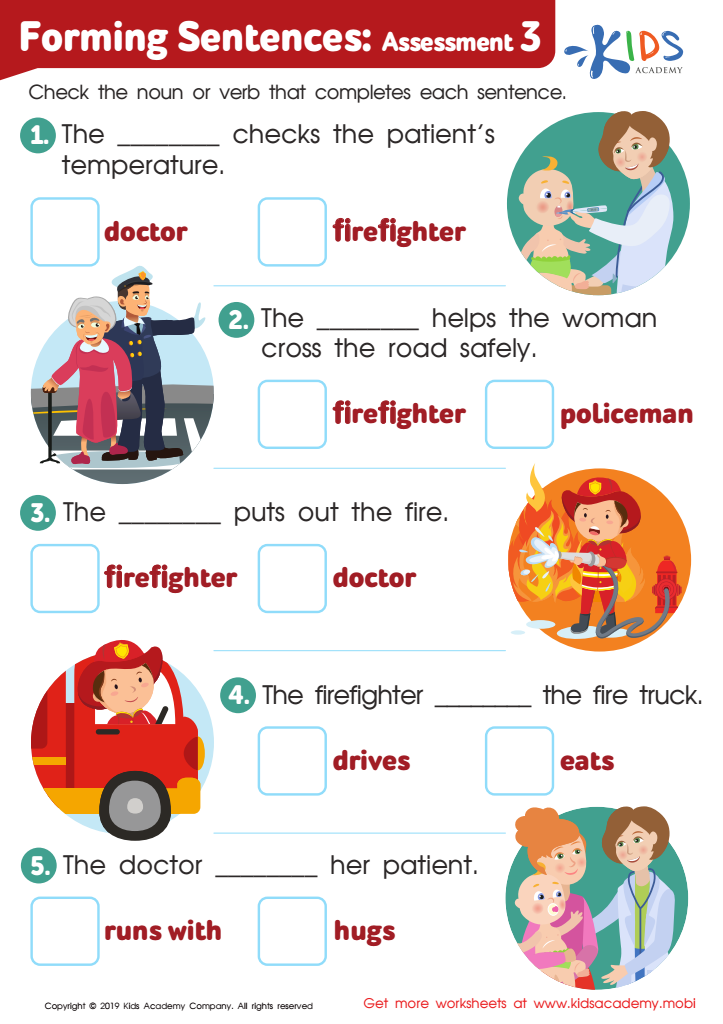
Forming Sentences: Assessment 3 Worksheet
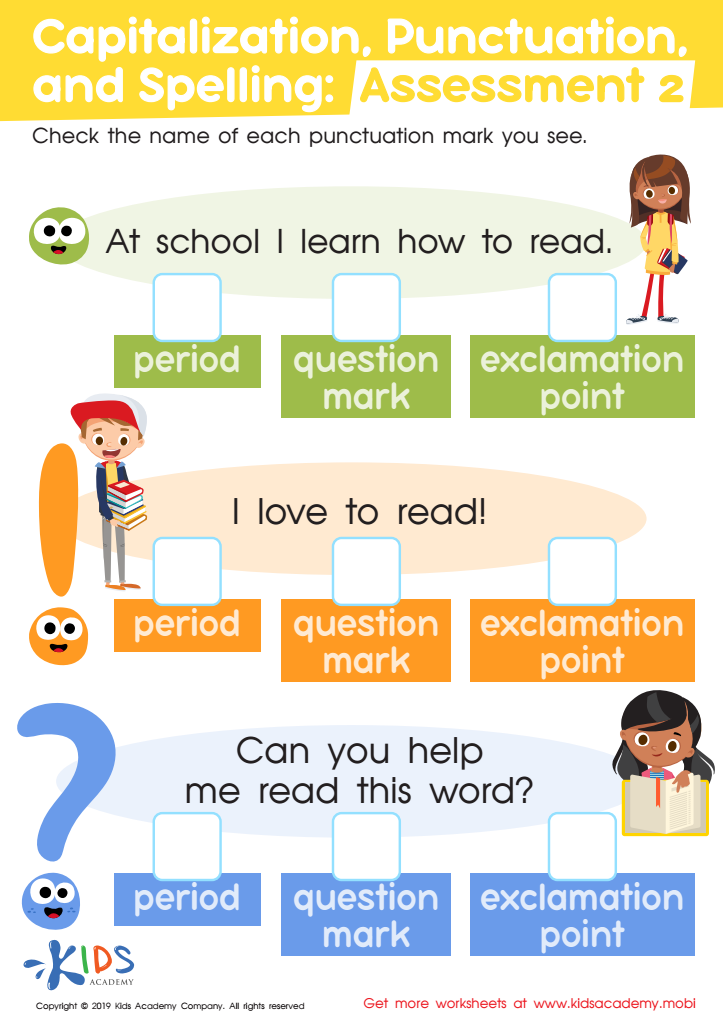
Capitalization. Punctuation. Spelling: Assessment 2 Worksheet








Comprehension skills are crucial for children aged 4-5 as they form the foundation for future learning and communication. At this age, children are starting to make connections between words and meanings, which is essential for effective reading and understanding. When parents and teachers focus on comprehension, they help children not only decode words but also grasp the concepts and ideas behind them.
Strong comprehension skills enable young learners to engage with stories, recognize characters, and understand sequences, fostering imagination and critical thinking. This also supports conversational skills, as children learn to express their thoughts and questions about what they read or hear.
Furthermore, nurturing comprehension skills early on can stimulate a lifelong love for reading, laying the groundwork for academic success. Children who understand what they read are more likely to be engaged learners, better problem solvers, and confident communicators. By prioritizing comprehension, parents and teachers can equip children with the tools they need to navigate the complex world of language and literacy effectively, paving the way for future educational achievements. Thus, investing in these skills early is undeniably beneficial for holistic development.








