Comparing lengths Easy Worksheets for Ages 4-7
6 filtered results
-
From - To
Discover our engaging "Comparing Lengths Easy Worksheets for Ages 4-7" at Kids Academy! These worksheets are specially designed to help young learners develop essential measuring skills through fun and interactive activities. Each colorful, educational sheet helps kids understand the concepts of length and size comparison by ordering and measuring objects. Perfect for early learners, these PDF worksheets encourage critical thinking and problem-solving skills while keeping children entertained. Whether used at home or in a classroom, our resources are an excellent tool to make learning measurement–simple and fun for young minds! Download today!
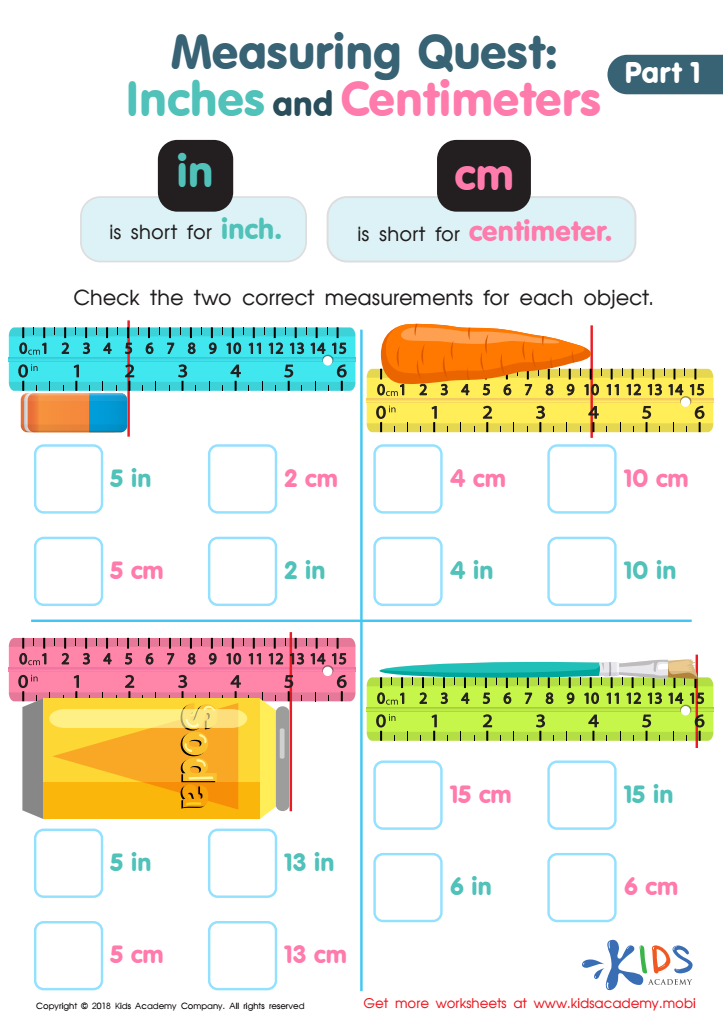
Measuring Quest: Inches and Centimeters Worksheet
 Assign to My Students
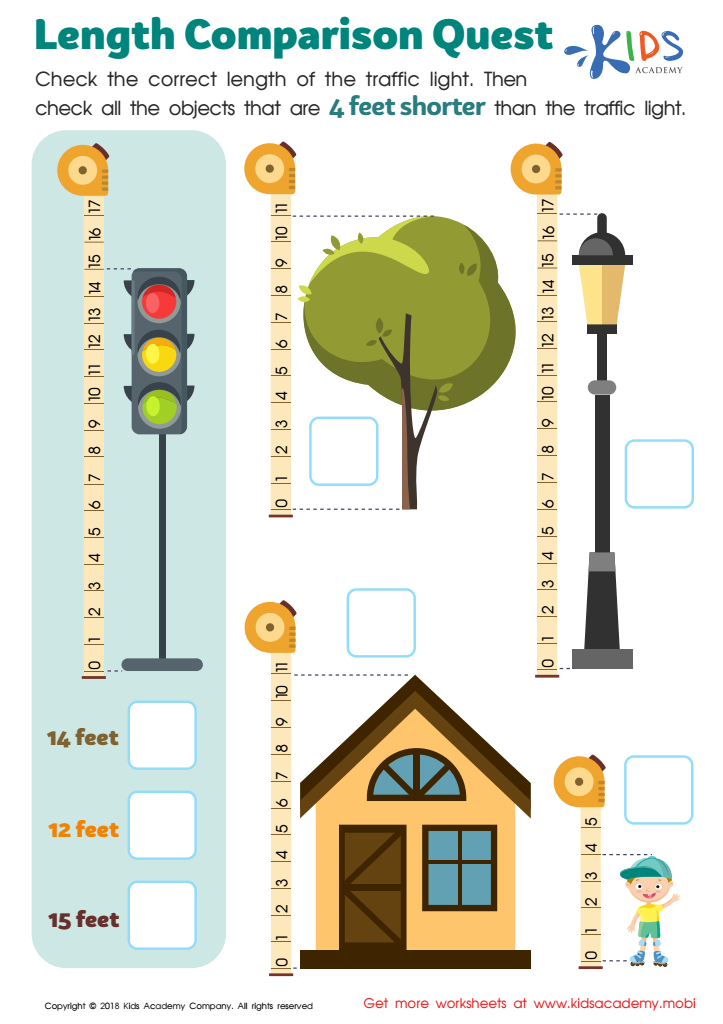
Length Comparison Quest Worksheet
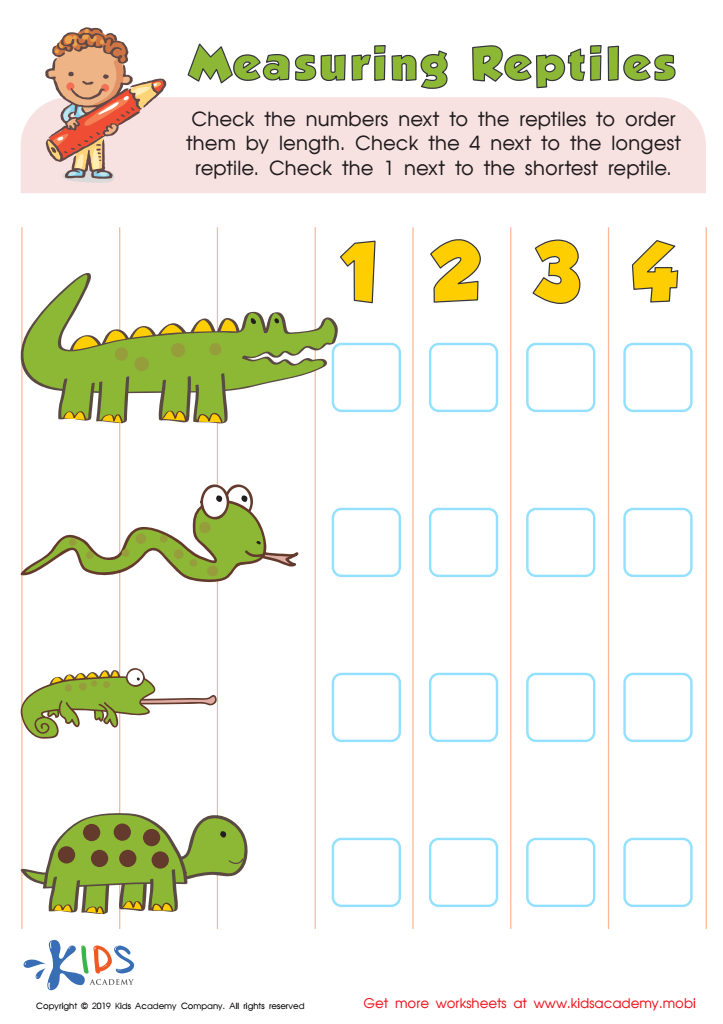
Measuring Reptiles Worksheet
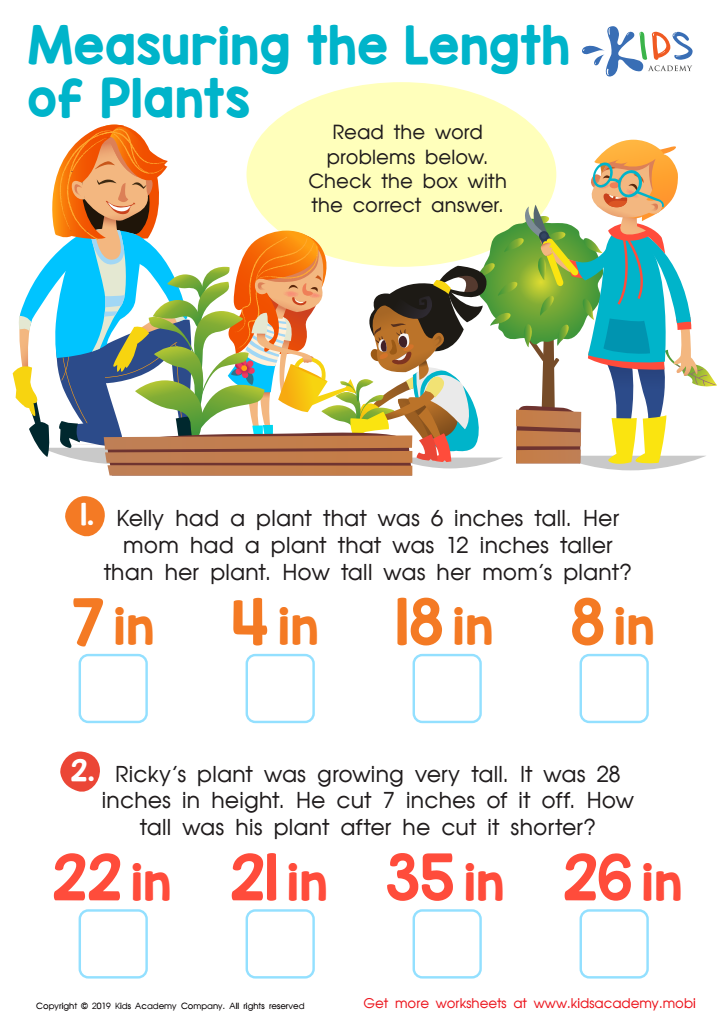
Measuring the Length of Plants Worksheet
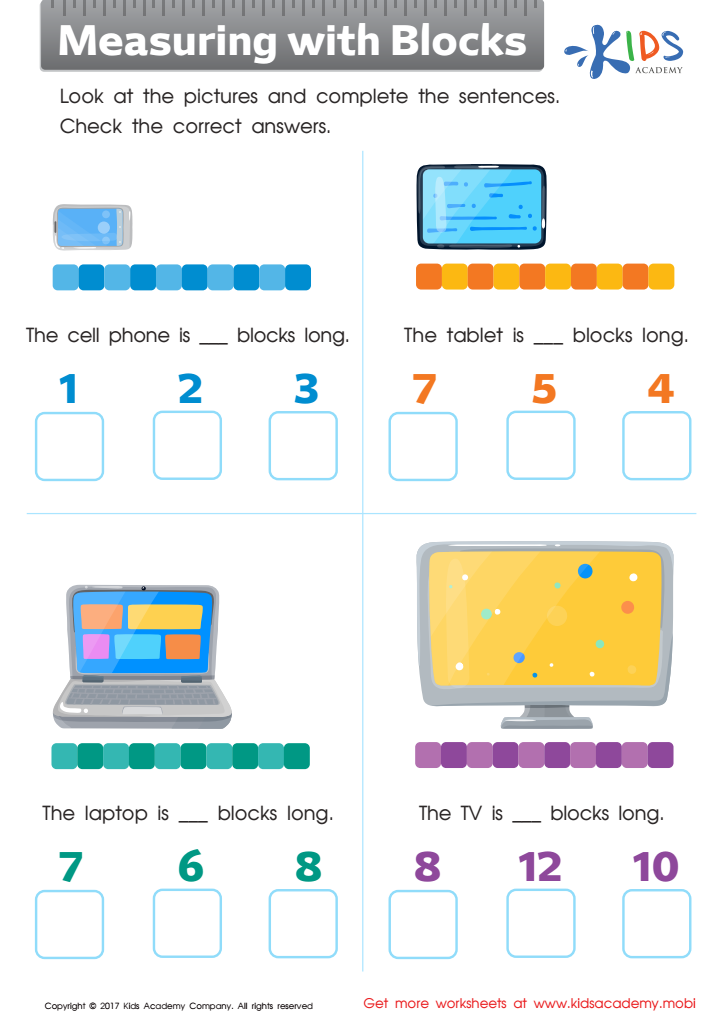
Measuring with Blocks Worksheet
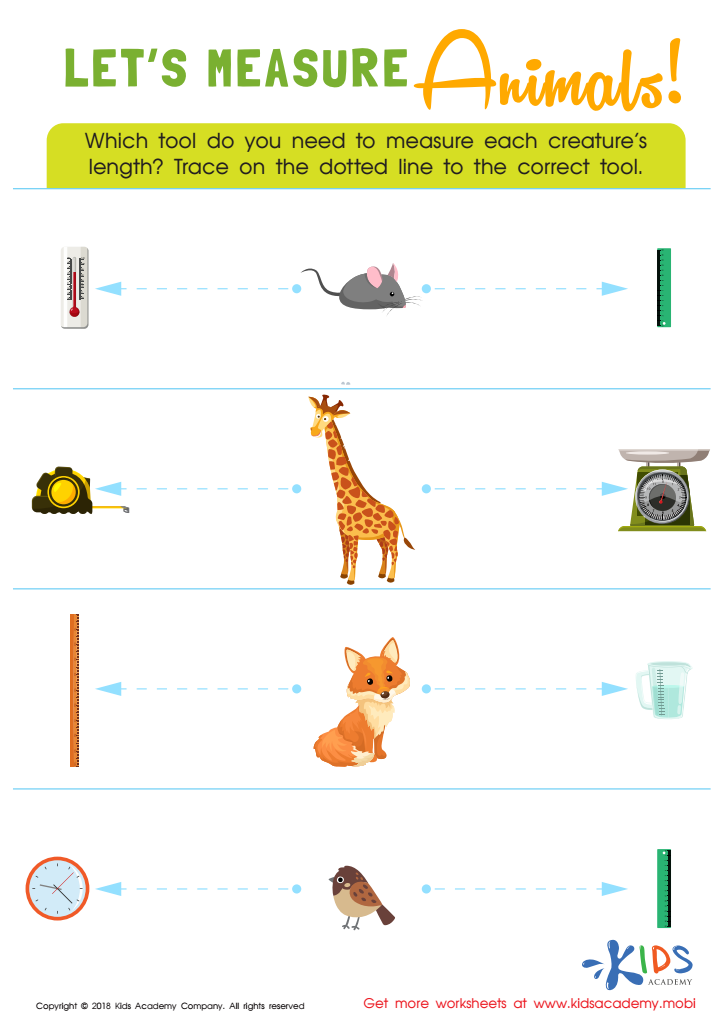
Let's Measure Animals! Worksheet






Comparing lengths is a fundamental skill for young children, as it forms the building block for various mathematical concepts and real-world applications. At ages 4-7, children are in the critical stage of developing their cognitive and motor skills. By learning to compare lengths, children enhance their ability to observe, analyze, and articulate differences and similarities in their environment. This activity strengthens their understanding of measurement and introduces them to basic spatial reasoning and geometry concepts.
Engaging in comparing lengths helps children develop vocabulary related to size such as longer, shorter, taller, and smaller. This descriptive language is essential for effective communication. Additionally, such activities involve hands-on manipulation, which improves fine motor skills and hand-eye coordination. When children use familiar objects like pencils, blocks, or ropes to compare lengths, they connect more deeply with the concepts being taught.
Moreover, these skills have direct correlations with everyday tasks, such as determining if a picture will fit the space on a wall or selecting appropriately sized furniture. Encouraging these activities fosters problem-solving skills and promotes cognitive development that is crucial for more complex logical and mathematical operations later in their education. Consequently, parents and teachers should prioritize activities that help young children practice comparing lengths to set a strong foundation for their future learning.








