Contextual understanding Easy Worksheets for Ages 4-8
5 filtered results
-
From - To
Welcome to our engaging collection of Contextual Understanding Easy Worksheets, thoughtfully designed for children aged 4-8! These playful and interactive worksheets help young learners grasp essential concepts by relating new information to familiar contexts. With vibrant visuals and relatable scenarios, children enhance their comprehension skills as they connect words to everyday experiences. Our worksheets foster critical thinking and encourage readers to make inferences, boosting their overall cognitive development. Perfect for homeschoolers, classrooms, or extra practice at home, our resources make learning fun and effective. Explore our diverse selection today and watch your child thrive in their understanding of context!
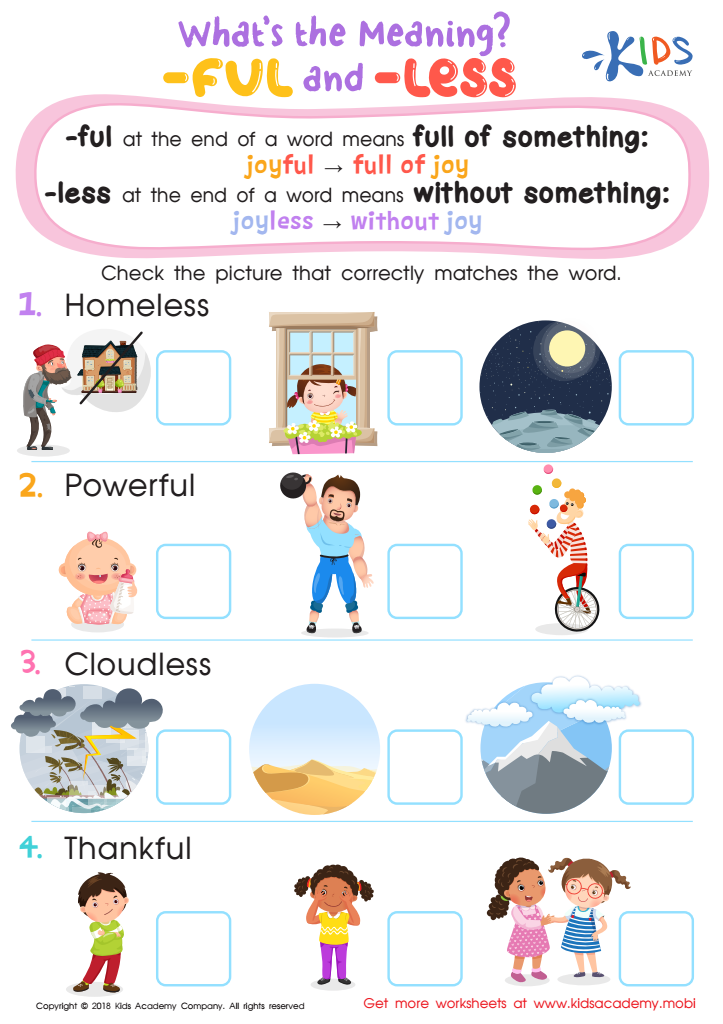
What's the Meaning? Worksheet
 Assign to My Students
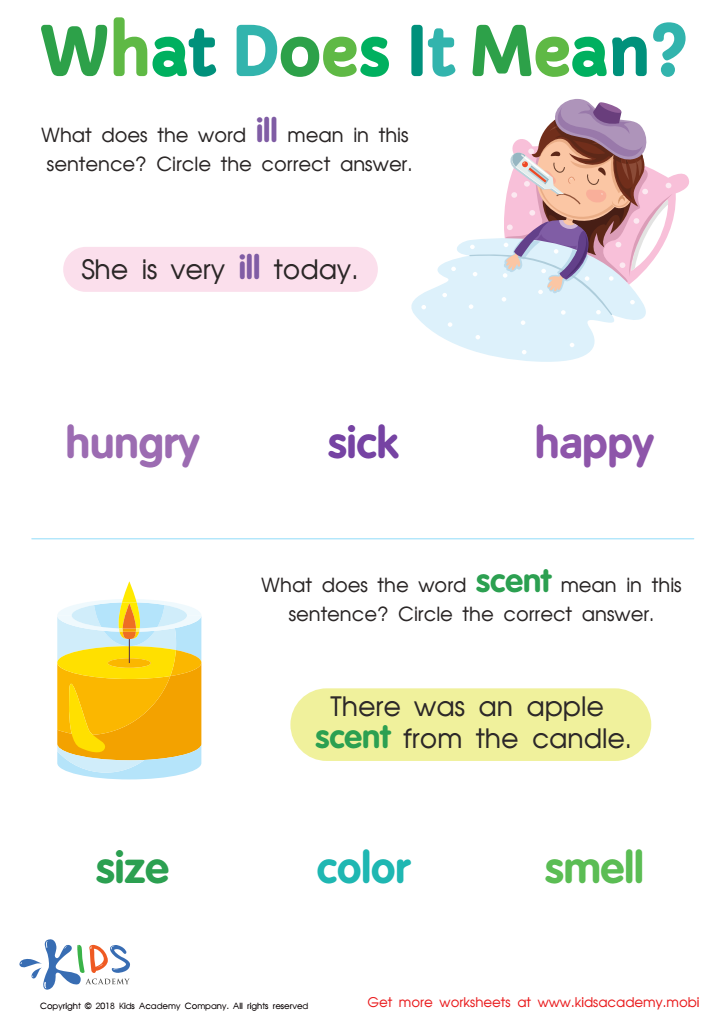
What Does It Mean? Worksheet
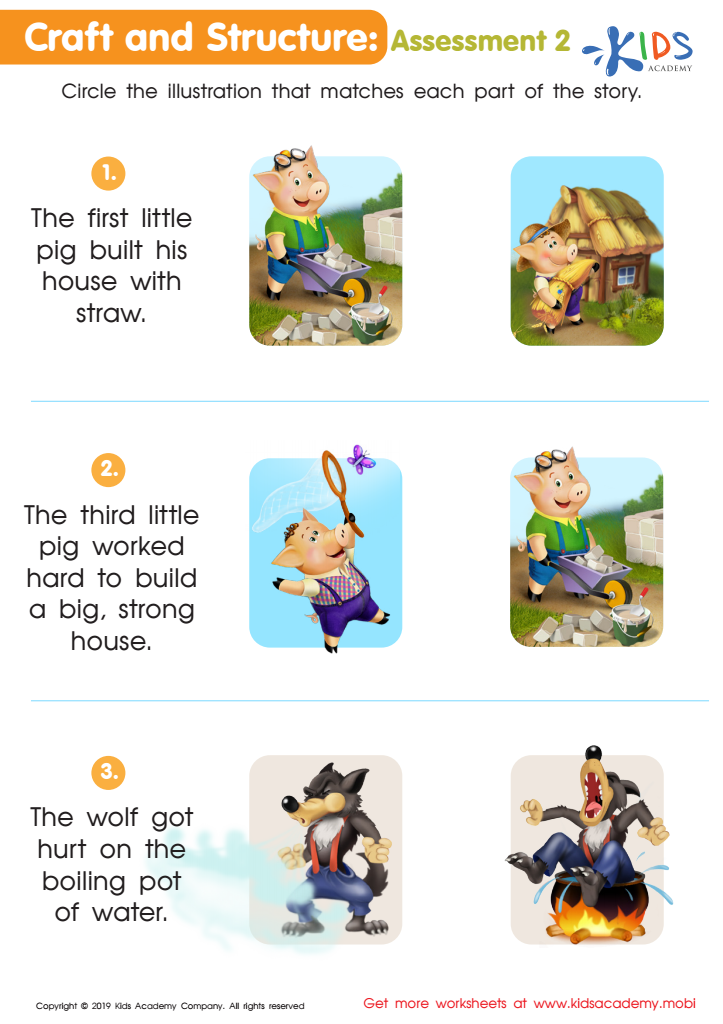
Craft and Structure: Assessment 2 Worksheet 2
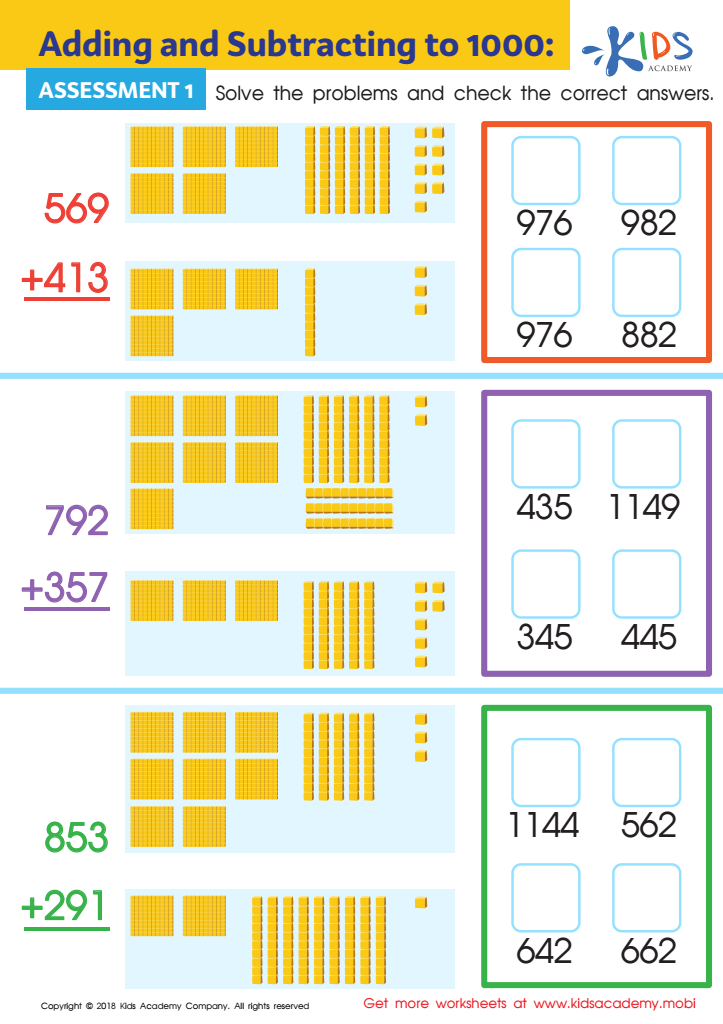
Adding and Subtracting to 1 Worksheet: Assessment 1
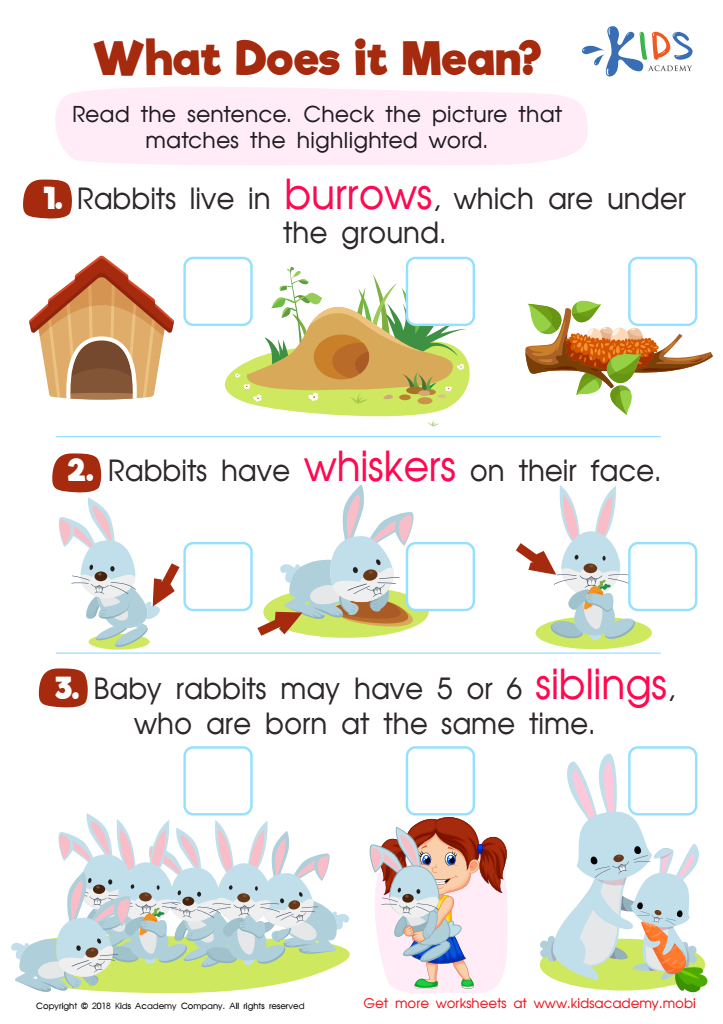
What Does It Mean? Worksheet






Contextual understanding is vital for children aged 4-8 because it helps them grasp the meaning behind words, stories, and experiences. When children learn information in context, they can relate it to their own lives, which makes it easier for them to remember and apply what they've learned. For example, if a child hears a story about a farm, they can connect it to their visit to a local farm, making the story more vivid and memorable.
Parents and teachers should care about this because it enhances learning and builds critical thinking skills. When children understand the connections between ideas, they can better analyze situations and solve problems. This kind of thinking is essential in everyday life, helping them make sense of their world.
Additionally, contextual understanding promotes empathy. When kids understand different perspectives and backgrounds, they become more open and accepting of others. Encouraging this at a young age helps develop compassionate, well-rounded individuals.
By focusing on contextual learning, adults can create more engaging and meaningful educational experiences for children, ensuring they not only learn but also enjoy the process. In this way, promoting contextual understanding sets a strong foundation for lifelong learning and personal growth.








