Counting skills Easy Tracing Numbers Worksheets for Ages 4-9
4 filtered results
-
From - To
Introduce your child to the joys of math with our Counting Skills Easy Tracing Numbers Worksheets, designed for ages 4-9! These engaging worksheets are perfect for young learners to practice tracing and counting numbers effortlessly. By combining fun activities with education, these printables build a strong foundation in math, enhancing fine motor skills and number recognition. Tailored to suit kids aged 4 to 9, our worksheets ensure that learning is always age-appropriate. Set your child on a path to confident counting with these thoughtfully crafted, easy-tracing numbers worksheets—making math fun, engaging, and effective. Download now!
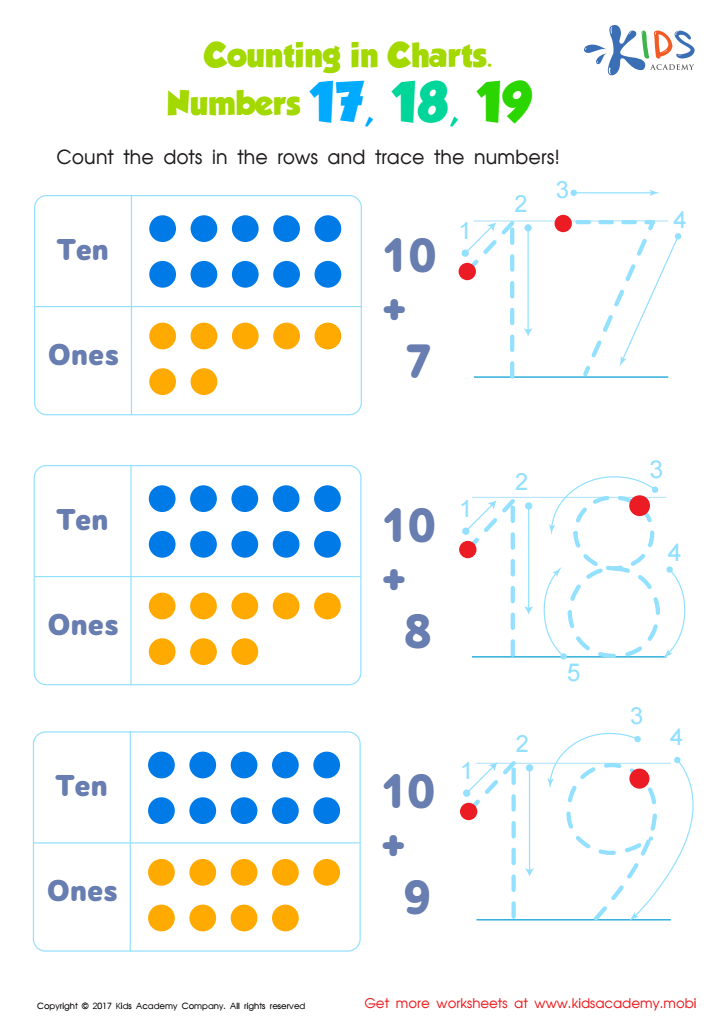
Kindergarten Number Tracing: Counting in Charts Worksheet
 Assign to My Students
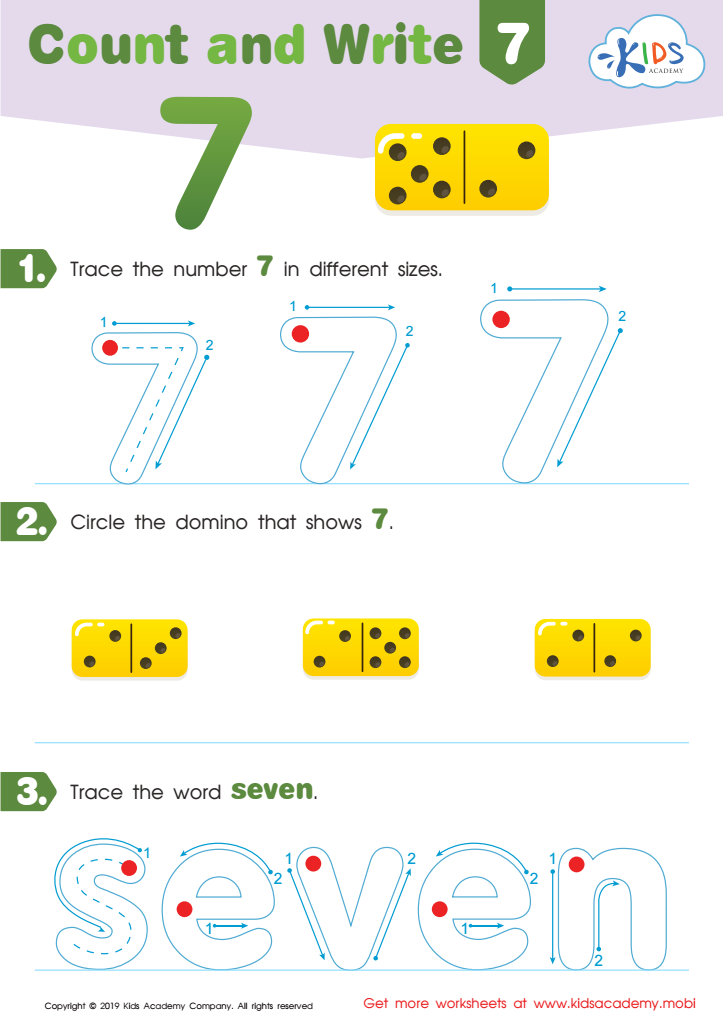
Count and Write 7 Worksheet
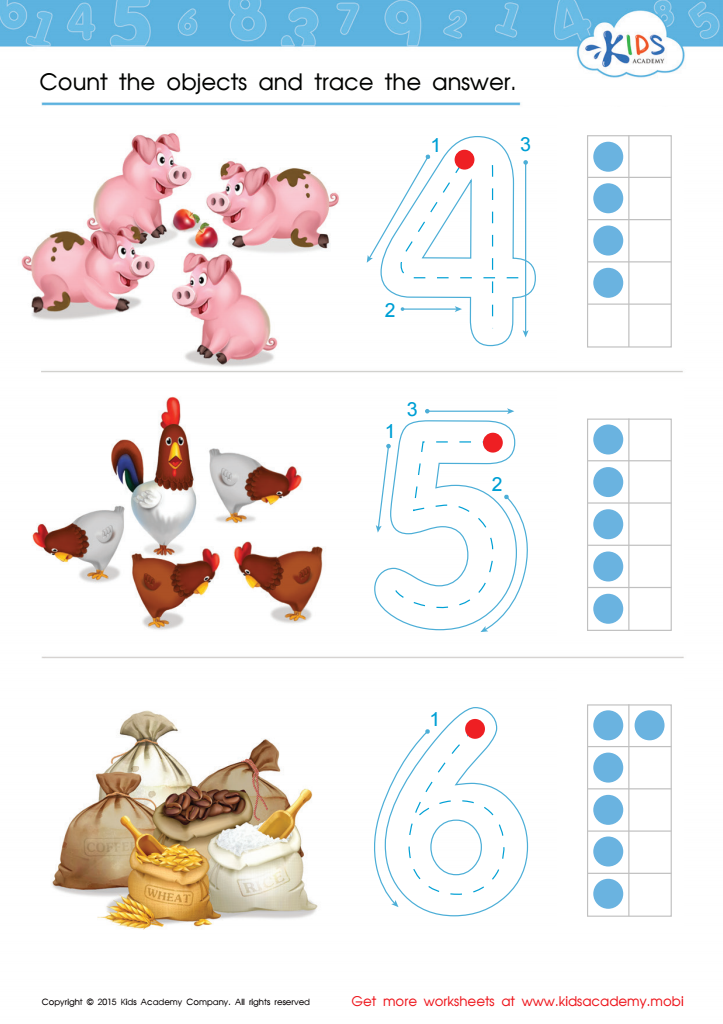
Count and Trace 4 – 6 Worksheet
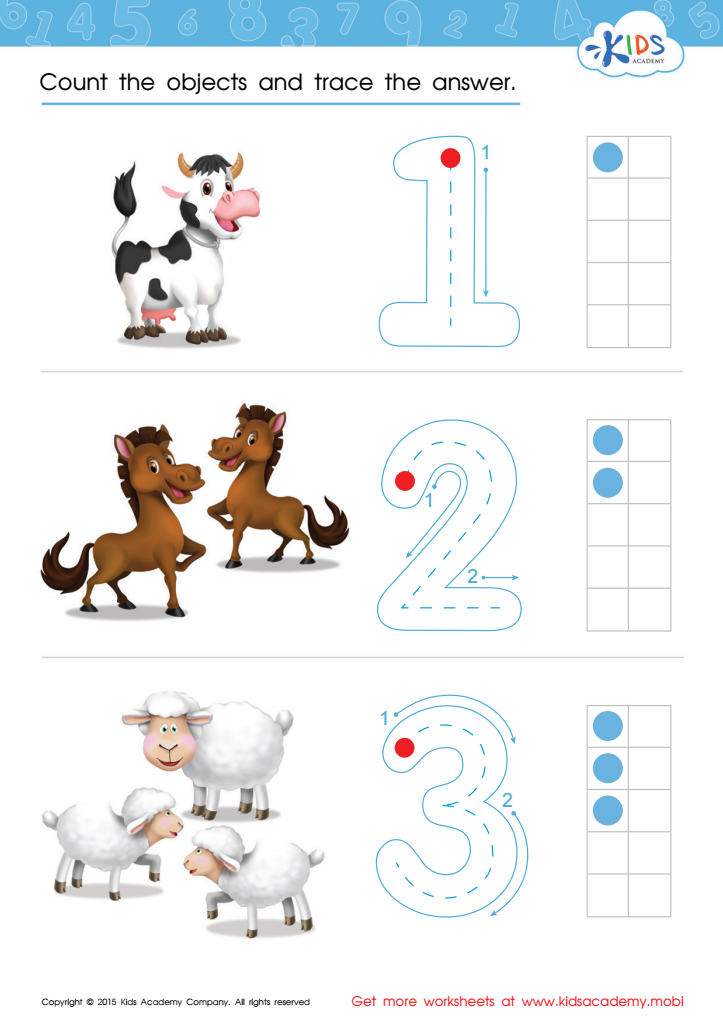
Count and Trace 1 – 3 Worksheet








Counting skills and number recognition serve as the foundation for all future math learning, making them crucial for children aged 4-9. Easy tracing numbers help children develop these essential skills in a fun and interactive way.
Firstly, counting skills are fundamental for daily activities such as telling time, handling money, and following schedules. Mastering counting and number recognition in early childhood ensures that children gain confidence in their ability to understand and manipulate numbers, an asset that carries through their academic journeys.
Secondly, tracing numbers supports fine motor skill development. As children trace lines and shapes of numbers, they enhance their hand-eye coordination and dexterity. These fine motor skills are essential for writing, drawing, and other activities requiring precision.
Teachers and parents should focus on counting skills and easy tracing numbers because they foster cognitive development. Counting sequences and recognizing number patterns boost children's memory and problem-solving abilities. As children practice, they experience the satisfaction of accomplishment, which encourages a love for learning.
In summary, counting skills and easy tracing numbers are vital for laying a strong math foundation, improving fine motor skills, and enhancing cognitive abilities. Supporting this early learning stage helps children develop important skills that will benefit them throughout their lives.