Understanding Sequences Easy Numbers Worksheets for 4-Year-Olds
3 filtered results
-
From - To
"Understanding Sequences Easy Numbers Worksheets for 4-Year-Olds" offers fun and engaging activities to help young learners grasp the concept of sequences. Specially designed for preschoolers, these worksheets make understanding numerical order and patterns enjoyable. Children will enhance their counting, logical thinking, and problem-solving skills through colorful and interactive exercises. Perfect for both classroom and home use, these printable worksheets aim to build a solid mathematical foundation in early childhood education. Join us at Kids Academy to nurture your child's love for learning and give them a head start on essential math skills with these delightful sequence activities.
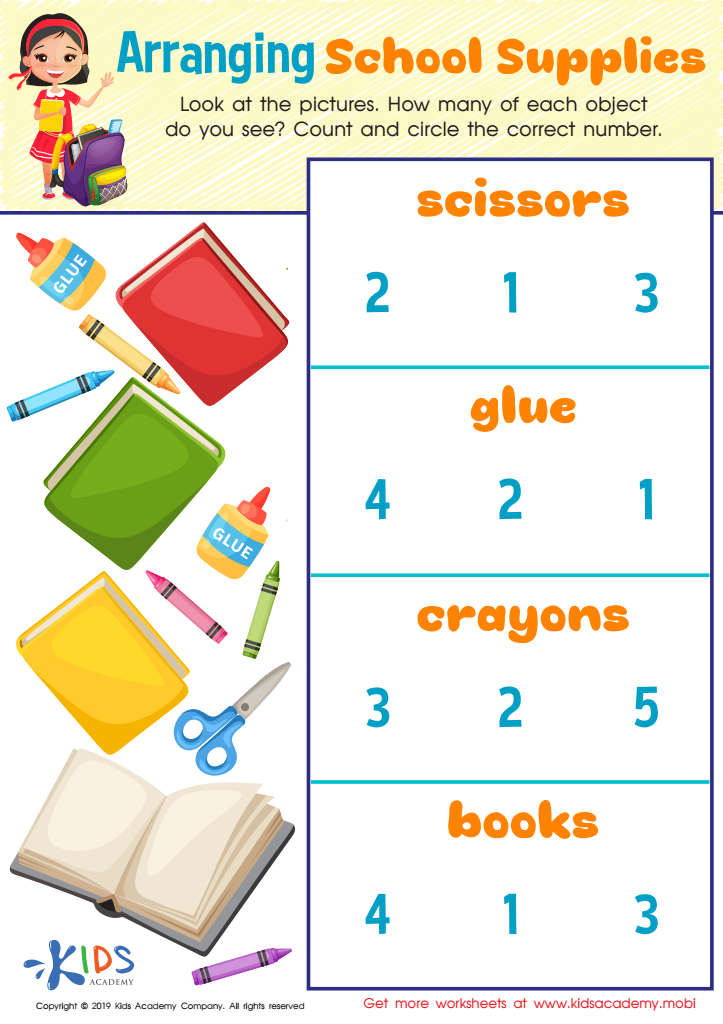
Arranging School Supplies Worksheet
 Assign to My Students
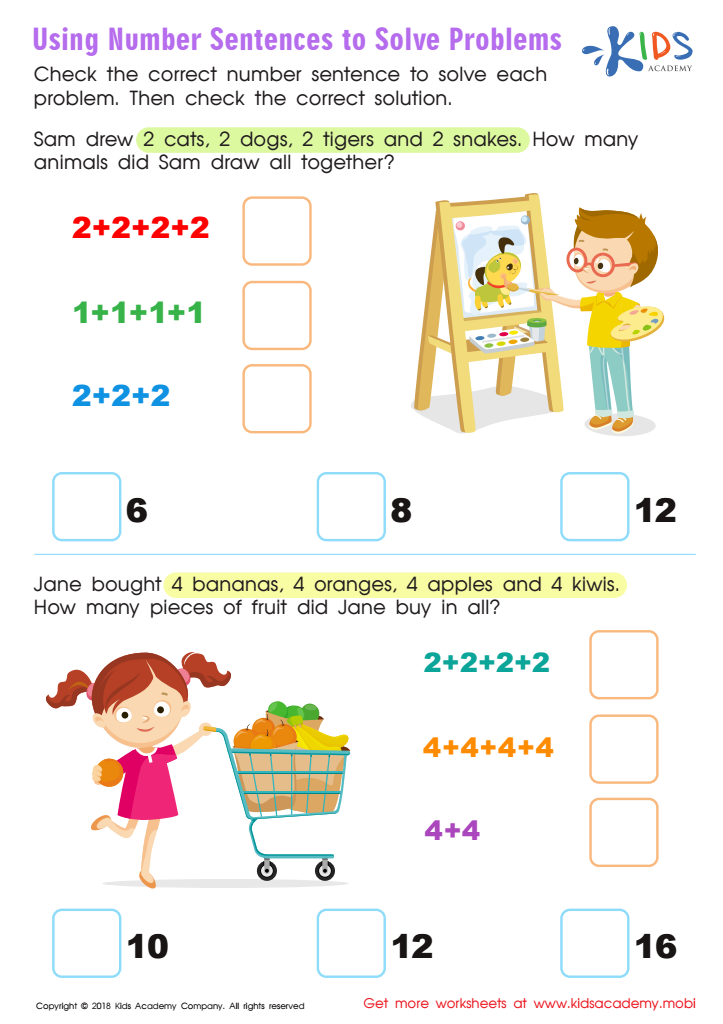
Using Number Sentences to Solve Problems Worksheet
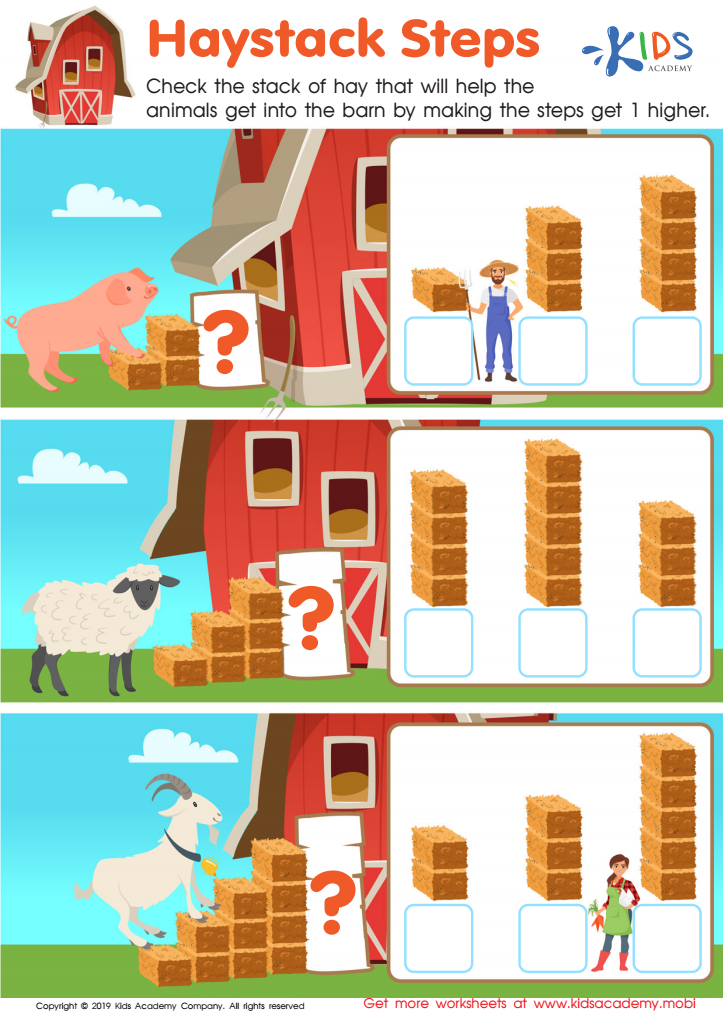
Haystack Steps Worksheet








Understanding sequences and numbers at an early age is crucial for young children, and this is particularly true for 4-year-olds. It lays a strong foundation for math and critical thinking skills. When children grasp sequences, they learn to recognize patterns and predict what comes next – something that's essential in everyday life and more complex mathematical concepts later on. For example, recognizing that 1, 2, 3 comes before 4 already sets the stage for understanding addition and subtraction.
Moreover, understanding easy numbers and sequences helps improve memory skills. When children repeat sequences in playful and engaging activities, they enhance their ability to recall information. This is a critical bridge to learning other academic subjects comprehensively.
Promoting early numerical skills boosts children’s confidence once they enter kindergarten. It prepares them for classroom expectations, reducing the initial challenges they might face. Parents and teachers can introduce these concepts through fun activities, rhymes, and games, making the learning process enjoyable rather than intimidating.
Finally, having a solid grasp of sequences nurtures early cognitive development, encourages organizational skills, and builds a logical mode of thinking. Investments in understanding sequences and basic numbers during these formative years serve as stepping stones for academic and personal successes in later stages of learners' lives.








