
Pattern recognition Easy Worksheets for Ages 5-6
3 filtered results
Difficulty Level
Grade
Age
-
From - To
Subject
Activity
Standards
Our "Pattern Recognition Easy Worksheets for Ages 5-6" introduce your child to foundational cognitive skills in a fun and engaging way. Specifically designed for young learners, these worksheets make understanding patterns simple and enjoyable. Each exercise aims to enhance logical thinking, improve observational skills, and build early math proficiency. The vibrant and kid-friendly illustrations capture attention while reinforcing learning concepts. Whether identifying shapes, colors, or sequences, your child will gain confidence while playing with patterns. Help your little one embark on an exciting educational journey with our easy-to-use worksheets that make learning feel like play!
Favorites
With answer key
Interactive
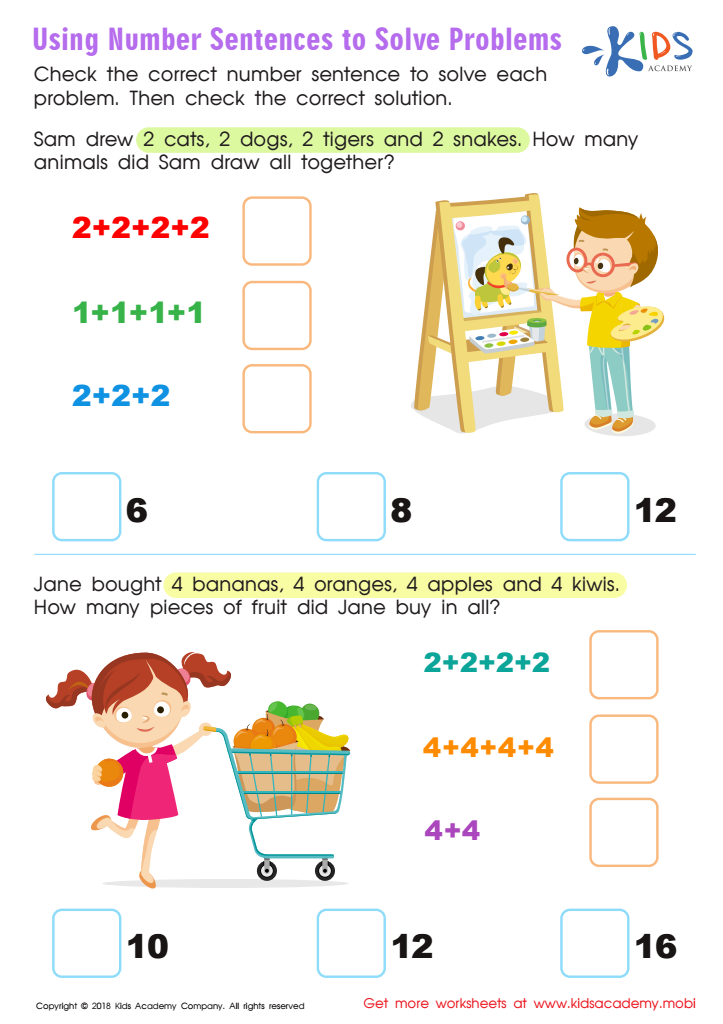
Using Number Sentences to Solve Problems Worksheet
Solving math problems requires an efficient strategy. Picture representation can help young mathematicians with basic addition problems, especially when it involves repeated addends. As they gain confidence, they'll be able to apply their number sentence solving abilities to more complex equations.
 Assign to My Students
Using Number Sentences to Solve Problems Worksheet
Worksheet
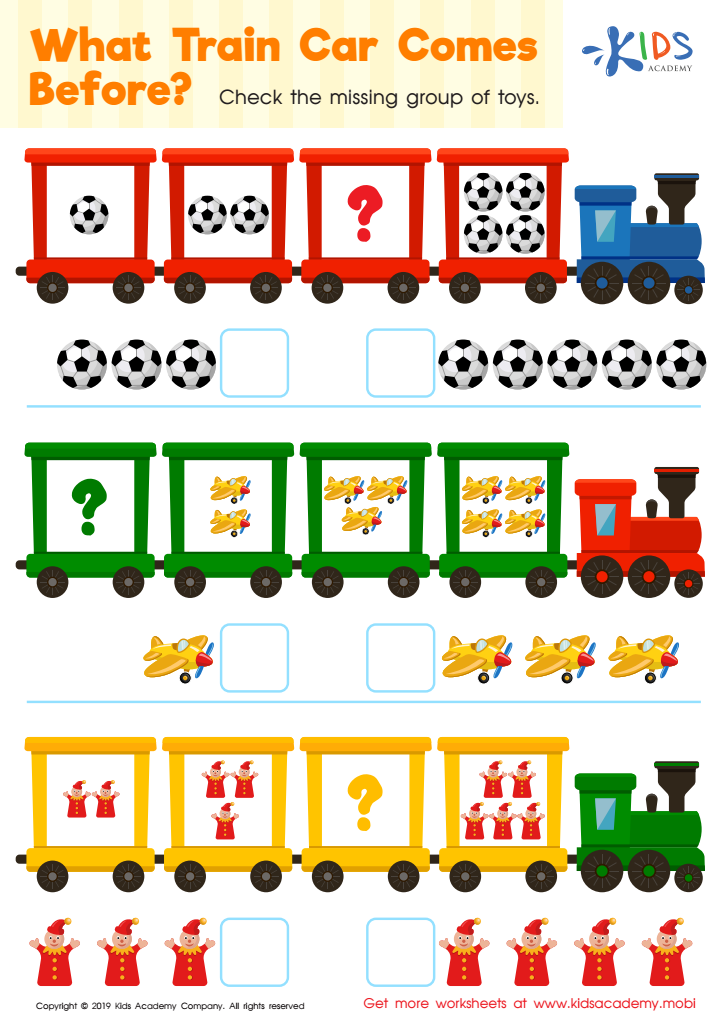
What Train Car Comes Before? Worksheet
Download this worksheet with your kids and have them identify the colorful objects pictured. Count the toys in the three trains together, then check the missing group of toys from the options provided. Have fun! (80 words)
What Train Car Comes Before? Worksheet
Worksheet
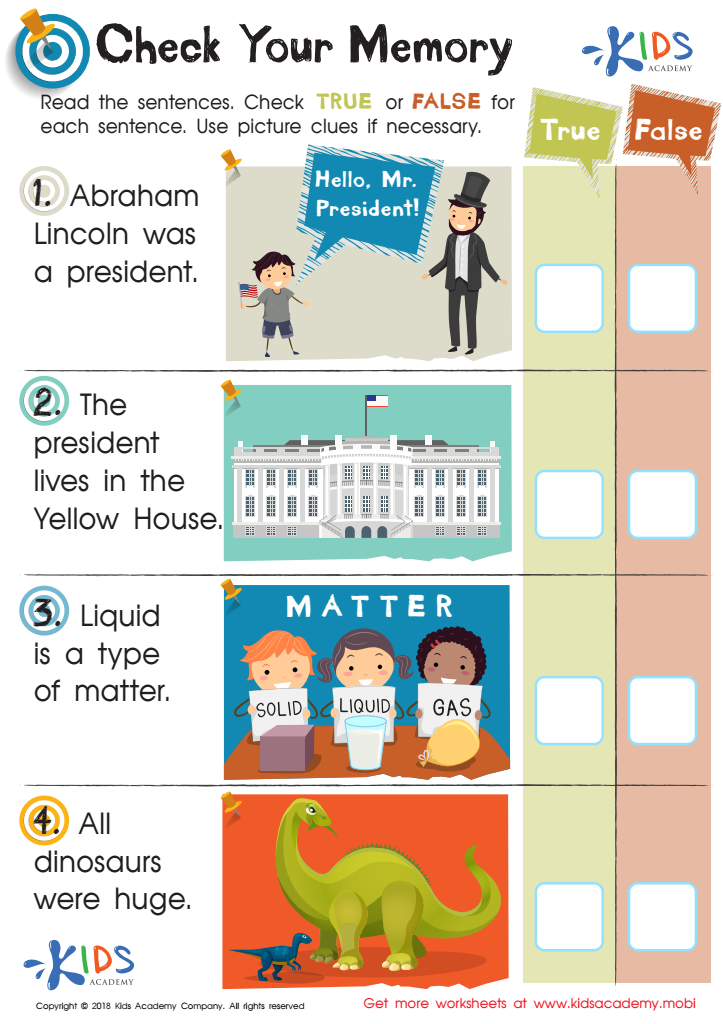
Check Memory Worksheet
Assisting your kids with their homework and using worksheets is a great way for them to learn. The vibrant visuals in this printout can help stimulate the mind and motivate your child. Have them read the sentences and then point to the associated images. Afterwards, ask them to state True or False for each sentence. If they are still uncertain, offer them the picture clues to assist further.
Check Memory Worksheet
Worksheet
Join Kids Academy for Free
Who is primarily going to use this learning content?


.jpg)





Pattern recognition is a vital foundational skill for young children, especially those around ages 5-6. At this developmental stage, their brains are highly receptive to learning new concepts and establishing critical cognitive connections. Recognizing patterns helps children make sense of the world and sets the stage for more complex learning concepts in later years, such as reading, mathematics, and science.
Patterns offer a sense of order and predictability, which can make children feel more secure and confident in their learning environment. For instance, recognizing patterns in numbers or shapes is the first step toward understanding more complex mathematical principles. Similarly, phonemic patterns enable children to grasp the basics of reading and writing by helping them decode words.
Moreover, pattern recognition can enhance problem-solving skills and foster creative thinking. When children identify and predict patterns, they are essentially practicing how to form hypotheses and navigate through complex scenarios—skills that are crucial for lifelong learning.
Engaging in pattern recognition activities can be both fun and educational, incorporating games, and hands-on activities that children naturally enjoy. This helps maintain their interest while also supporting their learning journeys. Therefore, parents and teachers should prioritize pattern recognition exercises to build a strong cognitive foundation, setting children up for future academic success.








