Understanding time Easy Worksheets for Ages 5-6
3 filtered results
-
From - To
Explore our "Understanding Time Easy Worksheets" designed specifically for children ages 5-6! These engaging and interactive worksheets offer kids the perfect introduction to time concepts, helping them learn to read clocks, recognize time intervals, and understand daily routines. With colorful illustrations and simple explanations, these resources make learning both fun and effective. Each worksheet promotes essential skills such as counting, problem-solving, and critical thinking, all while building a solid foundation in telling time. Perfect for classrooms or at-home learning, our worksheets ensure that young learners grasp the importance of time in their everyday lives. Dive in today and enhance your child’s understanding!
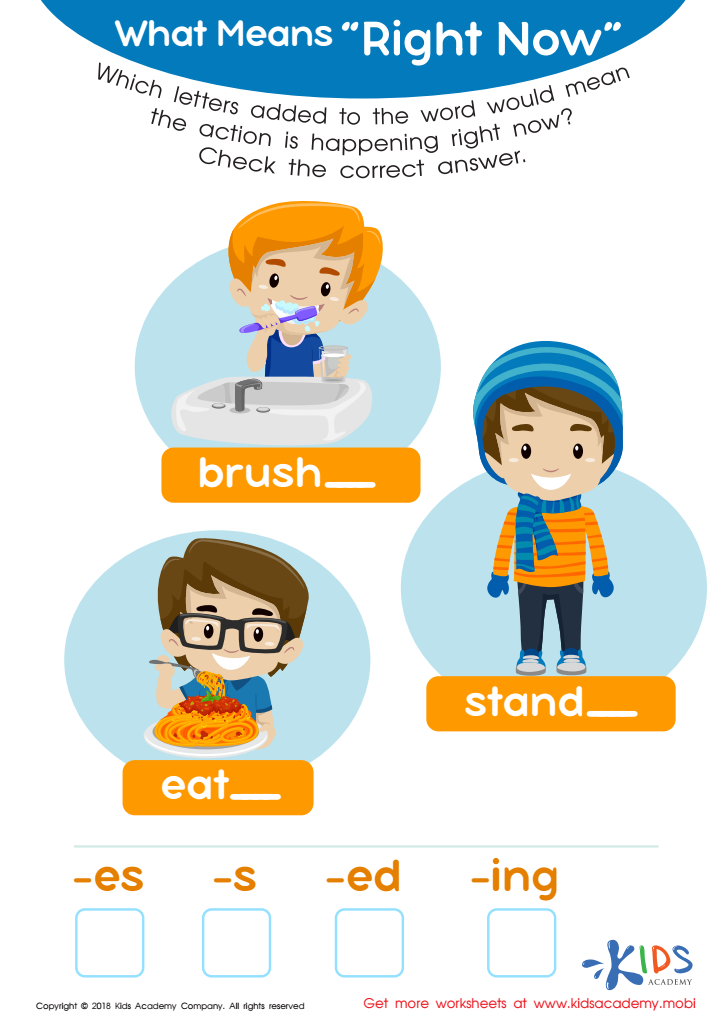
What Means "Right Now" Worksheet
 Assign to My Students
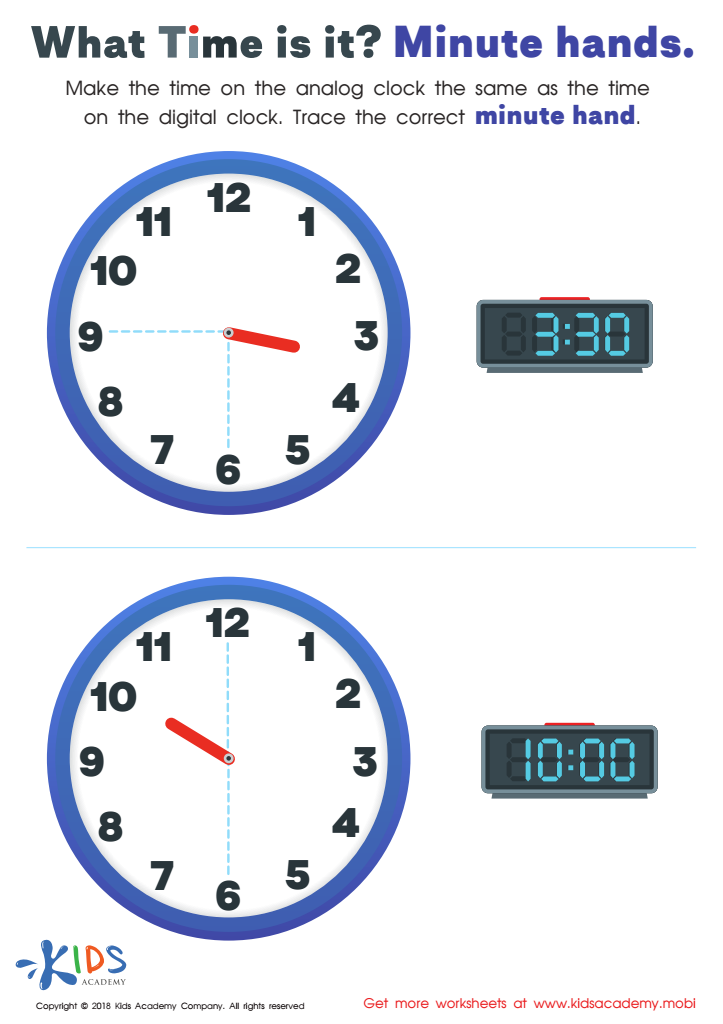
What Time Is it? Minute Hands Worksheet
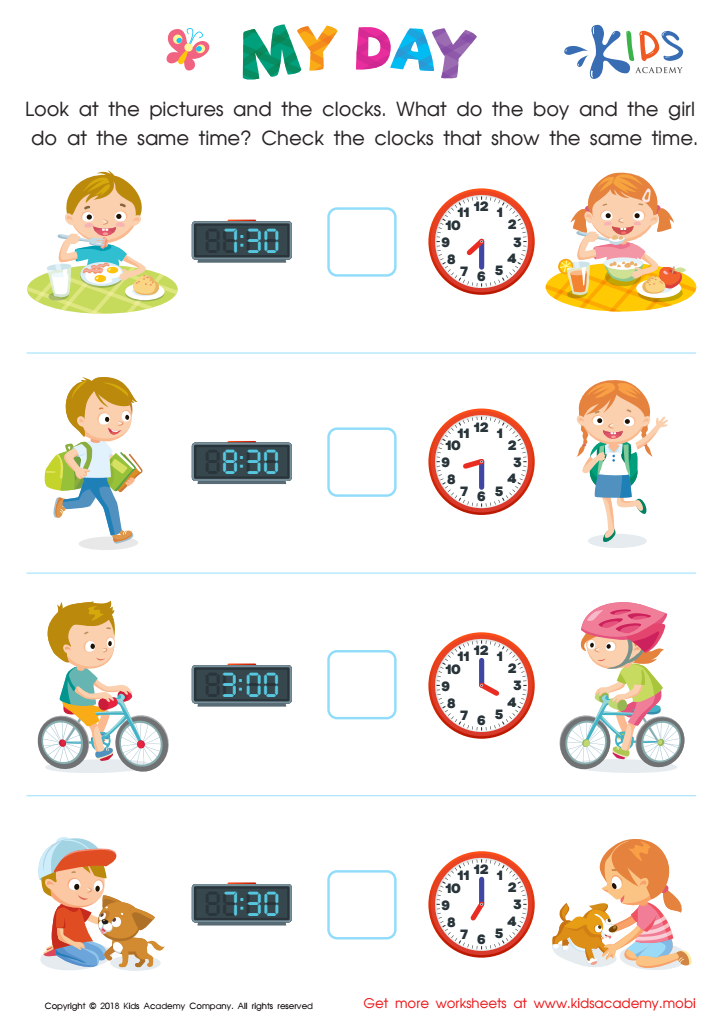
My Day Worksheet






Understanding time is crucial for children aged 5-6 as it lays the foundation for their daily routines and helps them develop essential life skills. At this age, children are beginning to grasp the concepts of past, present, and future, which enhances their cognitive abilities and social interactions. When parents or teachers prioritize time awareness, they aid children in learning to follow schedules, making transitions smoother and reducing anxiety.
Time education also supports essential executive functions, such as planning and organization, that children will encounter throughout their schooling and beyond. By learning to tell time and understand various time concepts, children gain a sense of independence and responsibility.
Moreover, discussing time in a fun and engaging manner—like using visuals or storytelling—can stimulate interest and curiosity about the world around them. For instance, linking activities to time, such as "lunchtime" or “playtime," makes these concepts more relevant and relatable.
Ultimately, fostering an understanding of time empowers young learners, encouraging self-regulation and improving their academic performance. It equips them with the skills necessary to navigate daily life as they grow, proving invaluable in both educational settings and personal development.








