Visual Perception Skills Easy Worksheets for Ages 5-6
5 filtered results
-
From - To
Discover a delightful collection of easy worksheets designed to enhance visual perception skills for children ages 5-6. Our engaging activities help young learners develop essential cognitive abilities, including pattern recognition, shape identification, and spatial awareness. Each worksheet is crafted to be fun and interactive, encouraging children to explore their creativity while honing their visual processing skills. Perfect for teachers and parents, these printable resources provide a valuable tool for reinforcing learning at home or in the classroom. Encourage your child's development and curiosity with our thoughtfully designed visual perception worksheets, ensuring a strong foundation for future learning success!
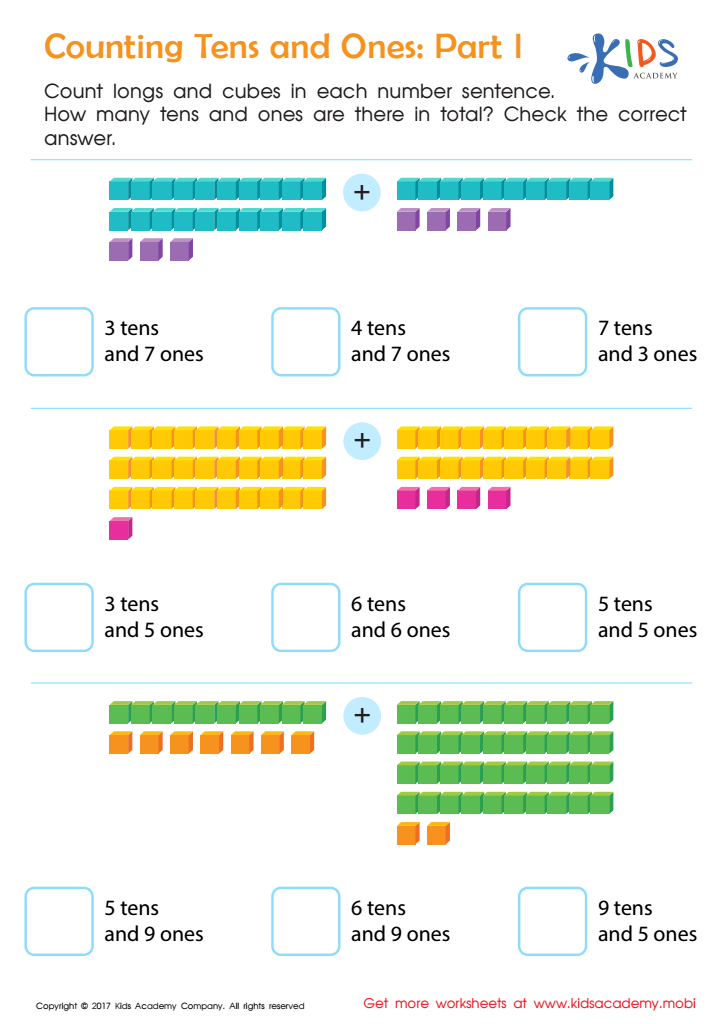
Counting Tens and Ones: Part 1 Worksheet
 Assign to My Students
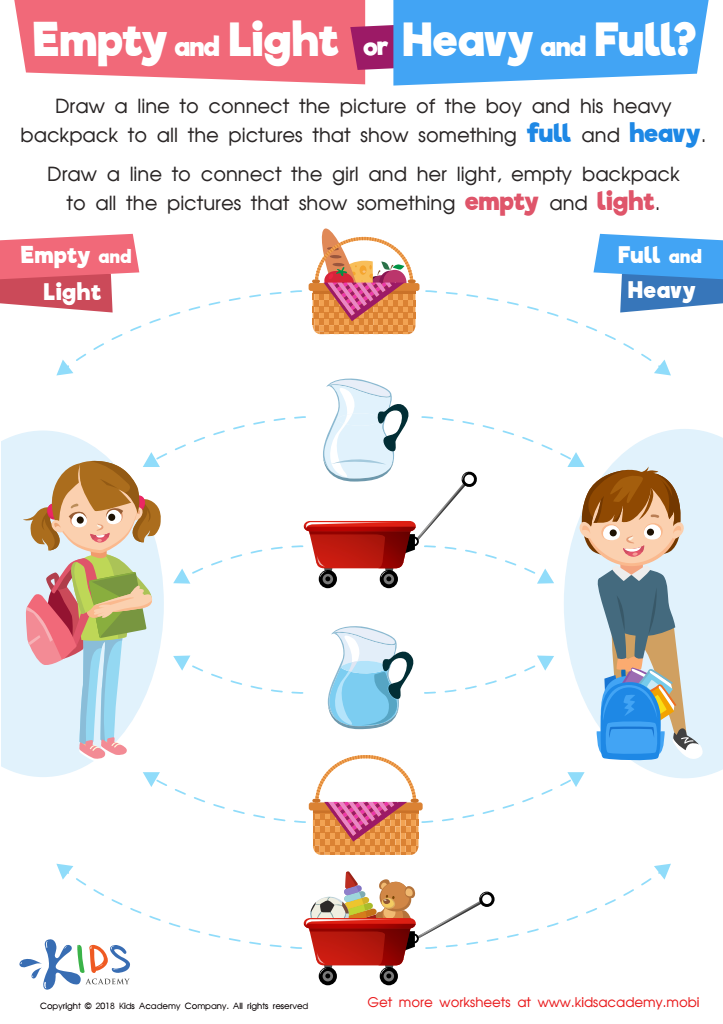
Empty and Light or Heavy and Full? Worksheet
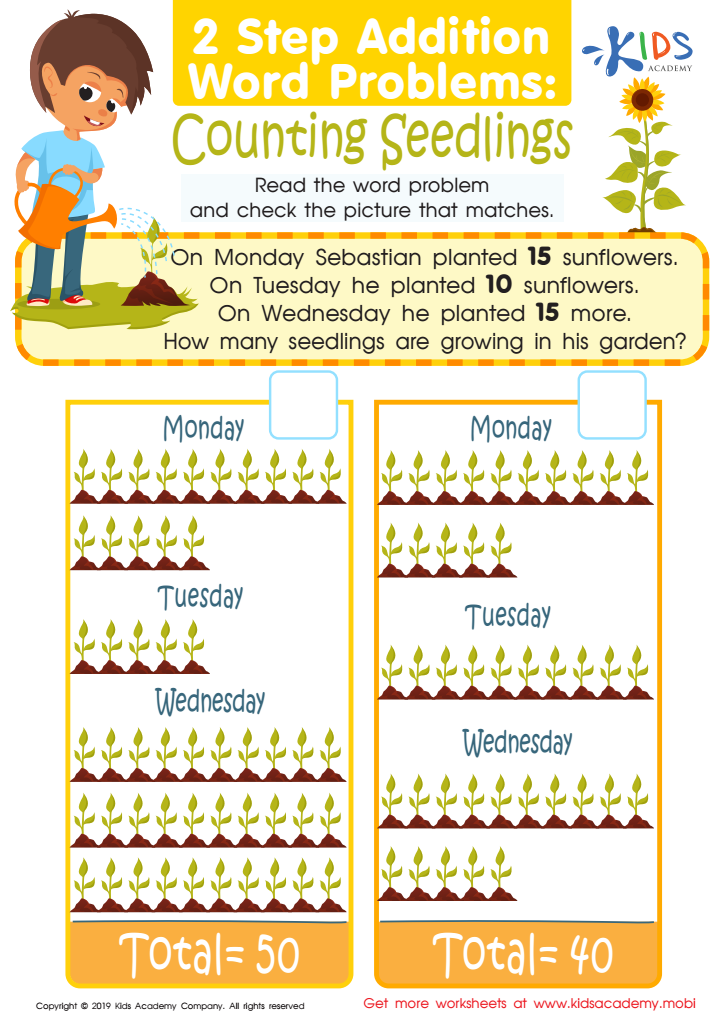
Counting Seedlings Worksheet
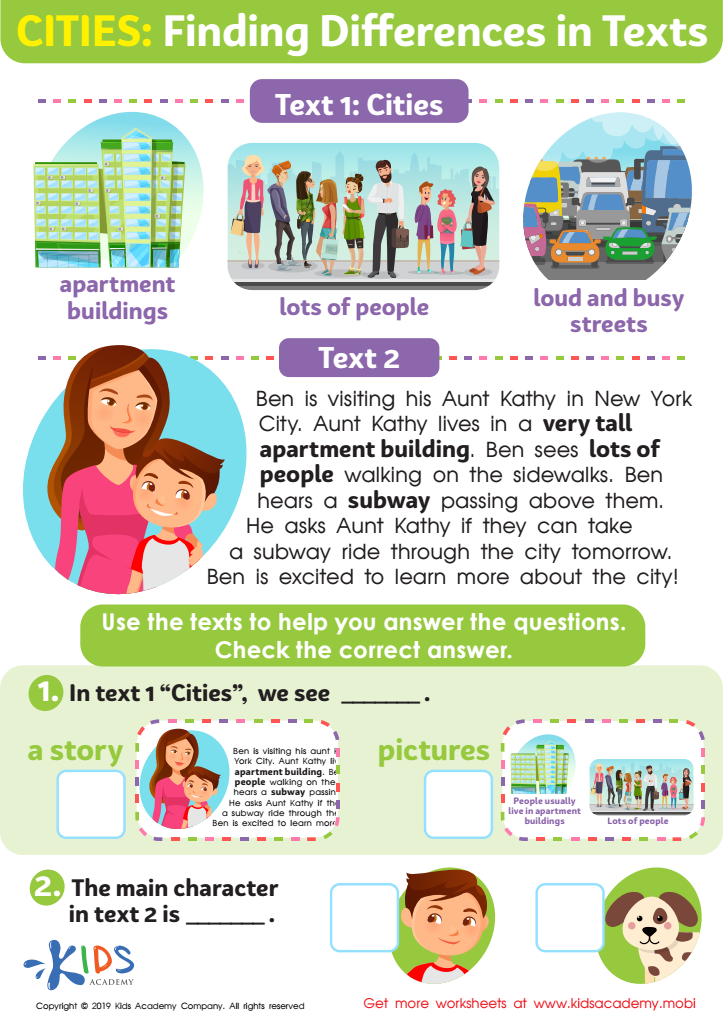
Cities: Finding Differences Worksheet
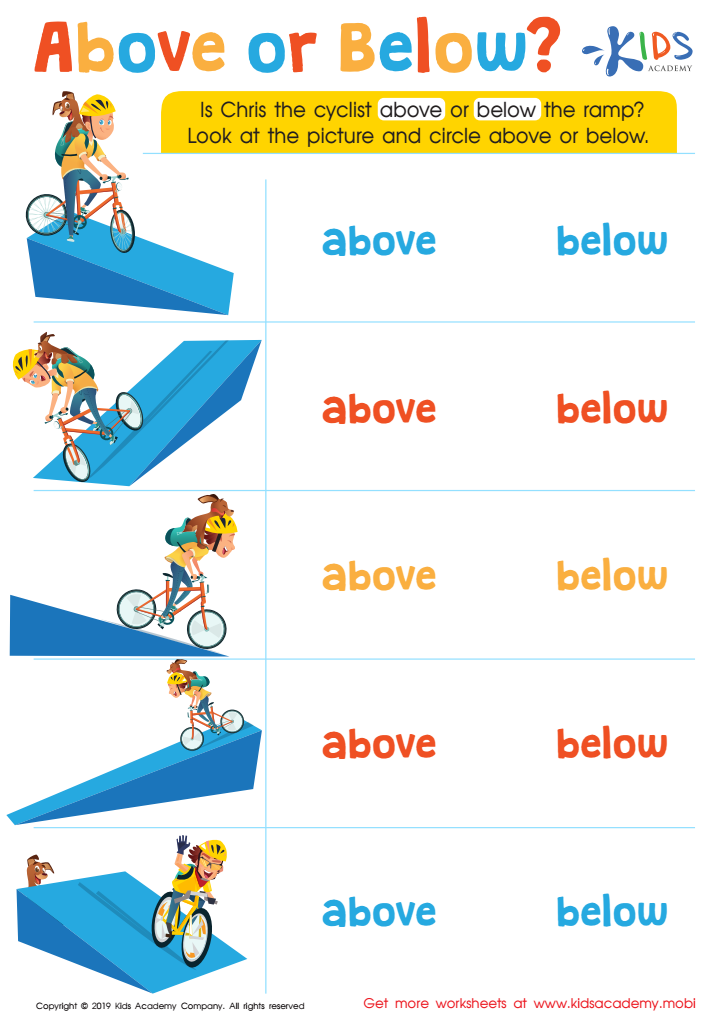
Above or Below? Worksheet








Visual perception skills are critical for children aged 5-6, as they form the foundation for many essential learning processes. These skills enable young learners to interpret, process, and understand visual information, which is necessary for tasks like reading, writing, and problem-solving.
When children can distinguish shapes, patterns, and spatial relationships, they are better equipped to identify letters and numbers, leading to smoother literacy and numeracy development. Enhanced visual perception also aids in their ability to follow instructions—whether on worksheets or during group activities—boosting overall classroom engagement and participation.
Moreover, strong visual perception skills contribute to improving fine motor skills, essential for activities like drawing, cutting, or manipulating small objects. This physical dexterity correlates with academic success and increased self-confidence in school activities.
Parents and teachers should prioritize activities that stimulate these skills, such as puzzles, matching games, or even simple observation exercises. By fostering a child's visual perception, adults are laying a groundwork for lifelong learning, helping to ensure that children thrive academically and socially as they progress through their education. Ultimately, investing in these foundational skills is an investment in a child’s future potential.








