Vocabulary expansion Easy Reading Comprehension Worksheets for Ages 5-7
6 filtered results
Difficulty Level
Grade
Age
-
From - To
Subject
Activity
Standards
Boost your child's language skills with our Vocabulary Expansion Easy Reading Comprehension Worksheets, designed for ages 5-7! Each engaging worksheet introduces young readers to new words in context, helping them build a robust vocabulary while improving their reading comprehension. Our carefully crafted activities encourage critical thinking and spark a love of words. Perfect for both classroom settings and at-home practice, these worksheets make learning fun and effective. Developed by educators, they are aligned with educational standards to support your child's learning journey. Unlock the power of words and give your child the gift of confident reading!
Favorites
With answer key
Interactive
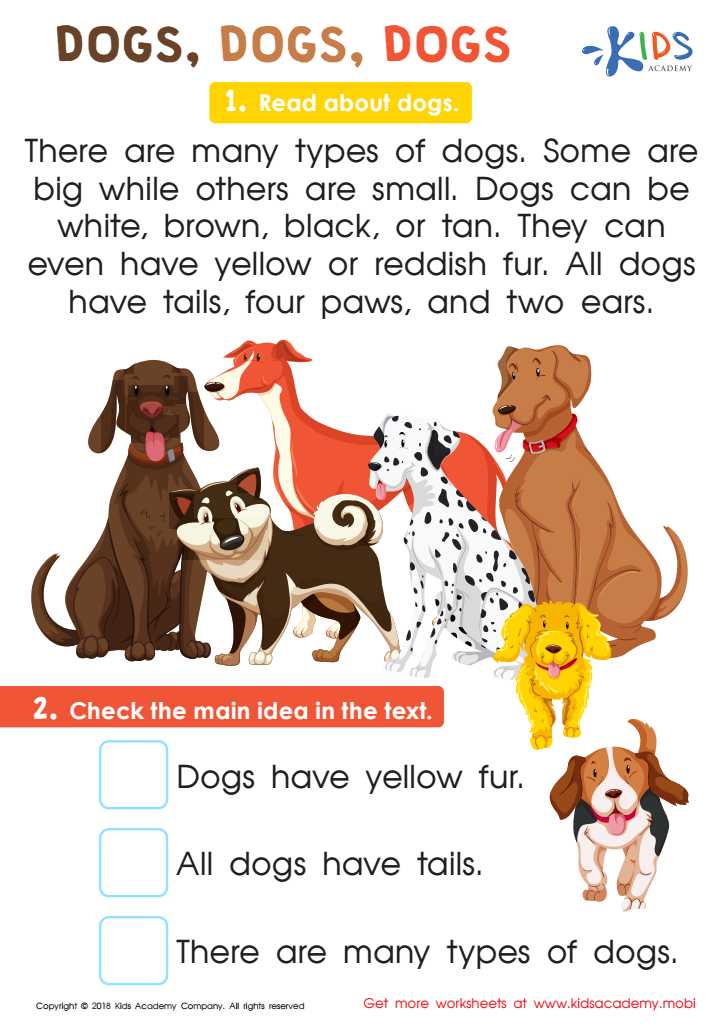
Dogs, Dogs Worksheet
Help your child understand main ideas with this fun doggy worksheet from Kids Academy! Have them read the passage and then discuss the main idea. After that, have them read the answer choices and pick the right one. This will help your kiddo hone their critical reading comprehension skills!
 Assign to My Students
Dogs, Dogs Worksheet
Worksheet
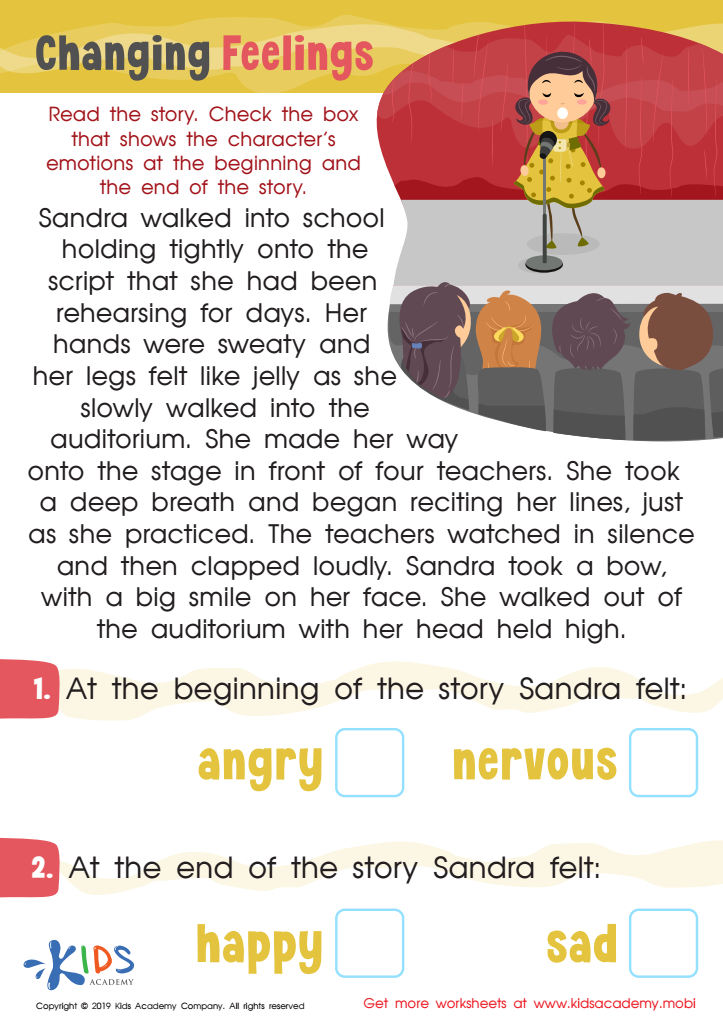
Changing Feelings Worksheet
Help your kids practice reading skills with this exercise. Ask them to read the short passage, then check the boxes showing the character's emotions at the start and end. This will help them improve their reading and understanding.
Changing Feelings Worksheet
Worksheet
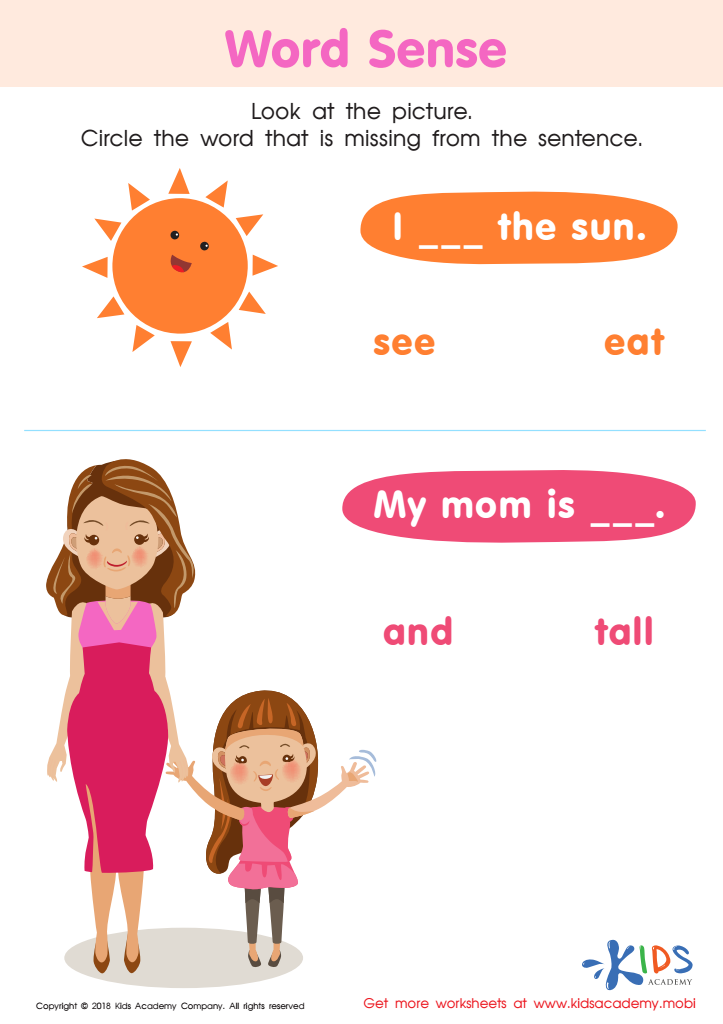
Word Sense Worksheet
Expose your child to common high-frequency words with this free and colorful worksheet. It will help them use picture clues to choose the correct word for each phrase. The more they're exposed, the stronger their fluency will become when reading. This process is an important part of the emerging reader's learning-to-read journey.
Word Sense Worksheet
Worksheet
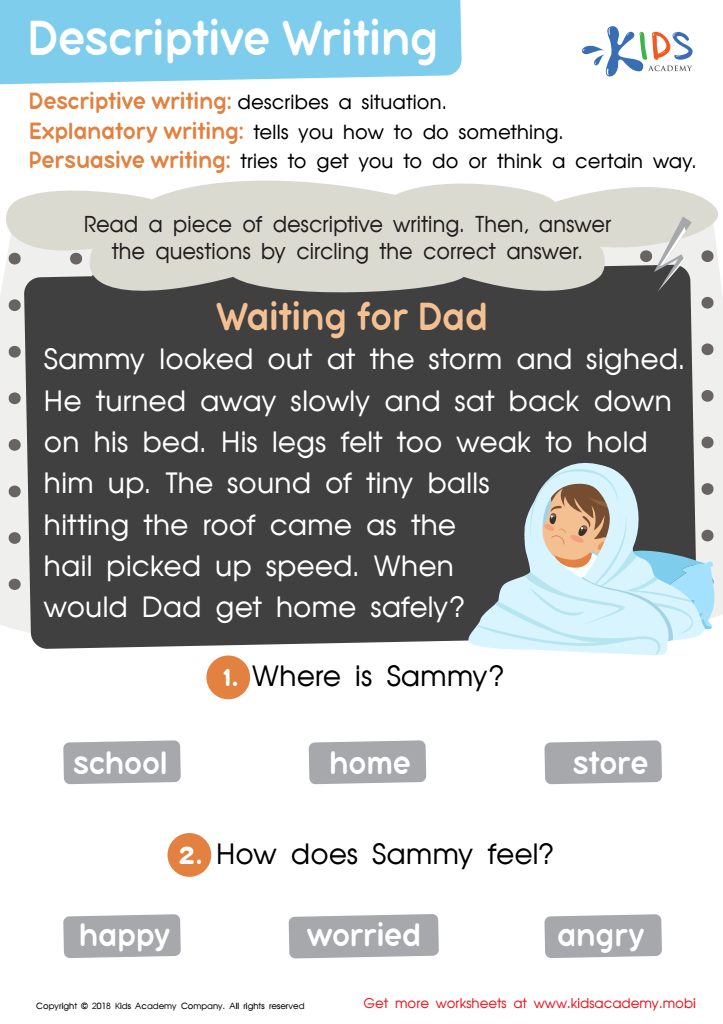
Descriptive Writing Worksheet: Part 2
In this worksheet, your kids will explore writing styles like descriptive, explanatory and persuasive. Read them the descriptive text, then have them answer the questions. Writing is an art – it's a way to express emotions, tell stories and share information.
Descriptive Writing Worksheet: Part 2
Worksheet
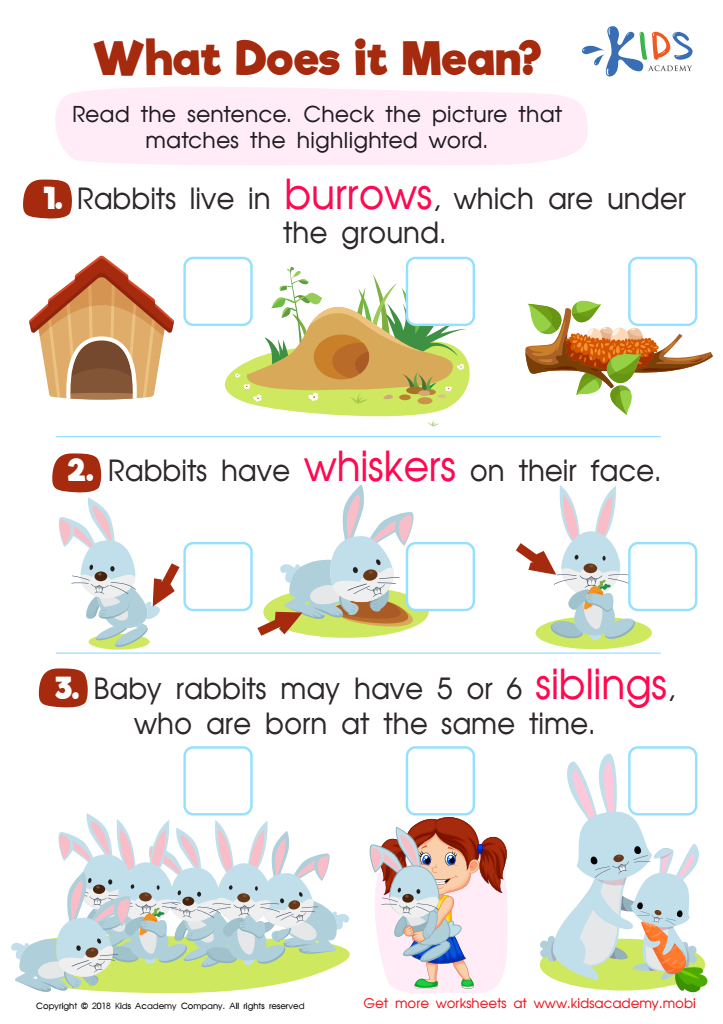
What Does It Mean? Worksheet
Teach your child to use context clues with this engaging Kids Academy worksheet. Read the sentences and find the pink-highlighted word. Use the other words in the sentence to figure out the meaning, then check the box next to the picture that represents it.
What Does It Mean? Worksheet
Worksheet
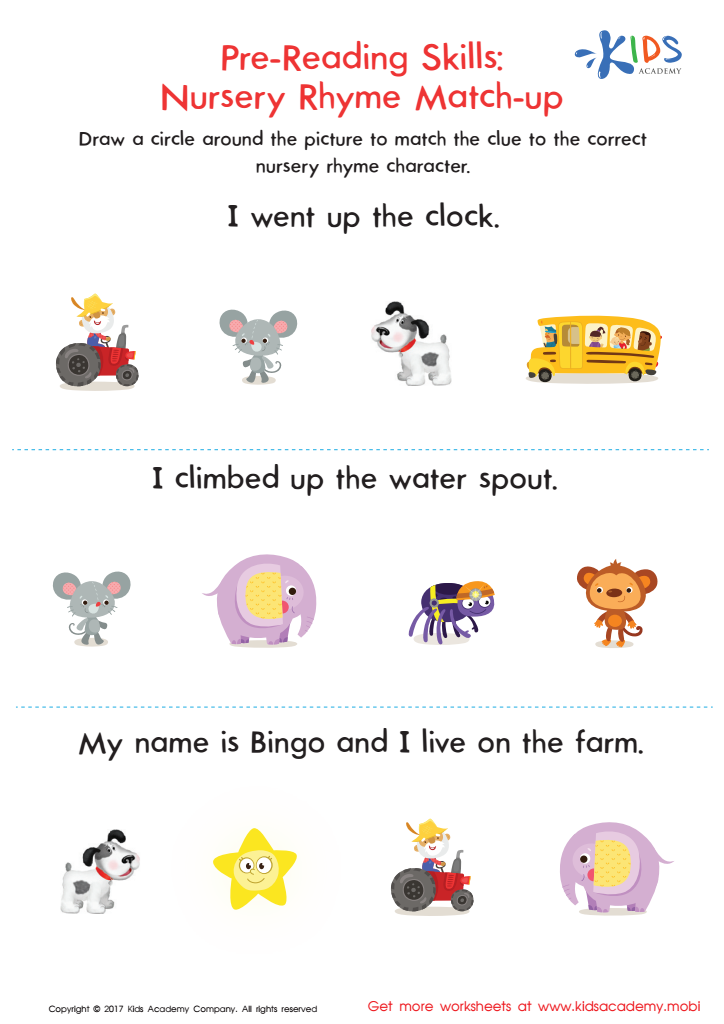
Nursery Rhyme Match–Up Worksheet
This worksheet helps kids build pre-reading skills using stories they know and love! By connecting with prior knowledge, kids can develop ideas about characters and set the stage for reading strategies.
Nursery Rhyme Match–Up Worksheet
Worksheet
Join Kids Academy for Free
Who is primarily going to use this learning content?








Vocabulary expansion and easy reading comprehension are crucial for young learners, particularly those aged 5-7. At this stage, children are beginning to form foundational literacy skills that will impact their entire educational journey. An extensive vocabulary is fundamental for expressing ideas clearly, understanding new concepts, and engaging effectively in social interactions. When children know more words, they can comprehend reading material more thoroughly, which facilitates learning in all subject areas, from science to math.
Moreover, reading comprehension is a key indicator of future academic success. Children who can easily understand what they read are more likely to enjoy reading and become lifelong learners. This joy in reading fosters a positive attitude towards school and education in general. Additionally, strong vocabulary and comprehension skills contribute to better communication abilities, both oral and written.
Investing in vocabulary expansion and easy reading comprehension for young children also helps to close achievement gaps early on. It ensures that all children, regardless of their background, have the linguistic tools needed to succeed. Simple strategies like reading aloud, discussing stories, and playing word games can make a significant difference. By prioritizing these areas, parents and teachers set the stage for a child's long-term development, academic achievement, and personal growth.