Basic counting skills Easy Worksheets for Ages 5-8
6 filtered results
-
From - To
Unlock your child’s potential with our “Basic Counting Skills Easy Worksheets for Ages 5-8.” Designed for young learners, these engaging, interactive worksheets foster essential counting skills through fun activities. From counting objects to simple number recognition, our resources cater to various learning styles, ensuring every child can grasp foundational math concepts. Perfect for homeschooling or classroom use, these worksheets encourage independent learning and creativity. Reinforce counting through play with colorful illustrations and easy-to-follow instructions, making math enjoyable and effective. Start your child's journey to numerical confidence today with our expertly crafted worksheets, tailored to inspire and educate young minds!
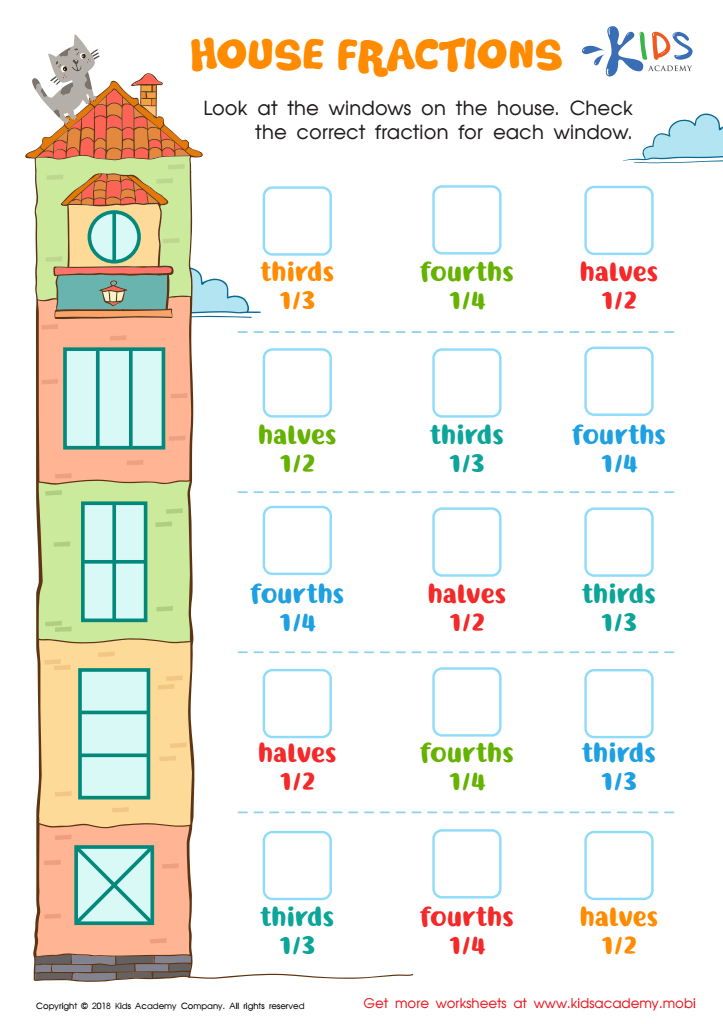
House Fractions Worksheet
 Assign to My Students
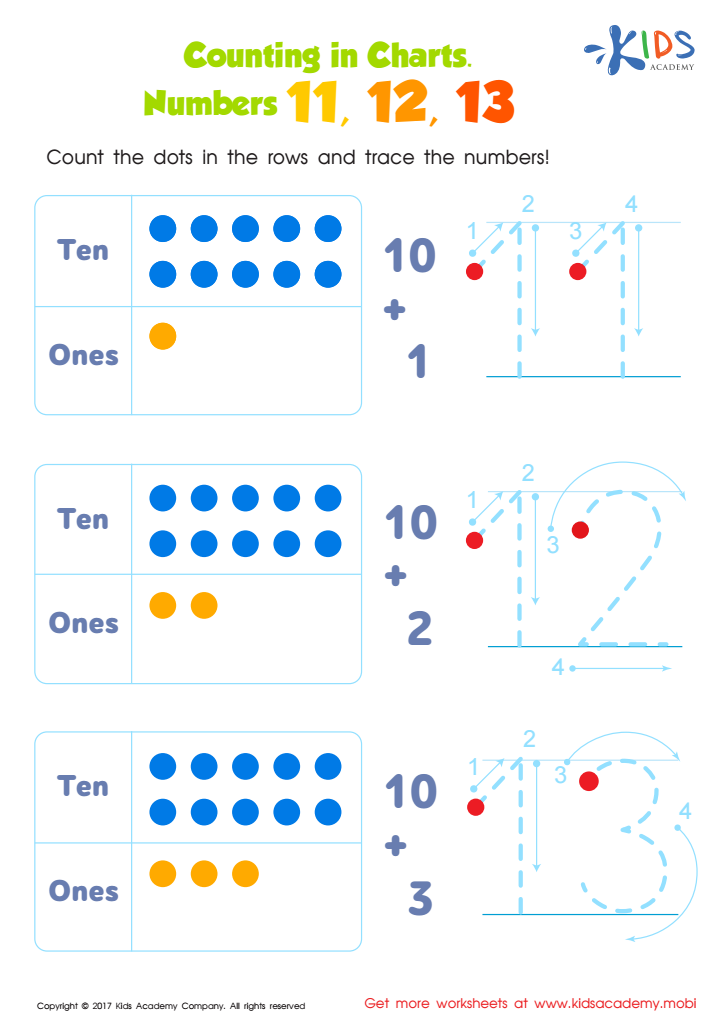
Number Tracing Worksheet For Kindergarten
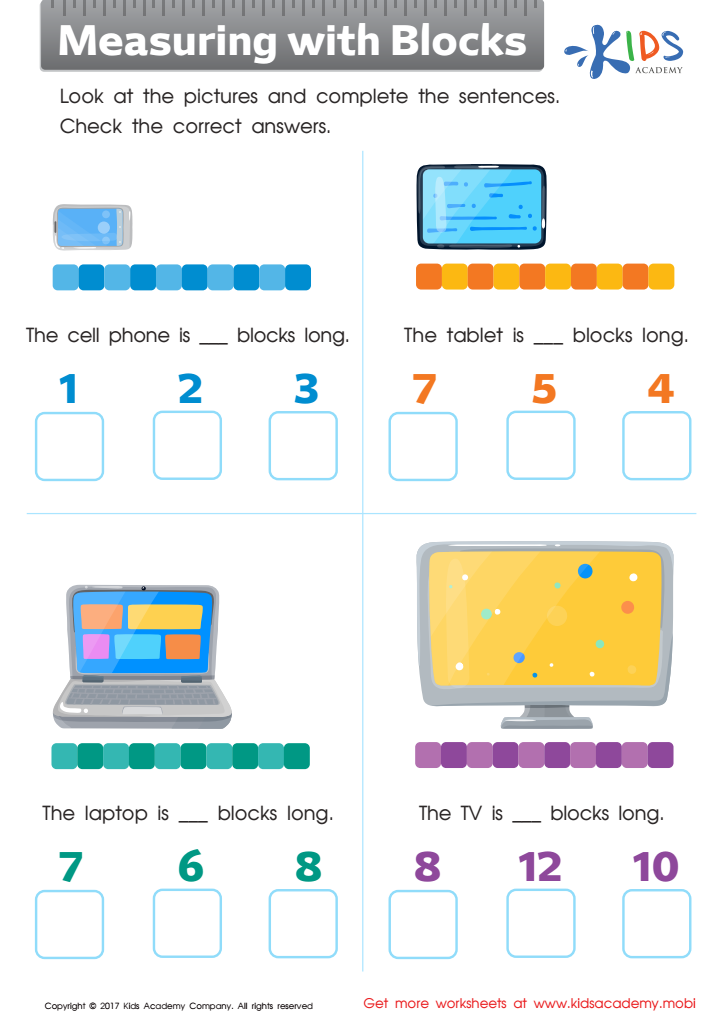
Measuring with Blocks Worksheet
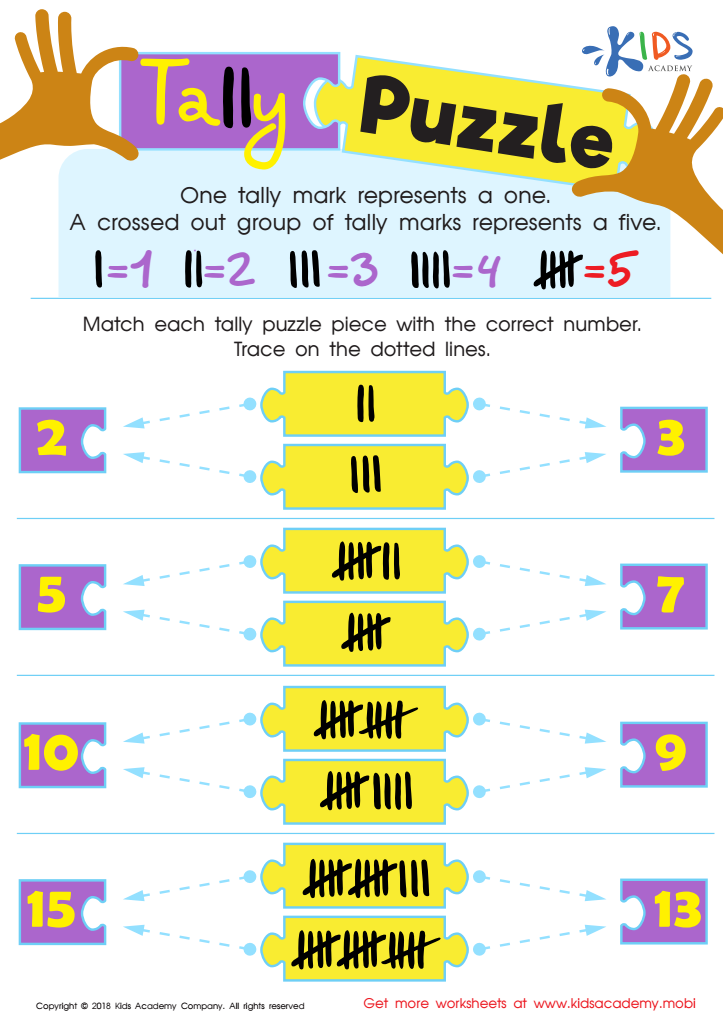
Tally Puzzle Worksheet
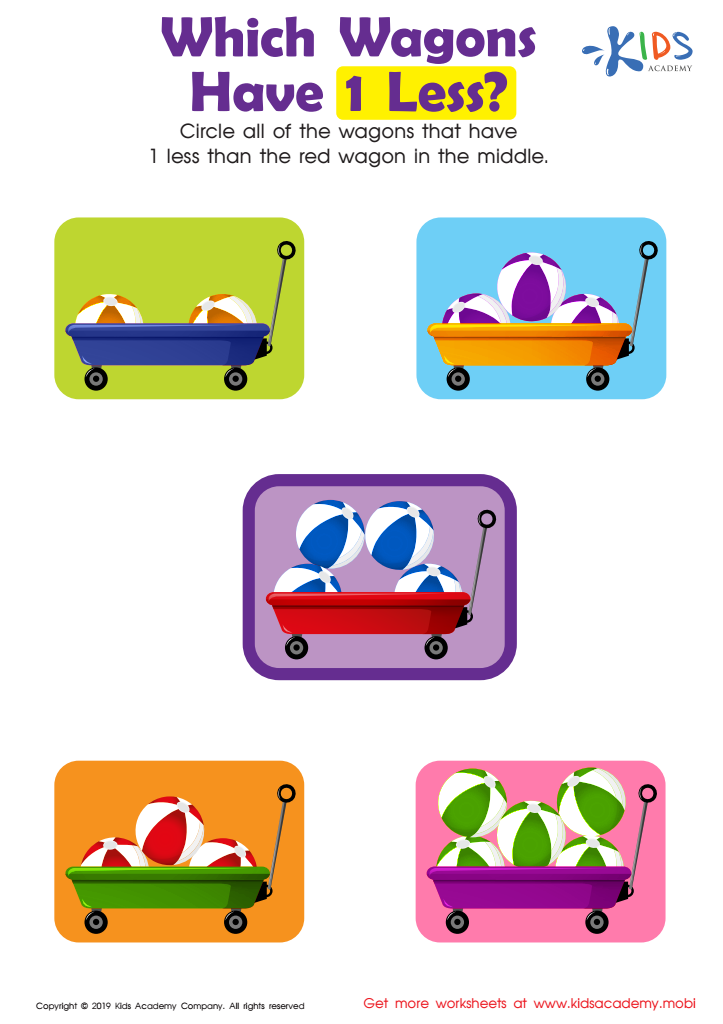
Which Wagons Have 1 Less? Worksheet


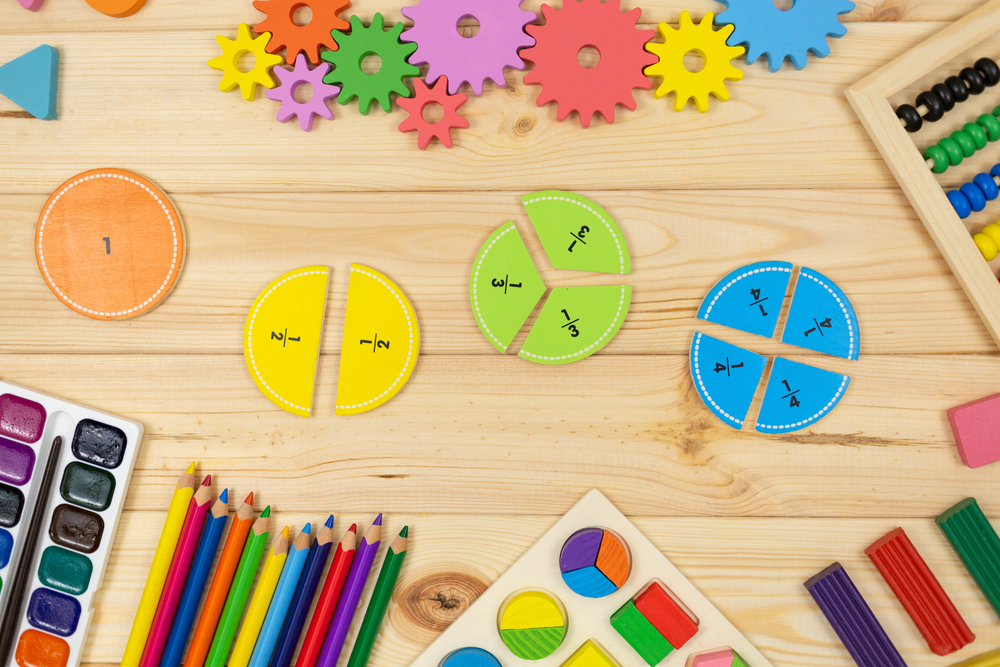


Basic counting skills are foundational for young learners aged 5-8, and it’s vital for both parents and teachers to prioritize them. First, these skills contribute to mathematical understanding. Counting is the first step in developing number sense, which aids in grasping more complex mathematical concepts later on, including addition, subtraction, and problem-solving.
Second, counting supports cognitive development. As children engage in counting games or activities, they enhance their critical thinking and memory. This boosts their overall learning capabilities in various subjects, not just math. Engaging with numbers also fosters logical reasoning and analytical skills.
Additionally, basic counting skills are essential for everyday life. Children who can count can better understand quantities, understand the importance of order, and follow simple instructions, promoting independence and confidence.
Moreover, counting is often tied to language development; it introduces vocabulary related to numbers, sequences, and comparisons. Therefore, supporting the growth of basic counting skills helps in building both mathematical and verbal competencies.
Overall, for a child’s academic, social, and personal growth, fostering basic counting skills is crucial, making it an essential focus for teachers and parents alike. It sets the groundwork for lifelong learning and real-world problem-solving abilities.








