Contextual understanding Easy Worksheets for Ages 5-8
5 filtered results
-
From - To
Welcome to our "Contextual Understanding Easy Worksheets for Ages 5-8" page! Our thoughtfully designed worksheets are tailored to help young learners grasp the nuances of context in reading and comprehension. These engaging activities promote critical thinking by challenging kids to infer meaning, understand relationships between words, and boost their vocabulary and language skills. Ideal for home or classroom use, our printable resources make learning fun and effective. Each worksheet is crafted to align with educational standards, ensuring your child develops a strong foundation in contextual understanding. Spark a love for learning with our easy, kid-friendly worksheets today!
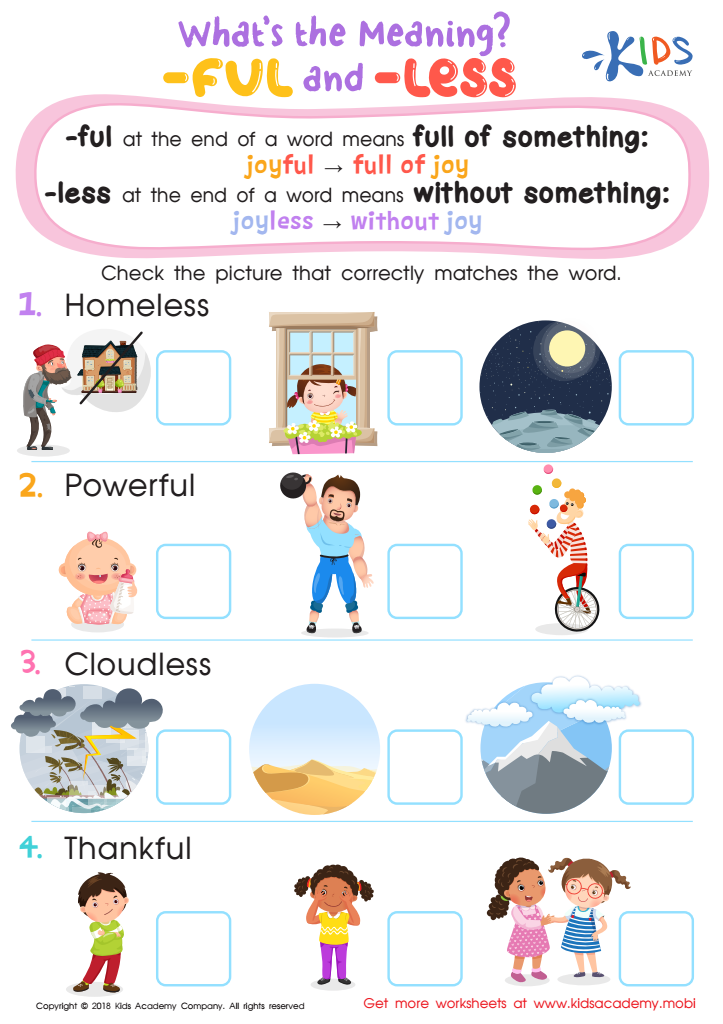
What's the Meaning? Worksheet
 Assign to My Students
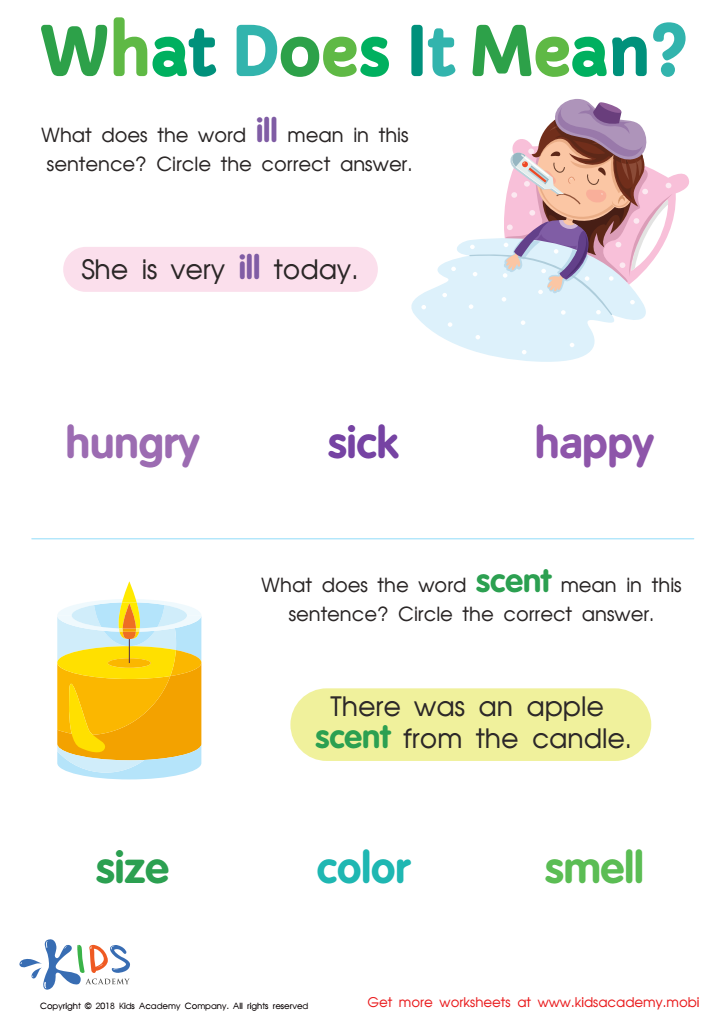
What Does It Mean? Worksheet
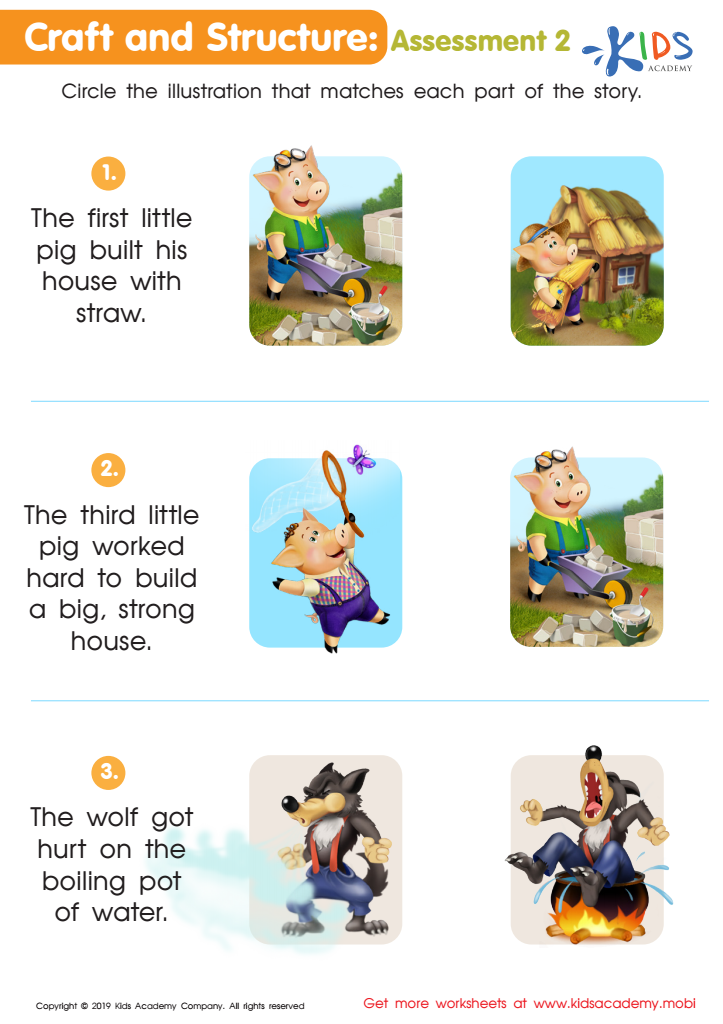
Craft and Structure: Assessment 2 Worksheet 2
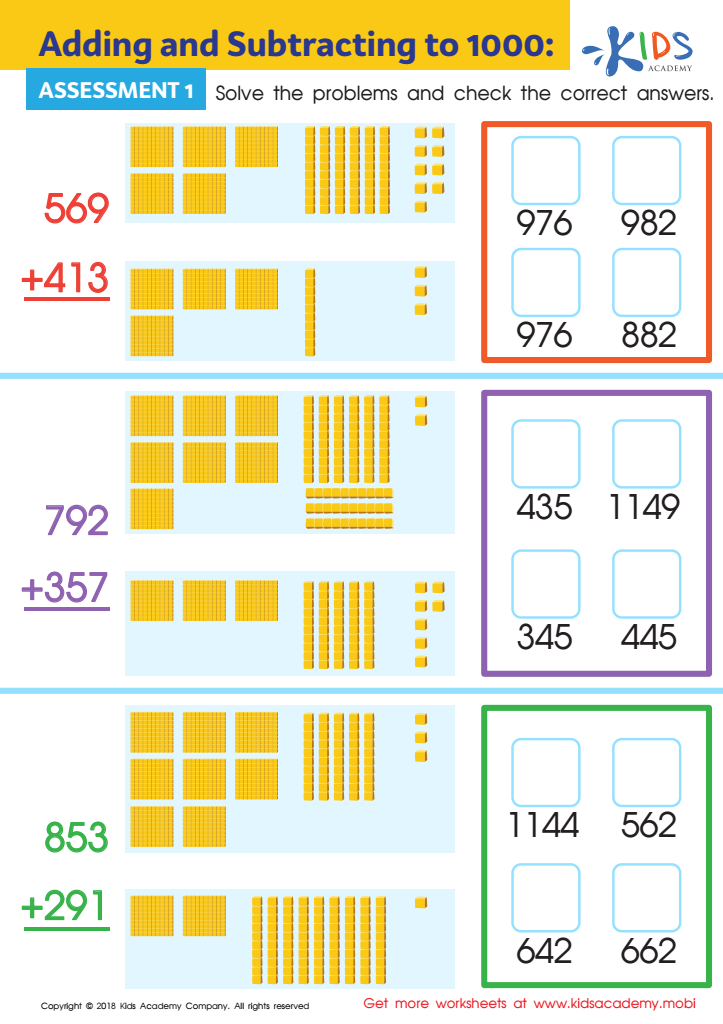
Adding and Subtracting to 1 Worksheet: Assessment 1
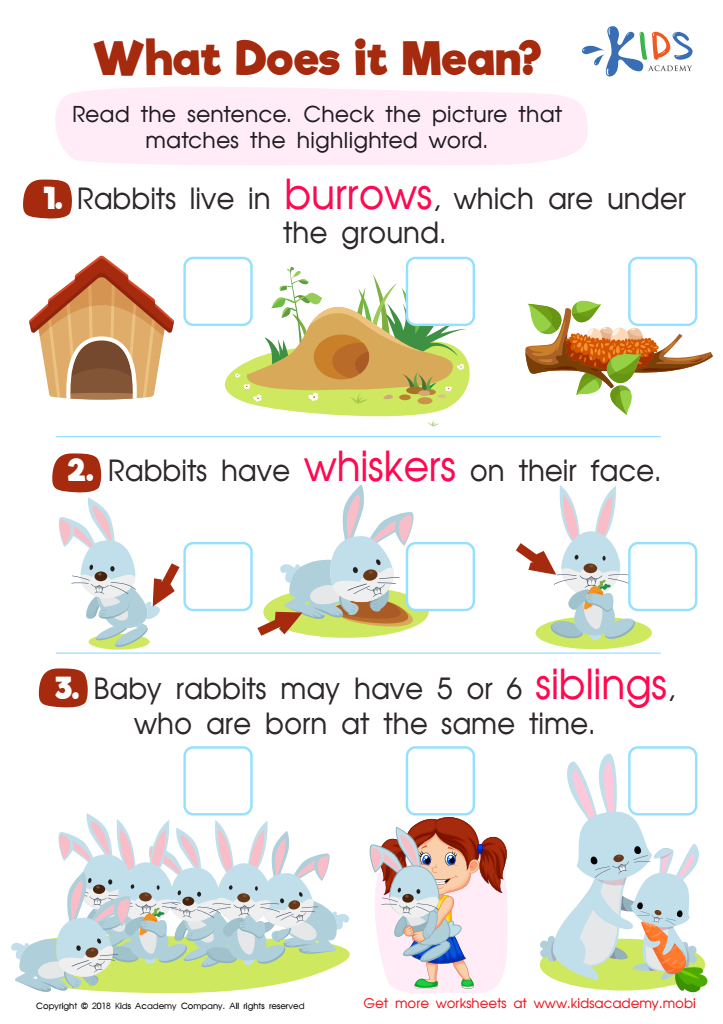
What Does It Mean? Worksheet





.jpg)


Parents and teachers should prioritize contextual understanding for children ages 5-8 because it is a critical foundation for effective learning and cognitive development. At this age, kids are naturally curious and rapidly absorbing information, but they need help making sense of how different pieces of information fit together. Contextual understanding connects new knowledge to their existing experiences, allowing children to see the bigger picture rather than isolated facts.
This deepens comprehension, making learning more meaningful and memorable. For instance, when reading a story, understanding the context enables children to grasp the plot, relate to the characters, and predict outcomes. This leads to better literacy skills and a more enjoyable reading experience. In math, recognizing how addition and subtraction work in real-life situations, like shopping, helps solidify these abstract concepts.
Context also enhances problem-solving skills. Children learn to apply their knowledge in varied situations, fostering adaptive thinking and creativity. Moreover, a strong grounding in context aids in social development. Kids start understanding social cues and relationships better when they can place actions and words within a broader framework, bolstering their emotional intelligence and peer interactions.
Therefore, prioritizing contextual understanding sets the stage for not only academic excellence but also well-rounded personal growth.








