Attention to Detail Easy Worksheets for Ages 6-8
5 filtered results
-
From - To
Explore our "Attention to Detail Easy Worksheets" designed for children ages 6-8! These engaging and interactive worksheets help young learners enhance their observational skills and improve their focus. Each worksheet features fun activities that challenge kids to spot differences, match items, and complete puzzles, making learning enjoyable and effective. Crafted with age-appropriate content, these resources support critical thinking and foster a growth mindset. Perfect for home or classroom use, our worksheets are a valuable tool for any early grade educator or parent aiming to boost their child’s attention to detail. Visit to download and inspire your child today!
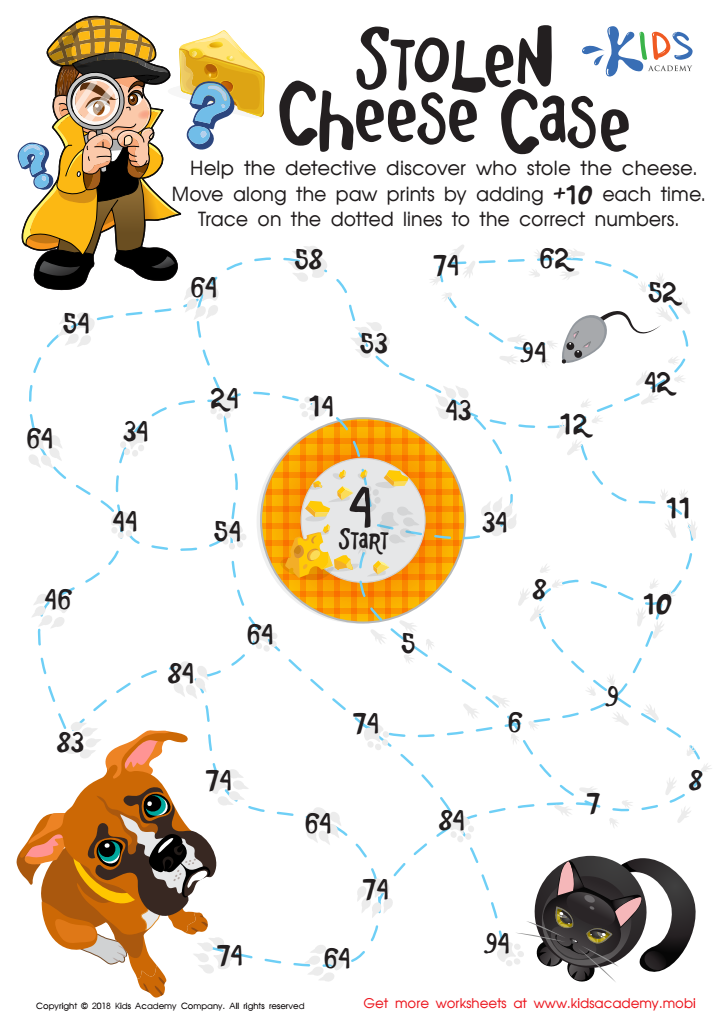
Stolen Cheese Case Maze Worksheet
 Assign to My Students
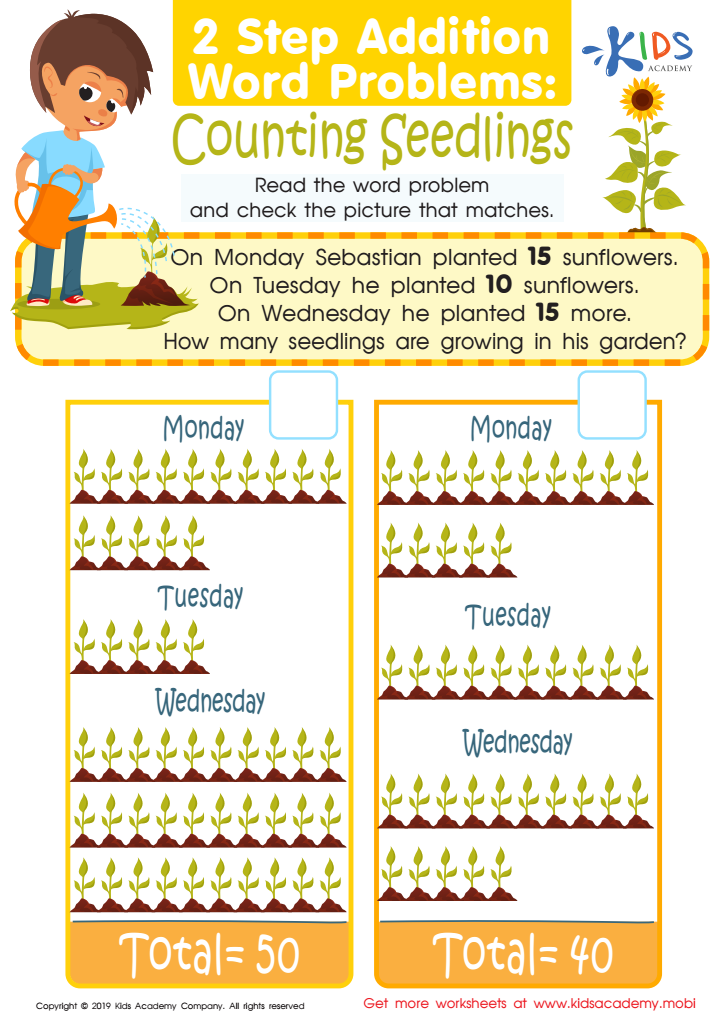
Counting Seedlings Worksheet
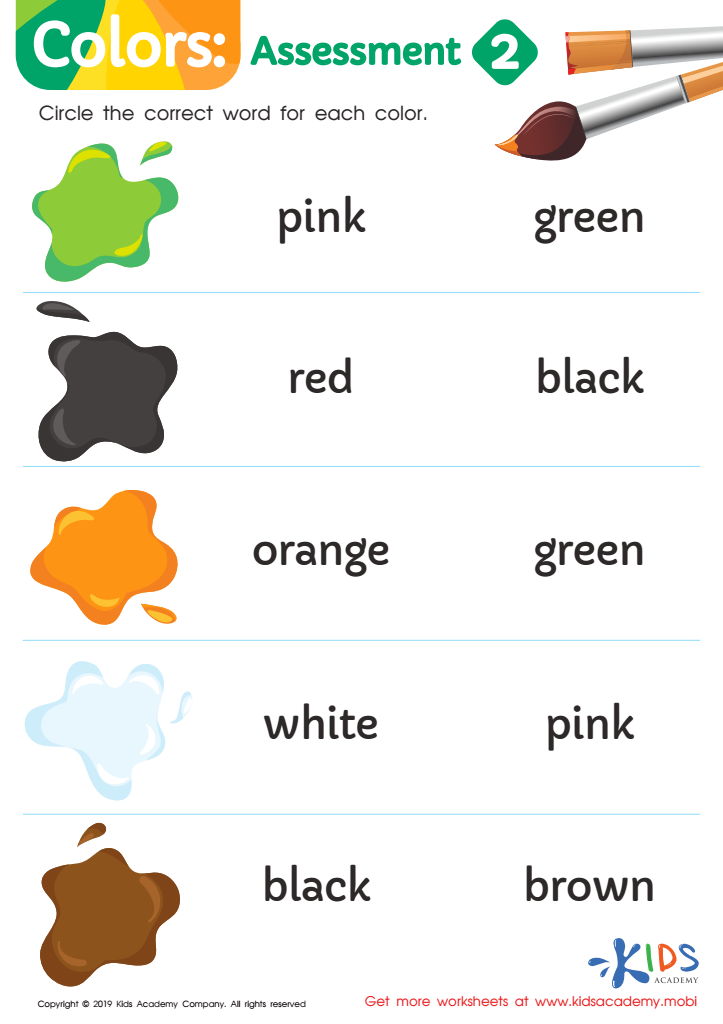
Colors: Assessment 2 Worksheet

Cities Worksheet
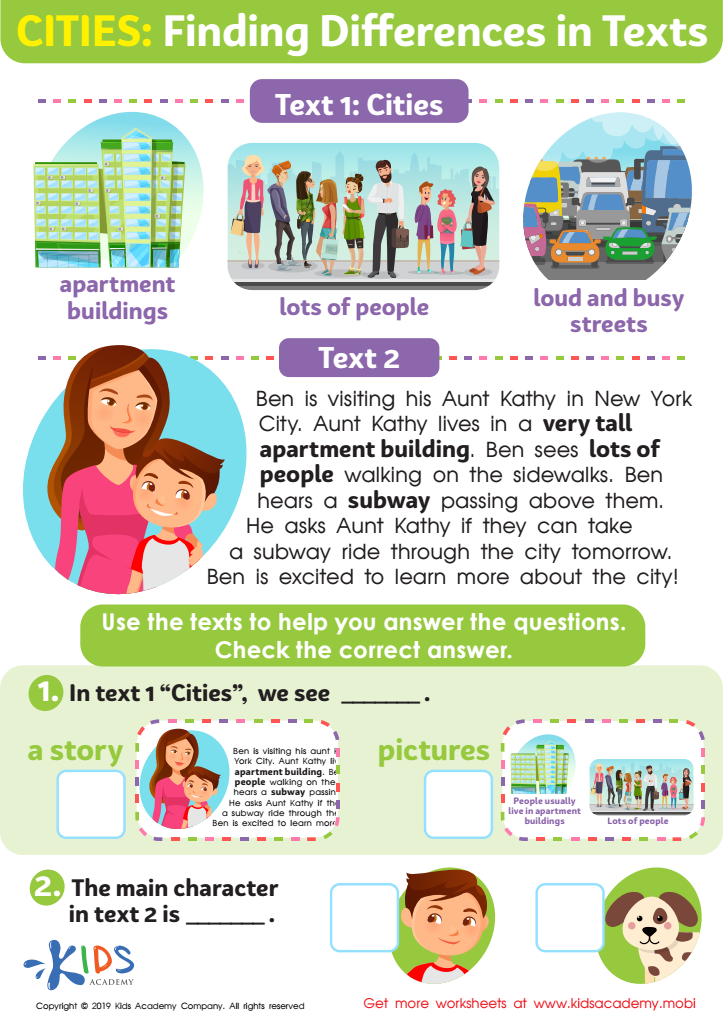
Cities: Finding Differences Worksheet







Attention to detail is crucial for children aged 6 to 8, as it forms the foundation for essential skills that will aid their academic and everyday life. When parents and teachers prioritize cultivating attention to detail, they empower children to observe and interpret their surroundings with clarity. This capacity is vital for tasks ranging from reading and writing to solving math problems, where minor mistakes can significantly alter outcomes.
In this developmental stage, children are establishing their learning habits. Teaching them to focus on details enhances their critical thinking, problem-solving abilities, and creativity, allowing them to approach challenges more effectively. It also encourages thoroughness and responsibility, traits that benefit their personal and academic pursuits.
Moreover, fostering attention to detail stimulates a child’s ability to follow instructions and recognize patterns, both of which are essential in many subjects. As they progress through school, these foundational skills will be crucial for adapting to more complex concepts and subjects. Hence, parents and teachers should invest time in activities that promote these skills, ensuring children develop a meticulous mindset and the confidence to tackle challenges independently. This attention ultimately leads to lifelong learning habits, paving the way for future success in school and beyond.








