
Observational skills Easy Worksheets for Ages 6-8
5 filtered results
Difficulty Level
Grade
Age
-
From - To
Subject
Activity
Standards
Boost your child's observational abilities with our easy worksheets designed specifically for ages 6-8. At Kids Academy, we provide engaging and educational printables to help young learners enhance their attention to detail while having fun. Our worksheets feature diverse activities like matching, spotting differences, and completing patterns, all crafted to develop critical thinking and visual skills. Perfect for at-home practice or classroom use, these resources ensure children improve focus and observation in an enjoyable and interactive way. Visit Kids Academy to download and start sharpening your child's observational skills today!
Favorites
With answer key
Interactive
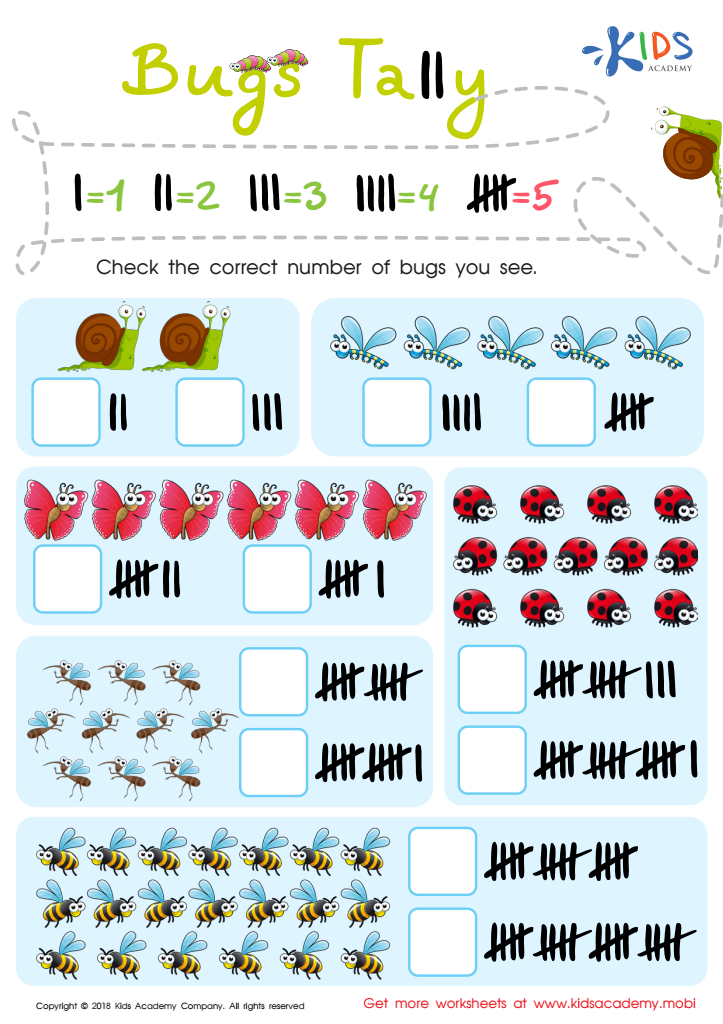
Bugs Tally Worksheet
This fun worksheet uses friendly bugs to help young mathematicians learn numbers and tally marks. They'll gain real-world skills to help with adding, subtracting and counting. Representations will solidify number reasoning, aiding with game playing and more.
Bugs Tally Worksheet
Worksheet
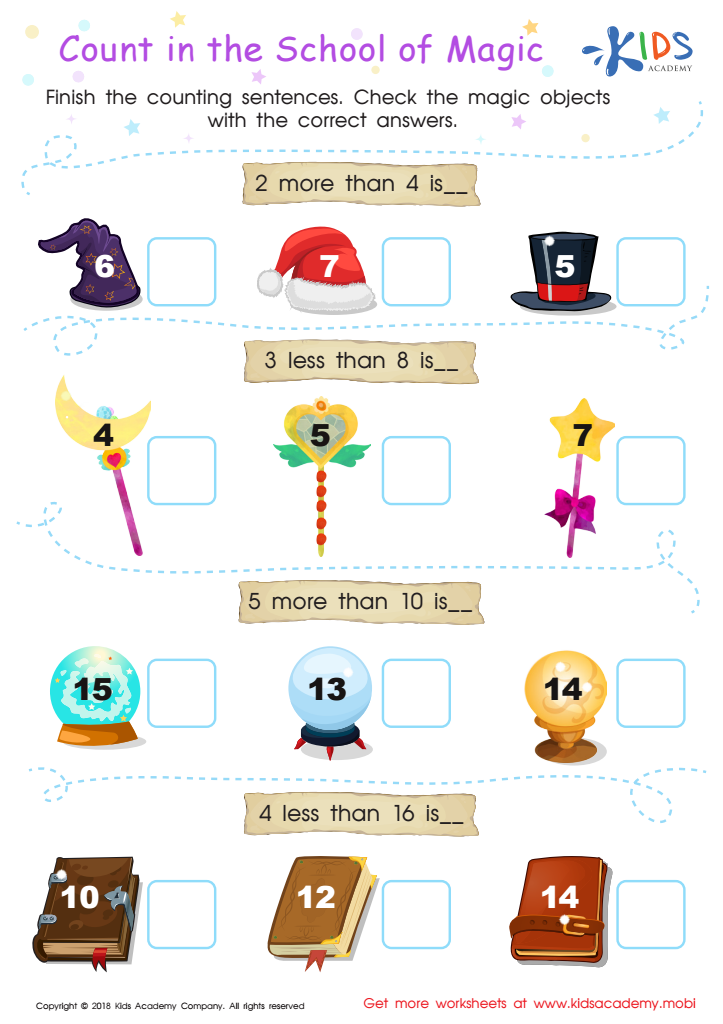
Count in the School of Magic Worksheet
Your math learners can explore the School of Magic with this worksheet. They'll read equations with addition and subtraction numbers under 20, count back and forth to find the answer, then complete the counting sentences. Fun pictures and easy accuracy make it an enjoyable and successful learning experience.
Count in the School of Magic Worksheet
Worksheet
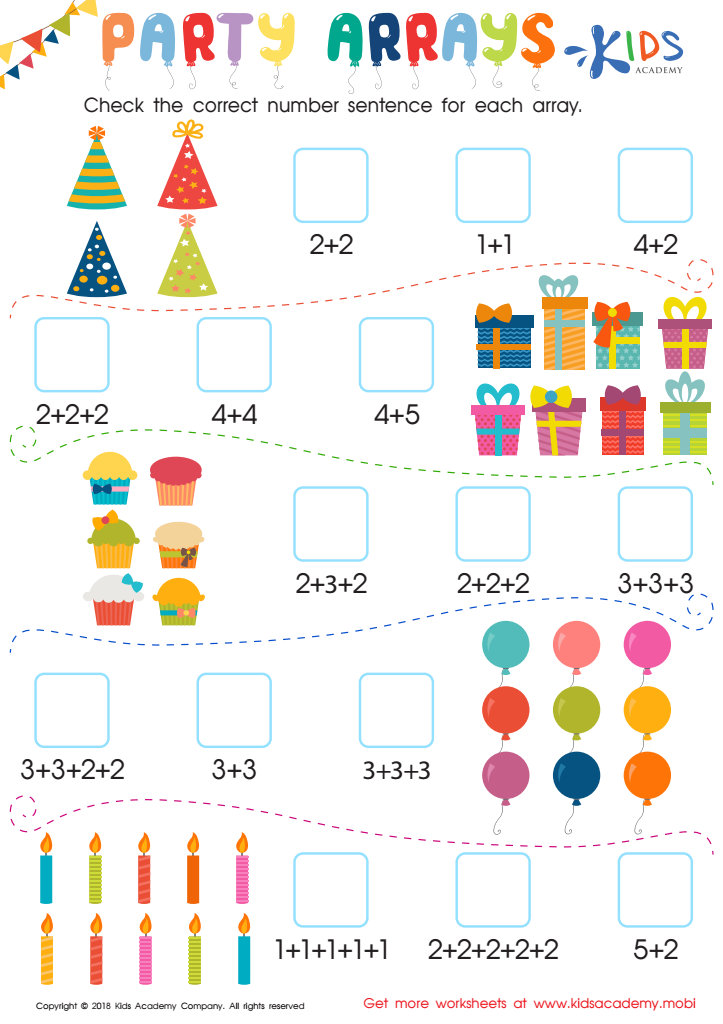
Party Arrays Worksheet
Help your child count the objects in each of the five arrays, then check the correct number sentence for each. This exercise will test their math skills and understanding of number sentences. Guide them to select the appropriate boxes.
Party Arrays Worksheet
Worksheet
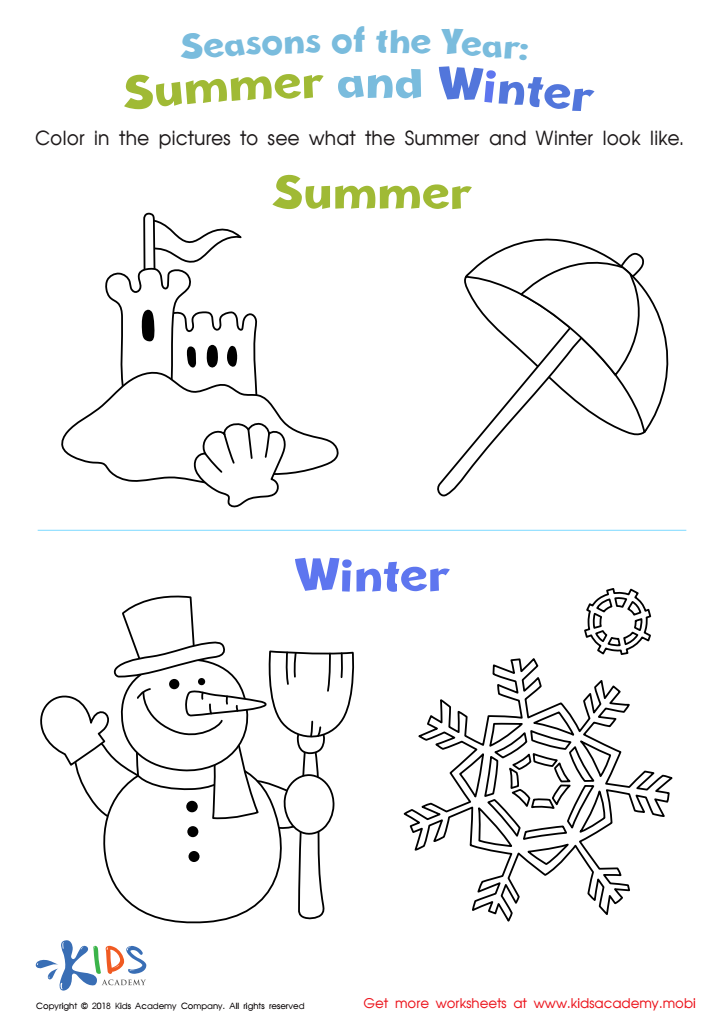
Summer and Winter Worksheet
Ask your child what they associate with winter and summer. What do they look forward to in winter? What colors do they see most? What do they love doing in summer? Help them color in the pictures of winter and summer in the worksheet, choosing the colors they think best represent each season.
Download (PDF)
 Assign to My Students
Assign to My Students
Summer and Winter Worksheet
Worksheet
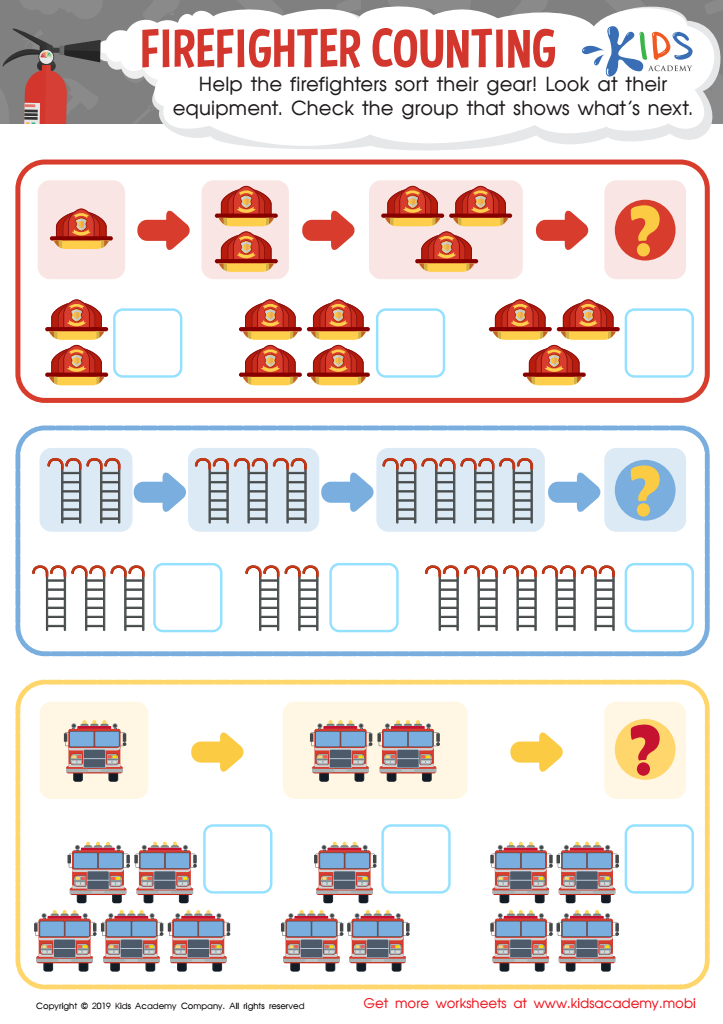
Firefighter Counting Worksheet
Firefighters are a vital part of any community. When a fire breaks out, they respond promptly to protect citizens and extinguish the blaze. Wearing specialized gear, they not only make the job easier, but safer too. Get your kids involved and help the firefighters sort their gear. Count the equipment, and check the group for the next steps.
Firefighter Counting Worksheet
Worksheet
Join Kids Academy for Free
Who is primarily going to use this learning content?




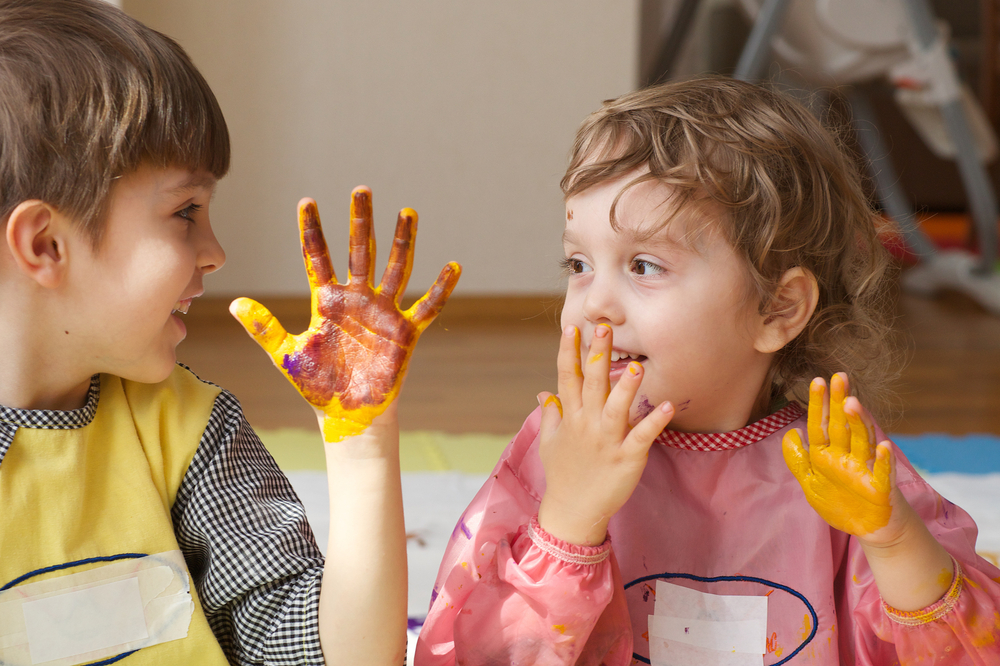

Observational skills are fundamental for young children, especially those aged 6-8, because they lay the groundwork for learning and understanding the world. At this age, kids are curious and eager to explore their surroundings, making it crucial for parents and teachers to nurture these abilities.
By honing observational skills, children improve their attention to detail, which is important in subjects like reading, writing, and math. For example, noticing the differences and similarities in letter shapes helps with reading accuracy, while paying close attention to numbers and patterns is essential in mathematics.
Moreover, strong observational skills aid in developing critical thinking. When children observe and ask questions about what they see, they learn to analyze and draw conclusions. This curiosity-driven approach fosters a love for learning, encouraging kids to become lifelong learners.
Socially, children benefit from keen observation as it helps them understand non-verbal cues such as body language and facial expressions. This awareness improves their empathy and communication skills, key components for building lasting relationships.
Finally, nurturing observational skills can increase safety. Kids who are aware of their surroundings are less likely to engage in risky behaviors and are better equipped to respond to emergencies.
In essence, by developing observational skills in children aged 6-8, parents and teachers set the stage for academic success, social competence, and a lifelong love of learning.








