Subtraction skills Easy Worksheets for Ages 6-8
3 filtered results
-
From - To
Discover our engaging Subtraction Skills Easy Worksheets designed for children aged 6-8! These interactive worksheets provide a fun and effective way to strengthen subtraction concepts, helping young learners build their confidence in math. Featuring colorful visuals and age-appropriate exercises, students will practice basic subtraction through enjoyable activities that reinforce their understanding. Perfect for homeschooling or in-class learning, these worksheets are aligned with educational standards, making them an ideal resource for parents and teachers alike. Enhance your child’s math skills with our engaging subtraction activities and watch them progress at their own pace. Start exploring our collection today!
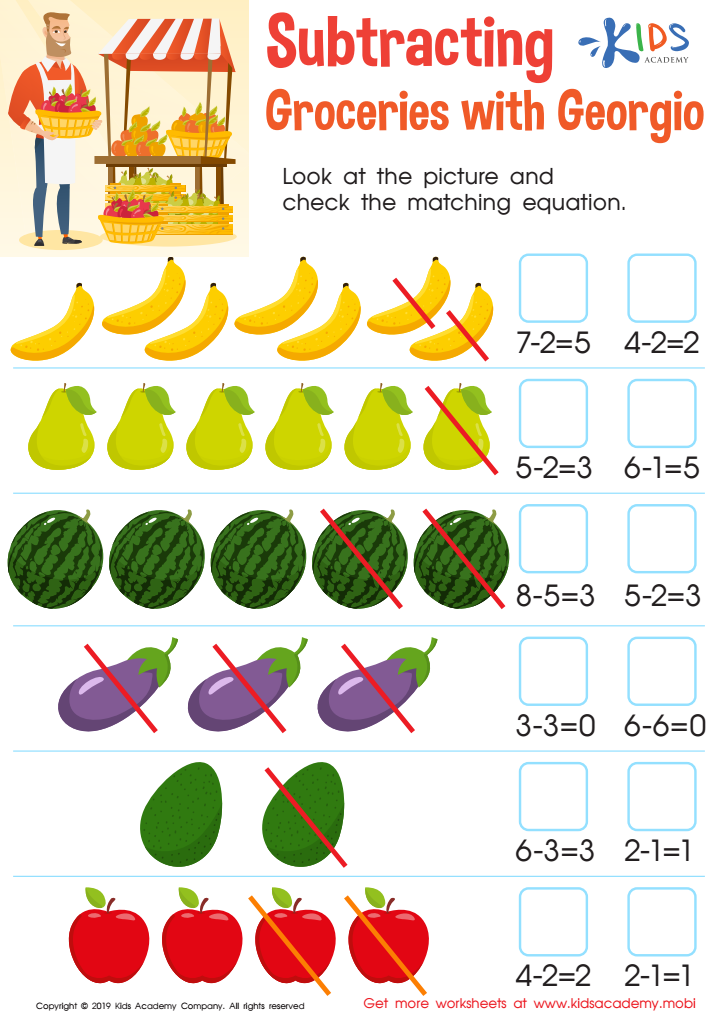
Subtracting: Groceries with Georgio Worksheet
 Assign to My Students
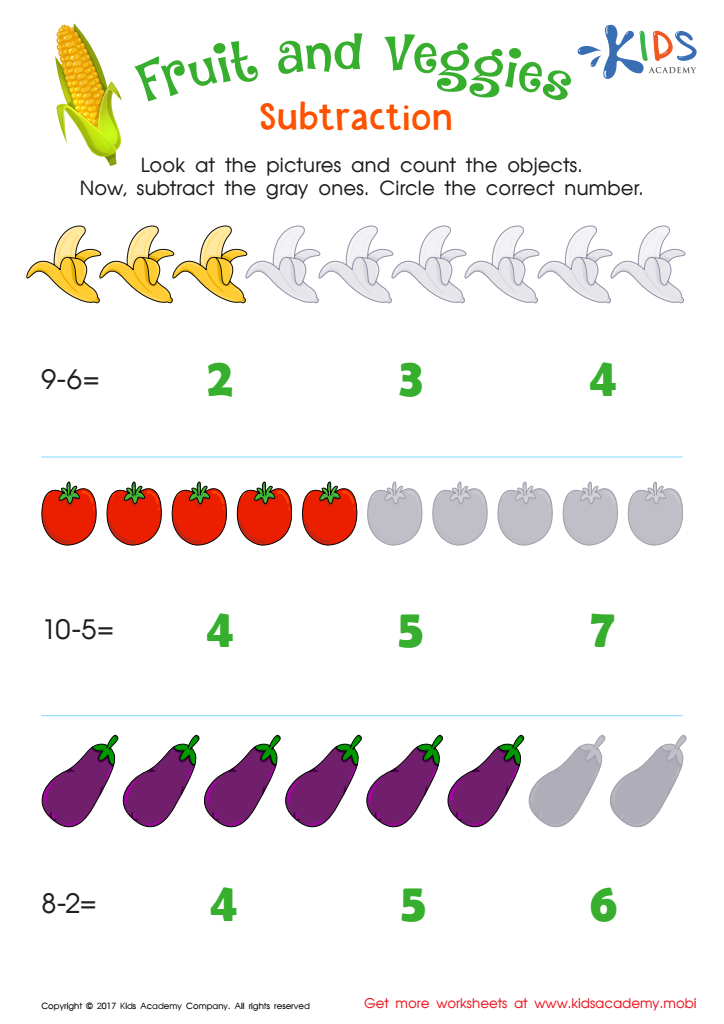
Fruit and Veggies Subtraction Worksheet
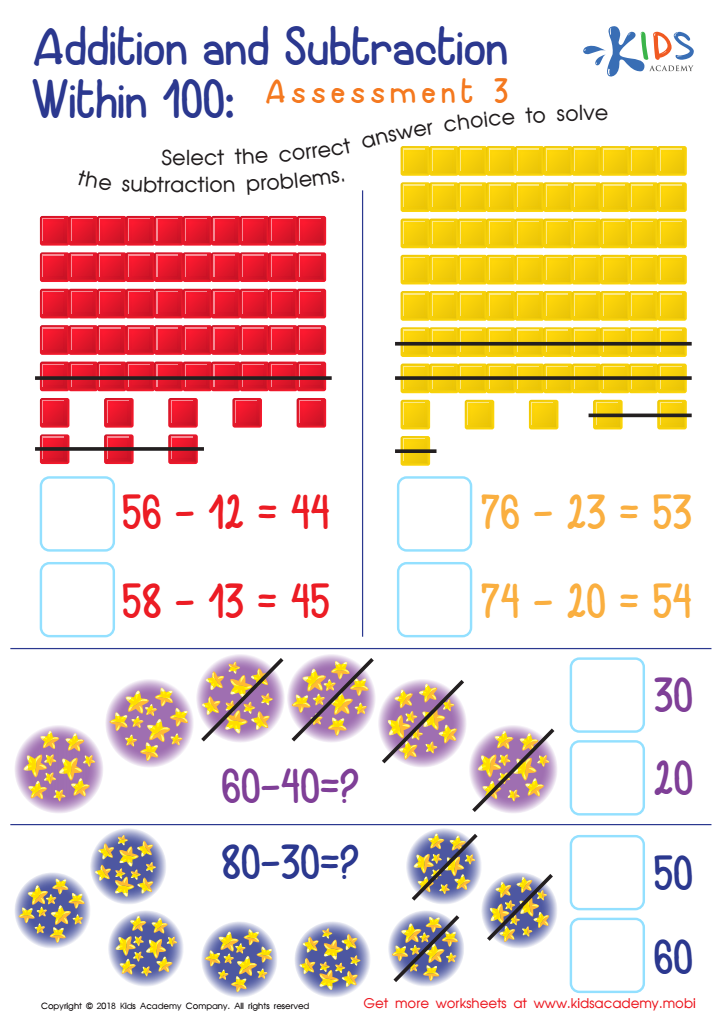
Addition and Subtraction Within 1: Assessment 3 Worksheet








Subtraction skills are crucial for children aged 6-8, laying a foundational understanding of mathematics that extends beyond simple arithmetic. Firstly, mastering subtraction enhances critical thinking and problem-solving abilities. Children learn how to analyze situations, make comparisons, and draw logical conclusions when they subtract. Moreover, these skills are vital in everyday life, from managing pocket money to sharing snacks, fostering independence and real-world application of math.
Additionally, strong subtraction skills contribute to a child's overall academic confidence. When they master basic subtraction, they become more willing to tackle more complex math problems, creating a positive learning cycle. This confidence can also transfer to other subjects, as a solid grasp of math concepts reinforces analytical skills across disciplines.
Furthermore, teachers and parents play a crucial role in supporting the development of subtraction skills. Engaging children in fun activities—like games or visual aids—can make learning subtraction enjoyable and engaging. This collaborative effort nurtures a love for learning, encouraging children to explore mathematics more deeply.
In summary, focusing on subtraction skills in early education is essential for a child's cognitive development, problem-solving capabilities, and academic confidence, making it a fundamental aspect of their educational journey.








