
Visual Learning Easy Worksheets for Ages 6-8
5 filtered results
Difficulty Level
Grade
Age
-
From - To
Subject
Activity
Standards
Discover engaging Visual Learning Easy Worksheets designed for children aged 6-8. These worksheets enhance critical thinking and promote visual literacy through fun, interactive activities. Tailored for early learners, our resources cover essential skills such as shapes, colors, and patterns, making learning enjoyable and effective. Each worksheet encourages creative expression while helping children develop observation and problem-solving abilities. Ideal for both classroom settings and at-home learning, these worksheets can captivate young minds and foster a love of learning. Explore our extensive collection to support your child’s educational journey and build a solid foundation for future academic success!
Favorites
With answer key
Interactive
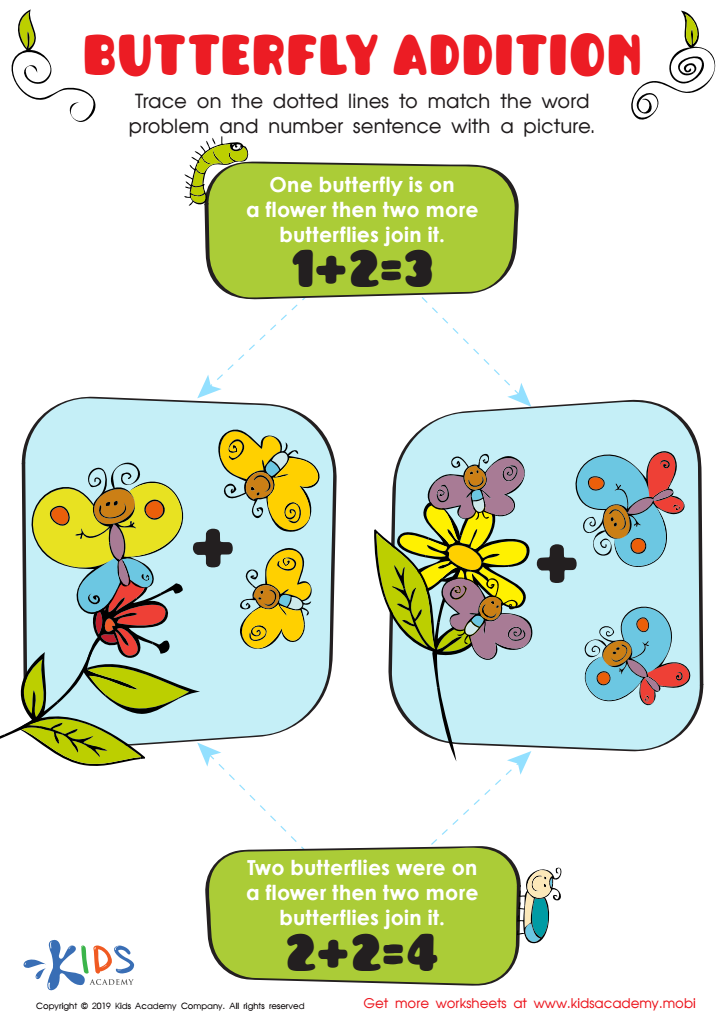
Butterfly Addition Worksheet
This tracing sheet is great for kids to work on math skills and have fun too. Read the word problems to them, then help them trace the dotted lines to match the problem and number sentence to a picture. Not only is it educational, it's beautiful too - your kids will love learning about butterflies!
 Assign to My Students
Butterfly Addition Worksheet
Worksheet
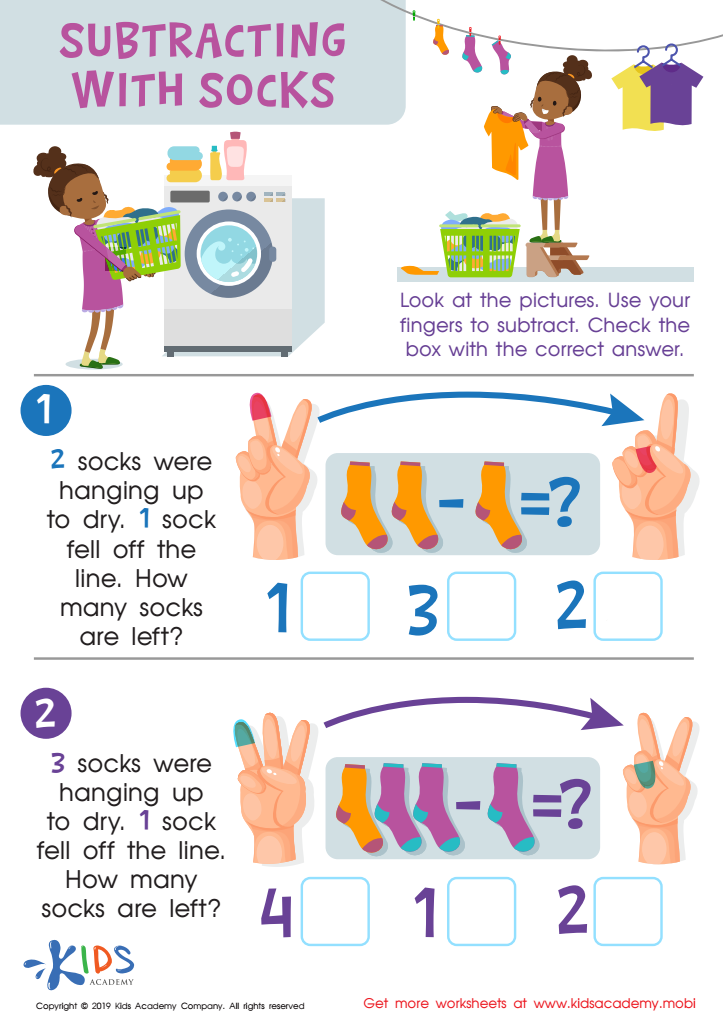
Subtracting Socks Worksheet
Before beginning this exercise with your children, warm them up with a counting game. If math is not their favorite subject, use this worksheet. Help them read the two word problems, then use their fingers to count and subtract. Ask them to select the correct answer and check the box.
Subtracting Socks Worksheet
Worksheet
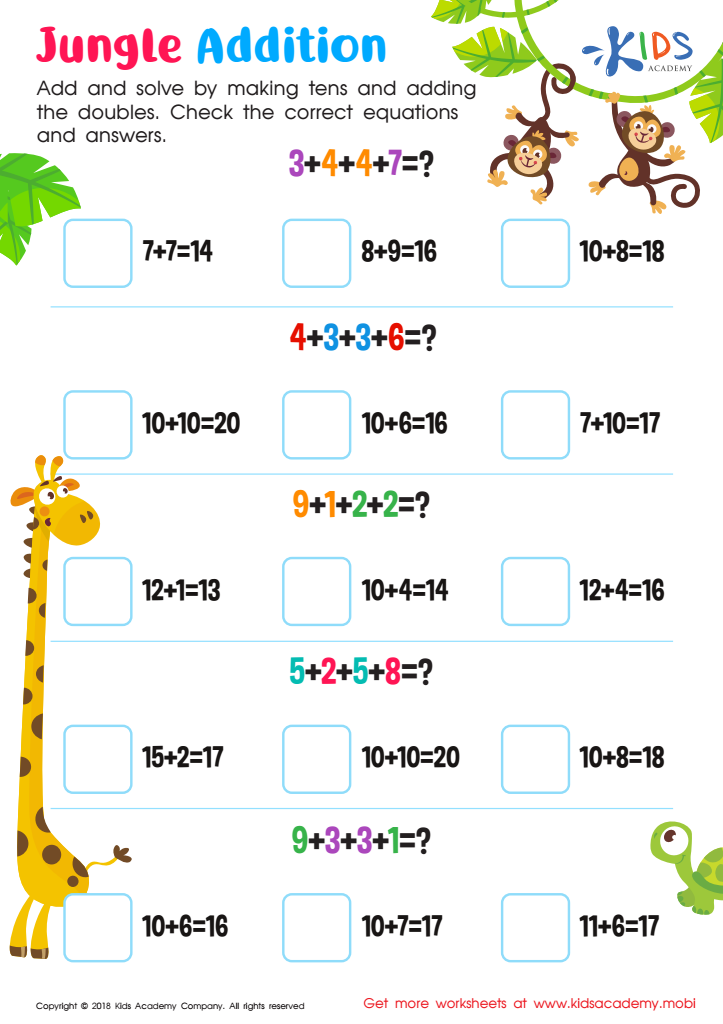
Jungle Addition Worksheet
With this worksheet, kids can use the strategies of making tens and adding doubles to add numbers with more than three addends. They'll practice choosing the right method and become more confident in their calculations, enabling quicker, more efficient computation.
Jungle Addition Worksheet
Worksheet
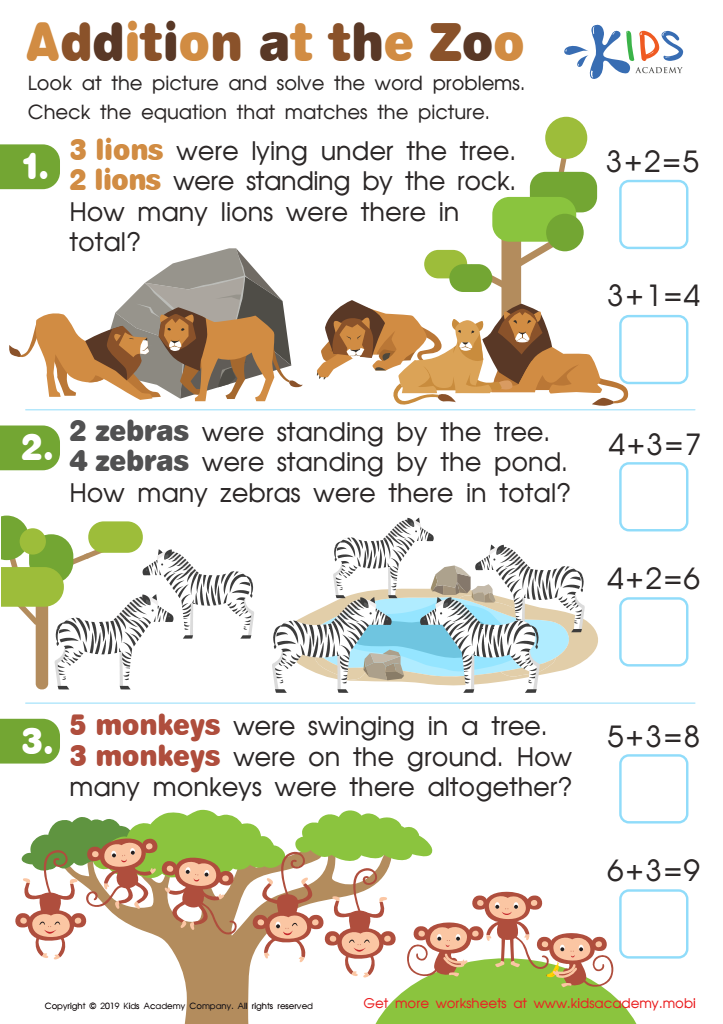
Addition at the Zoo Worksheet
Visit the zoo with your kids and point out all the different animals. Ask them to name their favorites and identify animals on a worksheet. Challenge them to solve word problems related to the pictures. Ask them for the equation that fits the picture and check the answer.
Addition at the Zoo Worksheet
Worksheet
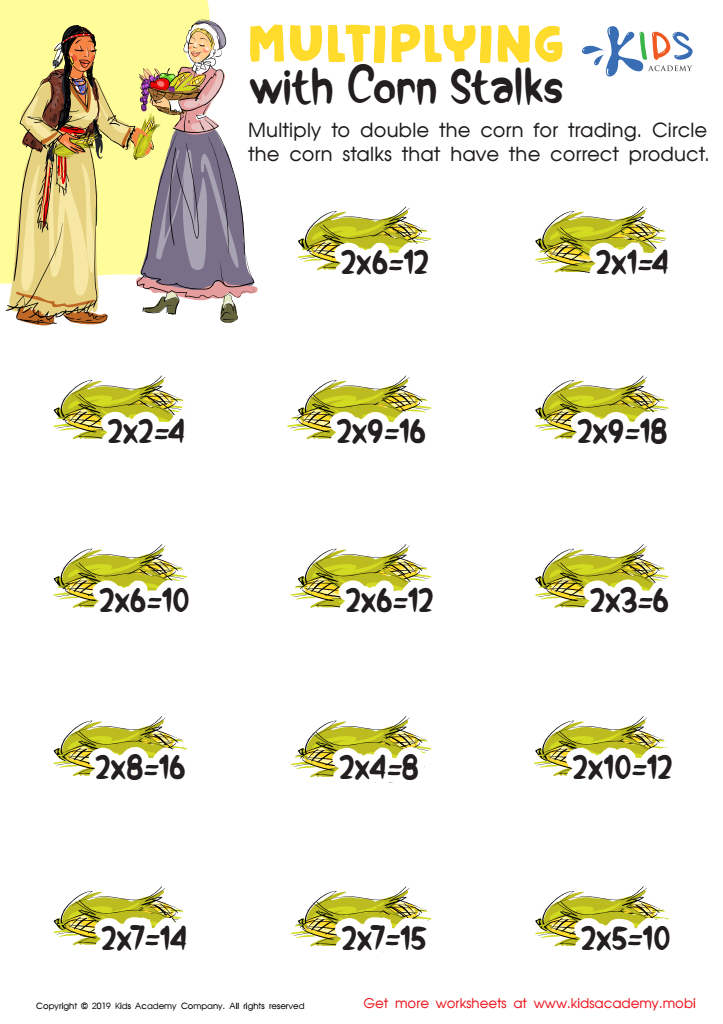
Multiplying With Corn Stalks Worksheet
Farming is profitable; corn is a versatile crop used for many things. Ask your kids what products come from corn! This worksheet is a fun way to teach multiplying with corn stalks. Farmers must multiply the stalks to double their number for trading and increase their profits. Challenge your kids to circle the correct products.
Multiplying With Corn Stalks Worksheet
Worksheet
Join Kids Academy for Free
Who is primarily going to use this learning content?




.jpg)


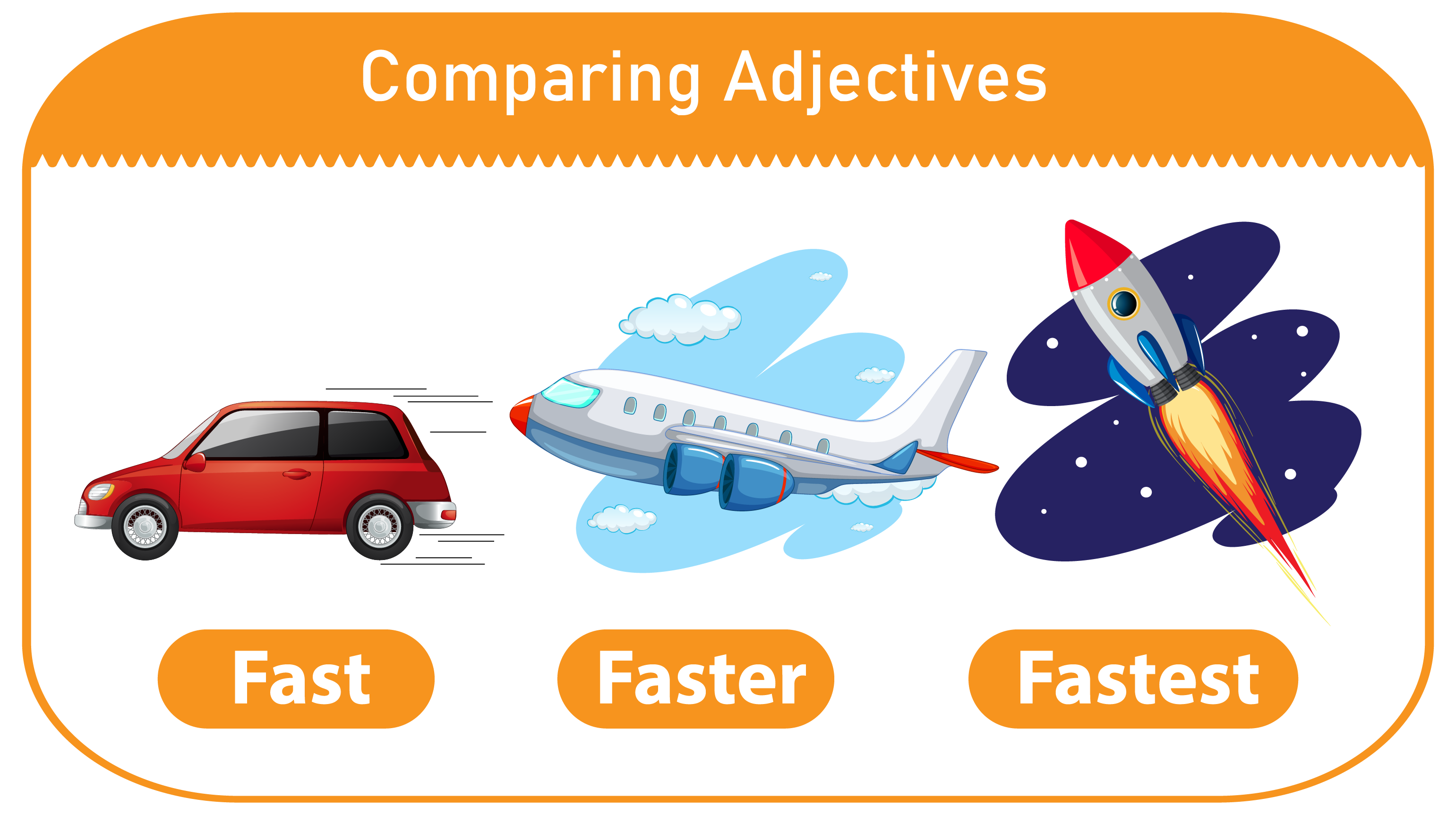
Visual Learning Easy for Ages 6-8 is crucial for developing essential skills in young learners during formative years. At this age, children are naturally curious, and utilizing visual learning methods can harness that curiosity effectively. Visual aids, such as charts, graphs, and images, make complex concepts more understandable; they transform abstract ideas into concrete representations that children can easily grasp.
Parents and teachers play a pivotal role in this developmental stage, and adopting visual learning can enhance engagement. Children in this age group often thrive in interactive environments where they can see and manipulate learning materials. This approach not only fosters creativity but also supports diverse learning styles, ensuring that visual learners receive the targeted assistance they need.
Moreover, visual learning techniques can help in memory retention. When children associate new knowledge with visual elements, they are more likely to remember and recall that information in the future. This strengthens foundational skills in literacy, numeracy, and critical thinking.
In summary, prioritizing visual learning equips young children with exciting tools to explore and understand their world better, setting them on a path to academic success and lifelong learning. Parents and teachers should champion these methods for a well-rounded educational experience.








