Problem-Solving Skills Easy Geometry Worksheets for Ages 6-8
6 filtered results
-
From - To
Boost your child's problem-solving skills with our Easy Geometry Worksheets for Ages 6-8! These engaging worksheets are designed to introduce young learners to foundational geometric concepts through fun, age-appropriate activities. Children will explore shapes, patterns, and spatial reasoning while developing critical thinking skills. Each worksheet focuses on interactive learning, encouraging kids to solve puzzles and challenges that build confidence and mastery in geometry. Perfect for home or classroom use, our easy-to-follow worksheets make learning geometry enjoyable and accessible for early learners. Help your kids develop essential problem-solving skills with our expertly crafted content.
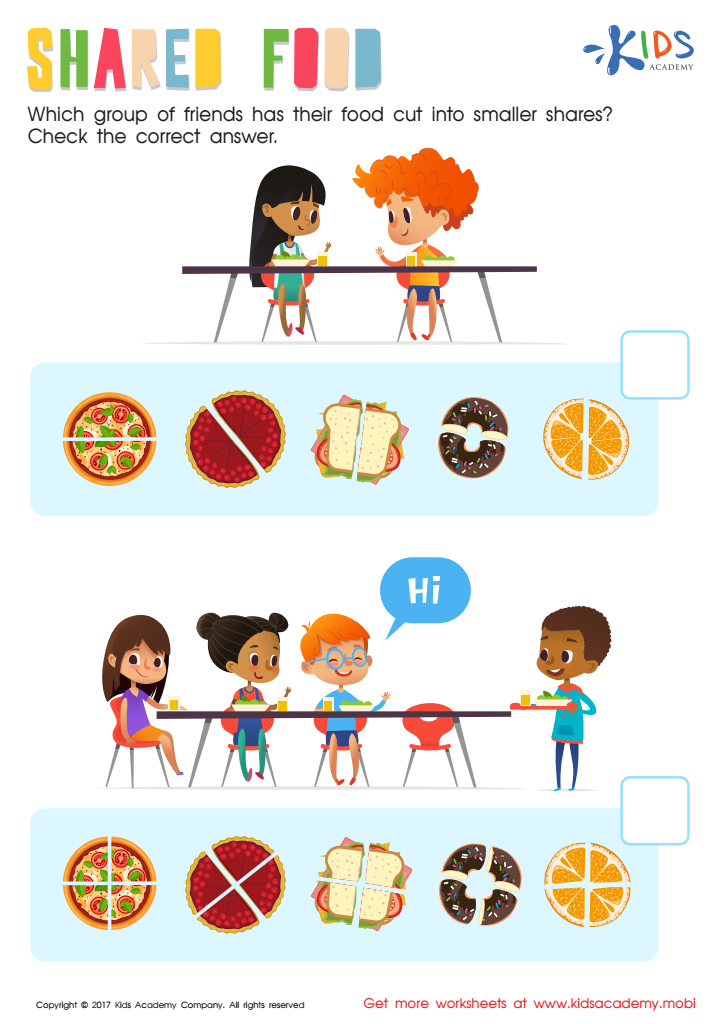
Shared Food Worksheet
 Assign to My Students











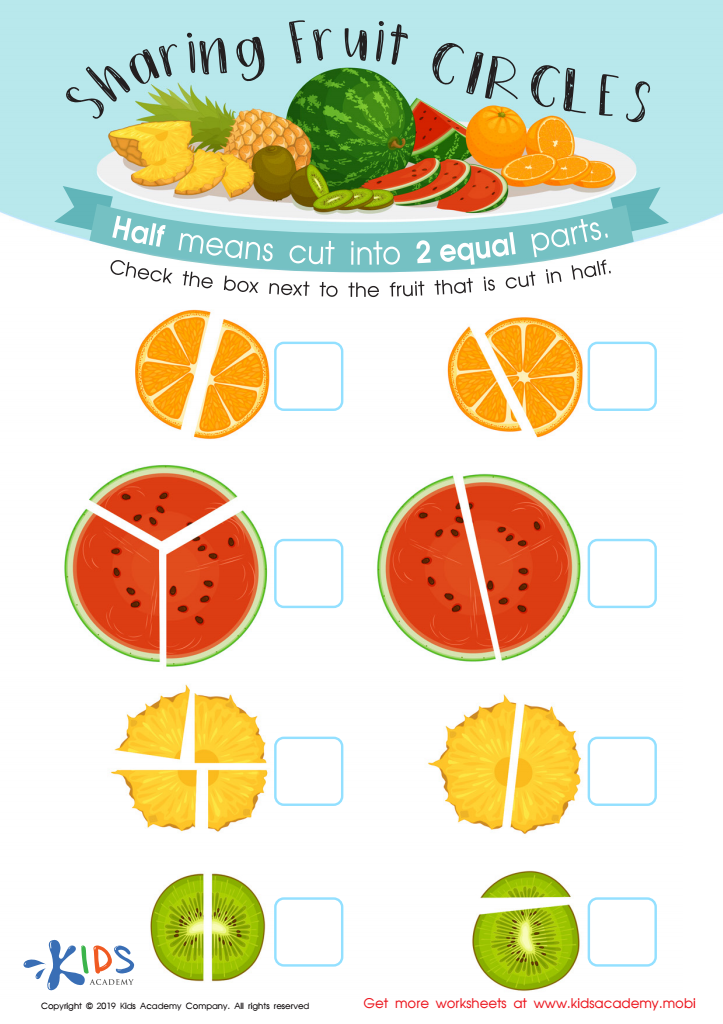
Sharing Fruit Circles Worksheet
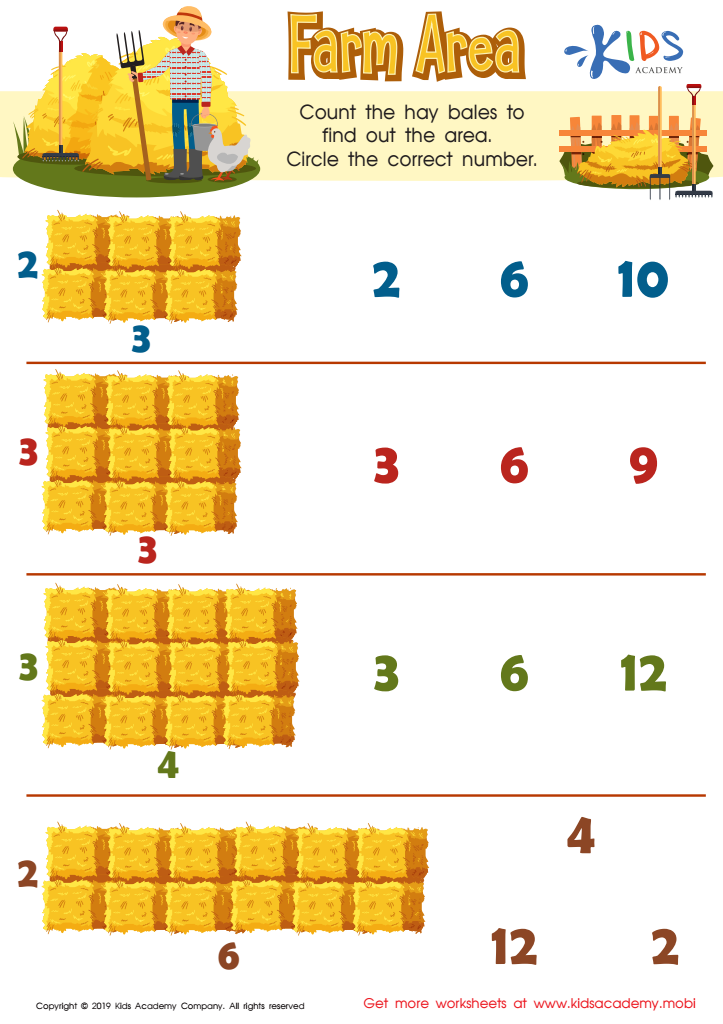
Farm Area Worksheet
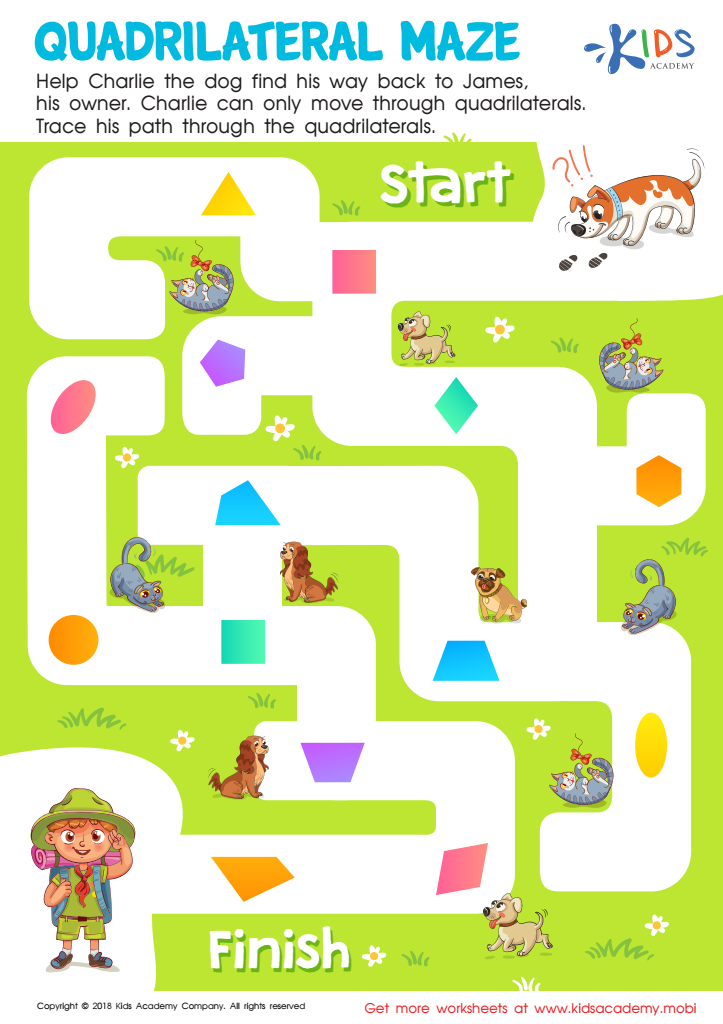
Quadrilateral Maze Worksheet
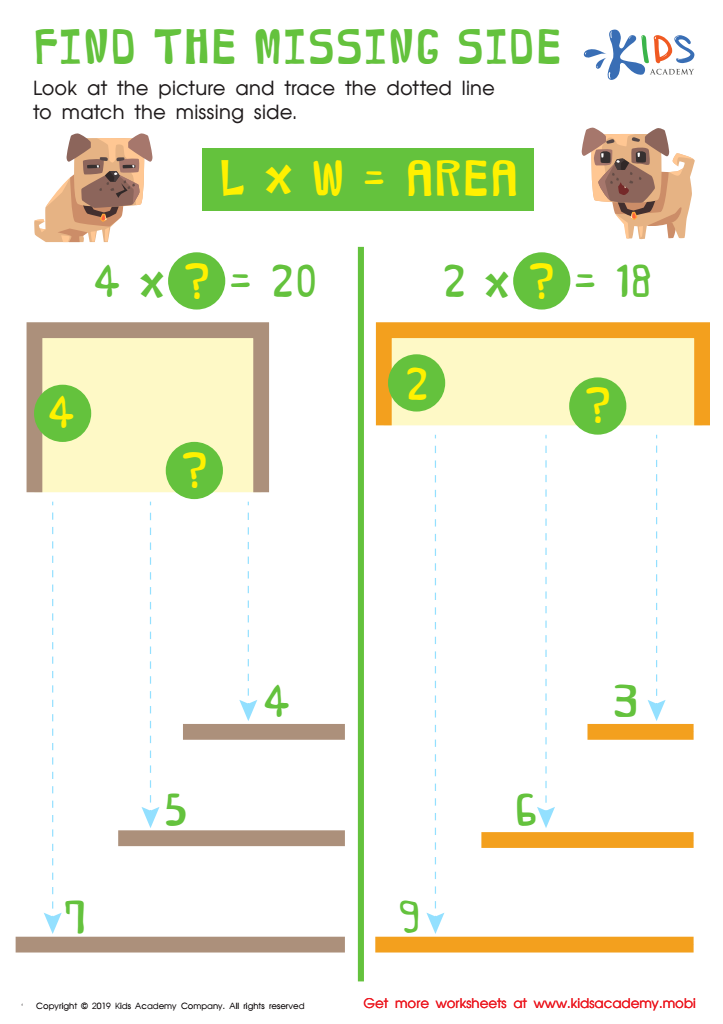
Find the Missing Side Worksheet
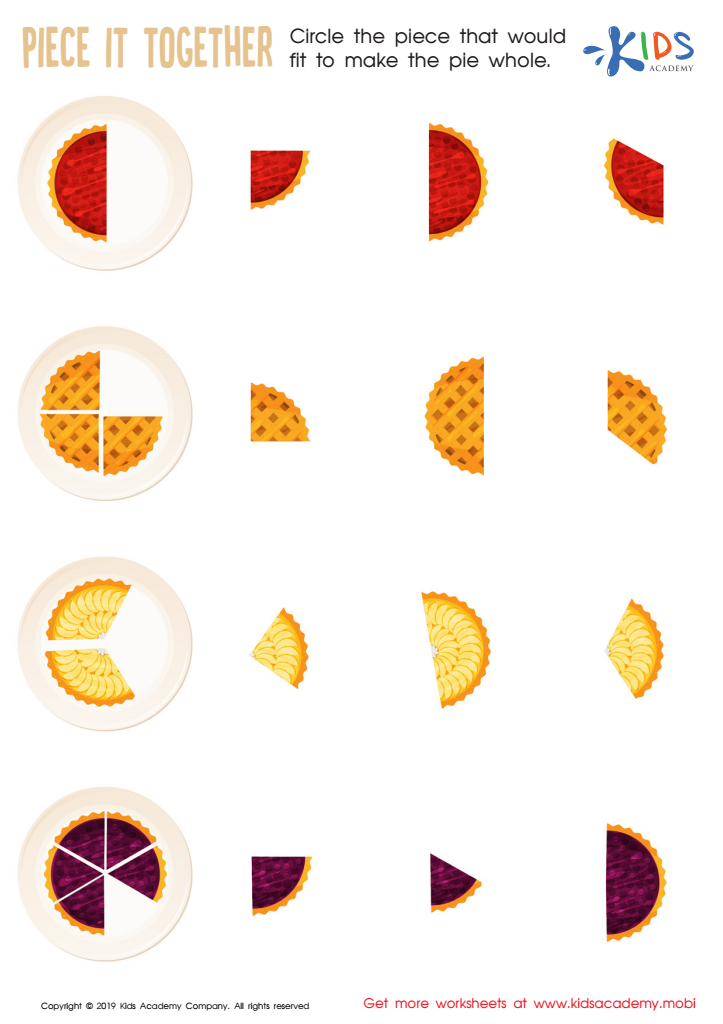
Piece it together Worksheet








Parents and teachers should prioritize problem-solving skills in basic geometry for children ages 6 to 8 because these skills are foundational to their cognitive development and academic success. At this early stage, children are highly receptive and developing their ability to think critically and solve problems. Exposure to geometry helps them visualize and understand spatial relationships, which is crucial for everyday tasks and more complex mathematical concepts later on.
Geometry exercises enhance children's logical reasoning by encouraging them to recognize patterns, make predictions, and understand symmetry and shapes. These skills are not only important in math but also in science, engineering, and technology-related fields, which are becoming increasingly important in today’s job market. Additionally, the ability to solve geometric problems boosts children’s confidence as they become proficient in tackling new and challenging situations, contributing positively to their overall learning attitude.
Problem-solving in geometry also fosters creativity and persistence, as students explore multiple ways to solve a problem or understand a shape. Encouraging these skills ensures that children become lifelong learners who can approach problems systematically, an essential trait for both personal and professional life. Thus, integrating geometry problem-solving into early education builds a strong foundation for future academic and practical success.








