Filters

52 filtered results

Clear all filters
Favorites
With answer key
Interactive

52 filtered results

Difficulty Level

Grade


Check out this FREE Trial Lesson on Reading Comprehension for age 6-8!

Context Clues

Favorites
With answer key
Interactive
  • 6-8
  • Reading Comprehension
  • Easy
Setting of a Story Worksheet

Setting of a Story Worksheet

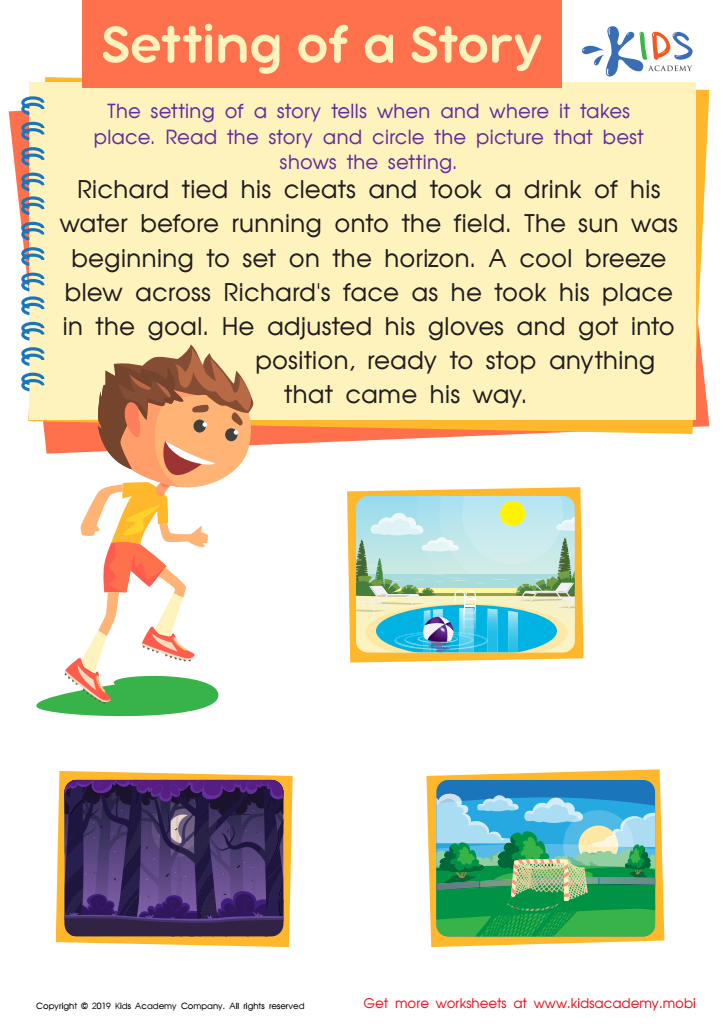
You need characters, theme, POV, plot and setting to tell a good story. Ask your kids to explain them and use this worksheet with a story to teach them about setting. Read the story with your kids, then have them circle the picture that best shows the setting.
Setting of a Story Worksheet
Worksheet
A Fox Family Worksheet

A Fox Family Worksheet

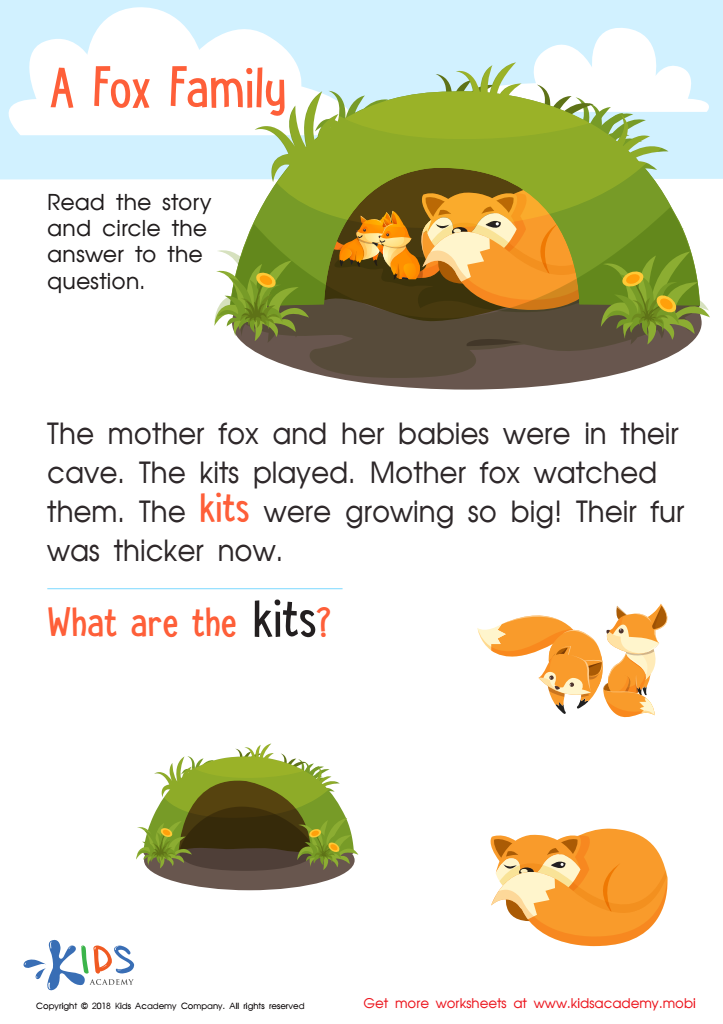
Reading is an easy way to learn new words. This worksheet introduces an interesting story about a fox family, teaching your child that "kits" refers to baby foxes. Read the text together and circle the picture to answer the question.
A Fox Family Worksheet
Worksheet
Check Memory Worksheet

Check Memory Worksheet

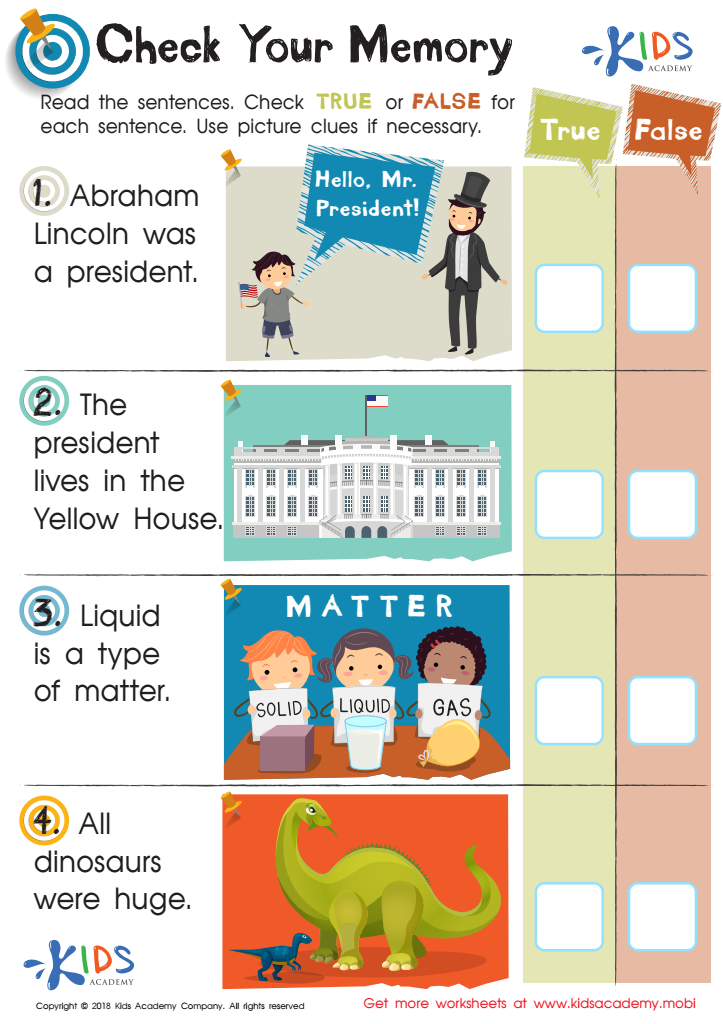
Assisting your kids with their homework and using worksheets is a great way for them to learn. The vibrant visuals in this printout can help stimulate the mind and motivate your child. Have them read the sentences and then point to the associated images. Afterwards, ask them to state True or False for each sentence. If they are still uncertain, offer them the picture clues to assist further.
Check Memory Worksheet
Worksheet
What Does Not Match? Worksheet


What Does Not Match? Worksheet

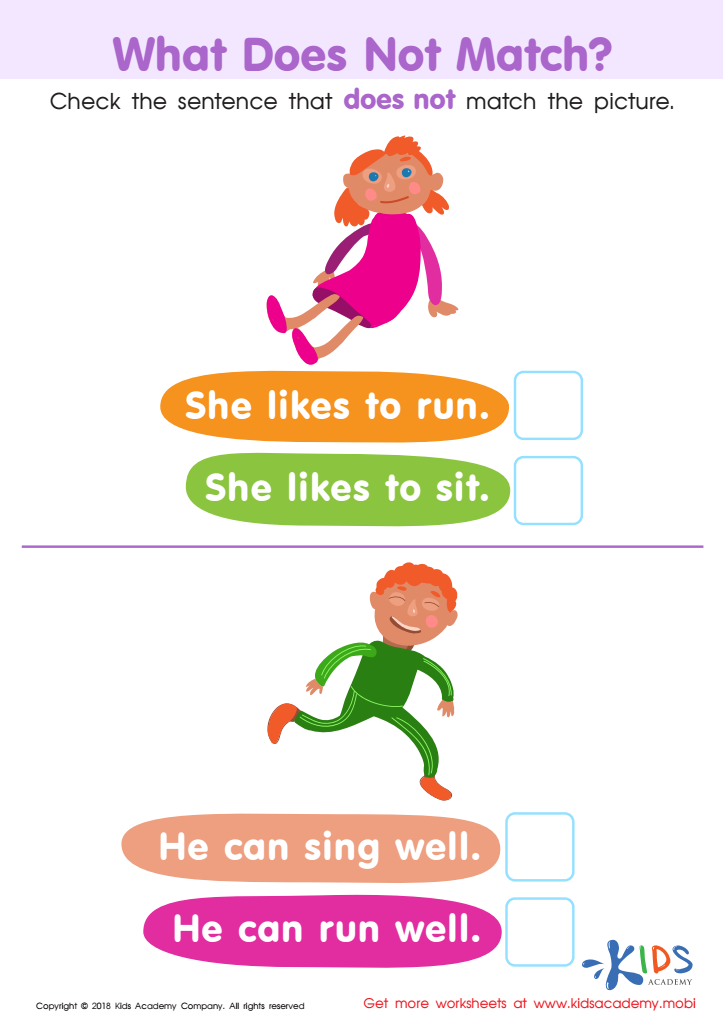
Emerging readers need to practice using visual cues and repetitive text. This colorful PDF provides them with an opportunity to look at pictures, use discrimination and discern which phrase does not match. It also enables them to gain familiarity with high-frequency words to aid decoding longer sentences.
What Does Not Match? Worksheet

Worksheet


... 2 3

Easy reading comprehension for ages 6-8 is essential for both parents and teachers as it lays the foundation for a child’s overall academic success. During these critical early years, children develop vital literacy skills that significantly impact their ability to understand and engage with the world around them. Effective comprehension skills enable young learners to decode texts, remember details, and infer meaning, which enhances their ability to communicate and think critically.

For parents, promoting reading comprehension helps nurture a love for learning and boosts their child's self-confidence. Engaged children are more likely to share their thoughts and ask questions, fostering deeper connections with adults and peers.

Teachers benefit from focusing on reading comprehension as it allows them to tailor instruction to varied learning styles, ensuring all students grasp fundamental concepts. A strong emphasis on comprehension at this stage can reduce struggles in later grades, where reading becomes more complex. Ultimately, both parents and teachers play a vital role in cultivating a supportive literacy environment, guiding young readers to become proficient, confident, and curious individuals. By prioritizing reading comprehension, they equip children with skills that will serve them throughout their academic journey and beyond.