Easy Beginning Consonants Worksheets for Ages 6-9
3 filtered results
-
From - To
Discover our "Easy Beginning Consonants Worksheets," specially designed for children aged 6-9! These engaging worksheets help young learners master the fundamentals of consonant sounds. With various fun activities, including tracing, matching, and letter recognition exercises, students will develop essential early literacy skills. Our colorful and interactive designs keep kids motivated while enriching their vocabulary. Whether used at home or in the classroom, these worksheets are perfect for reinforcing understanding and enhancing phonemic awareness. Support your child's learning journey and make phonics fun with our easy beginning consonants resources today! Perfect for teachers, parents, and caregivers seeking effective educational tools.
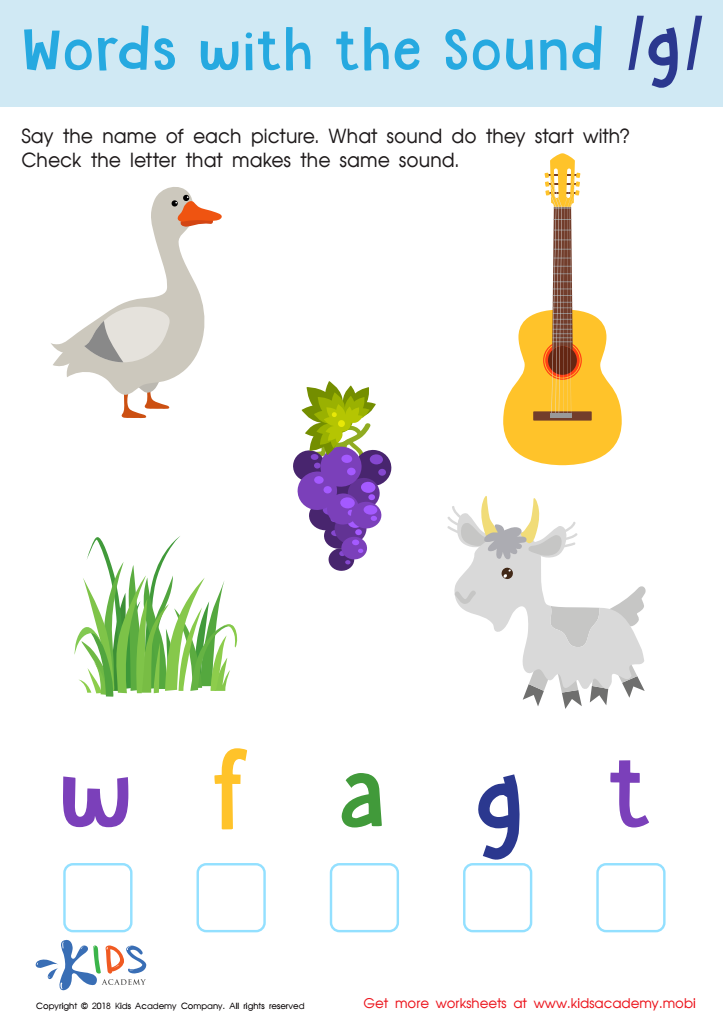
Words with sound g Reading Worksheet
 Assign to My Students
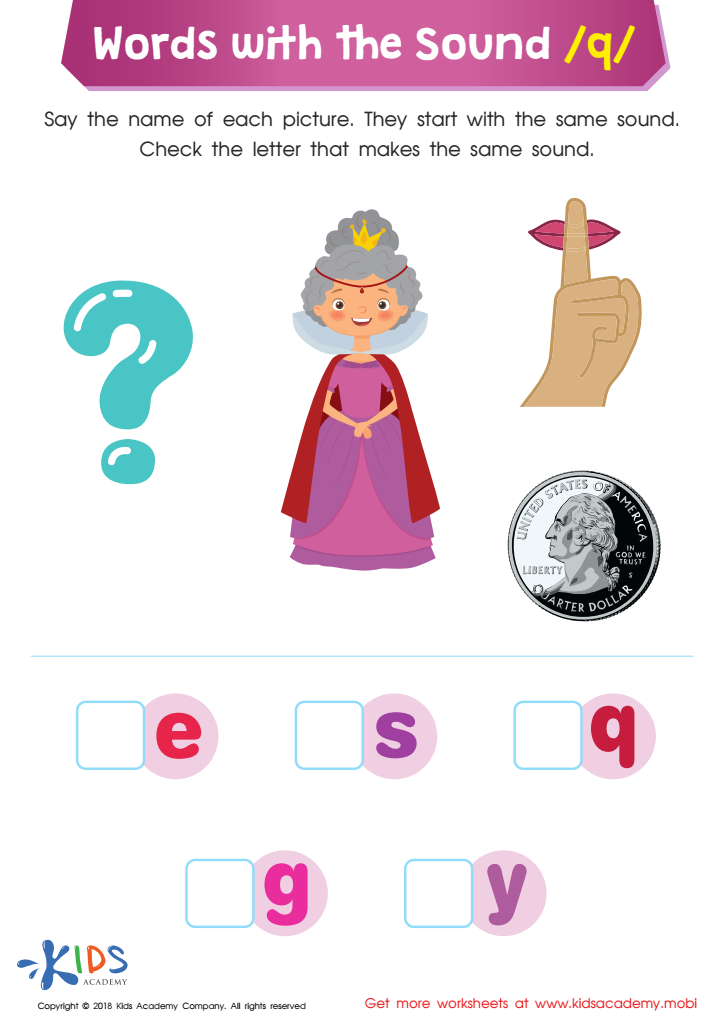
Words with Sound Q Reading Worksheet
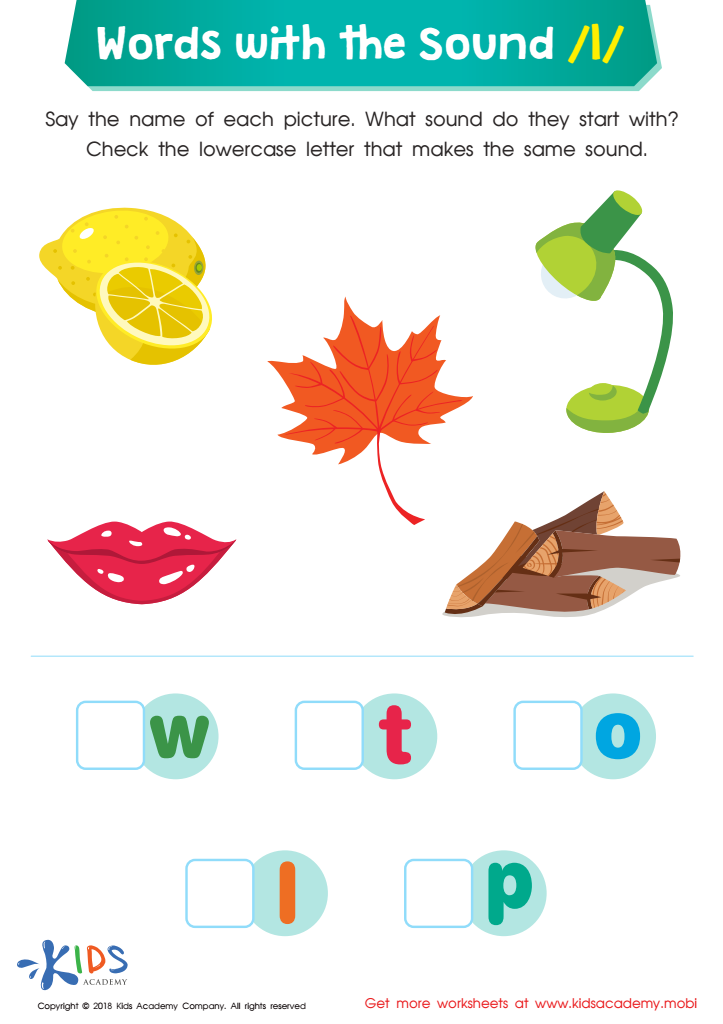
Words with Sound L Reading Worksheet


Parents and teachers should care about Easy Beginning Consonants for ages 6-9 because this foundational skill significantly impacts children's literacy development. Mastering beginning consonants helps young learners decode words, improving their reading fluency and comprehension. At this age, children are still developing their phonemic awareness, which is crucial for recognizing and producing sounds.
By focusing on easy beginning consonants, educators can support children in transitioning from learning the alphabet to reading simple words. This builds confidence and encourages a love for reading, setting the stage for more complex literacy skills later. Moreover, recognizing consonant sounds enhances spelling abilities and vocabulary growth, vital components of literacy.
Incorporating fun and engaging activities centered on beginning consonants ensures that learning is enjoyable. It promotes interaction and bonding between parents, teachers, and children, making learning a collaborative experience. Additionally, the ability to identify beginning consonants plays a critical role in a child's success in school, as it supports comprehension in all subjects.
Overall, emphasizing Easy Beginning Consonants in early education paves the way for lifelong academic achievement and fosters essential communication skills, making it a crucial focus for parents and teachers alike.








