Easy Lowercase/Small Letters Worksheets for Ages 6-9
3 filtered results
-
From - To
Welcome to our Easy Lowercase/Small Letters Worksheets, designed specifically for children aged 6-9! These engaging worksheets help young learners master essential literacy skills by focusing on lowercase letters. Each activity is crafted to make learning fun and interactive, ensuring kids build confidence as they practice writing, recognizing, and using small letters in various contexts. Perfect for homeschooling or classroom use, our worksheets cater to different learning styles, incorporating tracing, coloring, and matching exercises. Foster a love for reading and writing with our well-structured resources that support early childhood development. Start your child’s literacy journey today with our easy worksheets!
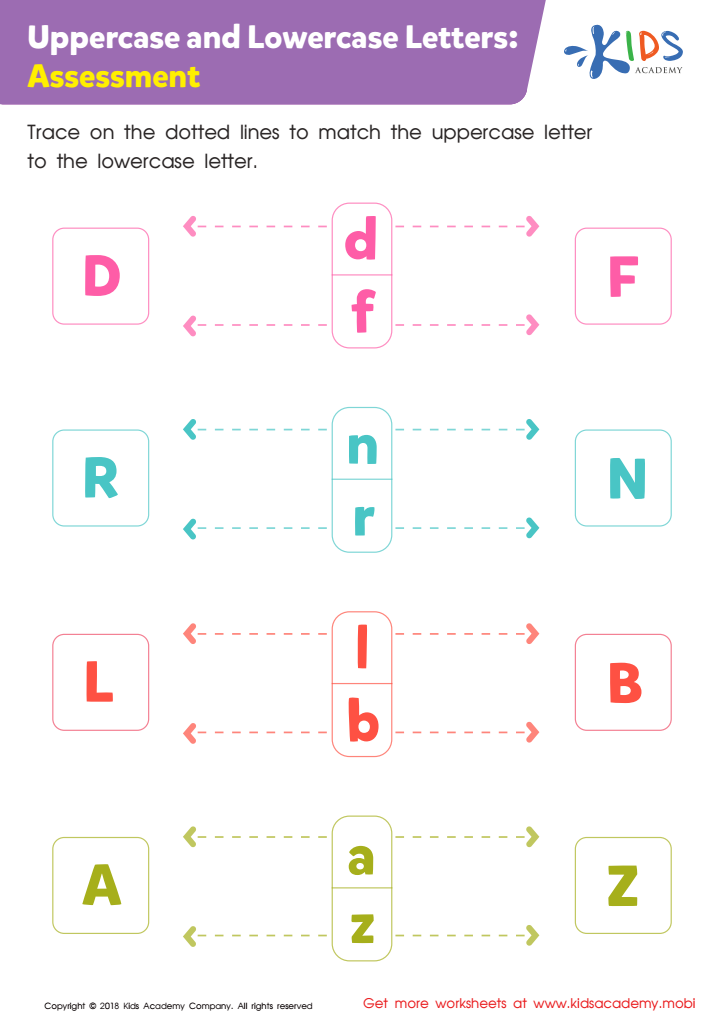
Uppercase and Lowercase Letters: Assessment Worksheet
 Assign to My Students
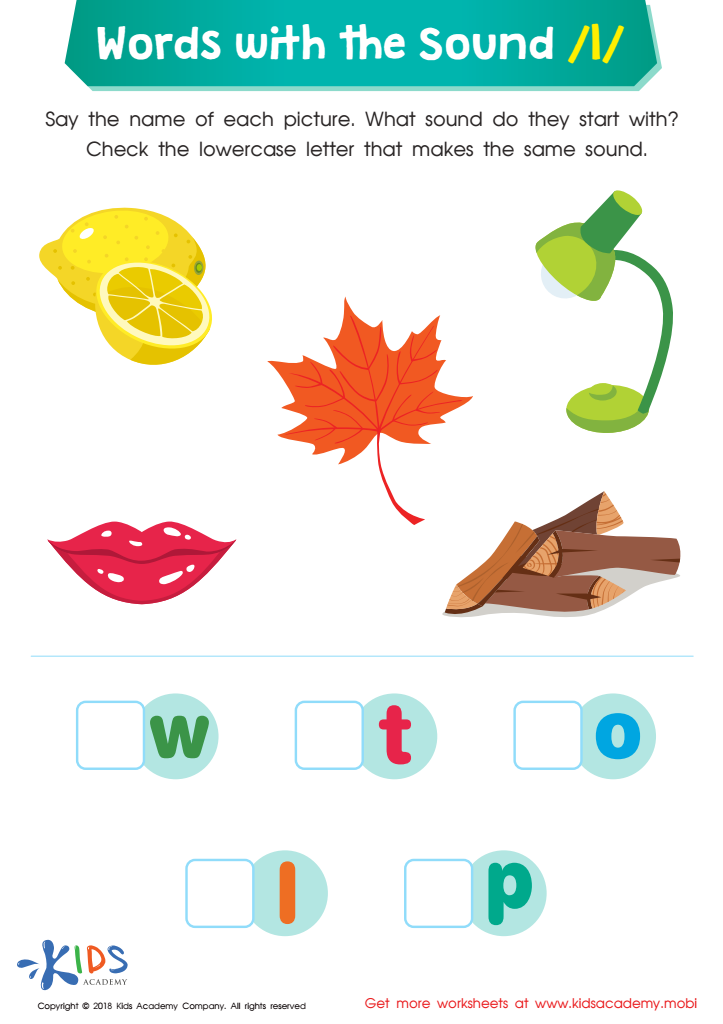
Words with Sound L Reading Worksheet
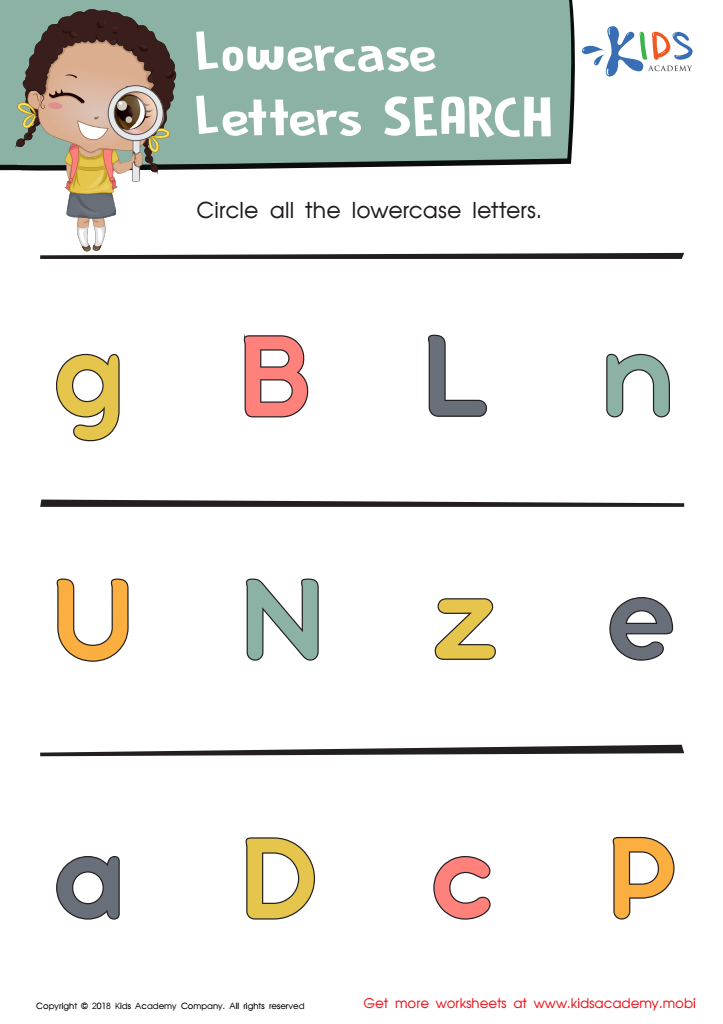
Lowercase Letters Search: Assessment Worksheet


Understanding lowercase letters is crucial for children aged 6-9, as this foundational literacy skill lays the groundwork for their reading and writing abilities. During this developmental stage, children transition from learning individual letters to recognizing their use in everyday language. Lowercase letters frequently appear in texts, making their mastery essential for fluency. When children can easily identify and write lowercase letters, it boosts their confidence and encourages them to engage more with reading and writing activities.
Teachers and parents play a pivotal role in supporting this learning process. By incorporating fun and interactive approaches—such as games, storytelling, and creative writing exercises—they can create a rich environment that fosters curiosity and learning. Additionally, understanding lowercase letters improves children's spelling and punctuation skills, helping them develop coherent thoughts in writing.
Moreover, early mastery of lowercase letters instills a sense of identity and belonging among peers, as children will be better equipped to participate in classroom activities. Ultimately, investing time in teaching easy lowercase letters can significantly impact a child's academic success and love for literacy, equipping them with invaluable skills for lifelong learning. Educators and parents should be proactive and supportive in this important stage of learning.