
Hand-eye Coordination Easy Worksheets for Ages 6-9
27 filtered results
Difficulty Level
Grade
Age
-
From - To
Subject
Activity
Standards
Enhance your child's hand-eye coordination with our easy worksheets designed for ages 6-9. These fun and interactive activities help develop essential skills through tracing, drawing, cutting, and matching exercises. Each worksheet is crafted to improve children's ability to synchronize their visual input with hand movements, fostering better motor skills, concentration, and spatial awareness. Ideal for both home and classroom settings, our engaging worksheets make learning enjoyable and effective. Help your child achieve developmental milestones and boost their confidence with our expertly designed hand-eye coordination worksheets.
Favorites
With answer key
Interactive
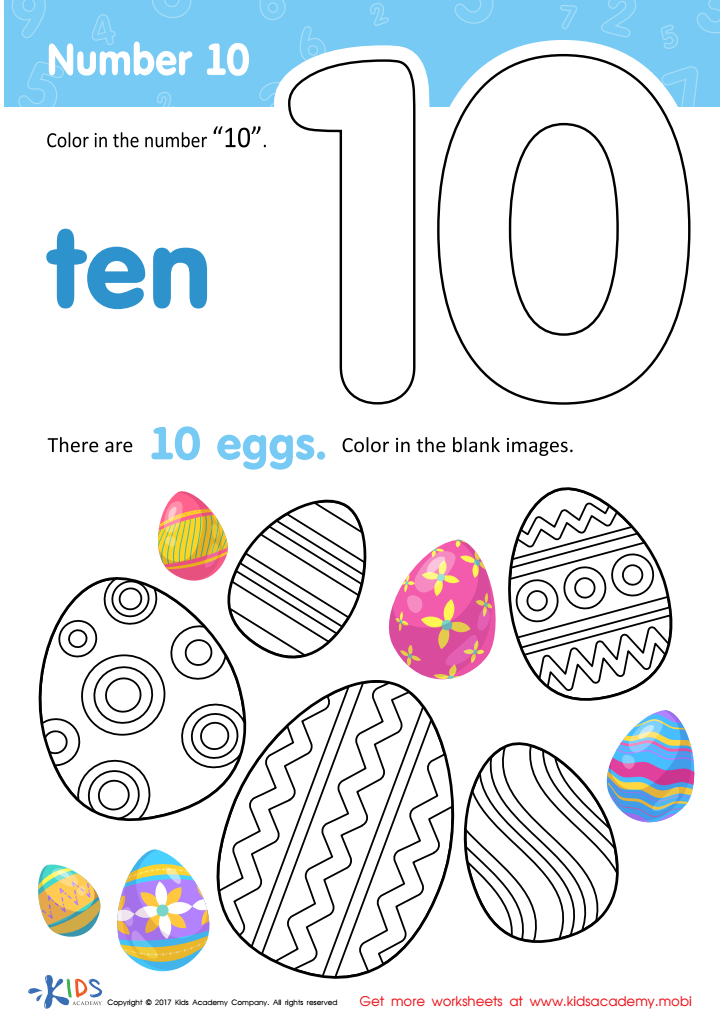
Number 10 Printable
Easter eggs are a great way to combine creativity and learning! Help your child explore the number 10 with our fun coloring page. The intricate designs will spark their imagination and fuel their artistic side, while they practice important numeracy basics. Get creative with eggs and enjoy the fun, no matter the time of year!
Download (PDF)
 Assign to My Students
Assign to My Students
Number 10 Printable
Worksheet
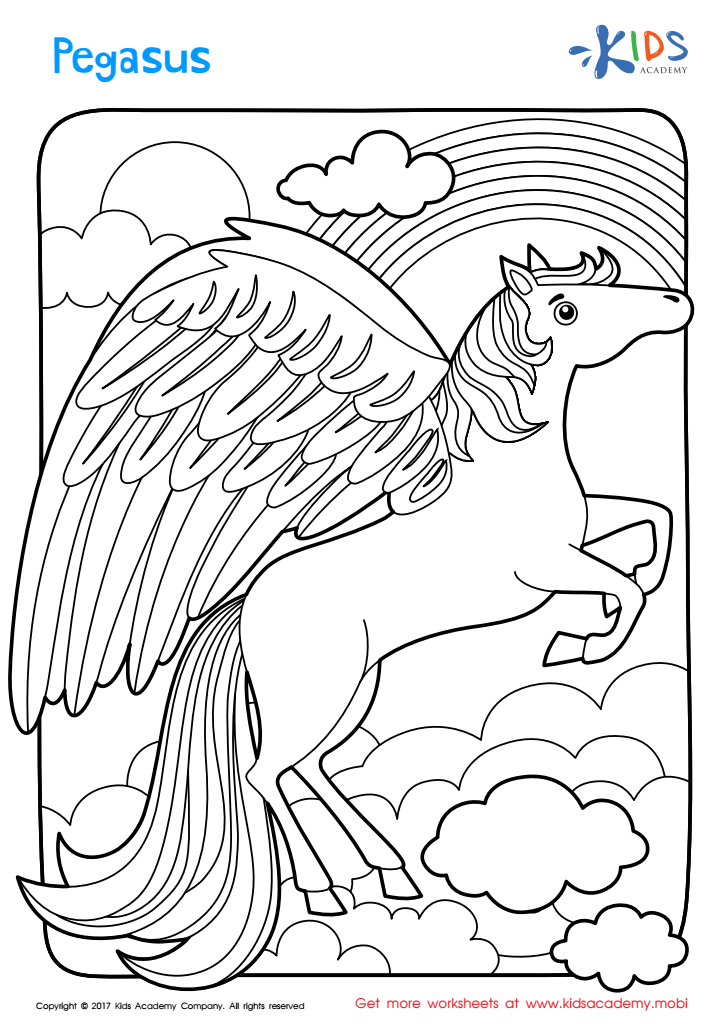
Pegasus Printable
Learn about ancient Greek mythology with your child! Print our Pegasus coloring page to bring the myths to life. Encourage your child to read the stories and let his/her imagination soar. This activity will make the tales of the gods come alive!
Download (PDF)
Assign to My Students
Assign to My Students
Pegasus Printable
Worksheet
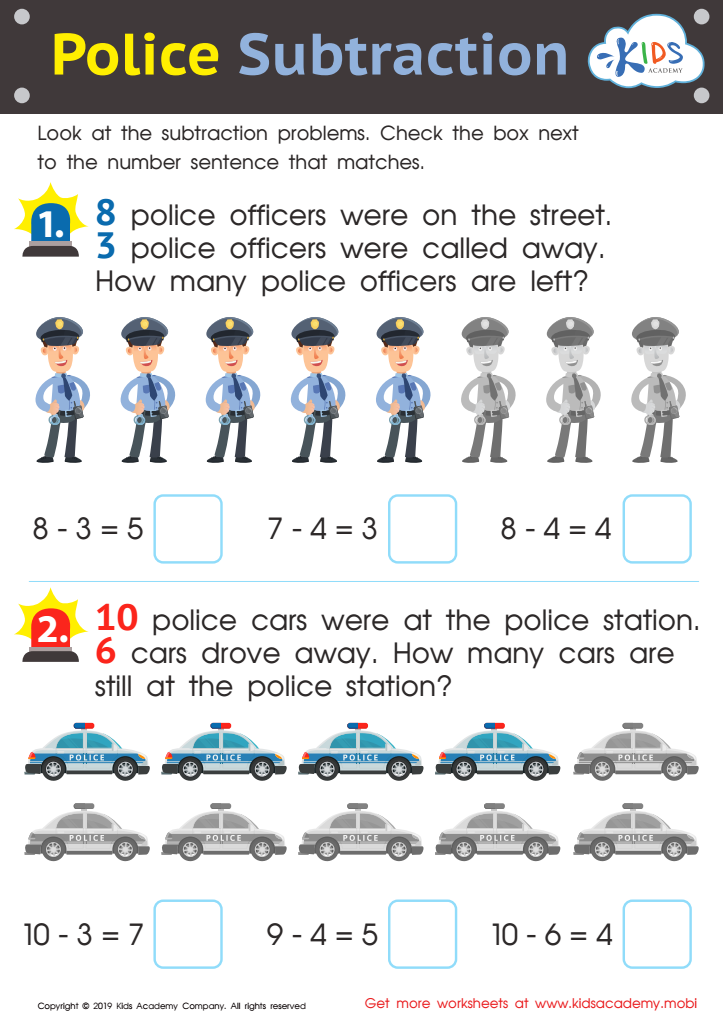
Police Subtraction Worksheet
Police protect citizens and do more in the community. Kids can learn numbers with this math worksheet: two subtraction problems in the downloadable PDF. Read the problems with your kids, then check the box next to the number sentences that are correct.
Police Subtraction Worksheet
Worksheet
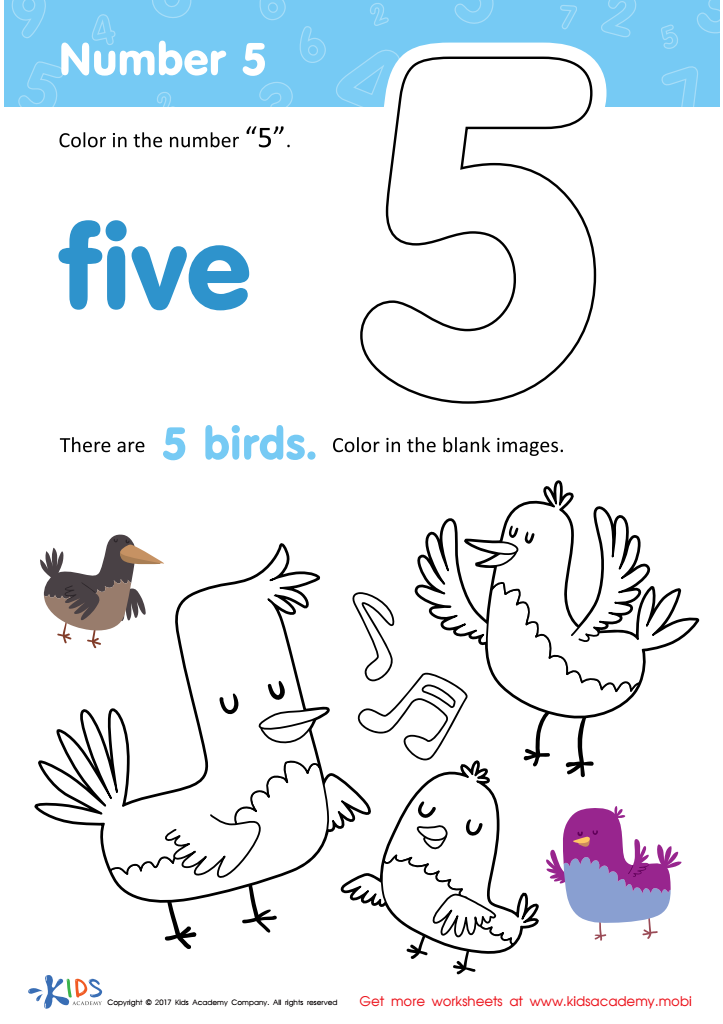
Number 5 Printable
Let your child have fun with this number 5 coloring page! They'll adore coloring the birds and music notes, while learning to recognize the number 5. Enjoy listening to the birds sing their beautiful songs!
Download (PDF)
Assign to My Students
Assign to My Students
Number 5 Printable
Worksheet
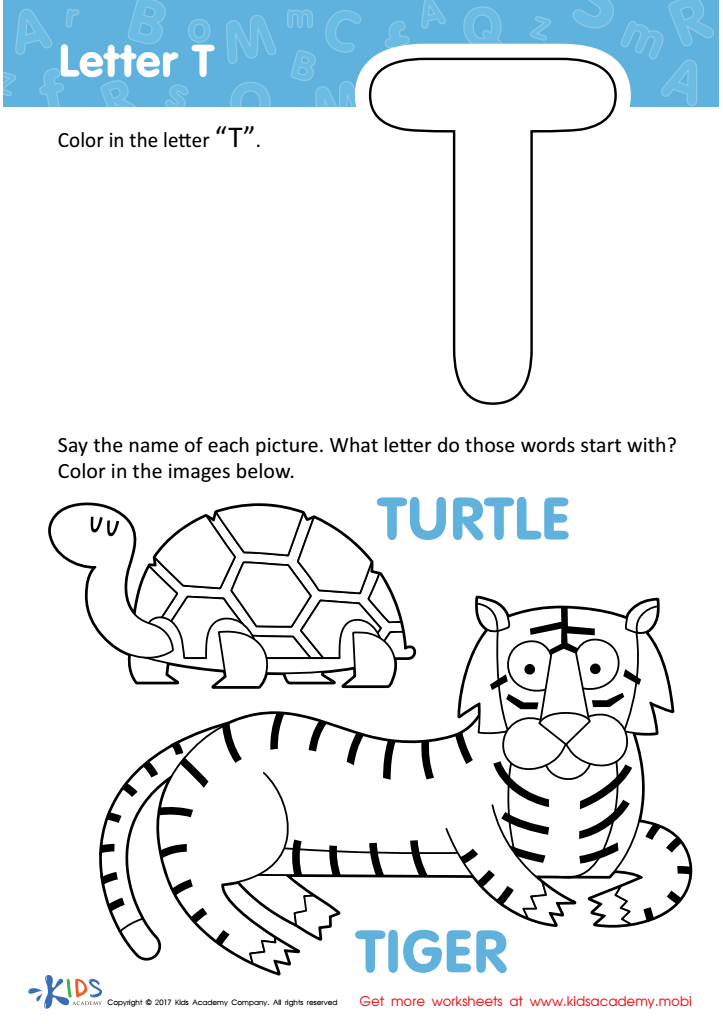
Letter T Coloring Sheet
Introduce your child to the letter "T" and its animals – turtles and tigers! With this coloring page, you can stimulate your child's imagination and creativity, while helping them recognize the letter "T". Have fun with your child and get coloring!
Download (PDF)
Assign to My Students
Assign to My Students
Letter T Coloring Sheet
Worksheet
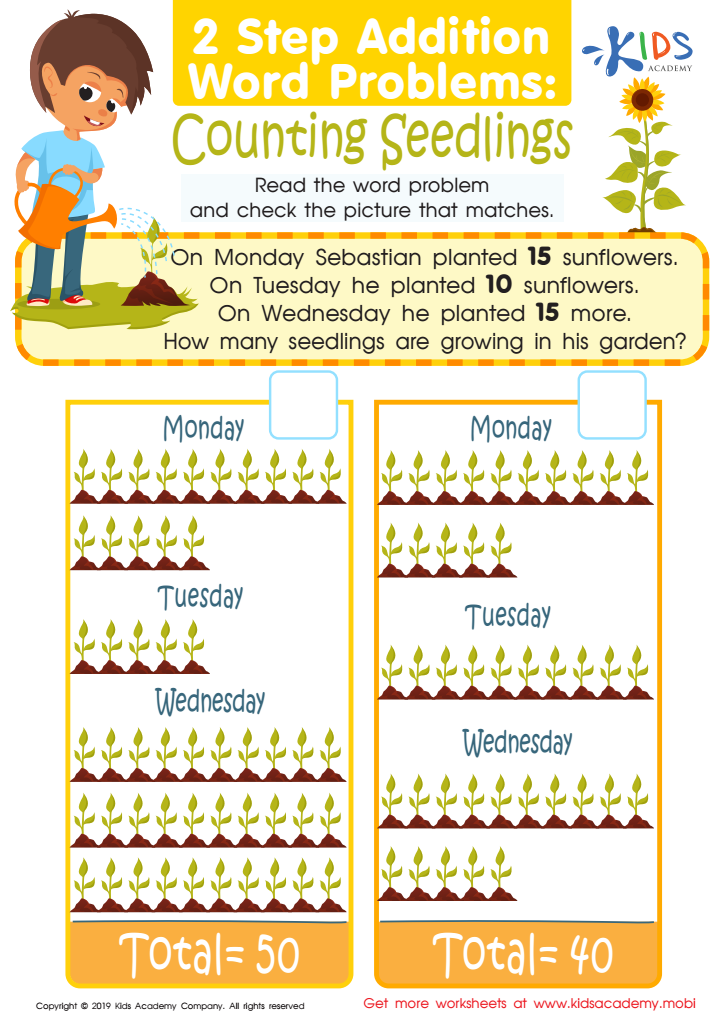
Counting Seedlings Worksheet
Understanding math word problems is key. Multiple steps can prove challenging - this free worksheet provides one-to-one picture representation to help kids solve multi-step addition word problems. Strengthen addition skills by choosing the matching picture to the answer.
Counting Seedlings Worksheet
Worksheet
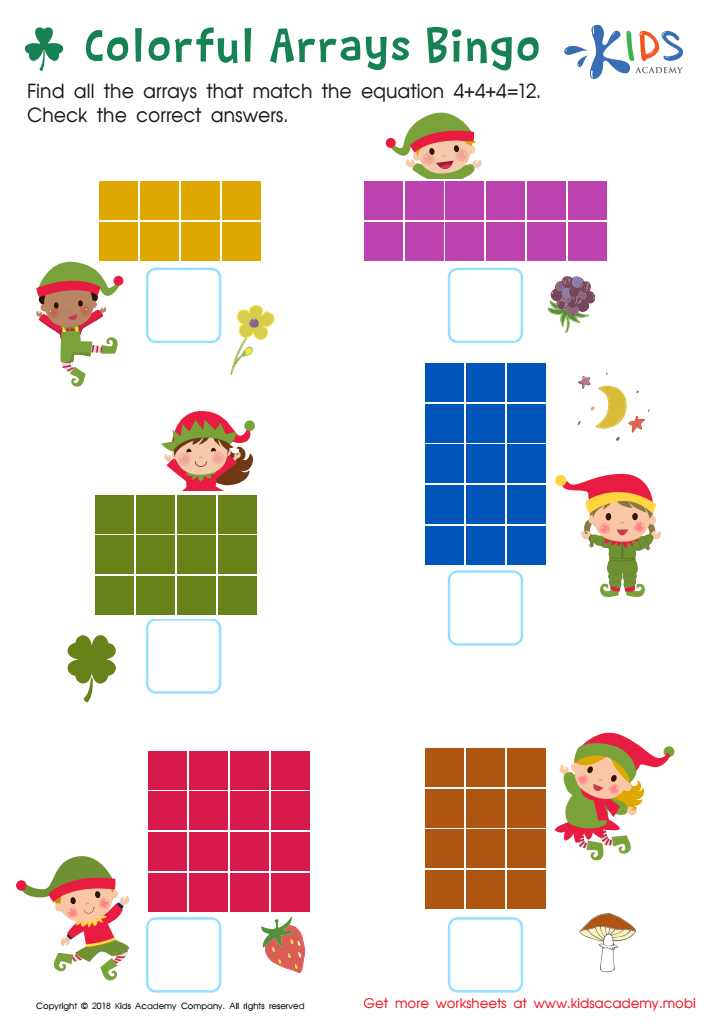
Colorful Arrays Bingo Worksheet
This worksheet stimulates thinking about arrays and how to represent them. Instruct students to count the 6 arrays and find which ones sum up to 12. Ask them to check the answers for accuracy.
Colorful Arrays Bingo Worksheet
Worksheet
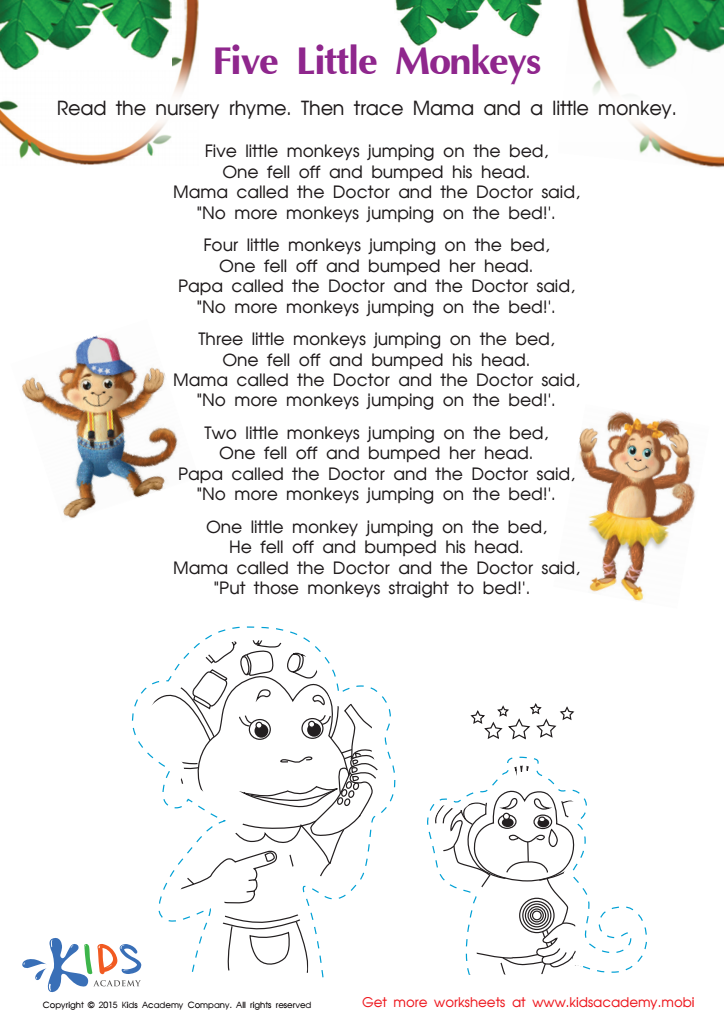
The Five Little Monkeys Nursery Rhyme Worksheet
Sing the beloved nursery rhyme "Five Little Monkeys" with your child, and add a finger play for extra fun! After a few times, encourage them to join in and fill the songs with laughter. Also, have fun coloring the worksheet featuring the monkeys and their Mama.
The Five Little Monkeys Nursery Rhyme Worksheet
Worksheet
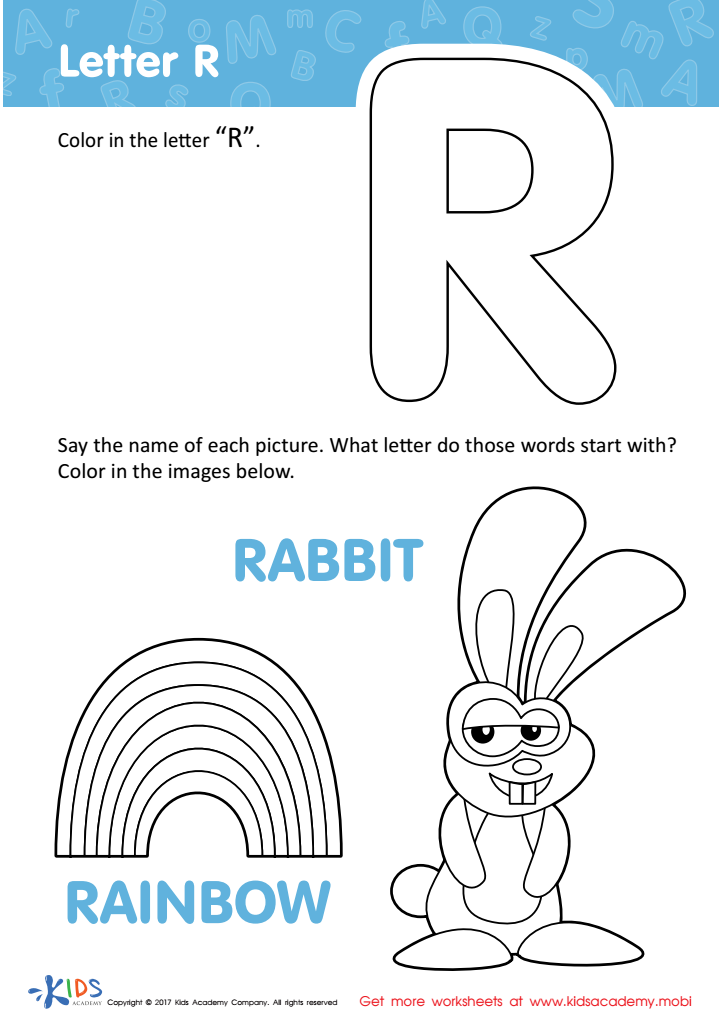
Letter R Coloring Sheet
Let your child explore the rainbow with this fun letter "R" coloring page! They can learn to recognize the letter and make connections to words, all while having fun! Make alphabet learning enjoyable with joyful coloring pages.
Download (PDF)
Assign to My Students
Assign to My Students
Letter R Coloring Sheet
Worksheet
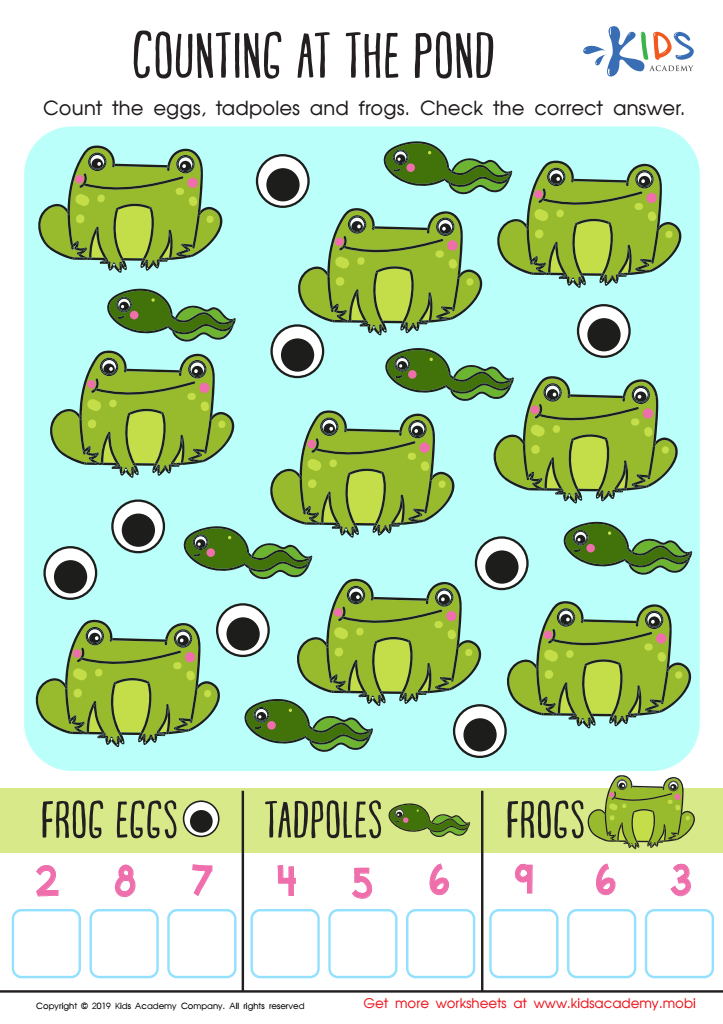
Counting at the Pond Worksheet
Ask your kids what they see in the picture. Can they identify the animal? Where does it live, what does it eat and what sound does it make? These questions will help get them in the math mood. Help them count the eggs, tadpoles and frogs, then check the answer.
Counting at the Pond Worksheet
Worksheet
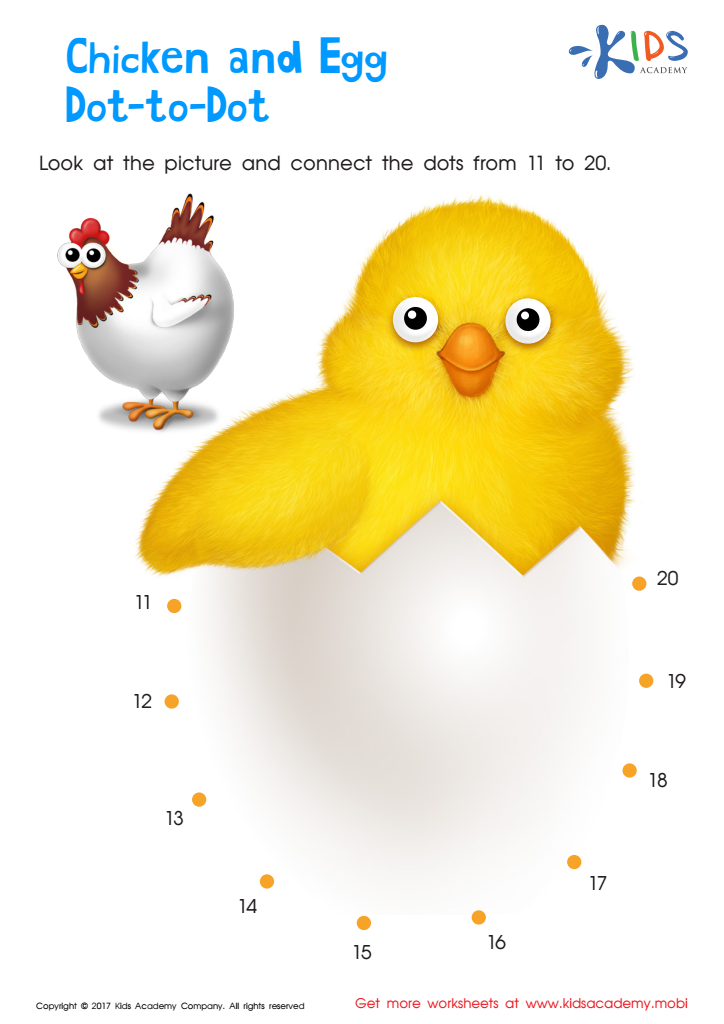
Ordering 11–20: Chicken & Egg Dot–to–dot Worksheet
Help your child hatch the chick and practice their counting skills with this dot to dot worksheet – the chicken came first! Connect the dots 11-20 to have fun and learn at the same time. Experience meaningful practice and gain confidence while drawing great pictures.
Ordering 11–20: Chicken & Egg Dot–to–dot Worksheet
Worksheet
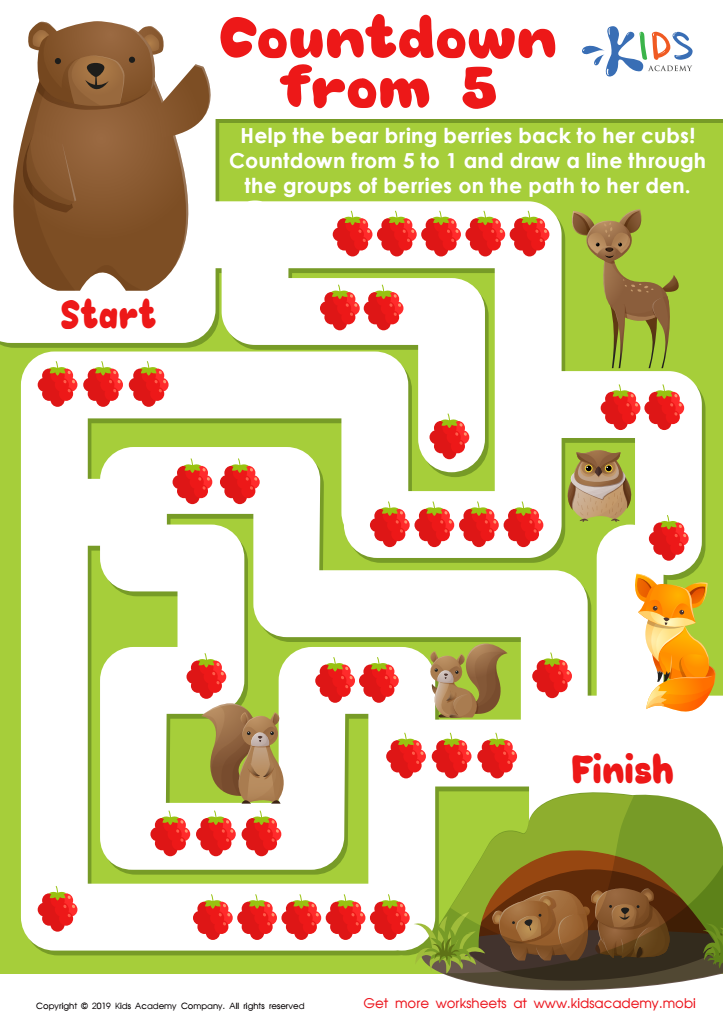
Countdown from 5 Worksheet
Encourage your kids to help Mama Bear find her way to her den! Ask them to count down from 5 to 1 and draw a line through the groups of berries on the path. Point them to the picture of the friendly bears. A fun and safe way to enjoy these cute animals!
Countdown from 5 Worksheet
Worksheet
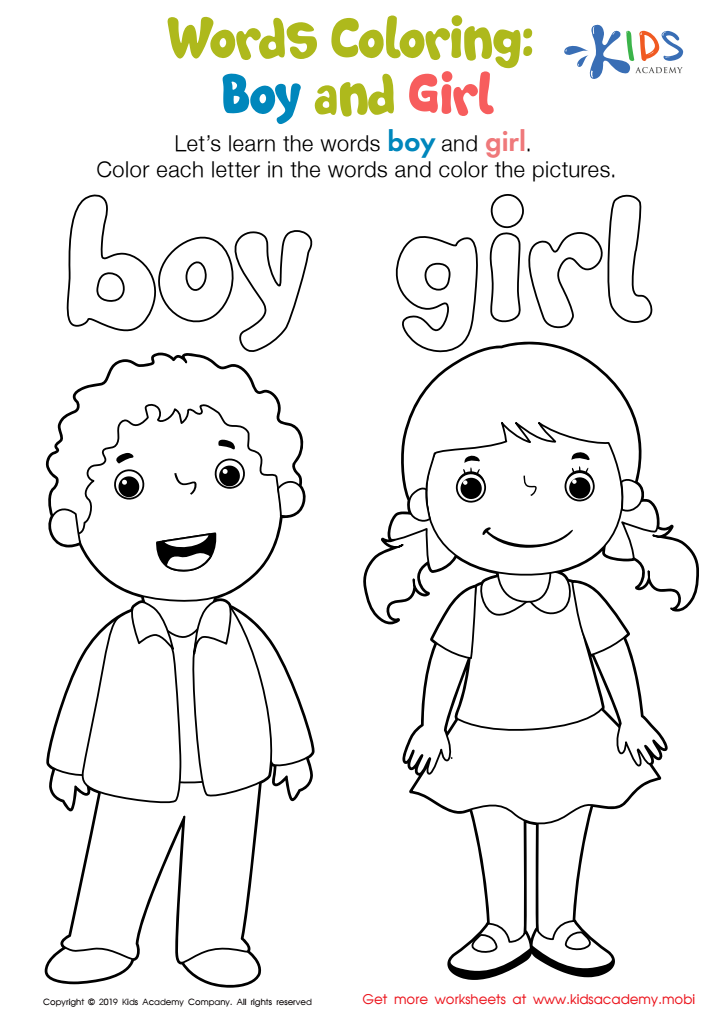
Boy and Girl Words Coloring Worksheet
Help your students build their sight word vocabulary! Early readers may not be able to sound out all words, so this worksheet teaches them to read two important sight words: boy and girl. They will color the letters and a picture of each, making it a fun and educational way to learn. Download the PDF now.
Download (PDF)
Assign to My Students
Assign to My Students
Boy and Girl Words Coloring Worksheet
Worksheet
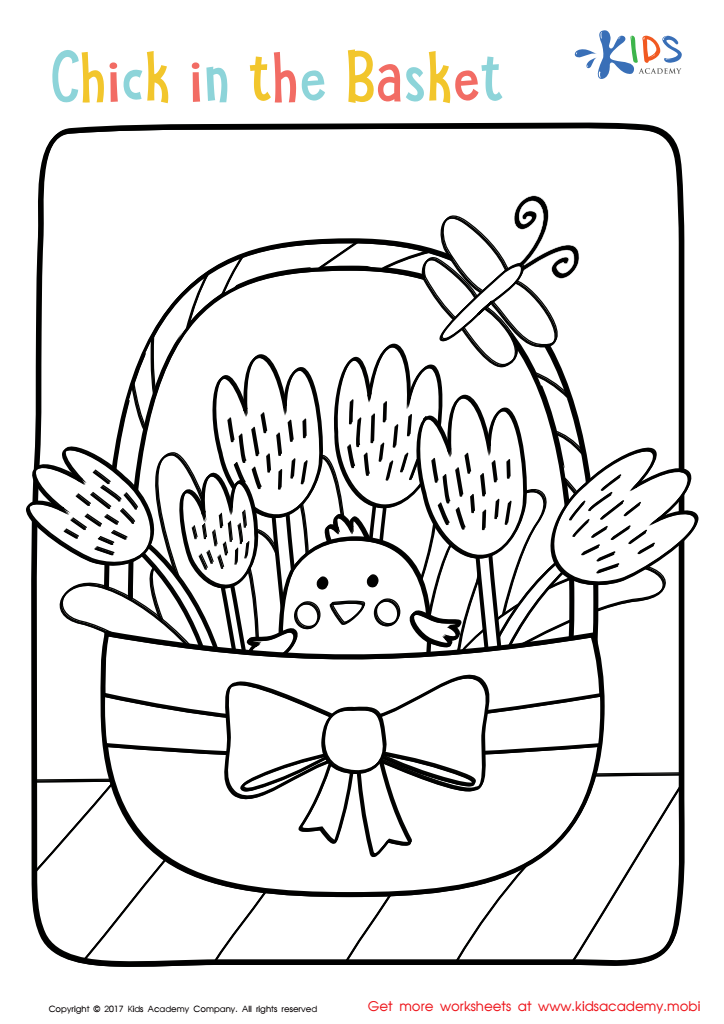
Easter: Chick in the Basket Worksheet
Kids love Easter morning when they wake up to a basket full of goodies! Let them get creative and learn something new with this Easter chick coloring page! It's perfect to use while they wait for the Easter bunny, and talk about the symbolism of chicks and baskets. They'll have fun learning and creating a wonderful image to decorate!
Download (PDF)
Assign to My Students
Assign to My Students
Easter: Chick in the Basket Worksheet
Worksheet
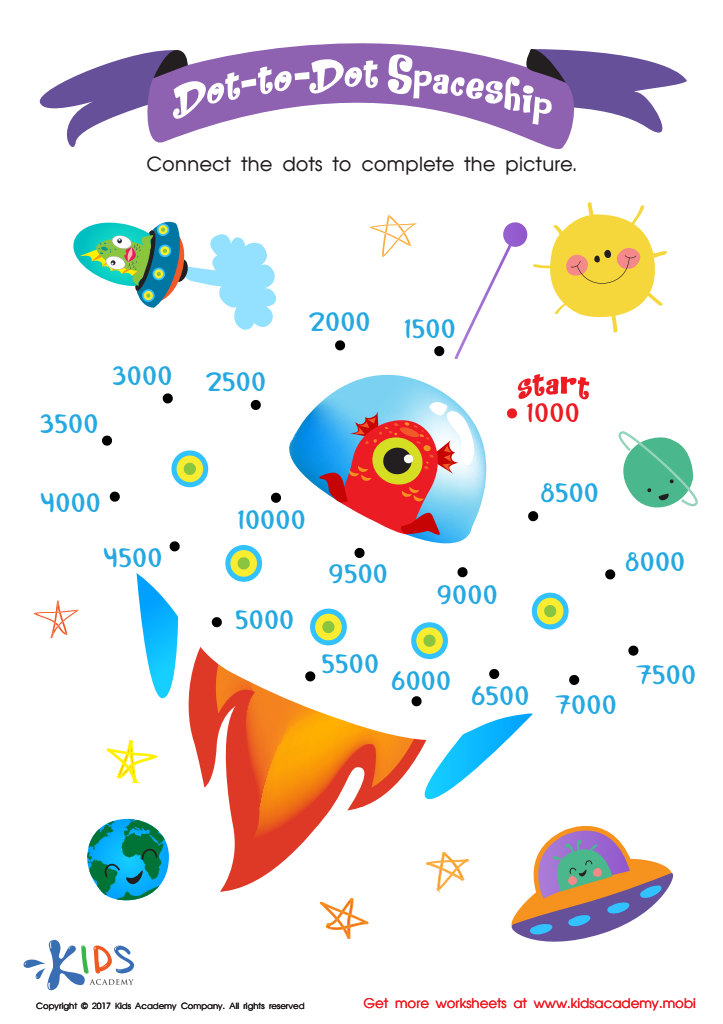
Dot to Dot Worksheet for 3rd Grade
Let your 3rd grader develop better number skills with this dot-to-dot worksheet! They can have fun outlining a spaceship as they skip count by 500 up to 10,000. It's a great way to boost their number sense and make learning more exciting.
Dot to Dot Worksheet for 3rd Grade
Worksheet
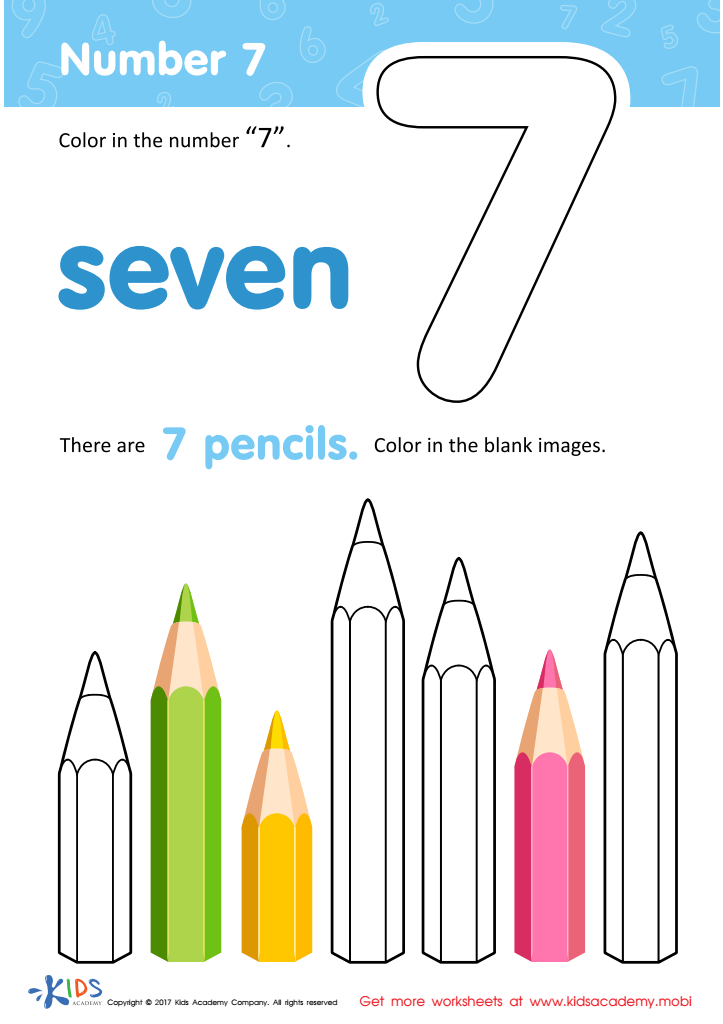
Number 7 Worksheet
Introduce beginning math to your child with this fun number 7 coloring page! Coloring the crayons and using the blank pencils for math equations will bring a creative twist to learning. Your child will love this worksheet!
Download (PDF)
Assign to My Students
Assign to My Students
Number 7 Worksheet
Worksheet
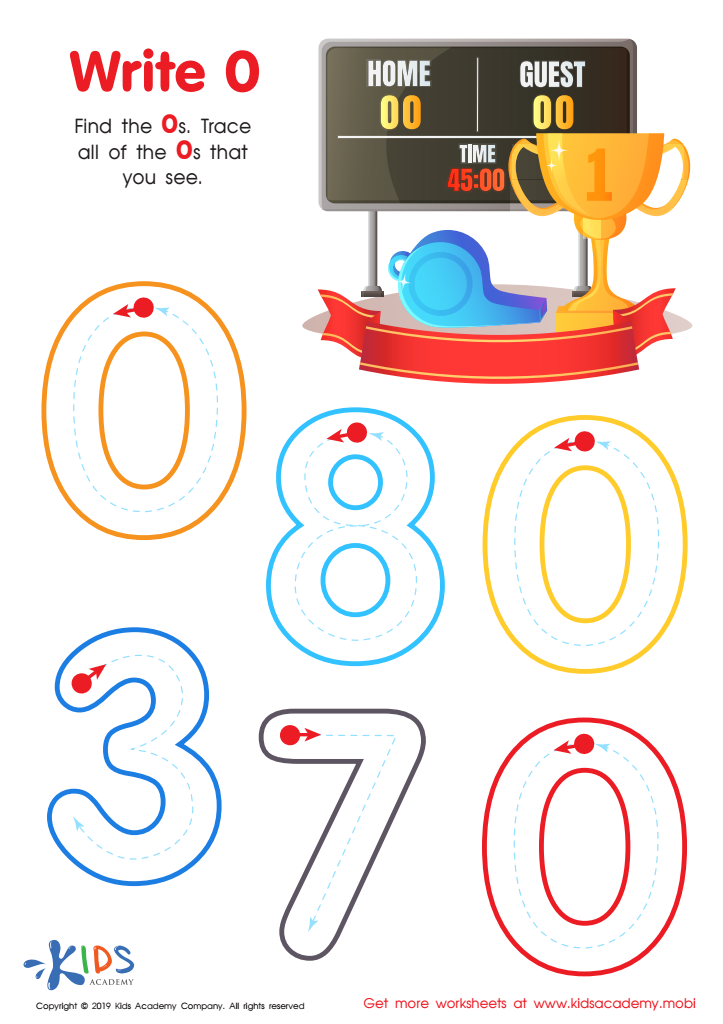
Write 0 Worksheet
Help your children become number pros! This worksheet will give them the edge they need to count, while also helping them practice writing the number 0. Have them find the 0s in the printout, then trace them. It's a great way to build a math foundation and get them ready to succeed with more advanced math concepts.
Write 0 Worksheet
Worksheet
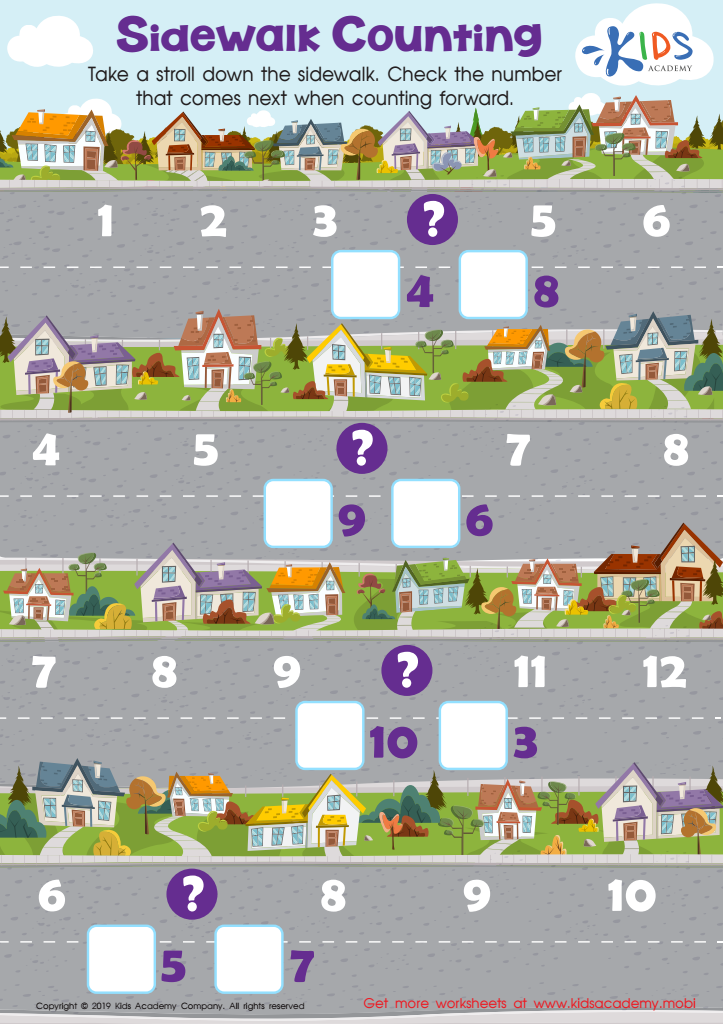
Sidewalk Counting Worksheet
Counting is a vital math skill, helping kids with addition and improving their speed when solving math problems. Let them practice with this fun sidewalk counting worksheet: have them take a walk and fill in the next number in the sequence as they count.
Sidewalk Counting Worksheet
Worksheet
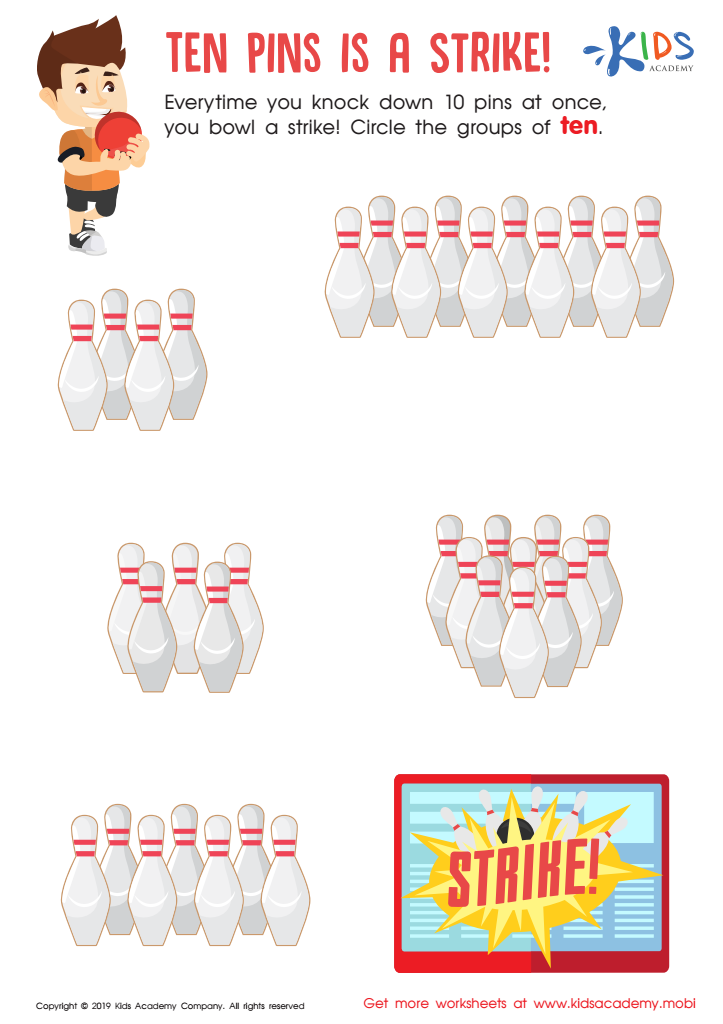
Ten Pins is a Strike Worksheet
Show your kids the picture and ask them to identify the objects. Explain that bowling is a leisure game played with a ball and pins. Count the pins and have them circle groups of ten. This worksheet will make learning fun and easy, as your children already know the objects.
Ten Pins is a Strike Worksheet
Worksheet
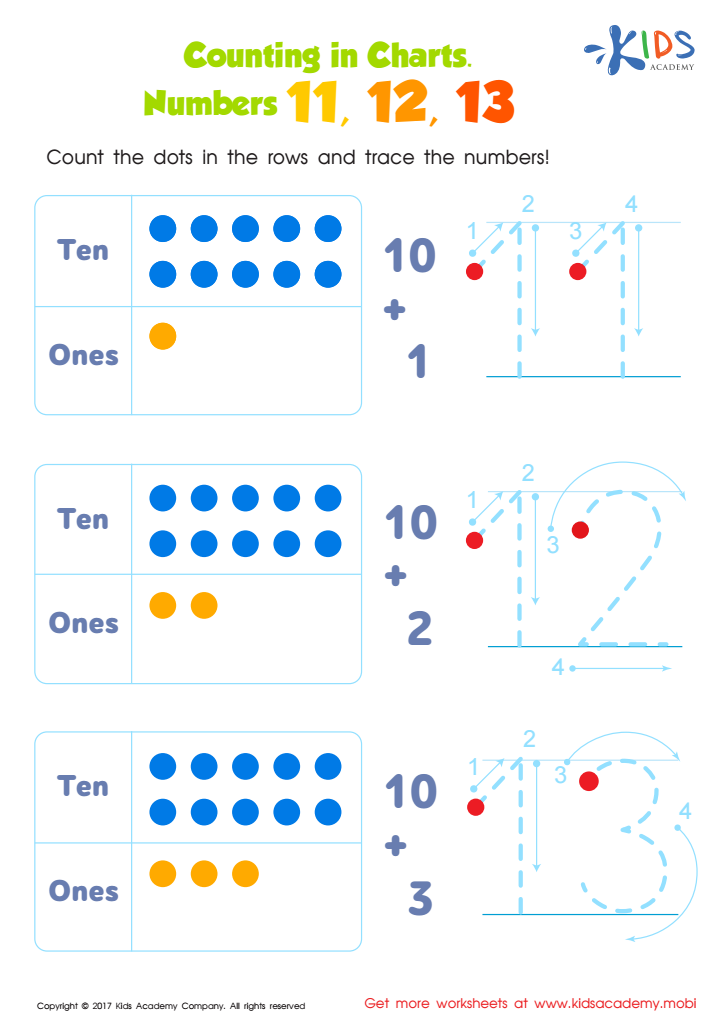
Number Tracing Worksheet For Kindergarten
Help your child develop addition skills and improve number recognition with this easy-to-use worksheet. Have them count the dots and add to solve each problem. Then, trace over the number to complete each row! It's a fun and simple way for kindergarteners to practice their math skills.
Number Tracing Worksheet For Kindergarten
Worksheet
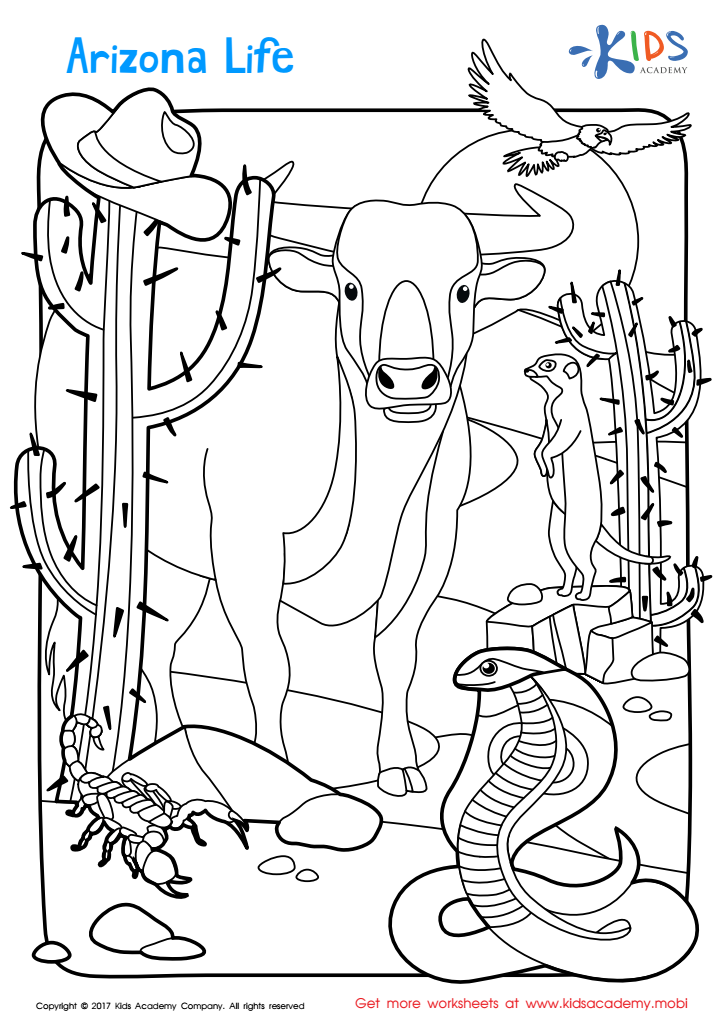
Arizona Coloring Page Worksheet
Heading to Arizona with this fun coloring page! Your kid will have a great time coloring the rattle snake and cacti, and learn about Arizona's distinct climate and wildlife along the way.
Download (PDF)
Assign to My Students
Assign to My Students
Arizona Coloring Page Worksheet
Worksheet
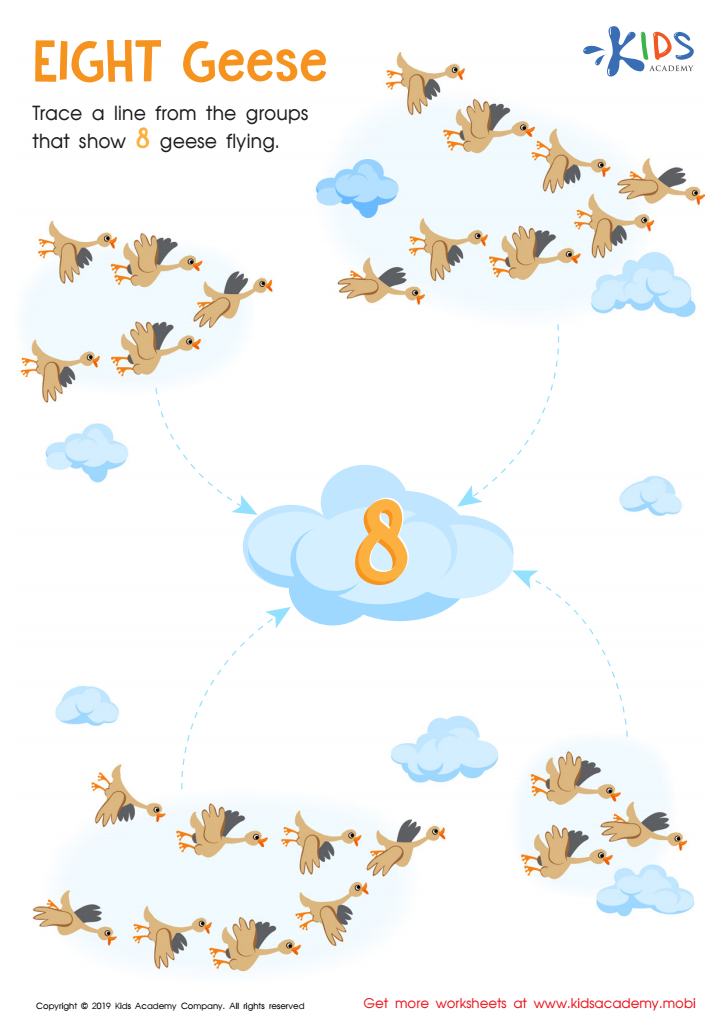
Eight Geese Worksheet
Assess your child's counting skills with this worksheet. Help them count the geese in each group, then trace a line from the groups showing 8. Give your kids a boost by providing lots of exercises and learning aids to help with counting. They likely count objects they come across, like spoons and stones. Use this opportunity to give them practice and help them learn.
Eight Geese Worksheet
Worksheet
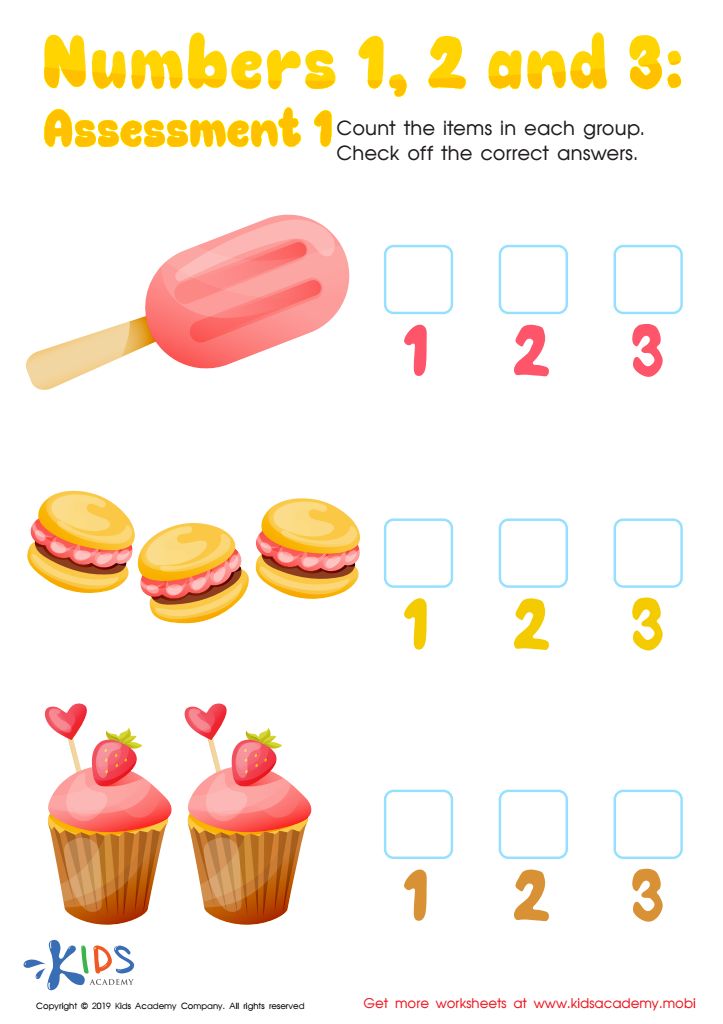
Numbers 1, 2 and 3: Assessment 1 Worksheet
This bright and colorful numbers assessment worksheet is a great way to assess your child's numeracy skills. It provides a sweet treat for them, and helps them recognise 1, 2 or 3 objects. One-to-one representation is key for foundational math skills, and this PDF helps your child build these essential skills.
Numbers 1, 2 and 3: Assessment 1 Worksheet
Worksheet
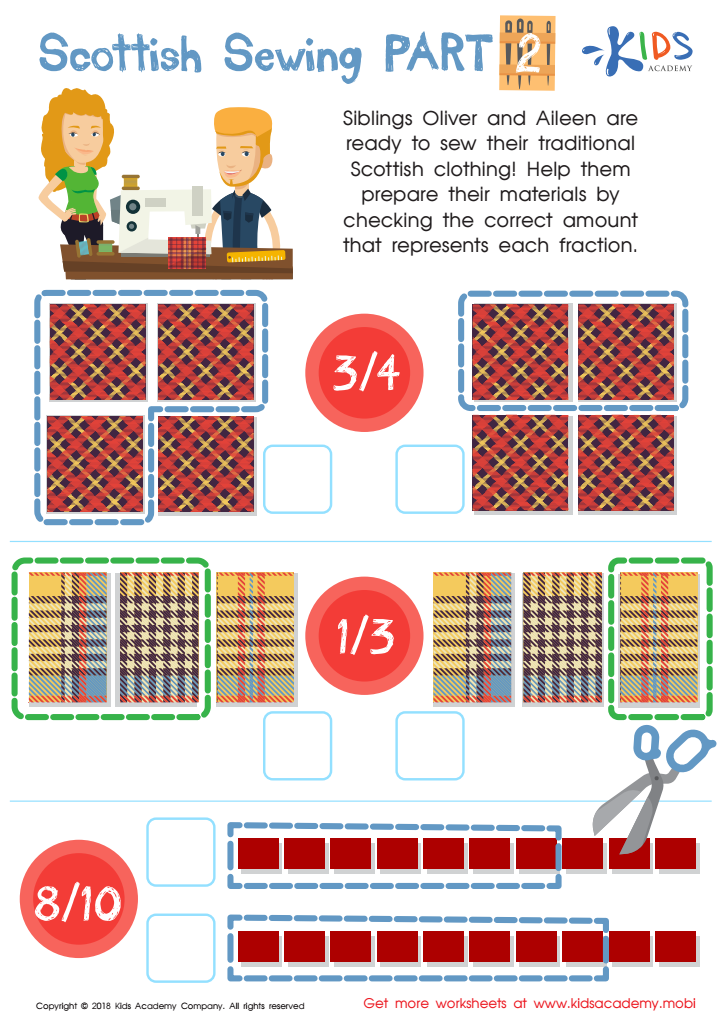
Scottish Sewing Part 2 Worksheet
Oliver and Alleen are sewing traditional Scottish attire. Help your kids count the cloth and check the correct fraction to support them. Have your kids check the correct amount that represents each fraction to help the brother-sister duo prepare their material.
Scottish Sewing Part 2 Worksheet
Worksheet
Join Kids Academy for Free
Who is primarily going to use this learning content?







Hand-eye coordination is crucial for children aged 6-9 because it significantly impacts their ability to perform everyday activities and succeed in school tasks. This skill involves using the eyes to direct attention and the hands to execute a specific task, like catching a ball or writing neatly. For young children, developing good hand-eye coordination is essential for both academic and physical success.
From an academic perspective, hand-eye coordination helps with handwriting, reading, and use of classroom tools like scissors and rulers. Children with strong hand-eye coordination can form letters more accurately and quickly, making writing tasks easier and less frustrating. Good coordination also supports reading fluency by enabling children to track lines of text smoothly.
On the physical side, hand-eye coordination is fundamental in activities like sports, playing an instrument, or simply participating in playground games. These activities not only contribute to physical health but also enhance cognitive and social skills. When children can effectively participate, they're more likely to enjoy learning and social interactions, boosting their confidence.
In summary, parents and teachers should prioritize hand-eye coordination because it forms the foundation for many skills children need for academic achievement and overall well-being. Activities like playing catch, building with blocks, and drawing can support this important skill, ensuring children grow confident and competent.








