Easy Geometry Worksheets for Ages 6-9 - Page 3
53 filtered results
-
From - To
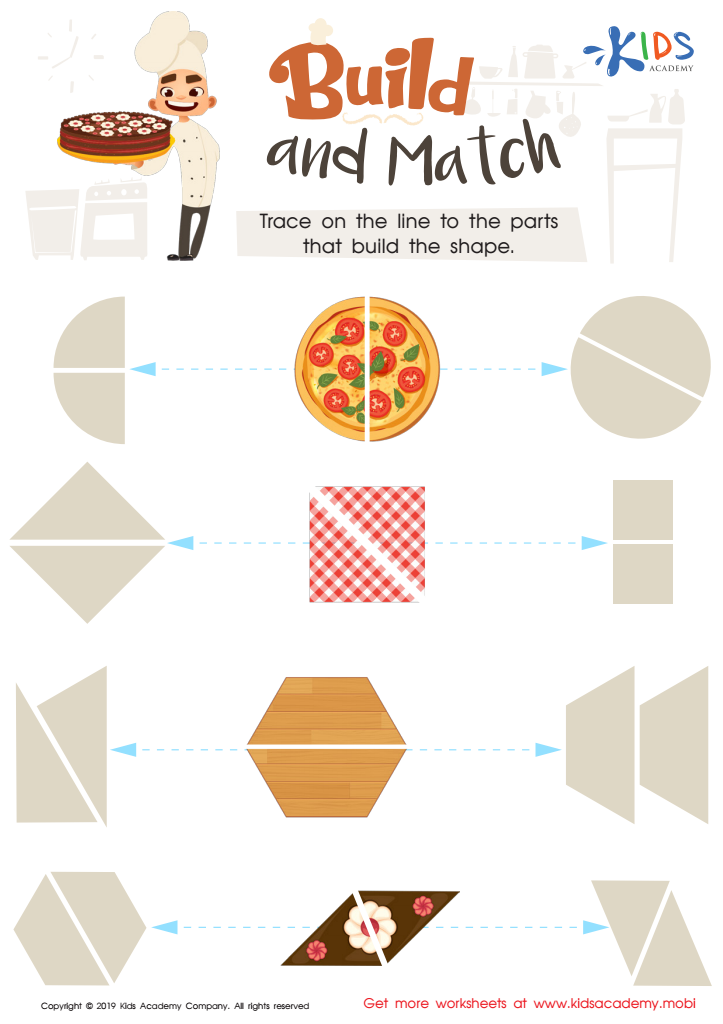
Build and Match Worksheet
 Assign to My Students











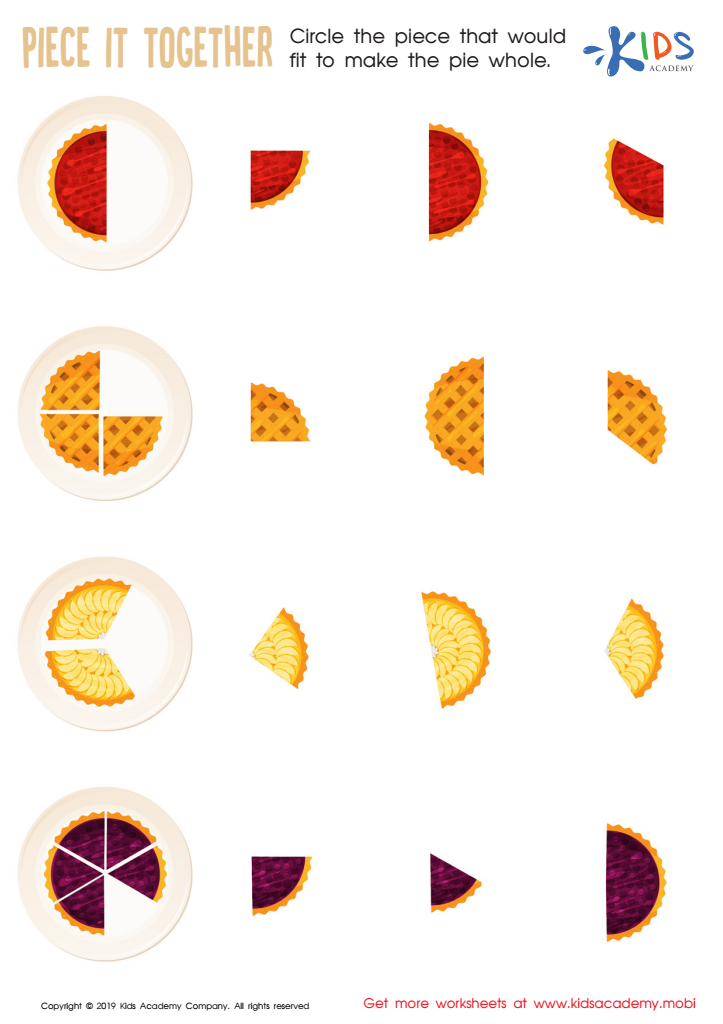
Piece it together Worksheet
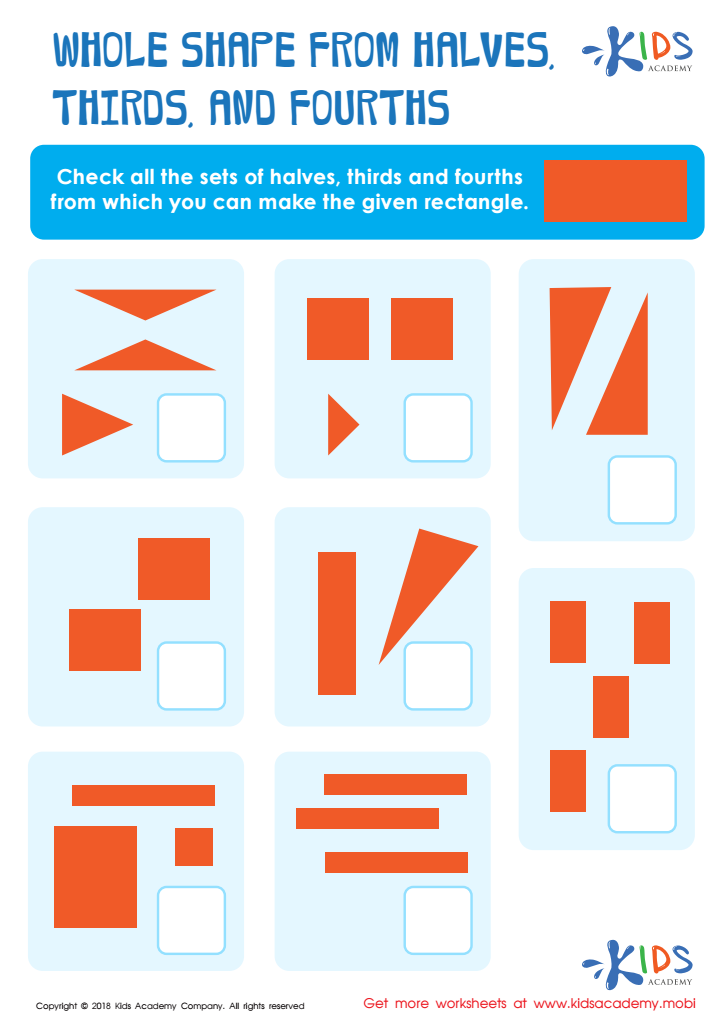
Whole Shape from Halves, Thirds and Fourths Worksheet
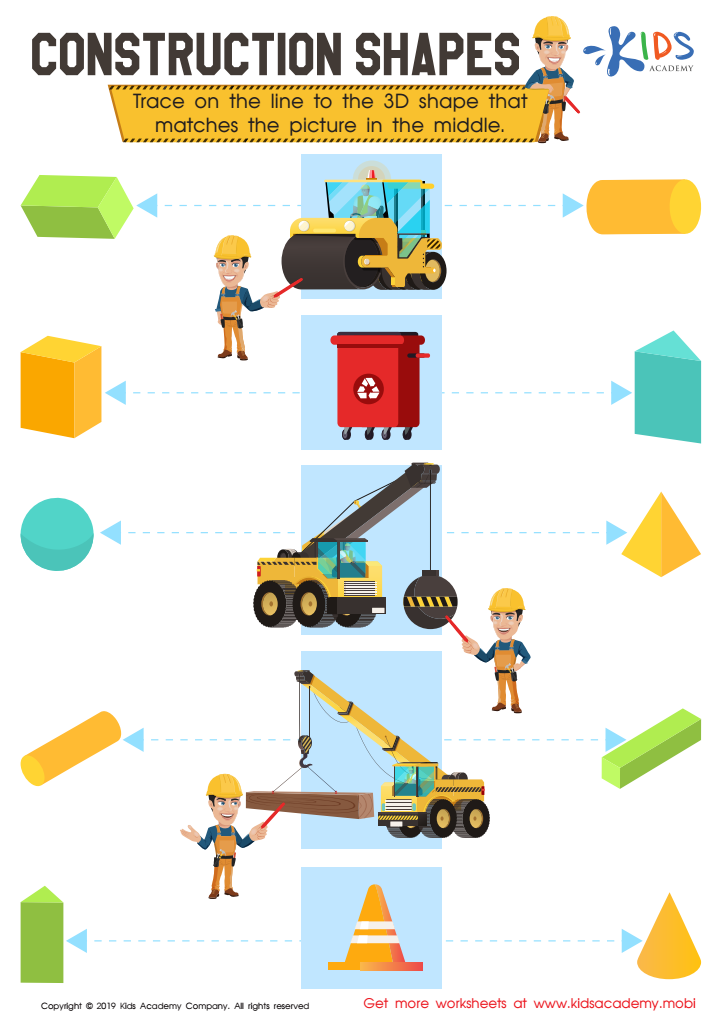
Construction Shapes Worksheet
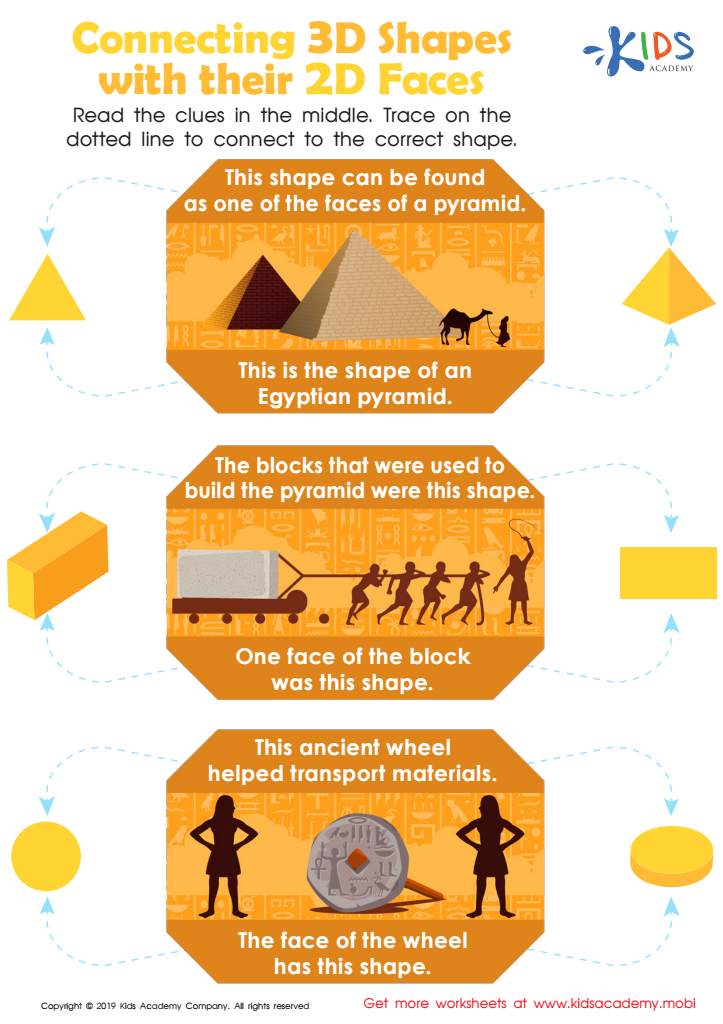
Connecting 3D Shapes with Their 2d Faces Worksheet








Easy Geometry for ages 6-9 is essential because it lays the groundwork for critical thinking and problem-solving skills. At this age, children are naturally curious and quick to absorb new information, making it an ideal time to introduce geometric concepts. Understanding shapes, spatial relationships, and basic properties helps children develop visual-spatial awareness, which is fundamental for more complex mathematical reasoning and numerous everyday tasks.
For parents, encouraging early exposure to geometry through playful, engaging activities at home nurtures a love for learning and builds a strong foundation for future academic success. It equips children with the tools to comprehend their environment and enhances their ability to engage in constructive play, such as building with blocks or drawing, which in turn promotes fine motor skills and creativity.
Teachers should prioritize Easy Geometry in the classroom as it complements other areas of learning, including reading and physical education. Lessons can be interactive and movement-based, which caters to multiple learning styles and keeps children engaged. Additionally, early geometry education aligns with educational standards and supports proficiency in STEM (Science, Technology, Engineering, and Mathematics) fields.
In summary, introducing Easy Geometry between ages 6-9 benefits cognitive development, enriches learning experiences, and sets the stage for future proficiency in various academic subjects.








