Easy Patterns Worksheets for Ages 6-9
6 filtered results
-
From - To
Discover engaging and educational Easy Patterns Worksheets designed for children aged 6-9! Our worksheets are crafted to develop critical thinking, enhance problem-solving skills, and promote a love for learning. Through colorful and interactive exercises, kids can grasp basic pattern recognition, sequencing, and prediction skills essential for early math success. Perfect for classroom use or at-home practice, these worksheets provide fun-filled, effective learning experiences that cater to varied learning paces. Equip your youngsters with the tools they need to excel in their mathematical journey. Download now and start building strong foundational skills today!
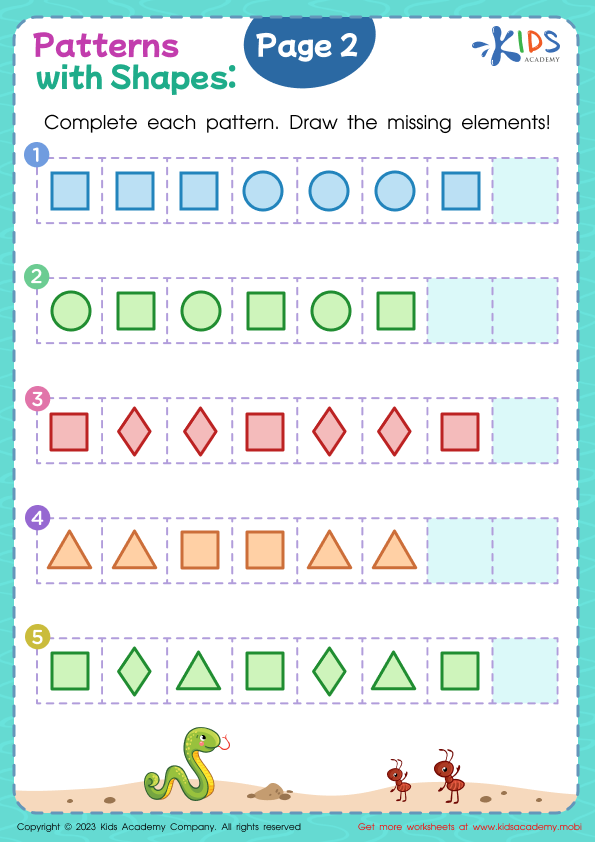
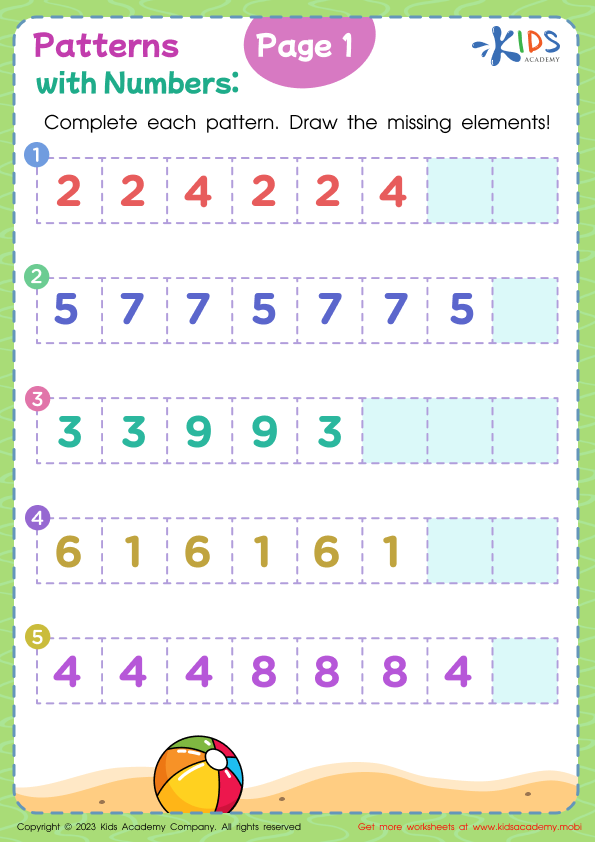
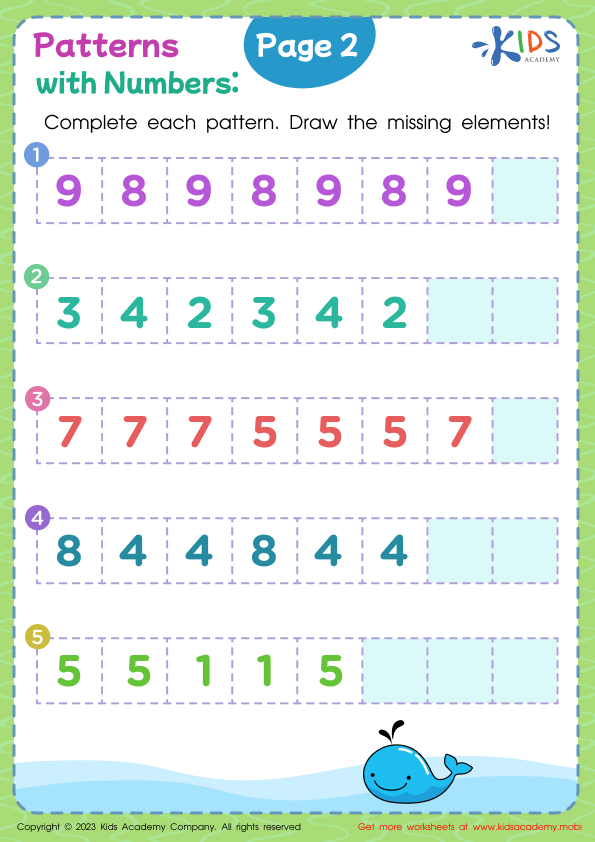
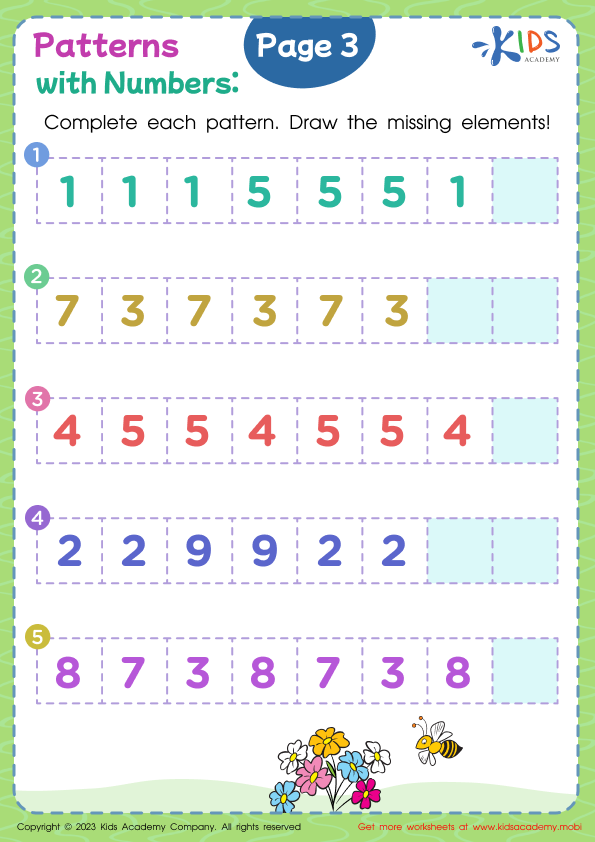
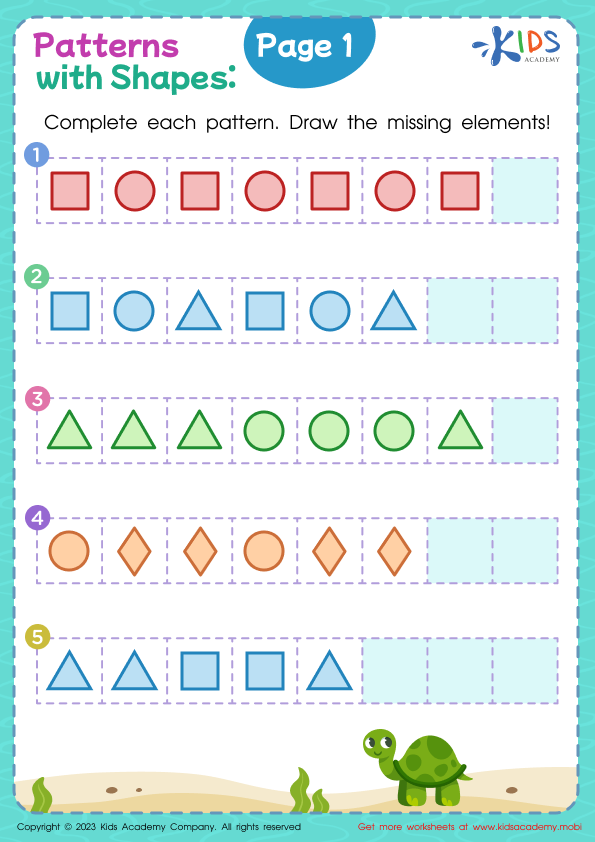
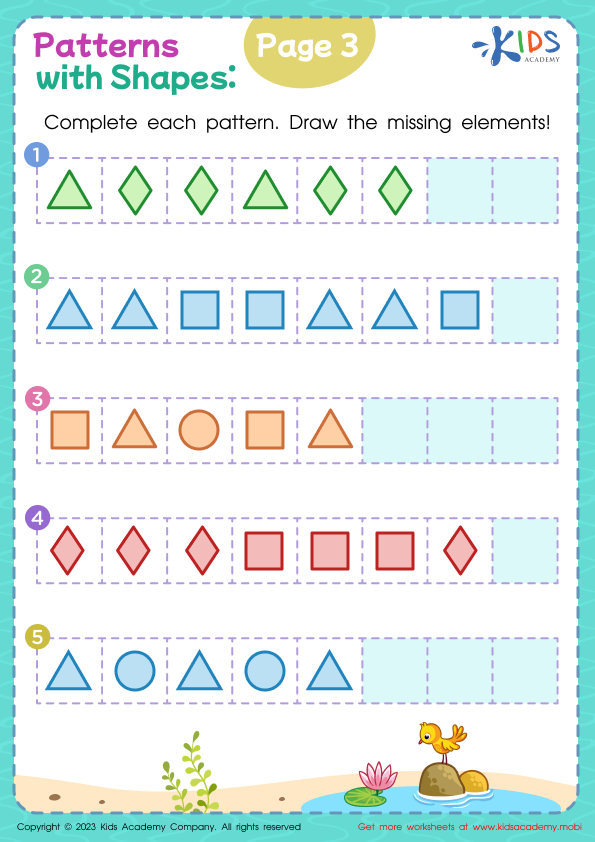







Easy patterns play a crucial role in the early development of children aged 6-9, and their importance should not be underestimated by parents or teachers. Engaging young minds with patterns helps in enhancing their cognitive skills, including problem-solving, critical thinking, and logical reasoning. Recognizing and creating patterns aids in the development of mathematical understanding, laying a solid foundation for more complex math concepts such as algebra and geometry.
Furthermore, patterns are omnipresent in everyday life; they can be found in nature, art, music, and language. By learning to recognize these patterns, children develop observational skills that boost their overall learning capabilities. For example, patterns in nature can introduce scientific thinking, while patterns in language can support reading comprehension and phonics.
Socially, working with patterns can enhance collaborative learning. Group activities involving pattern creation or detection encourage teamwork, communication, and peer interaction, promoting both social and emotional development. Additionally, finding joy and satisfaction in solving pattern-related tasks or challenges can enhance a child's motivation and self-esteem.
Therefore, parents and teachers should prioritize pattern activities, as they provide multifaceted educational benefits that foster a well-rounded, eager, and capable learner.








